The World of the Bayeux Tapestry
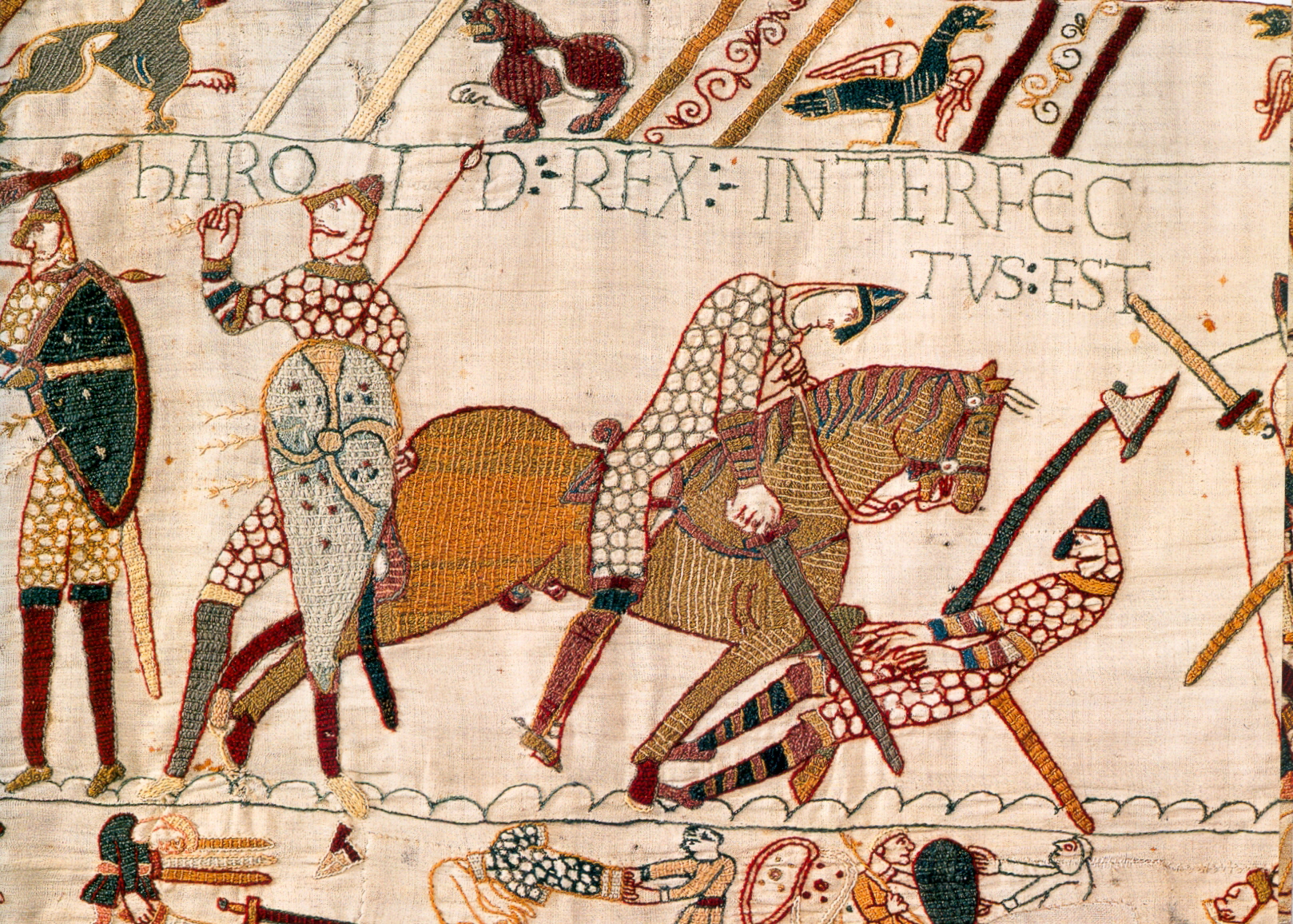
It’s finally coming! As the result of an historic loan agreement between Britain and France, the alarmingly fragile, 70-metre-long Bayeux Tapestry is booked on the Eurostar and will be exhibited at the British Museum between September 2026 and July 2027. The Tapestry was designed and made in England in the 1070s, but is believed to have been commissioned, properly paid for and legally exported by the then Bishop of Bayeux – so it hasn’t been seen here for nine and a half centuries.
An experienced lecturer (accredited to the Arts Society since 2011), with an extensive practice both at home and abroad, Rupert Willoughby offers a lively introduction to the Tapestry – so much more than the story of Hastings – in which he unravels some of its mysteries, places it in the context of its age and firmly establishes it as a landmark in the history of Western art. Replete with insights, humour and surprises, this lecture is the ideal preparation for would-be visitors to the British Museum.
A Young Person’s Guide to the Bayeux Tapestry
Rupert has also developed a 45-minute, illustrated introduction to the Tapestry that is especially for young people. Its focus is on the dramatic, the quirky and the astonishing. With its lively illustrations of languid, moustachioed Englishmen, of the cavalcades of noble huntsmen and of the snorting Norman cavalry poised to charge into battle, the Bayeux Tapestry is the next best thing to a moving picture from the time.
The Bayeux Tapestry in Latin
If you are learning Latin, you can impress your friends with assured translations of the commentary, which, for the full-length of the Bayeux Tapestry, provides an essential key to the action.
Much of the Latin is straightforward enough for the average pupil in Year 7 and Year 8 scholars should be able to read it with ease.
Instances of late Latin or ‘Gallic’ vocabulary and usages – such as parabalo instead of the classical loquor for ‘I speak’, caballi rather than equi for ‘horses’ – point to a Norman author. On the other hand, certain words and particularly names are spelt in a distinctly English way – caestra instead of castra, Eadwardus instead of Edwardus. This is because the design and execution of the Tapestry were entrusted entirely to the specialist English tapestry-makers employed by the Bishop of Bayeux.
For the more confident classicists, this lesson can be extended to an hour in length, and include an opportunity to translate an ‘unseen’ from the Tapestry that contains passive, subjunctive and deponent verbs.
About Rupert
RUPERT WILLOUGHBY is a writer, researcher, lecturer, Latin-whisperer and impresario of ancient Greeks. A specialist in the Norman period, his ground-breaking article ‘The Shock of the New’, about the development of Frankish cavalry tactics, was published in History Today in 1999. His books include Mountain Gunner: The Wartime Adventures of Tony Fowle, M.C., the best-selling Life in Medieval England for Pitkin, and the scholarly yet whimsical Basingstoke and its Contribution to World Culture.
 Often complimented for his clear and confident delivery, Rupert is well-known for his light, humorous touch and narrative skills. He has been described as a ‘wonderful’ and a ‘captivating’ speaker – ‘mellifluous’, ‘enthralling’, ‘entertaining’ and ‘highly proficient’. For a selection of reviews, please scroll down to the bottom of the ‘Lectures’ page on this site.
With a busy sideline as an itinerant Classics master, he has taught in a series of prestigious prep schools, including Ludgrove, Arnold House, Thomas’s Kensington, St Paul’s Cathedral School, Summer Fields and Elstree.
Nuts and Bolts
These being illustrated talks, it will be incumbent on the client to provide all the necessary means of projection. Rupert will be armed only with a memory stick, or will have sent a powerpoint file, and any resources, in advance.
Fees are entirely negotiable, as long as they are worth his while. He understands that some organisations are more affluent than others. However, he loves teaching and lecturing and is eager to spread the word about this wonderful work of art. Based in London, he is willing to travel far and wide in furtherance of the cause.
Contact him at RupertWilloughby@btinternet.com.