Mark Ronson and Bruno Mars, Uptown Funk – in Latin

March 13th, 2015

I.

hic ictus,

illa frigida

Michaela Pfeiffer,

illud aureum album,

hocce, istis puellis viciniae,

istis bonis,

artificiis ipsis,

speciosis,

exultantibus in urbe,

calceantibus Sancti Laurenti,

‘tam pulchra meum est basiare’.

II.

nimis calidus sum,

denuntiatores vigilesque vocavi,

calidissimus sum (calidus, damna);

draconem abire facio.

calidissimus sum (calidus, damna)

dic nomen, scis qui sum,

calidissimus sum

et malus de illa pecunia.

comminue!

III.

puellae cantate halleluiah!

puellae cantate halleluiah!

puellae cantate halleluiah!

quod urbanum funcum vobis dabit!

quod urbanum funcum vobis dabit!

quod urbanum funcum vobis dabit!

sabatto nocte et sumus in loco.

nolite me credere, spectate.

nolite me credere, spectate.

nolite me credere, spectate.

nolite me credere, spectate.

nolite me credere, spectate.

nolite me credere, spectate.

nolite me credere, spectate.

eio, eio, O!

(urbanus = after the city fashion, refined in manner, elegant; funcum = funk – otherwise untranslatable!)

I.

This hit

That ice cold

Michelle Pfeiffer

That white gold

This one, for them hood girls

Them good girls

Straight masterpieces

Stylin’, while in

Livin’ it up in the city

Got Chucks on with Saint Laurent

Got kiss myself I’m so pretty

II.

I’m too hot (hot damn)

Called a police and a fireman

I’m too hot (hot damn)

Make a dragon wanna retire man

I’m too hot (hot damn)

Say my name you know who I am

I’m too hot (hot damn)

Am I bad ’bout that money

Break it down

III.

Girls hit your hallelujah (whuoo)

Girls hit your hallelujah (whuoo)

Girls hit your hallelujah (whuoo)

‘Cause Uptown Funk gon’ give it to you

‘Cause Uptown Funk gon’ give it to you

‘Cause Uptown Funk gon’ give it to you

Saturday night and we in the spot

Don’t believe me just watch (come on)

Don’t believe me just watch

Don’t believe me just watch

Don’t believe me just watch

Don’t believe me just watch

Don’t believe me just watch

Hey, hey, hey, oh!

Translated by Rupert Willoughby, 12 March 2015

View the original at https://www.youtube.com/watch?v=OPf0YbXqDm0.

Plan B, ‘She Said’ – in Latin

December 7th, 2014

Dixit

Calumnia Stricklandi Bancae

I.

dixit ‘te amo, puer, te amo tantum’.

dixit ‘te amo, parvule, o, o, o, oo, oo’.

dixit ‘te amo magis quam dicere possum’.

dixit ‘te amo parvu-u-u-le …’

II.

Itaque dixi ‘ita non est ut dicis, puella.

quomodo me amare potes?

Hac nocte convenimus.’

sed dixit: ‘verum puer te amavi ab initio.

quando primum audivi de amore aliquid in meo corde incanduit.’

dixi: ‘noli garrire. discede statim et ianuam claude. (dixit)

III.

‘sed te amo puer, te amo tantum.’

dixit ‘te amo parvule, o, o, o, o, oo.’

dixit ‘te amo magis quam dicere possum’.

dixit: ‘te amo parvu-u-u-le.’ (quod ita sit.)

IV.

itaque in basilica sto causem dicens, testem exsistens,

quaesitori iudicibusque referens quod vigilantibus dixi

illo die deprehensus sum, ‘sum innocens’ confirmavi.

Se percepit repudiata, eius cor fractum aliquo obsessi,

quippe qui amans mea musica,

quod deditam meis musicis facit.

hac de causa amor eam dementiscet,

non secernens virum ab musicis.

et narro hoc omne in loco

dum mea puella in portico lacrimat.

est magis quam umquam designavi,

consimilis illo cantico a Zutonis, ‘Valeria’,

sed iudices id credere nolunt,

et illud me nervosus facit.

compressis manibus sedentes, vultibus detorquentibus non credentibus,

sanguinarii oculi adfixi mihi,

me concludere volunt et clavem abicere,

me dimittere quamvis eos dicam ut …

V.

dixit ‘te amo, puer, te amo tantum’.

dixit ‘te amo, parvule, o, o, o, o, oo’.

dixit ‘te amo magis quam dicere possum’.

dixit ‘te amo parvule, e, e, e, e …’

VI.

itaque dixi ‘in nomine Tartari cur convivis abjecte?

non scis amorem, si autem hoc scias non facias.’

She Said

I.

She said ‘I love you boy I love you so’.

She said ‘I love you baby oh oh oh o-oh.’

She said ‘I love you more than words could say.’

She said ‘I love you ha-a-a-a-by.’

II.

So I said ‘What you’re saying girl it can’t be right.

How you can you be in love with me?

We only just met tonight.

But she said ‘But boy I loved you from the start.

When I first heard love goes down something started burning in my heart.’

I said ‘Stop this crazy talk, leave right now and close the door.’ (She said…)

III.

‘But I love you boy I love you so.’

She said ‘I love you baby oh oh oh o-oh.’

She said ‘I love you more than words can say.’

She said ‘I love you ba-a-a-a-by’ (…Oh yes she did)

But I love you boy I love you so.’

She said ‘I love you baby oh oh oh ooh’.

She said ‘I love you more than words can say’.

She said ‘I love you ba-a-a-a-by’ (…Oh yes she did).

IV.

So now I’m up in the courts pleading my case from the witness box,

Telling the judge and the jury the same thing that I said to the cops

On the day that I got arrested, ‘I’m innocent’ I protested.

She just feels rejected, had her heart broke by someone she obsessed with,

‘Cos she likes the sound of my music

Which makes her a fan of my music,

That’s why love goes down makes her loose it,

‘Cos she can’t separate the man from the music.

And I’m saying all this in the stand

While my girl cries tears in the gallery.

This has got bigger than I ever could have planned,

Like that song by the Zutons, ‘Valerie’,

But the jury don’t look like they’re buying it,

And this is making me nervous.

Arms crossed, screw faced like I’m trying it,

Their eyes fixed on me like a murderer’s.

They wanna lock me up and throw away the key.

They wanna send me down even though I told em she …

V.

She said ‘I love you boy I love you so’.

She said ‘I love you baby oh oh oh oh.’

(Yes she did.)

She said ‘I love you more than words can say’.

She said ‘I love you ba-a-a-a-by’.

So I said ‘Then why the hell you gotta treat me this way?

You don’t know what love is. You wouldn’t do this if you did.’

Translated by Rupert Willoughby, 3 December 2014

View the original at https://www.youtube.com/watch?v=rQjh9H-ymK4.


The Normans – Conquest and Legacy: The Isle of Wight

November 17th, 2014

The ruins of Quarr Abbey, Isle of Wight

A short film to promote my latest lecture, ‘The Normans – Conquest and Legacy’, can be viewed on my new Youtube page – https://www.youtube.com/watch?v=n0xejJtoUuk.

In the film, I visit four locations on the Isle of Wight – Binstead Church, Carisbrooke Castle, the ruins of Quarr Abbey and Brading Church – to demonstrate that the physical impact of the Normans was considerable, even in the remotest corners of our landscape.

Why might the Tower of London and Winchester Cathedral be the pride of the Isle of Wight? What saucy reminder of themselves did the Normans leave over a church door? Why was a powerful Island abbey the legacy of a marauding Norman giant who was hardly a model Christian? Why is the descendant of another Norman settler remembered as a swarthy Turk? These and other questions are answered in the film.

It was shot by Roger Lowe on 21 October 2014, while England was still being ravaged by the tail-end of Hurricane Gonzales – hence the dramatic skies and the slightly windswept appearance of the presenter!

The Norman motte at Carisbrooke, Isle of Wight

Captain Cyril Mumby and the First Lincolnshires at Nonne Bosschen, 13 November 1914

November 13th, 2014

The photograph above was signed and dated precisely a hundred years ago by my great-grandfather, Cyril Mumby, on the very day that he was wounded on the Western Front.

A former captain of militia (the 3rd Leicesters), the 35-year-old Cyril had rejoined the Special Reserve on 20 August 1914, soon after the outbreak of the war. After training in England, he had been ordered on 21 October to join the British Expeditionary Force in France, made up of regulars and reservists like himself.

Cyril had crossed by night from Folkestone, and had been attached to the First Battalion, the Lincolnshire Regiment, part of the 9th Infantry Brigade. It was an appropriate posting for someone with Lincolnshire ancestry. Raised in 1685 as the 10th Foot, the Lincolnshire had been collecting battle honours since Blenheim. With considerable apprehension, Cyril was joining them in their temporary billet in the village of Rouge Croix, south of Armentières.

Despite their legendary efficiency and ésprit de corps, the men of the Lincolnshire presented a shocking sight. In the action of the past few days, they had suffered no fewer than 144 casualties, yet were called forward again that very afternoon. Cyril’s first grim taste of action was an attack on Neuve Chapelle. Advancing under heavy machine gun fire, scores of the Lincolnshires were hit, their casualties amounting to a further fourteen killed, 74 wounded and seven missing.

It had been raining heavily. Barely able to keep themselves awake, the survivors huddled overnight in hastily-dug trenches that amounted to little more than muddy ditches. When the battalion eventually withdrew before dawn, it was to spend most of the day marching wretchedly through the rain to their billets.

The following morning they advanced on Kemmel, where the landscape was unspoilt as yet and seemed more picturesque. The battalion was to reinforce the line around Messines against a formidable assault by the Germans, who were bent on breaking through to the Channel ports. On 1 November, they were ordered to re-take the village of Wytschaete, which they achieved with further heavy casualties. Cyril survived the engagement, but five of his brother officers were killed and three were wounded. Formed up on the road by the Colonel and acting Adjutant, fewer than a hundred men answered the roll call. Astonishingly, the number of dead, wounded or missing, in all ranks, now totalled 293.

Refitted and reorganised, if not fully recovered, the gallant unit received orders on 5 November to move ‘at five minutes’ notice’. Detailed as reserve battalion, the Lincolnshire sheltered from heavy shell fire in dug-outs on the Menin road, mere holes in the ground. Mud, water, rain, frost and snow combining with murderous shell fire, the regimental historian considers their predicament to have been ‘without parallel in the history of the British Army’.

The British having been driven in a desperate battle from their trenches, the Lincolnshire and other reserve battalions were now sent to recover that ground. That is how my great-grandfather found himself in the Nonne Bosschen (‘Nun’s Wood’), on the north side of the Menin road, into which the enemy had fallen.

About a hundred yards short of the German line, the Lincolnshire halted and set about digging new trenches, but were unable to penetrate below the roots of the trees. For three days they huddled in shallow, water-logged ditches, easy targets for the German machine guns. Then, on 9 November, in pouring rain, they heroically beat back repeated onslaughts by the massed enemy, his final attempt to break a way through to Ypres and the coastal towns.

The succeeding days ‘were days of almost indescribable misery, when only the inherent cheerful disposition of the British soldier kept his soul alive amidst desperate conditions’. The trenches had been flooded by the heavy rain. Liquid mud mingled with blood and gore. Relentless shelling on 12 November accounted for 29 casualties. On 13 November, there was more of the same. My great-grandfather had time to sign and date a studio portrait of himself that he had had taken in Ypres, and to post it off to his sister, Isabel, in England. I have it now and it is the one illustrated above.

A novel form of trench-mortar, the Minenwerfer or ‘Minnie’, had been turned against them, the first of its damaging shells exploding in soft ground near a burying party and spattering it with mud. Heavy rain fell and Cyril, in the forward trench, was knee-deep in mud and water.

Suddenly, Cyril found himself on the receiving end of a shell. The next he knew he was concussed, the sound of the blast ringing in his ears. The shrapnel had torn into both feet, cut up his face and knocked out a tooth. A stretcher party hastily carried him away and he was transported, in agony, to a field hospital, where his wounds were classed as ‘severe’. His wife and mother were both informed by telegram. Four days later he was taken to Boulogne and, much to his relief, embarked on the troopship Carisbrooke Castle for England.

Cyril’s recovery was slow and it was not until March 1916 that he was declared ‘fit for light duty’. Determined to be of service, he re-trained as a Railway Transport Officer and, in October 1916, returned to France, to see out the war there as an R.T.O. Based in Rouen, his work was to issue movement orders, order waggons, certify demurrage bills. The Armistice was signed in November 1918, but two years later Cyril was still in uniform. Promoted to Major in 1919, he obtained his longed-for release in April 1921, by which time he was Deputy Assistant Director of Transport, British Troops, France and Flanders, a survivor, but greatly affected by his ordeal.

Cyril’s period of active service had left him permanently disabled, his business career and his marriage both in ruins. He would not have been human if not profoundly damaged psychologically by his experiences. The decimation of the gallant Lincolnshires that he had witnessed – in spite of which they had remained an effective fighting unit – must have haunted him for the rest of his days. He died in 1938.

Men of the First Battalion, The Lincolnshire Regiment, in the trenches at Nonne Bosschen, 11 November 1914. Cyril Mumby was in this trench on 13 November when a shell landed nearby, causing 'a terrific explosion'.

Mikhail Yur’evich Lermontov: A Hero of Our Time – with a Note on his Scottish and Tatar Ancestry

September 13th, 2014

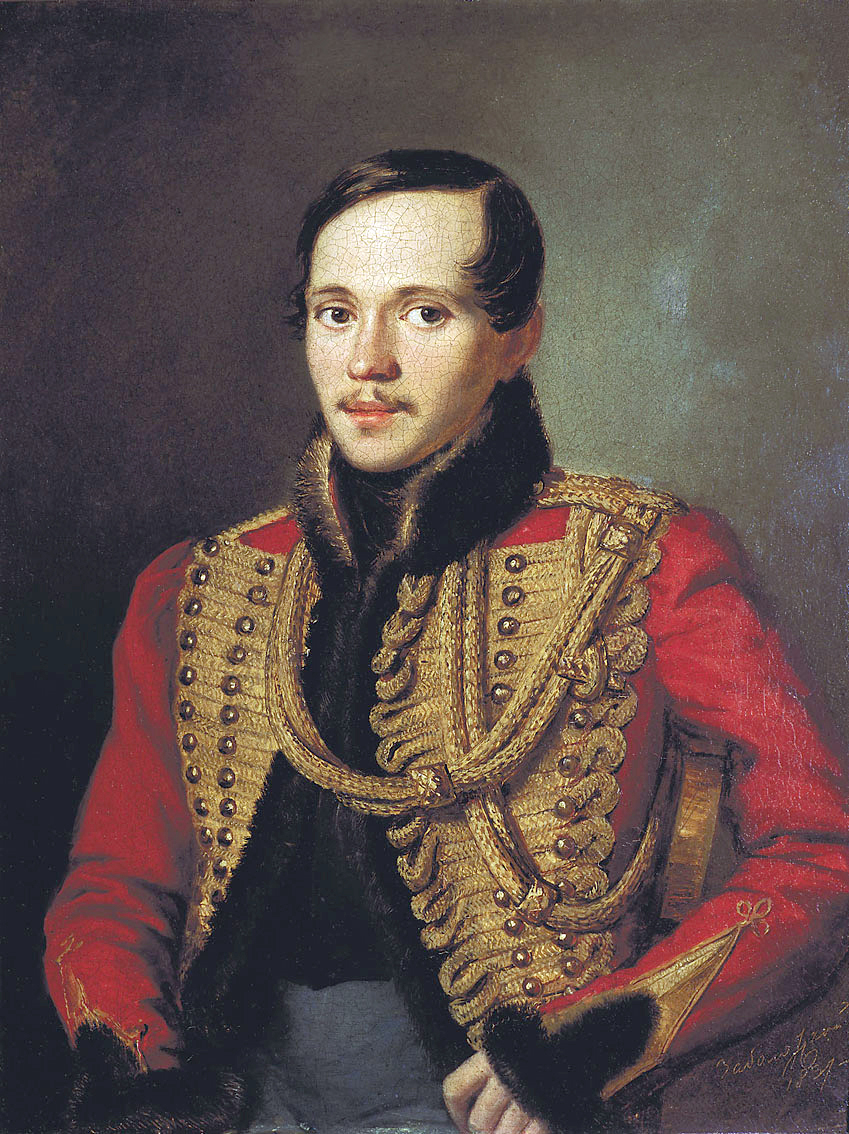
Mikhail Yur'evich Lermontov (1814 - 1841)

The bicentenary next month of Mikhail Yur’evich Lermontov, the great Russian poet, should be marked by a reading or re-reading of his only novel, A Hero of Our Time.

The eponymous hero is the Byronic Pechorin. Cynical, world-weary, bitter and bored, Pechorin represents a literary type known as the ‘superfluous man’, a man, that is, of superior talents, who is yet condemned by the constraints of society and his own lack of purpose to lead a wasted life. The ‘superfluous man’ is a recurrent figure in contemporary Russia literature, the supreme example being Pushkin’s Evgeny Onegin.

Lermontov’s Pechorin is not merely bored but destructive. The novel is as gripping for its romantic locations and dramatic pace as for the psychological unravelling of the hero, whom, in the end, it is impossible to like. Pechorin repeatedly turns away those who would willingly love him: ‘I’m incapable of friendship,’ he says. ‘Of two friends one is always the slave of the other, though often neither will admit it. I can never be a slave, and to command in these circumstances is too exacting, for you have to pretend at the same time. Besides, I have money and servants enough’ (trans. Paul Foote, Penguin edition, 1966, p.100).
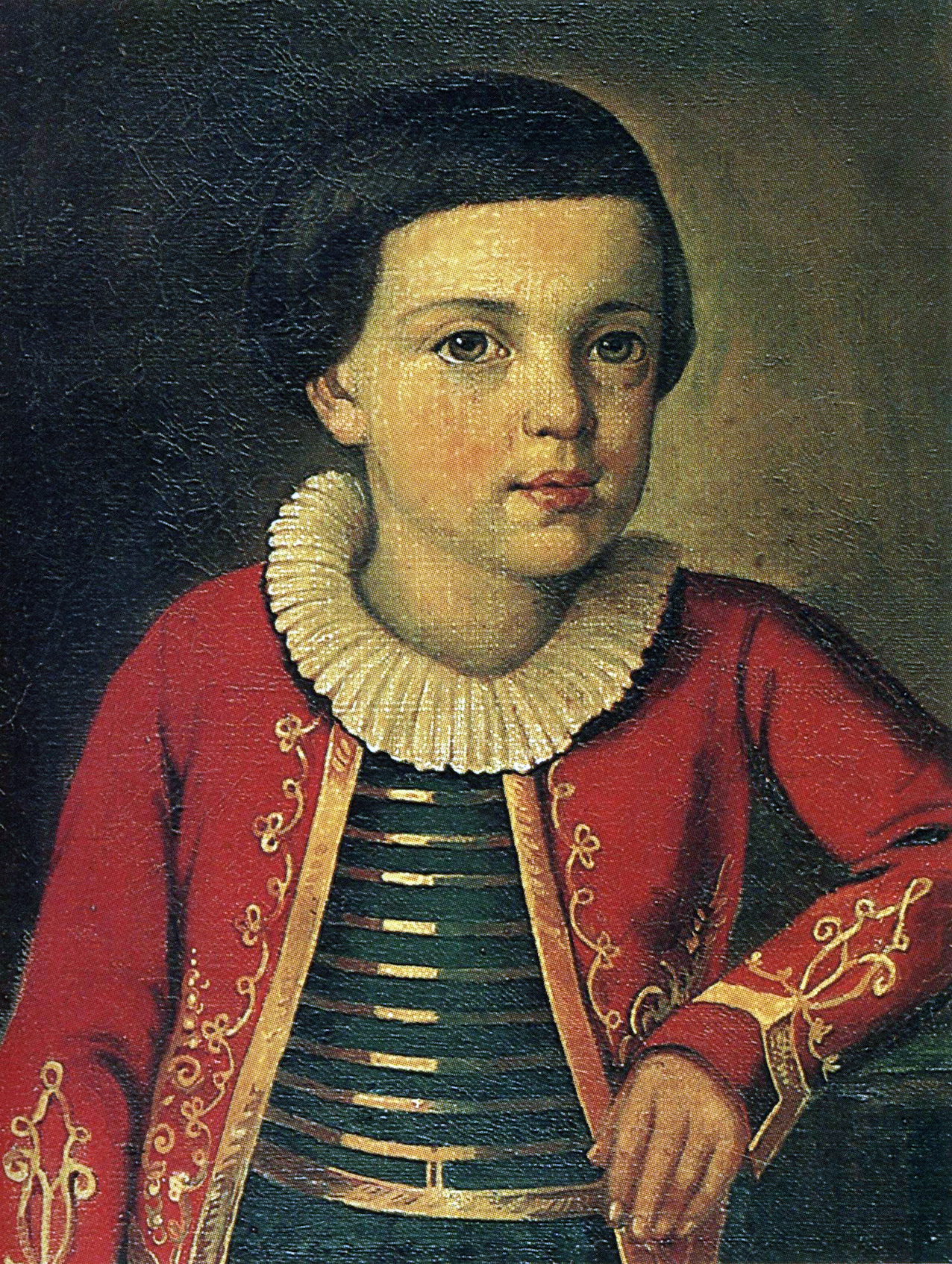
Lermontov aged about 7

While recognising his hero’s ‘malady’, Lermontov is sympathetic to a character who is so clearly modelled on himself. Like Byron, he had been deeply affected by the circumstances of his childhood. His father, Yury Petrovich Lermontov, the head of a minor gentry family, had served in an unfashionable regiment and had retired as a captain. He is said to have been a violent drunk and a womaniser. Lermontov’s mother, Maria, died when he was three and he was brought up by his adoring maternal grandmother, an aristocratic Stolypina. Her late husband, Mikhail Vasil’evich Arseniev, had also served as a captain, but in the Preobrazhensky, the foremost Guards Regiment. Madame Arsenieva considered her son-in-law to be far beneath them and he was kept at a distance.

The Arsenievs were, indeed, a distinguished military family. A distant cousin, Nikolay Dmitrievich Arseniev (1754 – 96), had commanded a column under Suvorov in the assault of Izmail in 1790, for which he is commemorated by Byron in Don Juan (Canto the Eighth, Verse IX) – ‘The columns … though led by Arseniev, that great son of slaughter/As brave as ever faced both bomb and ball’ – lines which young Lermontov was proud to be able to quote in the original. Grandfather Arseniev had, however, bequeathed him his melancholy streak – he had died in 1810 by his own hand, having poisoned himself. The atmosphere was hardly happy, and Lermontov had grown up to be isolated, indulged and introspective.

Commissioned in 1834 into the Guards Hussars Regiment, he had been thrust into St Petersburg society, of which he was sincerely disdainful, as is evident from poems like ‘The First of January’:

‘When the hands of town beauties

Which have long ceased to tremble,

Touch my cold hands with loveless audacity …’
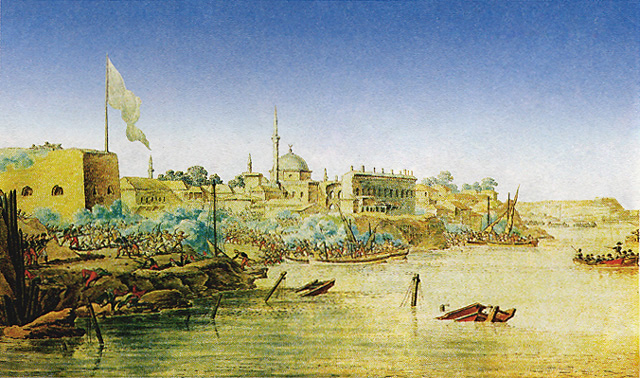
The Siege of Izmail in 1790: Arseniev commanded a column

His failures with women, in contrast to his heroes, Pushkin and Byron, fuelled his pessimism whilst spurring his creativity. Personally somewhat unprepossessing, he was described as bow-legged, with a scowling face and droopy moustache. The conquests of both Pushkin and Byron were legion – Pushkin could even boast that he had slept with a woman, Calypso Polichroni, who had been a mistress of Byron – but Lermontov had only one great love affair, with Varya Lopukhina, the model for Vera in Hero of Our Time. Like Vera, she had ended the relationship in order to marry an older man. Lermontov ‘nursed a bitter grievance and frustration forever thereafter. As a result, it could be argued that his feelings and perceptions about love became more intense than those Byron experienced’ (Laurence Kelly, Lermontov, p.192).

Lermontov clearly felt more at home in the Caucasus, the Russian Empire’s ‘Wild West’, to which, in 1837, he was effectively exiled, having denounced the death of Pushkin as a conspiracy. The impression in Hero of Our Time is of bored officers manning remote outposts, drinking and gambling late into the night, hunting furiously during the day and hoping that they will not be picked off by savage Circassians. Lermontov, however, was enchanted by the mountain scenery and relished the solitude. Perhaps, like Pechorin, he enjoyed dressing up in the splendid local costume and going out for long, lonely rides:

‘I fancy the Cossacks gazing idly from their watch-towers must have puzzled long over the sight of me galloping without cause or purpose, for from my clothes they must have taken me for a Circassian. Actually, I’ve been told that on horseback and in Circassian dress I look more like a Kabardian than many Kabardians themselves. Indeed, when it comes to this noble warrior’s dress, I’m quite a dandy: just the right amount of braid, expensive weapons with a plain finish, the fur on my cap neither too long note too short, close-fitting leggings and boots, a white beshmet and a dark maroon top-coat. I’ve made a long study of how the hillmen sit a horse, and nothing flatters my vanity more than to be admired for my mastery of the Caucasian riding style’ (trans. Foote, p.113).

Much has been made of Lermontov’s distant Scottish ancestry, his descent from a certain George Learmont, a mercenary who had been captured at Mozhaisk in 1618, subsequently transferring his allegiance from the Polish to the Muscovite service. Less has been said of his exotic Asiatic ancestry on his mother’s side. The Arseniev ancestor, Aslan-murza Chelebi, was a Tatar prince of the Golden Horde, an undoubted descendant of Chingis Khan, who had in 1389 also transferred to the Russian service and had accepted baptism, the Grand Prince Dmitry Donskoy himself standing as godfather. The family surname derives from Aslan’s son, Arseny Issup Prokof’evich. It is perhaps no wonder that Lermontov felt at home in the wilds! (Nicolas Ikonnikov, La Noblesse de Russie, Tome A.1 (Paris, 1957) and I.1 (Paris, 1959), Arseniev and Lermontov pedigrees.)
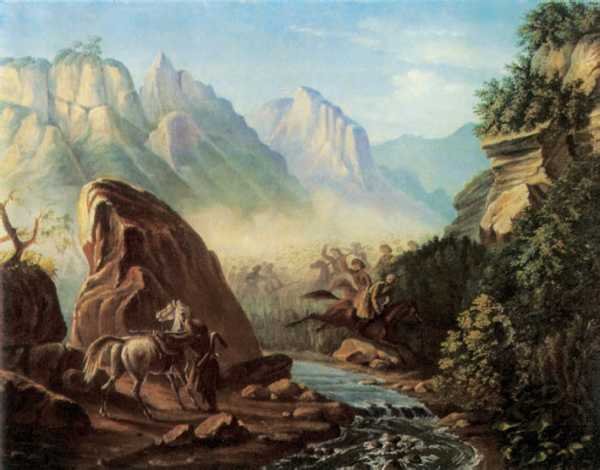
Skirmish in Dagestan, by Lermontov
A Notable Beneficiary of the Norman Conquest: Hugh de Port, Ancestor of the St John Family

September 3rd, 2014

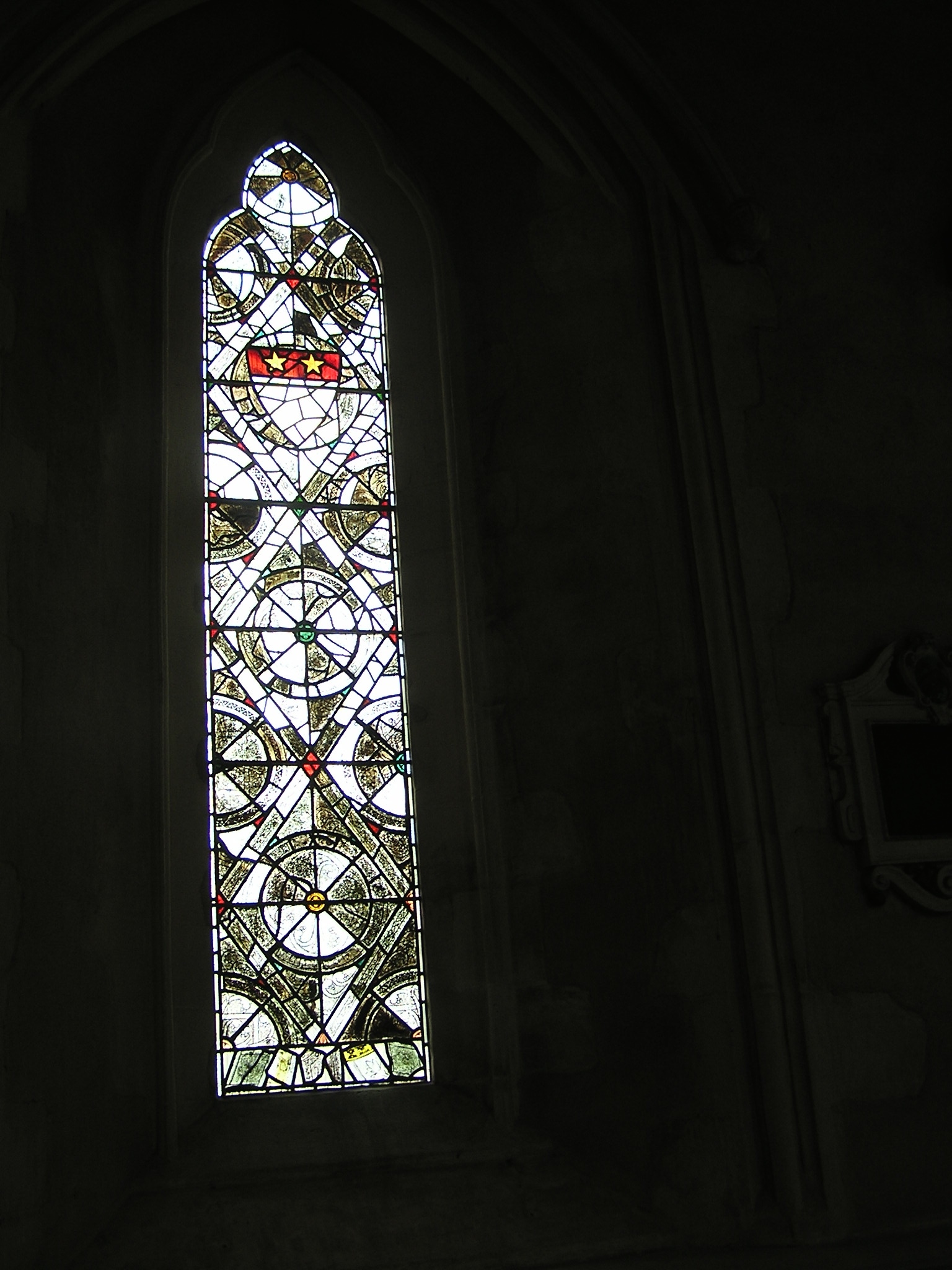
The St John arms in a window of Stanton St John church, Oxfordshire

Alone among noble families, the St Johns (Lords St John of Bletso and Viscounts Bolingbroke) descend from a Domesday tenant-in-chief – a landowner who, in 1086, held his estates directly from the King.

Their male-line ancestor, Hugh de Port, was an obscure Norman knight in the service of Odo, Bishop of Bayeux, the younger half-brother of William the Conqueror, from whom he held a modest three ‘knight’s fees’ – just enough land to support three knights. Hugh was a retainer of sufficient prominence to witness a pre-Conquest charter of Duke William, but it was as a participant in the Conquest of England that his fortunes were transformed.

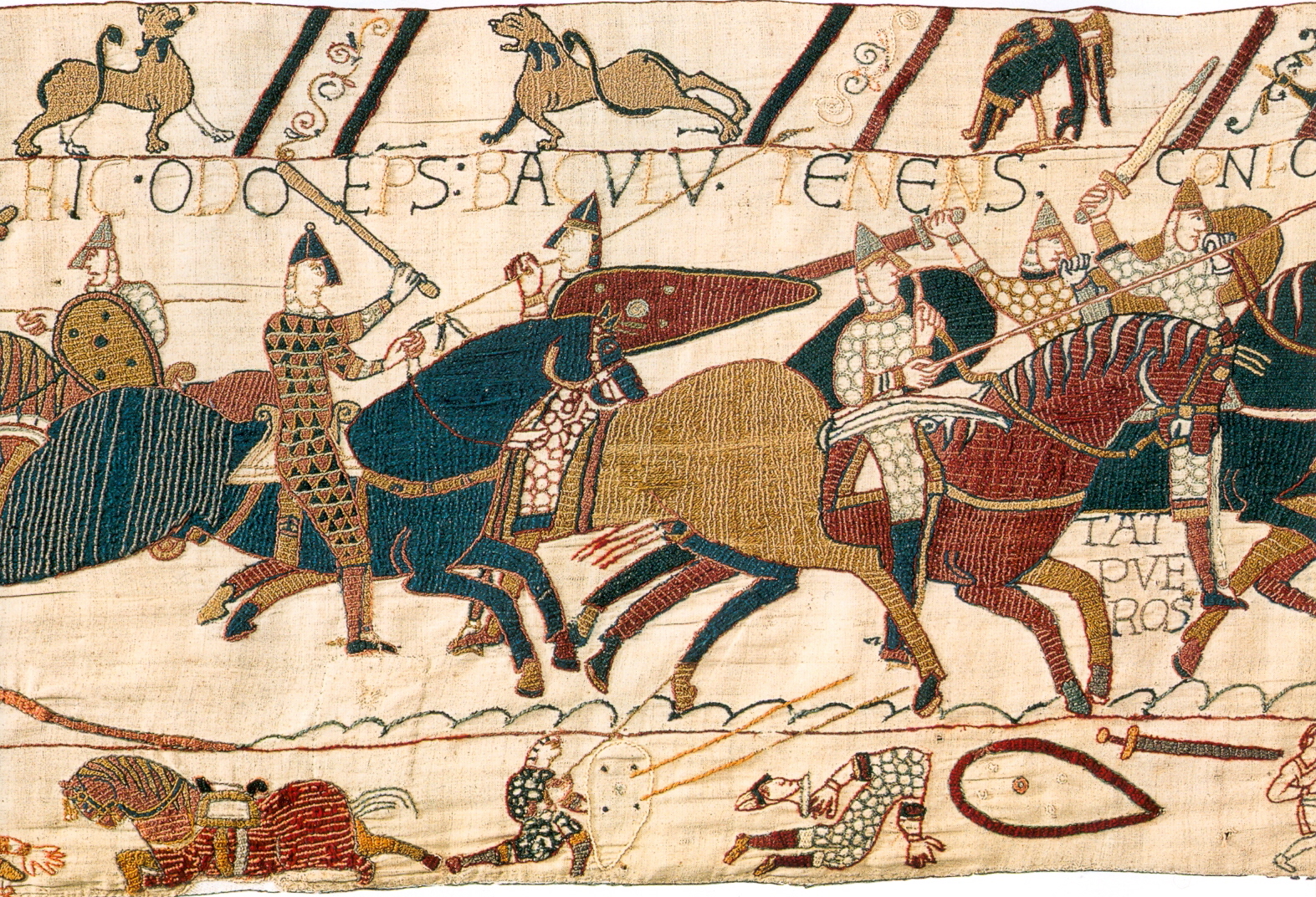
A club-wielding Bishop Odo (second from left) 'cheers on the boys'

Hugh is likely to have held a command under Odo, who assisted at the invasion of England with his own squadron of knights. Not notably pious, Odo was conspicuous on the field of Hastings, ostensibly ‘preparing for the combat with prayers’, but quite probably berating the English with his club and, at a key moment in the battle, re-animating a demoralised contingent of Bretons, an incident that is depicted on the Bayeux Tapestry (‘Here Bishop Odo, holding his club, cheers on the boys’).

Described as ‘a man of eloquence and statesmanship, bountiful and most active in worldly business’, Odo was the outstanding beneficiary of the Norman Conquest, receiving by 1067 the earldom of Kent (comprised of about 200 manors in that county and a further 300 elsewhere, as well as the wardenship of Dover Castle), and sharing with William fitz Osbern the vice-regency of the kingdom during William’s periodic absences abroad.

It is thought that, while in Kent, Odo commissioned the Bayeux Tapestry (decidedly a work of English craftsmanship) as an adornment to his cathedral. There are three depictions of him on the Tapestry, and illustrations also of the knights Wadard and Vital, who appear to have been his retainers. Hugh, their companion-in-arms at Hastings, does not appear, but his accumulation of spoils, hardly less spectacular than that of Odo himself, is a measure of the considerable favour in which he was held.

Sherborne St John, Hants.

In the immediate aftermath of the Conquest, Hugh received from Odo the under-tenancy of thirteen manors in Kent and of a further thirteen in Hampshire, as well as one of the wards of Dover Castle. By the time of the ‘Domesday’ survey (1086), he had acquired an additional fifty-five manors in Hampshire, including Basing, Sherborne and Portsea, as tenant-in-chief – holding them directly of the King – and indeed was the most important lay tenant-in-chief in the county. A scattering of manors in four other counties spread his influence as far as Herefordshire.

In many of these manors Hugh installed his own retainers as sub-tenants, men like Roger of Escures, who has given his name to the village of Nately Scures, near Basing. Escures is three kilometres south of Port-en-Bassin in the Calvados, which was obviously Hugh’s native town.

Hugh had proved himself indispensable to William as much as to Odo. Conspicuously favouring ‘new men’ to give effect to his will, the King made him Sheriff of Hampshire; and in 1085, by which time Odo was in disgrace and languishing in prison, had Hugh beside him when holding court in Normandy.

Hugh was married to a lady called Orence but had become a monk by the time of his death in 1096 – a wise precaution in view of the orgy of killing and expropriation in which he was implicated. His former patron, Odo, also died in that year, having reinvented himself as one of the spiritual leaders of the First Crusade. Hugh’s son Henry and grandson, another Hugh, were the founders of Sherborne Priory on their Hampshire estate and still clung in 1133 to the three knight’s fees in Normandy – Fontenelles, Commes and Létanville, all close to Port-en-Bassin – which they continued to hold of the Bishop of Bayeux.

The younger Hugh’s son, Adam de Port, married Mabel, heiress of Orval and through her mother of the St Johns, another Norman line, originating at Saint-Jean-le-Thomas in the Manche. The family of Port was known thenceforth as ‘St John’. The name still attaching to some of their former holdings, such as Sherborne St John in Hampshire and Stanton St John in Oxfordshire, their memory is indelibly etched on the English landscape.

[Complete Peerage, article ‘St John of Basing’; Lewis C. Loyd, The Origins of Some Anglo-Norman Families (Leeds, 1951), pp.79, 97; David R. Bates, ‘The Character and Career of Odo, Bishop of Bayeux’, Speculum, L (1975), pp.1-20; David C. Douglas, William the Conqueror (London, 1964), p.297; The Gesta Guillelmi of William of Poitiers, ed. R.H.C. Davis and Marjorie Chibnall (Oxford, 1998), pp.124, 164; The Ecclesiastical History of Orderic Vitalis, IV, ed. Marjorie Chibnall (Oxford, 1973), pp.114-18.]

Stanton St John Church, Oxfordshire

A Summer of Wild Swimming at the Parliament Hill Fields Lido, and the Anglo-Saxon Penchant for Tattoos

August 10th, 2014

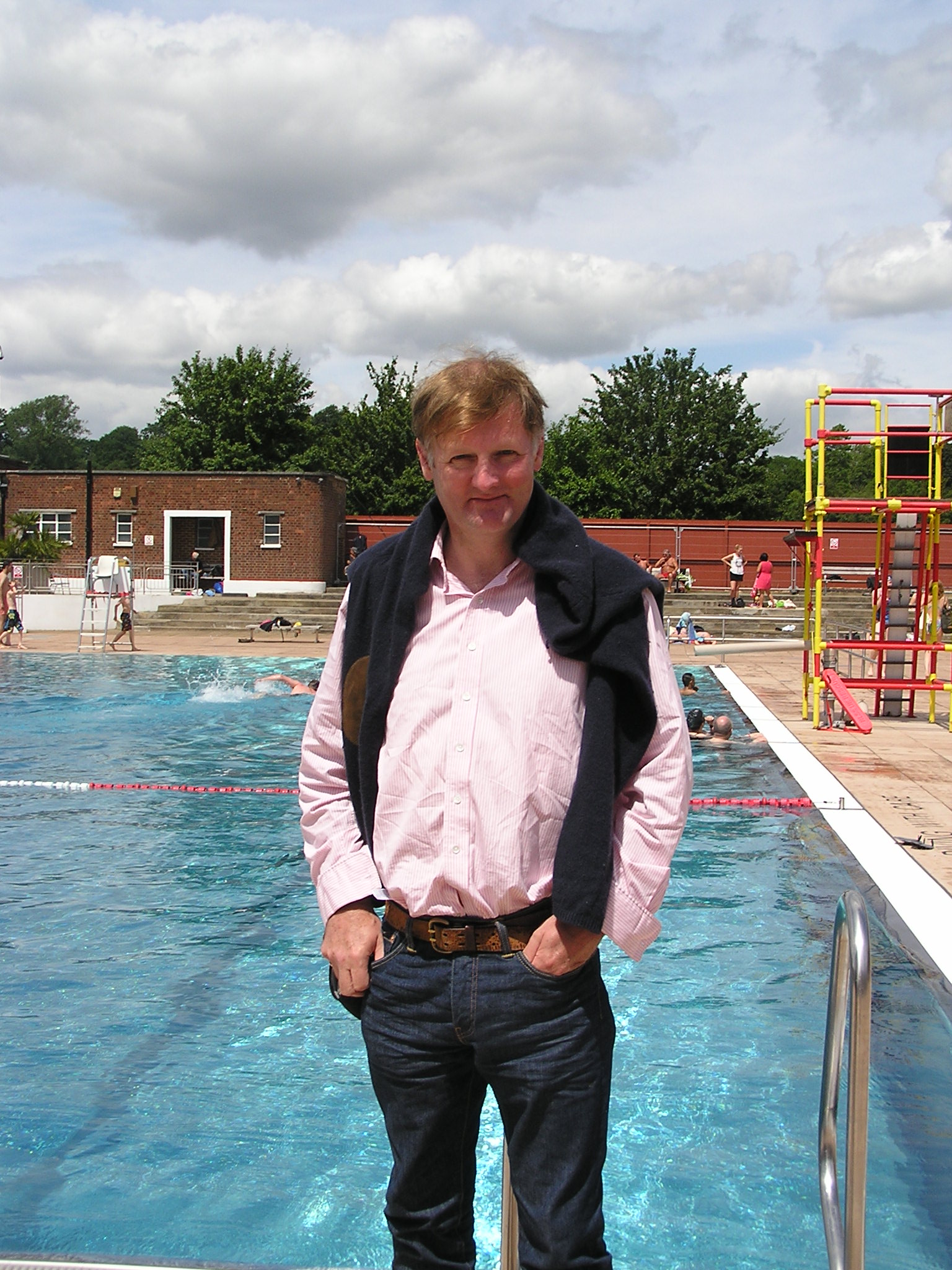
At Parliament Hill Fields Lido: definitely not 'inked'

There has been excellent swimming at the Parliament Hill Fields Lido this summer, especially at the ‘adults only’ sessions in the evening. The 60 x 27 metre uncovered, unheated pool is lined with gleaming metal, so immersion in it is like being cleansed in some giant sink. Roger Deakin (Waterlog, p.306) called it ‘one of the few really great swimming pools left’.

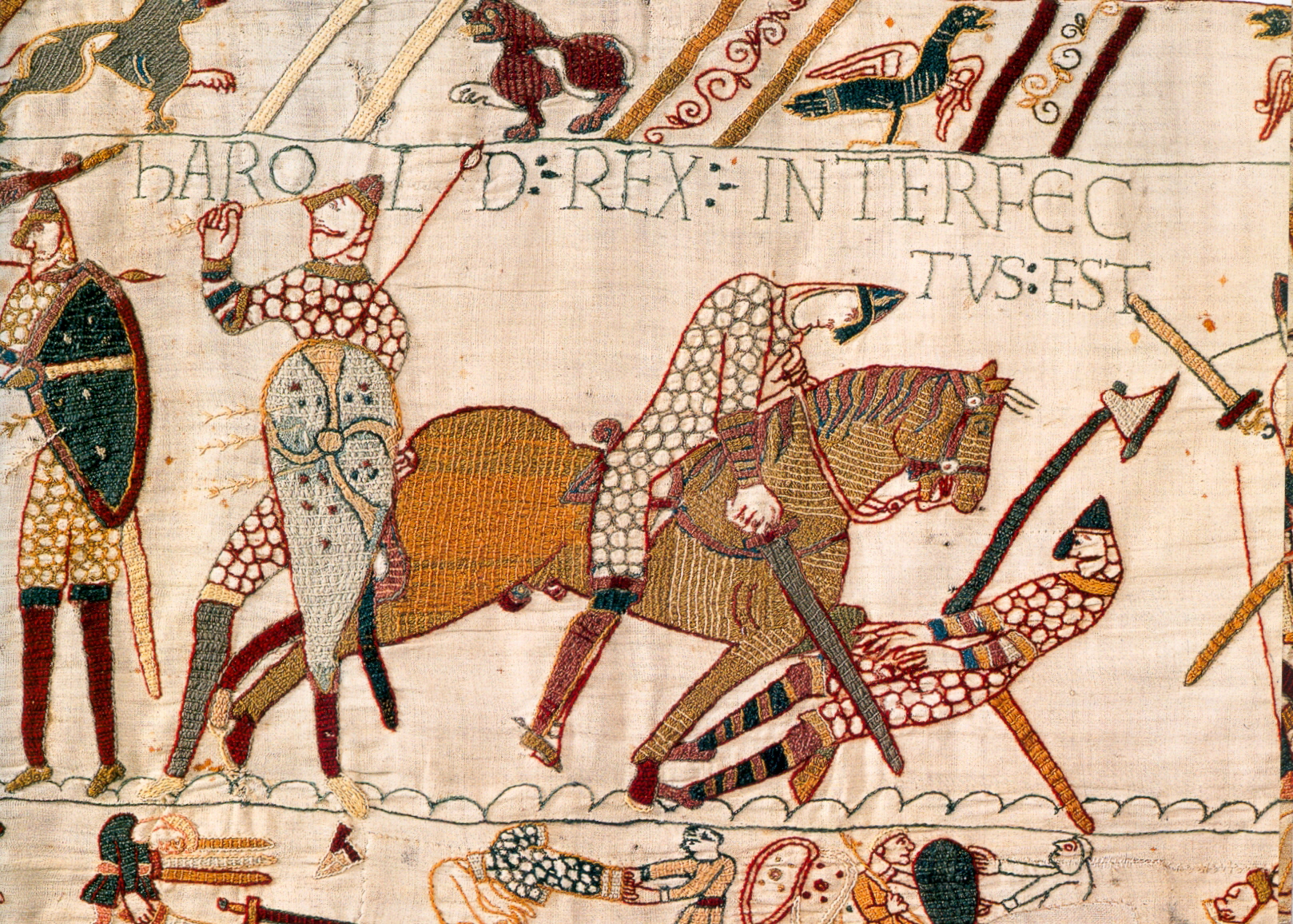
Harold Godwinson: almost certainly 'inked'

This is a popular facility, where it is possible to observe a cross-section of London society in the raw. Users come in all shapes and sizes, with or without tattoos, which are now said to adorn one in every four British adults. The proportion at the Lido seems to be even higher, and it has been interesting to observe them on some quite elderly, and apparently respectable bodies, as well as very youthful ones. My companion and I regard any form of ‘inking’ is a desecration, but I have pointed out to her that they have been in fashion in other periods of our history. The chronicler William of Malmesbury says of the English at the time of the Norman Conquest that they ‘wore short garments, reaching to the mid-knee; they had their hair cropped, their beards shaven, their arms laden with golden bracelets, their skin adorned with punctured designs; they were accustomed to eat till they were sick …’ For William, tattoos were firmly to be associated with the decadence of the age.

I was disappointed when, many years ago, I swam at the original Lido, off Venice, as the beach was crowded and somewhat featureless, and the lagoon is everywhere very shallow. It would have been a wholly unromantic experience, but I had just been reading Mann’s Death in Venice, so felt it to be worth the effort.

St John’s School, Ealing, in the First World War – Tales from the Home Front

June 30th, 2014

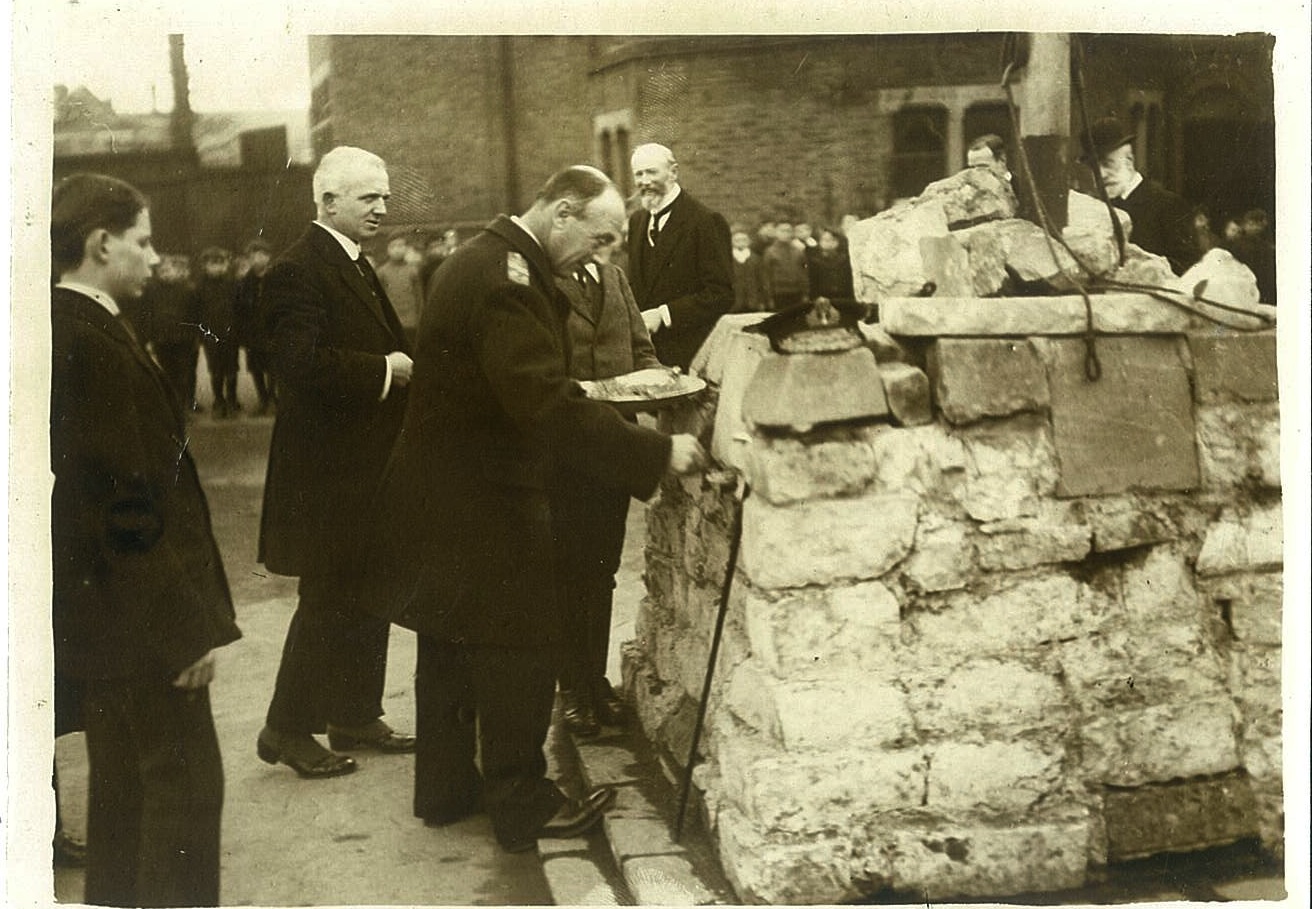
Admiral Lord Jellicoe lays one of the four corner stones of the St John's School War Memorial Cairn, 22 January 1918

The personal archive of Ernest Golledge reveals the effect of the First World War on the life of St John’s Boys’ Elementary School in Ealing, of which he was the inspirational headmaster.

Perhaps the first impact of the war was the departure, on 14 November 1914, of one of its masters, enrolled as an instructor in the ‘New Model Army’. The second was an increased number of visitors in uniform. Adept at attracting ‘celebrities’ into the school – he had even persuaded Shackleton to give a talk there – he soon arranged visits by Lieutenant-Commander Norman Holbrook, V.C. – ‘a real schoolboy’s hero, a man of the sea, sunburnt, jolly and breezy’ – and an old friend, an habitué of the nearby Hendon Aerodrome, Lieutenant Louis Noel of the French Flying Corps.

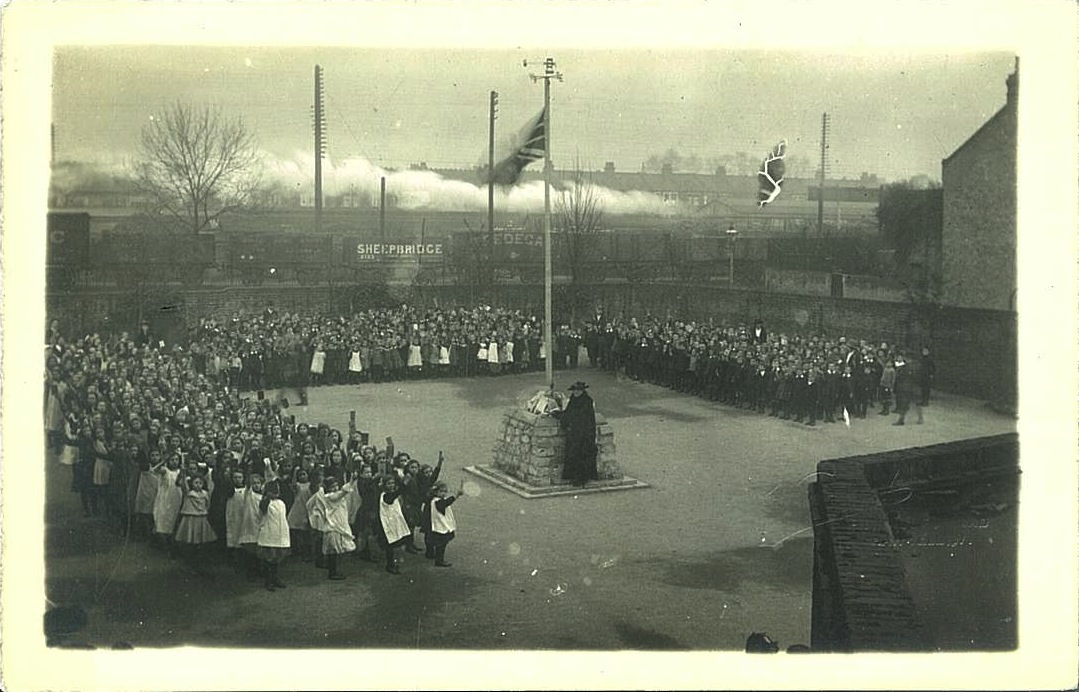
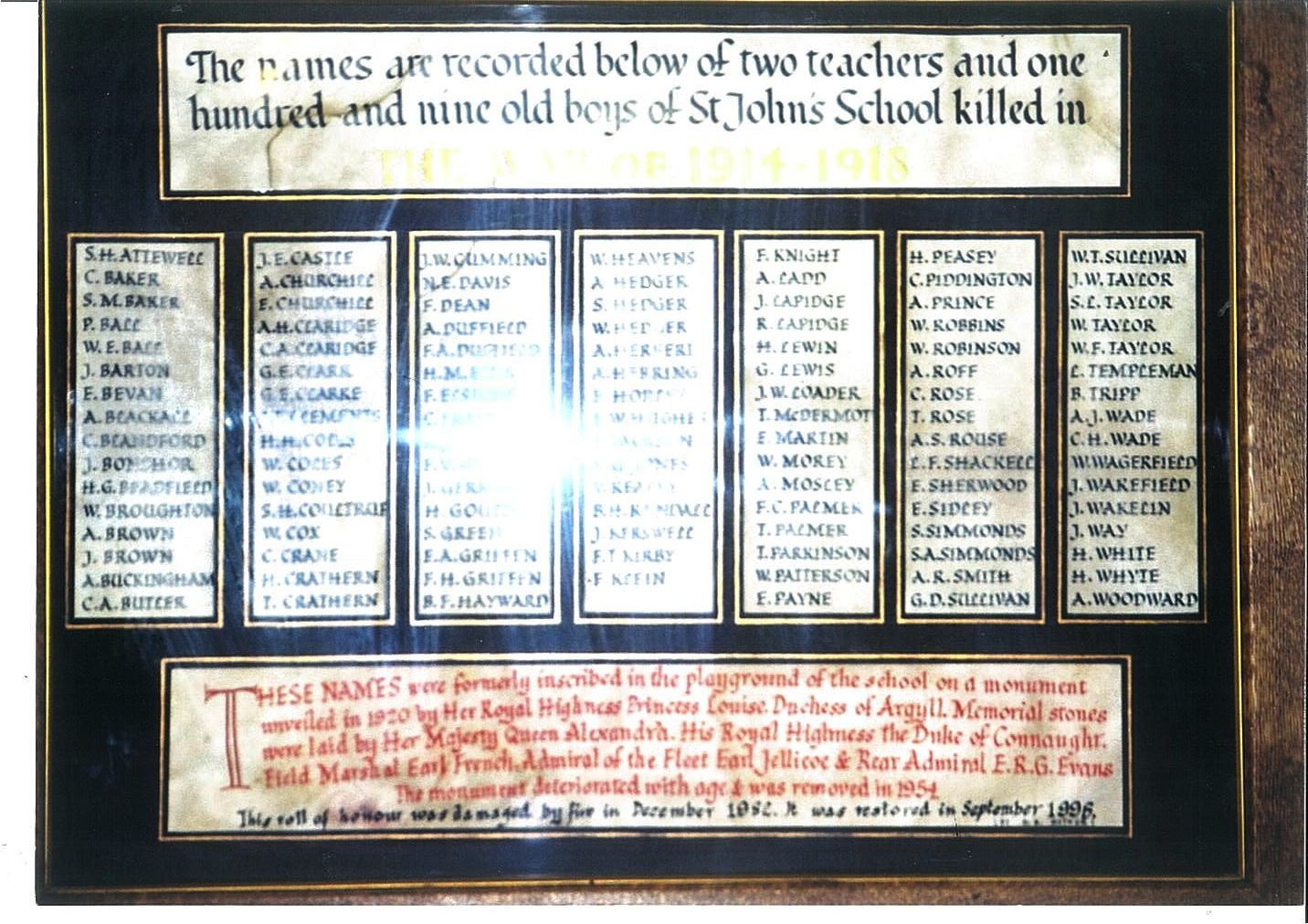
With mounting casualties among old boys, Ernest soon decided to erect a war memorial in the playground, one of the earliest to be raised, and to have some of its stones placed in position by visiting dignitaries. The first of these was the Hon. J.G. Jenkins, late Premier of Australia. Most of the heavy stones had been lifted into place by the boys themselves. A number of wounded soldiers, some with their arms in slings, were on hand to witness the ceremony.

In October 1916, Ernest invited no less a personage than Field Marshal Lord French, commander-in-chief of the British Home Forces, to ‘fix a corner stone on the “Cairn”’. Surprisingly, Lord French was ‘very much inclined to accede to your request’. His visit, postponed till 19 September 1917, despite much badgering from Ernest, lasted a mere ‘quarter of an hour’, during which he pinned the Distinguished Conduct Medal on the chest of a St John’s old boy. Private William Bristow of the Rifle Brigade, whom Ernest described as ‘an average type of boy’, had crawled under German wire entanglement at Armentières to lob a grenade into a crowded trench, and was to spend two and a half years in hospital for his pains.

Princess Louise stands by the unfinished War Memorial. This was probably her first visit to St John's, in 1916

The patriotic Ernest encouraged his boys to invest in the ‘War Loan’, an initiative in which children all over the country were involved. H.R.H. the Princess Louise lent her support and duly visited the school. She returned in the autumn of 1917 with her brother, the Duke of Connaught, who applied ‘a quantity of cement’ to the cairn before unveiling a portrait of Lord Kitchener. In January 1918, it was pointed out in the press that special significance was attached to the four corner stones of the cairn. Three of these had been laid by Lord French, the Duke of Connaught and Lord Jellicoe. Ernest was said to have in mind the Chief of Staff, General Sir William Robertson, to lay the fourth. In the event, it was Haig himself who performed the duty, probably late in 1920.

It is disillusioning to find a far from united home front. Every headmaster was obsessed with attendance figures. With much of the working population away at the front, able-bodied schoolboys were in high demand as workers. As a result, the self-interested tradesmen of Ealing had lured almost a quarter of Ernest’s boys from their classrooms – illegally – and, by December 1916, he was barely managing to hold the school together. A cynical, or pragmatic Mayor had instructed the attendance officer to turn a blind eye to the ‘wholesale employment of boys – as errand boys’, which had eventually reduced the school roll by nearly a quarter.

A lack of sufficient fuel that winter, an exceptionally harsh one, would hardly have helped. On 5 February 1917 the temperature in the unheated classrooms fell below freezing. The only option for the shivering boys was a lesson in ‘Drill’. Ernest caught a ‘severe chill’, as did ‘several of the teachers’ and ‘many of the children’. Such conditions were not just to be endured for a single day, but for weeks on end. ‘No fires in afternoon and no coal although plenty on order. Secretary informed.’ There is little sense of a community pulling together in adversity. Ernest seems almost to have been abandoned by the school managers, the local authority and by the townsfolk in general. Thefts at the school – of an umbrella, coats and Ernest’s own bicycle – were a further irritant.

In addition, there was the general disruption that came from being in a state of war. On 3 October 1917, pupils on their way back to school after dinner were sent home by police because of an air-raid warning, a Zeppelin looming overhead. In January, Ernest logs the endless queuing for provisions in the open air as a cause of increased illness among the children.

The unfolding national tragedy of course added to the sense of gloom. Ernest was intensely proud of the part played by his staff and old boys in the war effort. By the end of the war, no fewer than 475 former pupils had visited St John’s in khaki, an astonishing indication of their loyalty to him and the school. Ernest made active interventions on behalf of his pupils, for example recommending suitable candidates to the newly-formed Royal Flying Corps. He also kept a tally of the school’s ‘War Honours’. These would eventually amount to a Military Cross, three Distinguished Conduct Medals, eight Military Medals and two mentions in dispatches. Ernest preserved the stories of many of them in a scrapbook.

Of all the stories from the war, none is more poignant and striking than that of an old boy, Blake, who visited the school on 3 March 1916. Giving the boys ‘a very interesting account of his experiences in “Suvla Bay”,’ Blake ‘pathetically told how he and another old boy – Keeley – had just been talking about the “old school” when a shell burst over them and when he came to himself (unhurt) he saw poor Keeley lying “blown to pieces”. N.B. both lads were under 18 years of age.’

Blake, whose head must have been ringing from the blast, told the boys that his eye was caught by a piece of paper that was fluttering on the ground in front of him. He had picked it up and examined it. Then he remembered that Kealey (Ernest misspells the name) had had it in his hand when the shell had struck. It was a photograph of the school-yard at St John’s. Blake had brought it with him to show the boys.

Blake was again on parade at the school, as a police constable, on Empire Day 1924, when Princess Louise, by now a firm admirer of Ernest Golledge, presented him with the Police Medal. Bemused, if not reluctant heroes, the poor, undernourished, often lice-infested boys of St John’s School, many of whom had never seen the sea or even been to London, had learned much from their magnificent headmaster about ‘playing the game’.

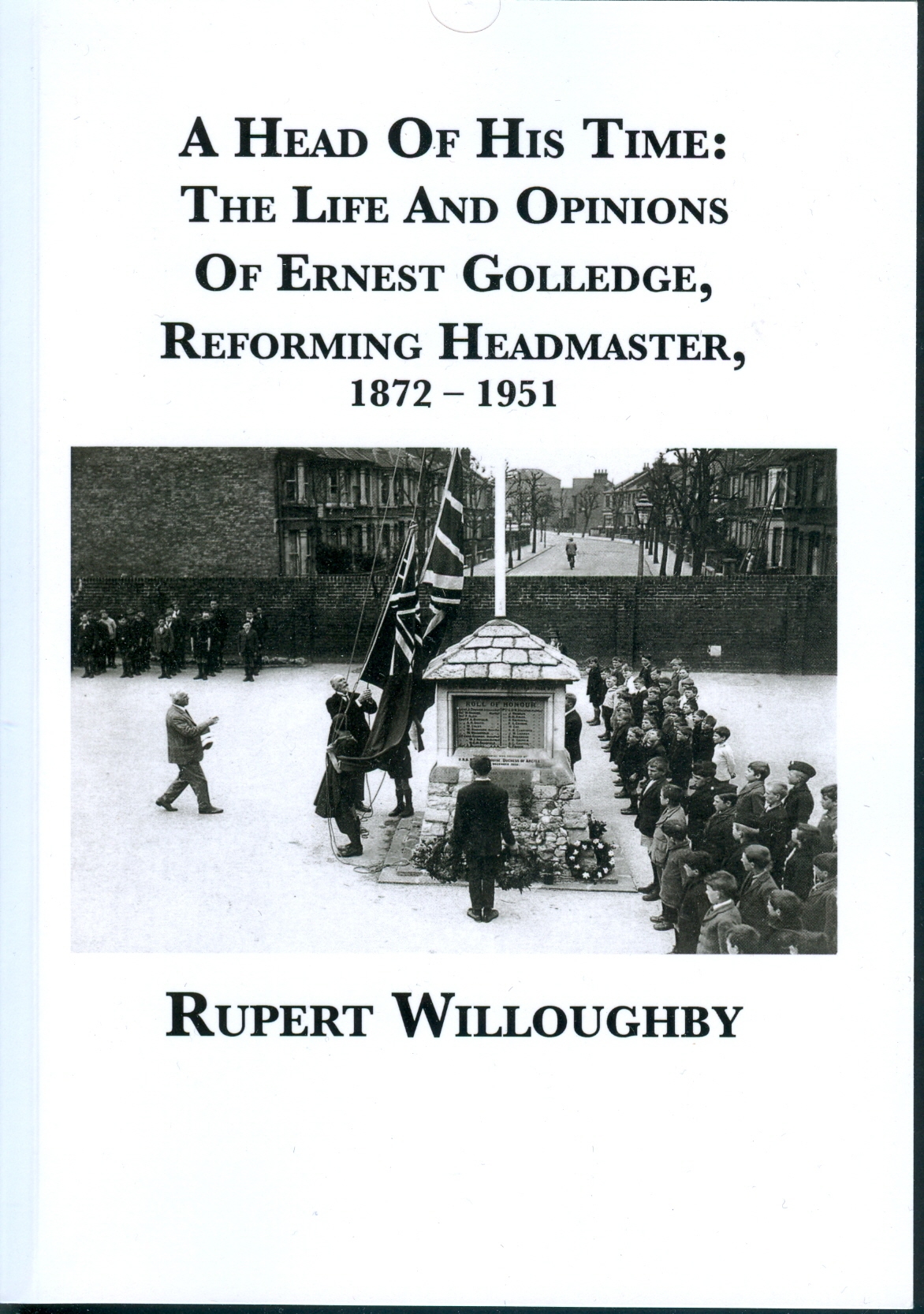
On Golledge, see also http://www.rupertwilloughby.co.uk/gleanings/ernest-golledge-headmaster-of-st-john’s-school-ealing-and-the-visits-of-the-antarctic-explorers-ernest-shackleton-teddy-evans-and-frank-wild/. For a full account of St John’s School, Ealing, during the First World War, see Rupert Willoughby, A Head of his Time: The Life and Opinions of Ernest Golledge, Reforming Headmaster, 1872 – 1951.


What Became of Madame Kolychko (née Princess Varvara Sergeevna Obolenskaya)?

June 26th, 2014

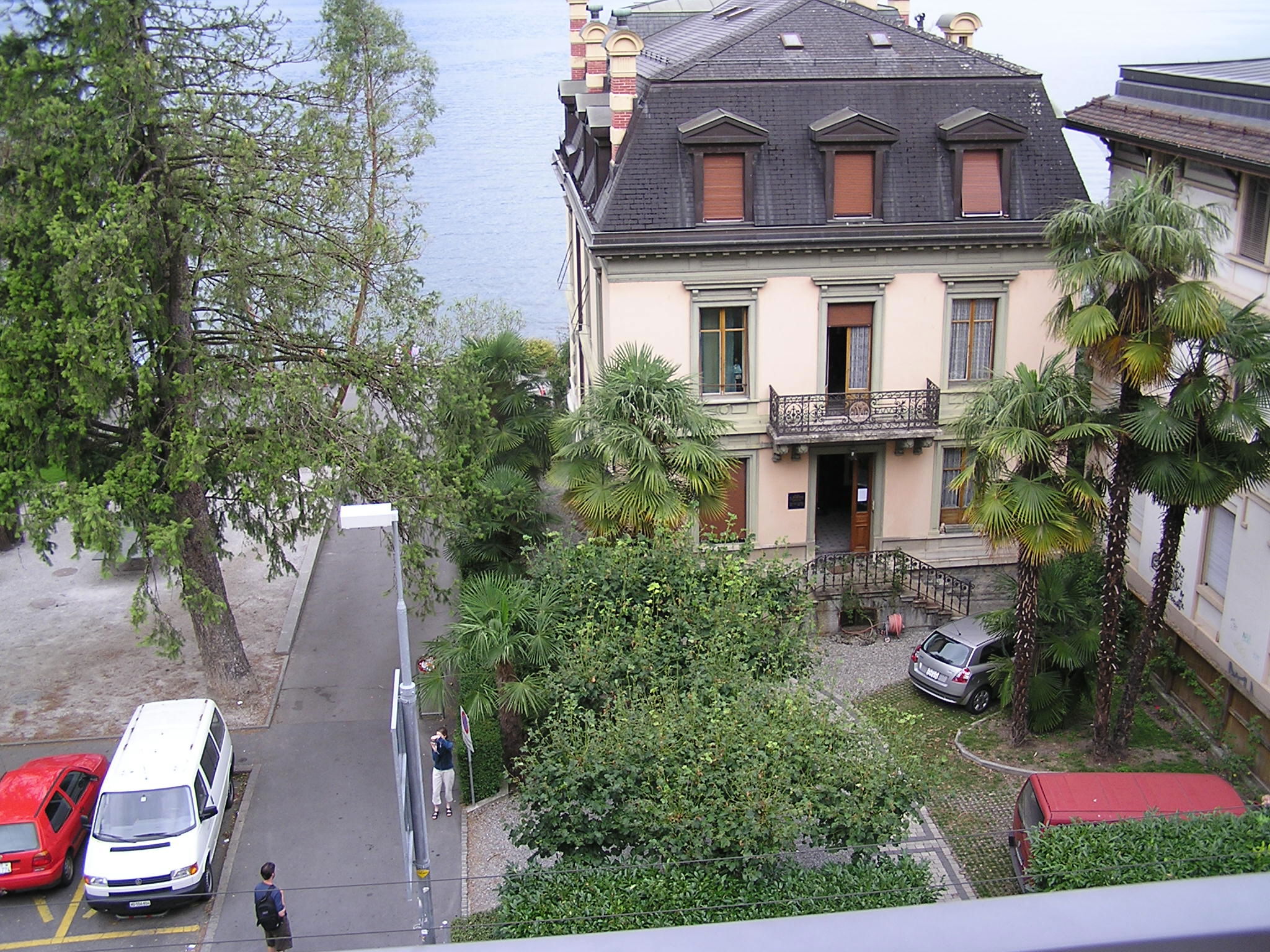
View of the Villa Monney, Montreux, from Lindsay Hall's third-floor bedroom at the Hotel Suisse. His friends, the Faletans, would try to lure him down from their balcony

At 8 o’clock on 1 January 1897, a merry, cosmopolitan party of fourteen adults and children sat down to dinner. The gathering took place at the Villa Monney, Montreux, overlooking the Lake of Geneva.

Gorgeously set against a mountain backdrop, Montreux at that time was a favourite resort of Europe’s élite. Alexandre Dumas père had called it ‘an international playground snipped off from France, Germany and Italy’. It had a casino – the Kursaal – a public park, numerous grand hotels, a railway station and a quay from which steamers regularly plied to various points around the lake. The romantic Château de Chillon nearby had been celebrated by Byron in one of his most famous poems.

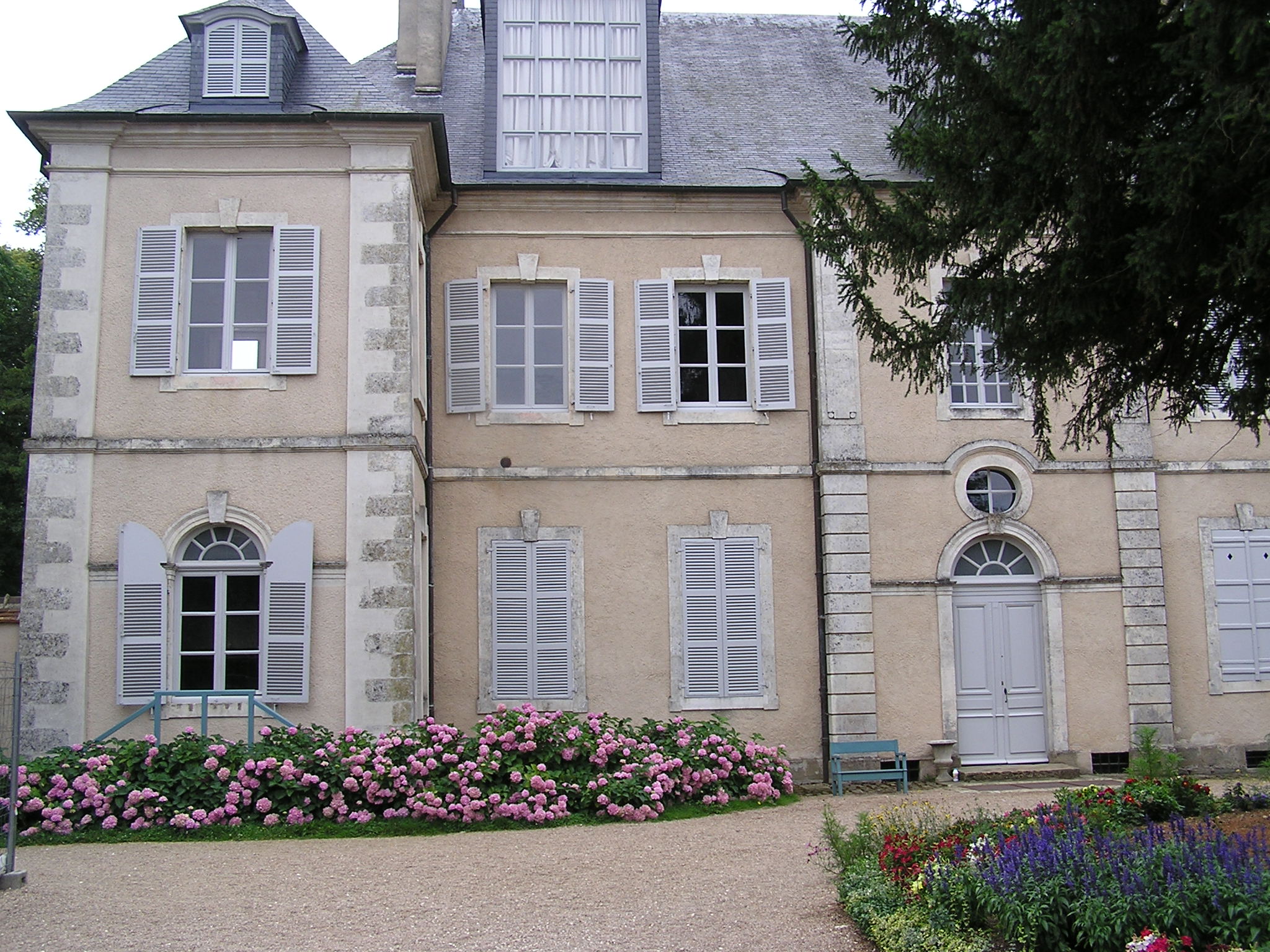
In the heart of the town, the Villa Monney was the temporary base of a noble French family, consisting of the Marquis Nicolas de Faletans, a splendid, blond, moustachioed giant from the Franche-Comté; his petite Russian wife, Olga; and their pretty, teenaged daughters, Nicole and Simone.

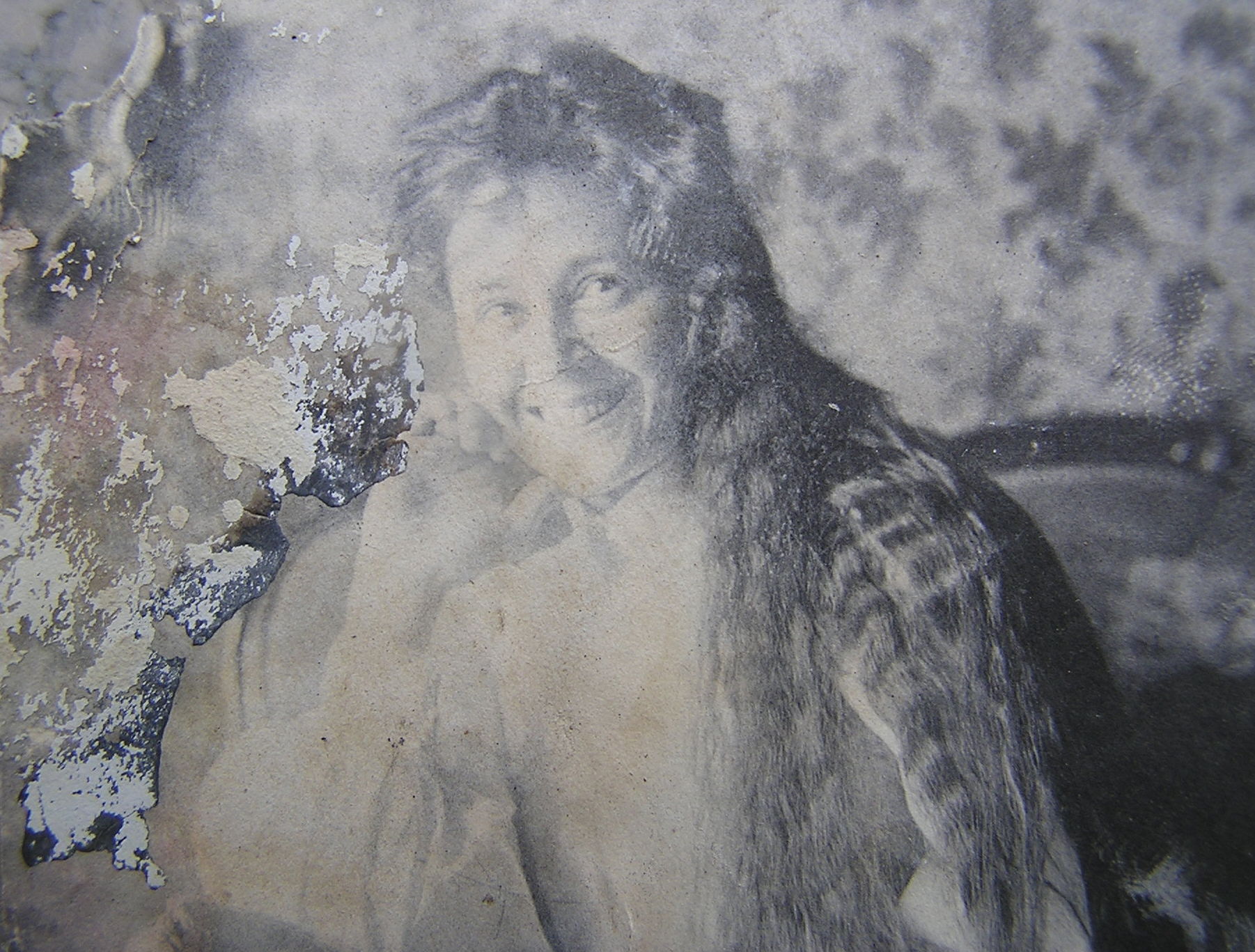
Madame Kolychko, Villa Monney, 1897

The family had forsaken their other homes, including the Château de Faletans, near Dole, for reasons of economy. The extravagant Marquis seemed to lurch from one financial crisis to another – and Switzerland was a remarkably cheap country in which to live in those days.

The hospitable Faletans had invited their close friend, Madame Kolychko, to spend that winter with them at the villa. Born Princess Varvara Sergeevna Obolenskaya in 1862 or 3, she was amicably separated, after twelve years of marriage, from Iosif Iosifovich Kolychko. Her father’s estate in Russia, Mindukino, had been sold, her mother (re-married to an Italian, Albert Rey) lived in Milan, and Madame Kolychko herself divided her time between various European cities, including St Petersburg, always accompanied by her nine-year-old son, Boris, and his governess.

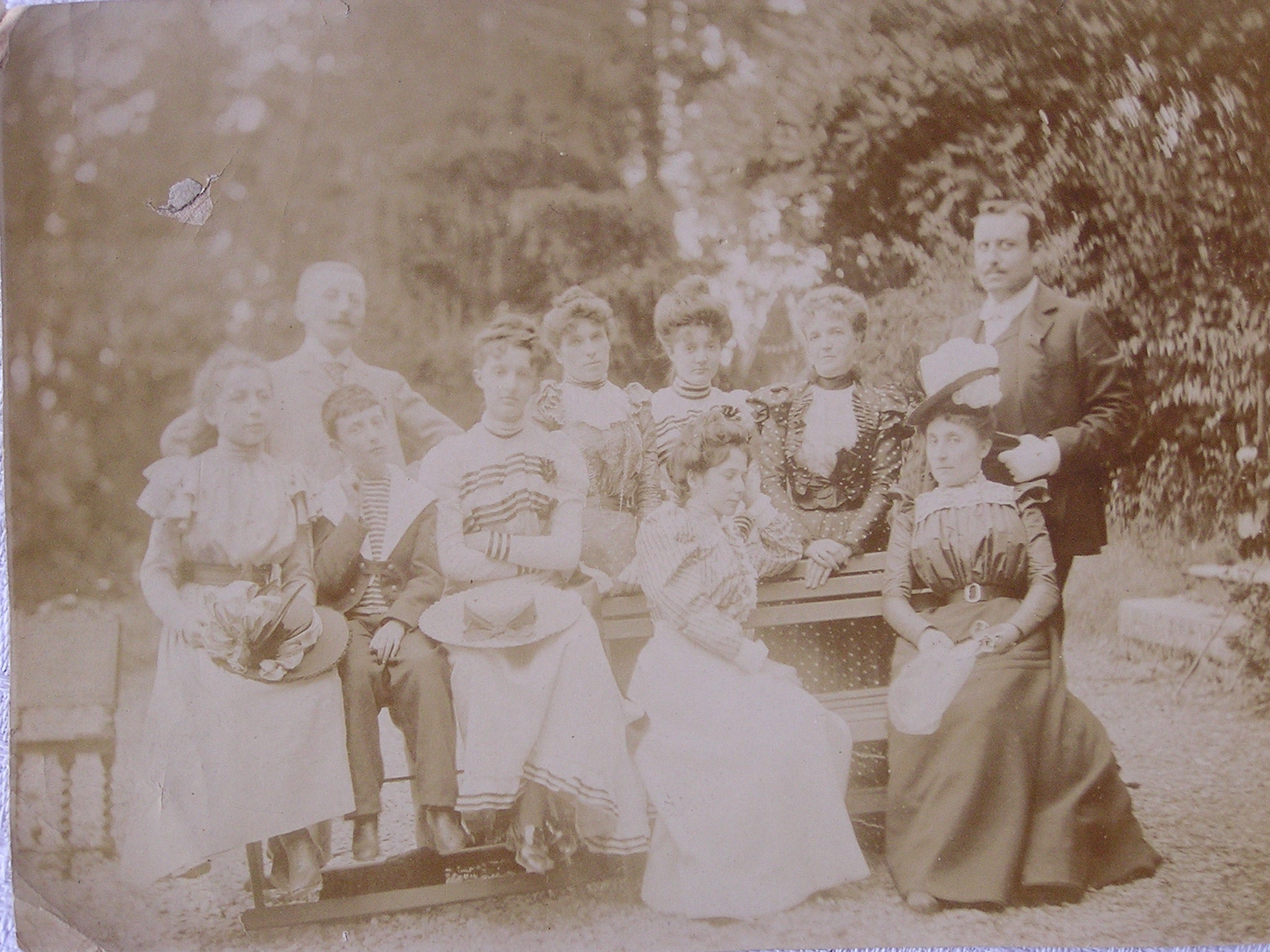
An enchanting woman, with the sort of looks that caused people to stop and stare in the streets, Madame Kolychko dressed beautifully, was graceful in her every step and movement, had a splendid voice and liked to sing Russian folksongs, accompanying herself on the guitar. She also had a very sweet nature. In the privacy of the villa, she was wont to release her long, fair curls and, in such a state of undress, even consented to be photographed, grinning shyly into the camera.

It is fortunate that the Marquis was a keen amateur photographer. Such informal photographs are very rare from this period. I rescued this one from the damp attic of a country house in France. Despite the damage, it conveys a clear idea of Madame Kolychko’s exceptional looks and personality.

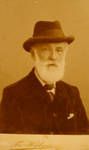
Lindsay Hall

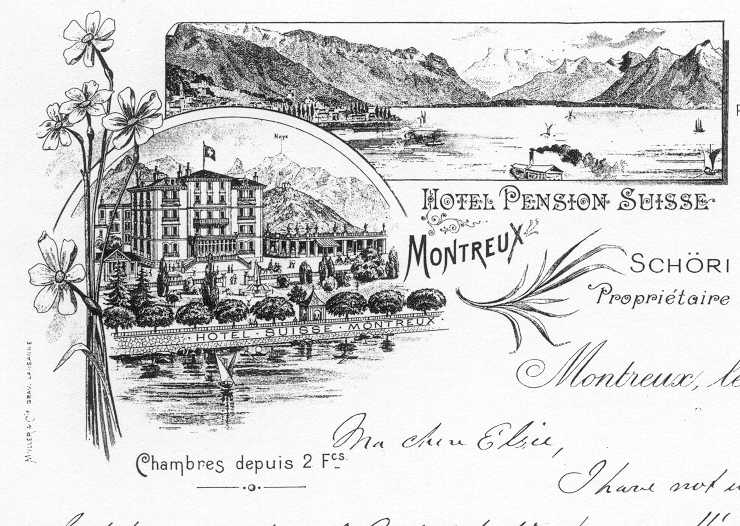
A solitary Englishman was present at dinner that evening. With his distinctive white beard and black velvet coat, Lindsay Hall was a familiar and much-loved figure in Montreux. A retired cotton-broker from Liverpool, Hall resided permanently at the Hôtel Suisse, one of Montreux’s foremost hotels, which towered over the rear of the Villa Monney and had a garden stretching down to the lake.

The Faletans had befriended Hall on his first arriving at Montreux, in March 1896, they themselves having been in residence since the previous September. The Marquis had attempted to photograph his daily ritual which was to feed the birds, a frantic flurry of squawking seagulls and swans, from the garden wall of the lake. Hall would happily entertain young Nicole and Simone and Boris for hours in the garden. Luckily, the foreigners all spoke good English, as Hall himself was no linguist.

Hall had embarked at Montreux on a most delightful new life. He had discovered, apparently for the first time, that he had a remarkable gift for friendship. Owing to some indefinable quality, this slight, unassuming old man was simply adored by men and women of every age and nationality.

He seems to have been a joyous companion, endlessly fascinated by other people, concerned for their well-being and determined to bring happiness to their lives. They universally responded with affection and even utter devotion.

Detail from one of Hall's letters to his daughter-in-law Elsie

The Faletans, who were a kind and unstuffy family, had taken him under their wing and introduced him to all the élite of Montreux. He spent most of every day with them, escorting them to the daily concerts at the Kursaal and then to afternoon tea at the Tennis Club in Territet, and, on summer evenings, sitting up late with them in the hotel garden.

Hall was virtually a pauper, yet he lived in great comfort at the hotel, for the cost of living in Switzerland in those days was, indeed, remarkably low. Lindsay Hall, who survived on ‘less than £100 a year’, hardly exaggerated when he said it was about a tenth of what it was in England.

He had a bright little bedroom on the un-electrified third floor, looking directly onto the Villa Monney. Often he would see his friends the Faletans on the balcony, beckoning to him to come down, or pointing to the lake if an excursion was planned.

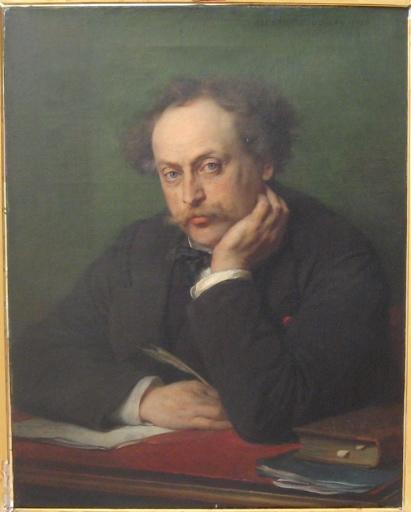
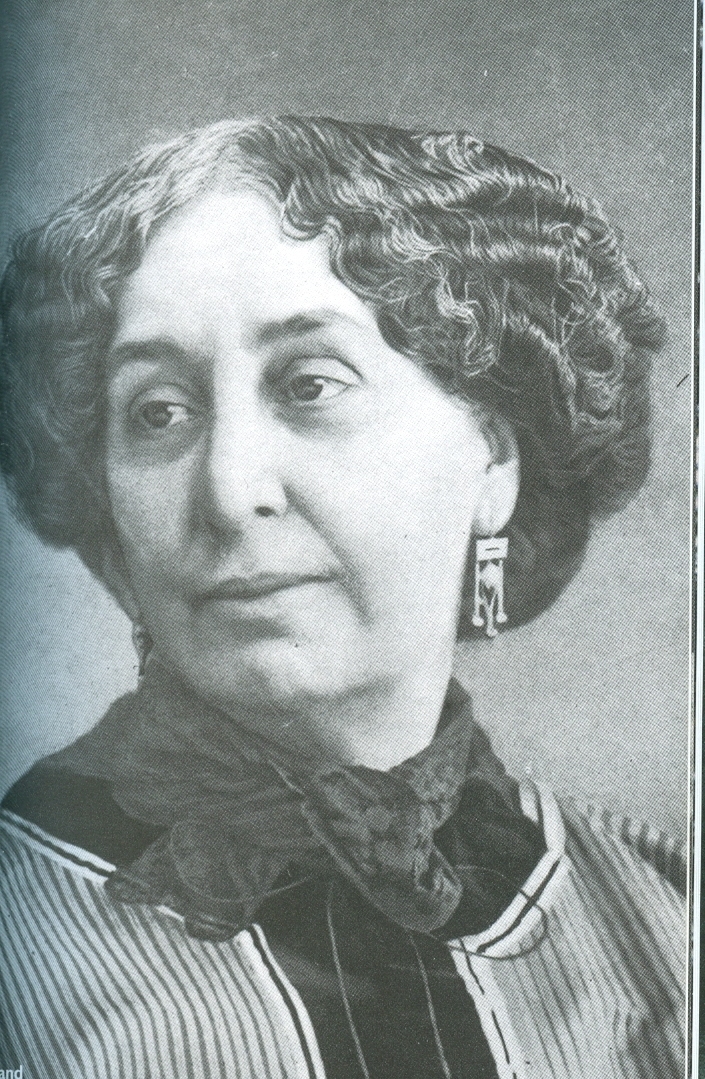
He was somewhat torn between his devotion to Olga and to Madame Kolychko, whom he called ‘the princess’. The ladies seem to have competed good-humouredly for his time and affection. At that memorable New Year’s dinner party, he was favourably seated between them. They courteously spoke only in English, whilst he ‘amused them at times to screaming laughter by my attempts at French humour, but they say I am much improving’. Among the other guests were Jeanne Daudet – the adored granddaughter of Victor Hugo, daughter-in-law of the novelist Alphonse Daudet and ex-wife of the journalist Léon (to whom Proust was to dedicate Le Côté de Guermantes) – and Jeannine d’Hauterive, daughter of Alexandre Dumas fils. Hall observed the ‘different ways & manners’ with fascination.

Through a fog of cigar smoke, the Marquis told the men of his work in Belgium, which accounted for his frequent absences. He was an inventor, specialising in armaments, He had already secured a significant contract to modify the rifles of the Russian army, and was now looking for similar contracts elsewhere. He travelled all over Europe and was often in Russia, where he had held a post at the Embassy.

Hall, who struggled to keep up with conversations of this sort, had a merry time instead with the women. Young Nicole, excitedly and in stuttering English, embarked on some elaborate story about a dog. Apparently it had belonged to Madame Daudet’s grandfather, Victor Hugo. It was a poodle – not a toy poodle, a proper one, bred for hunting – and had become a nuisance to its master, requiring constant attention. On a whim, he had given the dog to Nicole’s Papa, who had taken it with him to Russia, but one day the dog had vanished and then a month later had turned up in Paris in a terrible state, barking feebly at its master’s door. No one could explain how it had made such a journey in so short a time, or how it had found its way. Madame Daudet had smiled and nodded in verification of the tale. She had known the dog and had grown up with it in her grandfather’s house on Guernsey, for Hugo had been deeply moved by its devotion and had sworn never to be parted from it again.

Neither Madame de Faletans nor Madame Kolychko could have predicted how involved they would both become with Lindsay Hall. Was he in love with them, and why did they find him so appealing? I suspect that both women, neglected by their husbands, were flattered by his attention, his willingness to listen to them and notice them, without ever feeling challenged sexually (Hall was in his late sixties and a very proper Victorian). Hall may have wished it were otherwise, but a barrier of formality seems always to have been maintained, apart from some mild flirting.

The picture reproduced here is marked in pencil on the back: ‘Madame Kolychko, Villa Monney, 1897’. I am unable to identify her positively in any other photograph. According to the Obolensky family genealogy, she survived Lindsay Hall by 46 years, dying on 18 March 1956, aged 93. I have no further information about her long life, nor do I know what became of her son, Boris Iosifovich Kolychko. One hopes that he survived the twin calamities of the Great War and the Russian Revolution. It would be sad to think that nothing of Madame Kolychko, who made such an impression on contemporaries, had outlived her, not even a memory. I hope that I, in telling her story, have provided a fitting memorial.

[See Nicolas Ikonnikov, La Noblesse de Russie, Tome K.2 (Paris, 1960), ‘Les princes Obolensky’, no.261. Comments and further information will be gratefully received at RupertWilloughby@btinternet.com.]

A Montreux group. Madame de Faletans is second from right at the back. Her daughter Nicole is next to her, whilst Simone is seated at the front, third from left. Madame Kolychko may be the woman seated next to her, fourth from left

Men in Spats – or Johnny Depp and his Gay Diablerie

June 21st, 2014

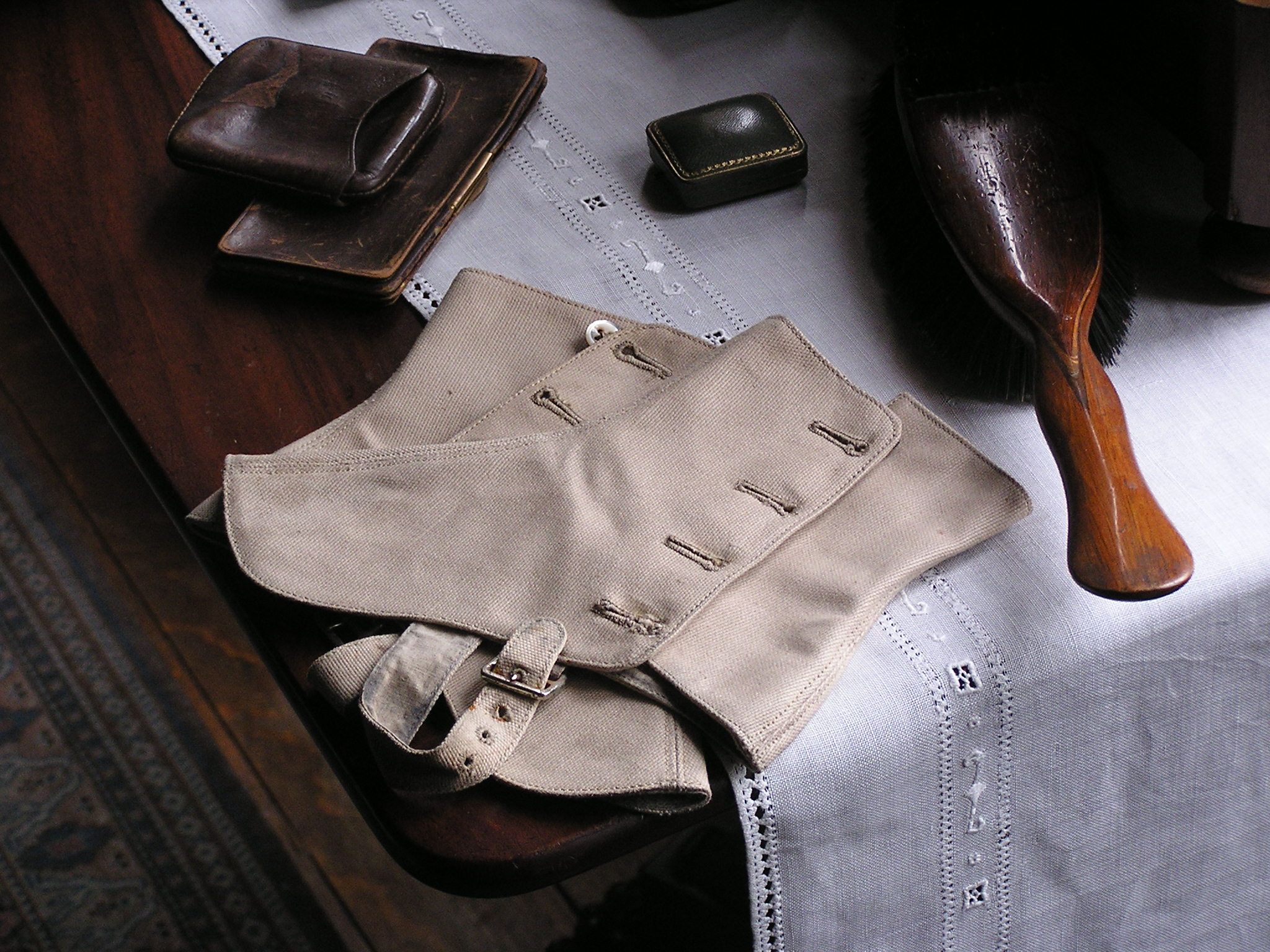
Tommy Agar-Robartes's dressing table at Lanhydrock, complete with spats

Leafing through a recent edition of Hello Magazine (19 May 2014), I was struck by a picture of Johnny Depp, the distinguished tragedian, attending the ‘Met Ball’ in New York in white tie and tails, with white gloves, watch-chain, a silver-topped cane and spats. It was the spats that most intrigued me, as they are so seldom worn these days.

The other day, I went into a shop in Bloomsbury that specialised in vintage-style clothing. It was crammed with three-piece Harris Tweed suits, boaters and panamas, woollen ties and braces. There was a Penny Farthing parked outside. Yet the nattily-dressed assistant had never heard of spats.

Allow me to put him straight. Spats, short for ‘spatterdashes’, originated as military garments, and are still worn by pipers in the British army. In the late-nineteenth and early-twentieth centuries, however, they were much in vogue, both in America and Europe, as stylish civilian wear for gentlemen:

Have you seen the well-to-do

Up and down Park Avenue

On that famous thoroughfare

With their noses in the air

High hats and arrowed collars

Wide spats and lots of dollars

Spending every dime

For a wonderful time

[Irving Berlin, Puttin’ on the Ritz, 1930]

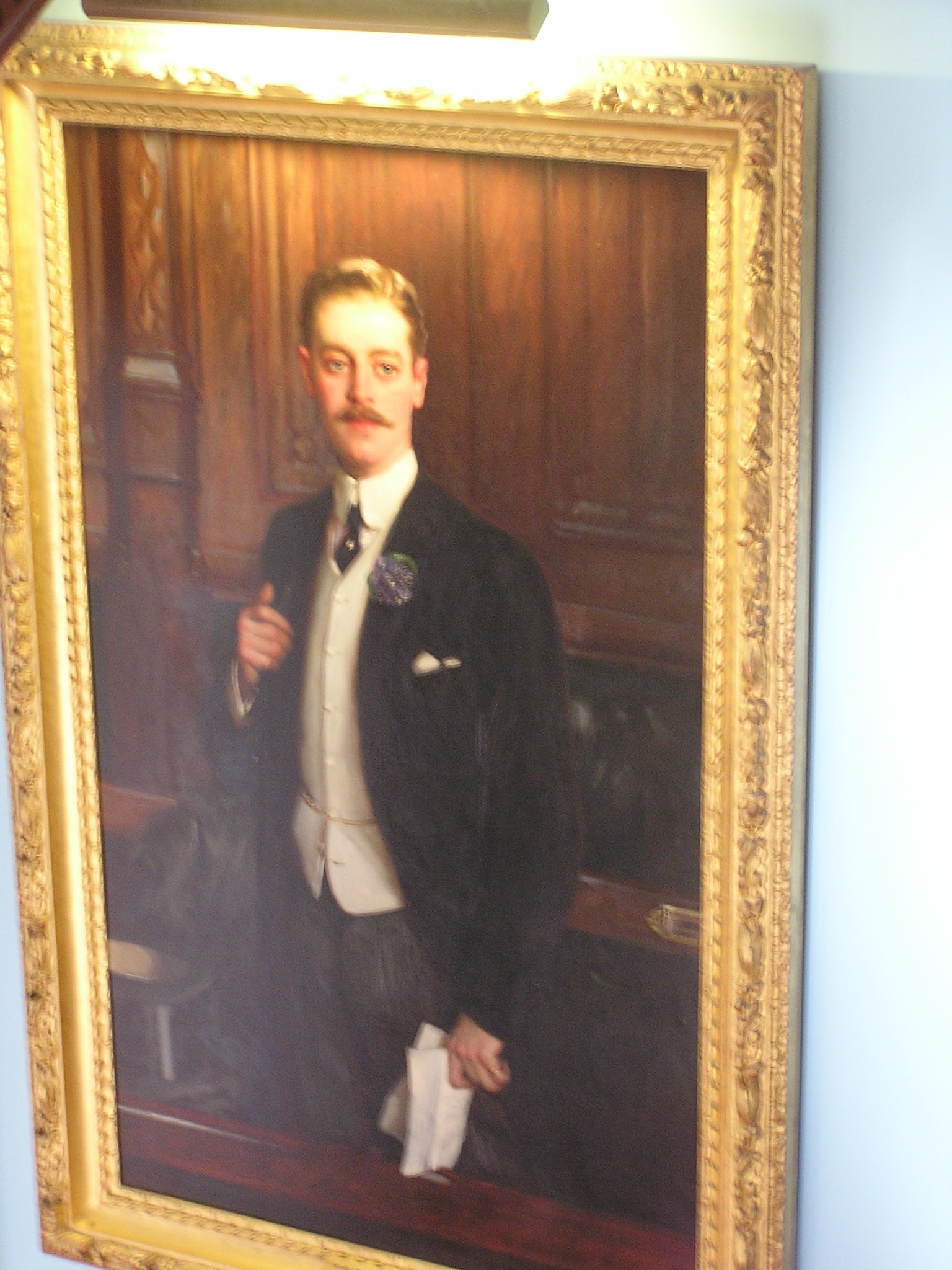
Spats were made of white cloth or brown felt that buttoned round the ankle, their ostensible purpose being to keep the mud off one’s shoes and socks. A notable spat-wearer was Tommy Agar-Robartes, reputedly the ‘best-dressed man in the House of Commons’, whose pre-Great War spats are laid out in his former bedroom at Lanhydrock, Cornwall. The prevalance of spats in that period is apparent from Sir Leslie Ward’s ‘Spy’ cartoons for Vanity Fair, such as his portrait of the magazine’s proprietor, ‘Tommy’ Bowles. I also find them mentioned in Ezra Pound’s bitter masterpiece, Hugh Selwyn Mauberly: Ode pour l’élection de son sépulchre (1920):

The sky-like limpid eyes,

The circular infant’s face,

The stiffness from spats to collar

Never relaxing into grace …

The description, apparently, is of Sir Max Beerbohm, whom Pound mistook for a Jew.

Portrait of Tommy Agar-Robartes at Lanhydrock

In the preface to Joy in the Morning, P.G. Wodehouse laments the passing of the spat. ‘In the brave old days spats were the hallmark of the young-feller-me-lad-about-town, the foundation stone on which his whole policy was based, and it is sad to reflect that a generation has arisen which does not know what spats were. I once wrote a book called Young Men in Spats. I could not use that title today.’

Their principal purpose, he continues, was not to ‘protect the socks from getting dashed with spatter’, but to lend ‘a sort of gay diablerie to the wearer’s appearance. The monocle might or might not be worn according to taste, but spats, like the tightly-rolled umbrella, were obligatory.’ Despite an inhibiting ‘anaemia of the exchequer’, Wodehouse had his own pair, ‘white and gleaming, fascinating the passers-by and causing seedy strangers who hoped for largesse to address me as “Captain” and sometimes even as “M’lord”. Many a butler at the turn of the century, opening the door to me and wincing visibly at the sight of my topper, would lower his eyes, see the spats and give a little sigh of relief, as much as to say, “Not quite what we are accustomed to at the northern end, perhaps, but unexceptionable to the south”.’

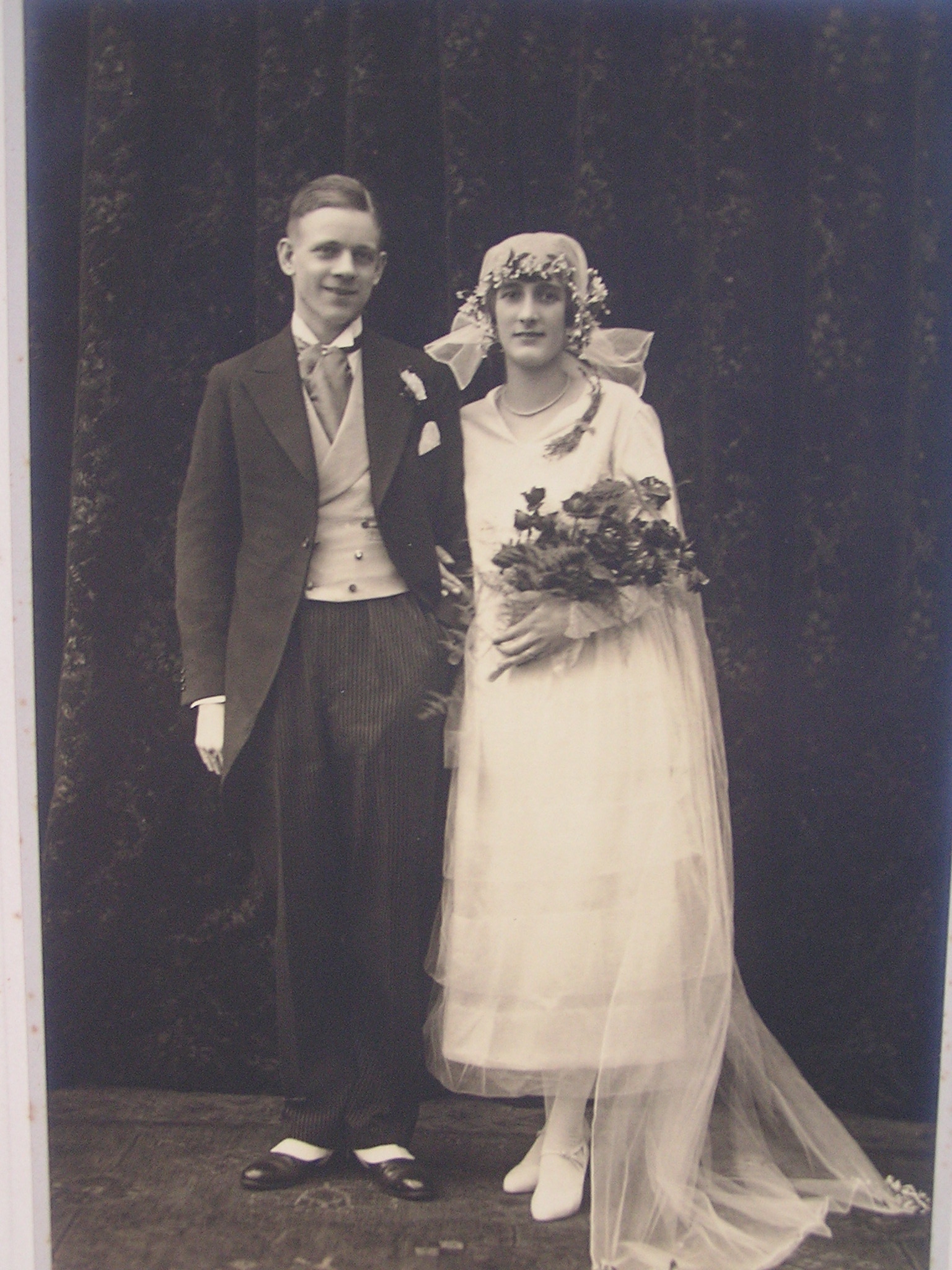
My grandparents at their wedding at All Souls', Langham Place, in 1930, spats to the fore

In Right Ho, Jeeves (Chapter 4), it is not necessary to be ‘some terrific nib’ to give away the prizes at Market Snodsbury Grammar School; ’anybody in spats’ will do, as Bertie Wooster discovers to his cost.

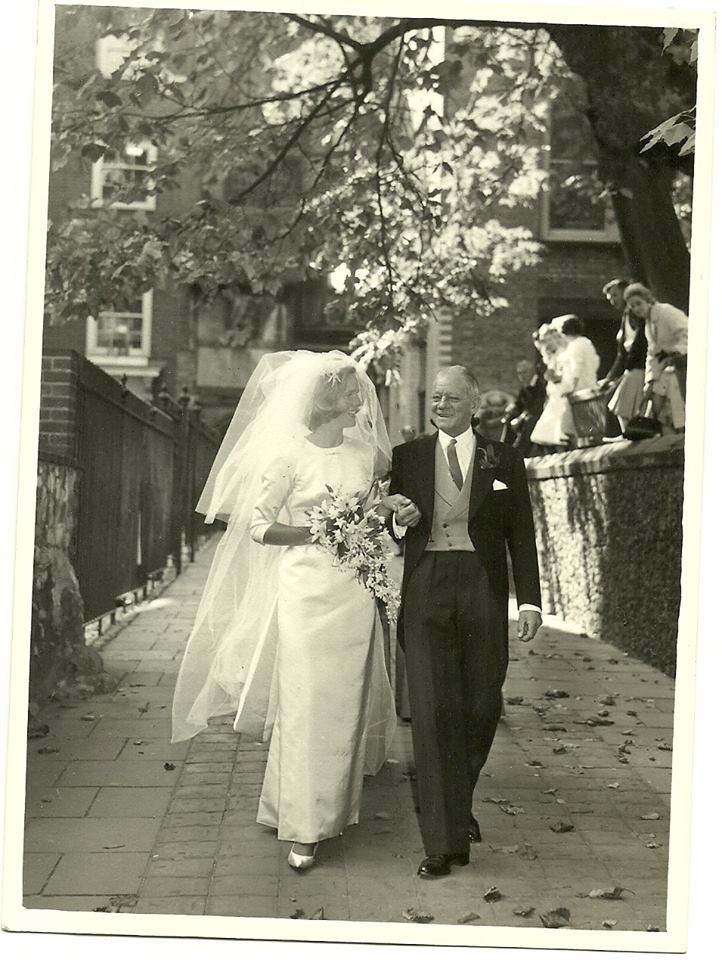
My own grandfather wore spats at his London wedding in 1930. (As he was about to set off on the train to his honeymoon in Eastbourne, his thoughtful batman brought the evening paper to his carriage.) The same morning suit was still in service when he gave away his daughter in 1964, and now is occasionally worn by my brother. Regrettably, the spats have been discarded and have fallen into general desuetude since the Second World War. I myself have been to a single wedding at which they were worn – that of A.A. Gill in 1989, who sported a fine pair, the best-man commenting on his ‘lifelong addiction to the “dressing-up box’.

Giving away his daughter in 1964 - the same suit, but no spats