Alexandre Dumas fils Introduces his Mistress, Nadezhda Naryshkina, to George Sand at Nohant

June 16th, 2014

Since their meeting in 1852, Alexandre Dumas fils had formed a close friendship with George Sand, whom he addressed as his ‘Mama’. In the summer of 1861, he spent a restorative month with her, alone, at the Château de Nohant, her home in the Berry. There was much discussion of his mistress, the beautiful Nadezhda Naryshkina. She had long since abandoned her aristocratic husband in Russia, but his inability to marry her had driven Dumas mad with frustration. Sand, an advocate of free love, scarred by her own unhappy marriage, had heard bad reports of Nadezhda and would have thought him unwise, but had done her best to encourage him and cheer him up.

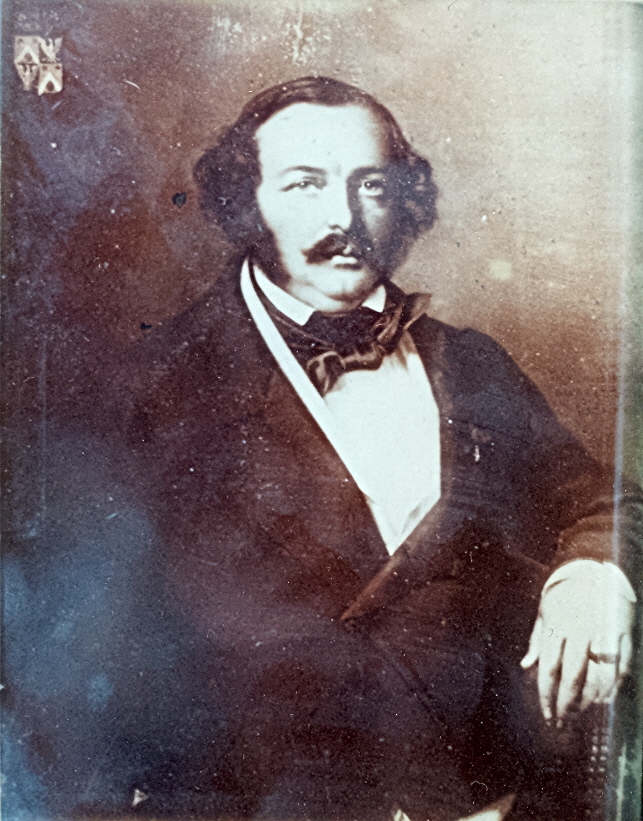
Dumas fils by Edouard Dubufe

A few weeks later, Nadezhda had been persuaded to accompany Dumas on a return visit to Nohant, invited by Sand to view one of the famous performances in her private theatre. Dumas wrote on 20 September, asking if Nadezhda’s teenage daughter, Olga, might join them. ‘She can sleep in her mother’s room on a sofa. She, as a young Muscovite traveller, will love that!’ He had also begged to be allowed to bring his burly painter friend, Charles Marchal, known as ‘the Mastodon’, who ‘can sleep anywhere, under a tree, under the well’.

Sand had written separately to Dumas and to Nadezhda at Villeroy, assuring them that all would be welcome. Surprisingly in awe of Sand, and expecting to feel inadequate, Nadezhda had been putting off a meeting and had hoped to leave after a day. The socialist Sand, who at fifty-seven was fixed in her ways, had been somewhat apprehensive, too. The ‘princess’ might be shocked by the ‘democratic’ spirit of Nohant, by having to sit side by side with the hairdresser, the cloth merchant, the vet and other lesser beings, for all were received there on equal terms. Even at the last minute she had fussed over the arrangements, concerned that the presence at the table of a young actress, Marie Lambert, might offend.

George Sand by Nadar

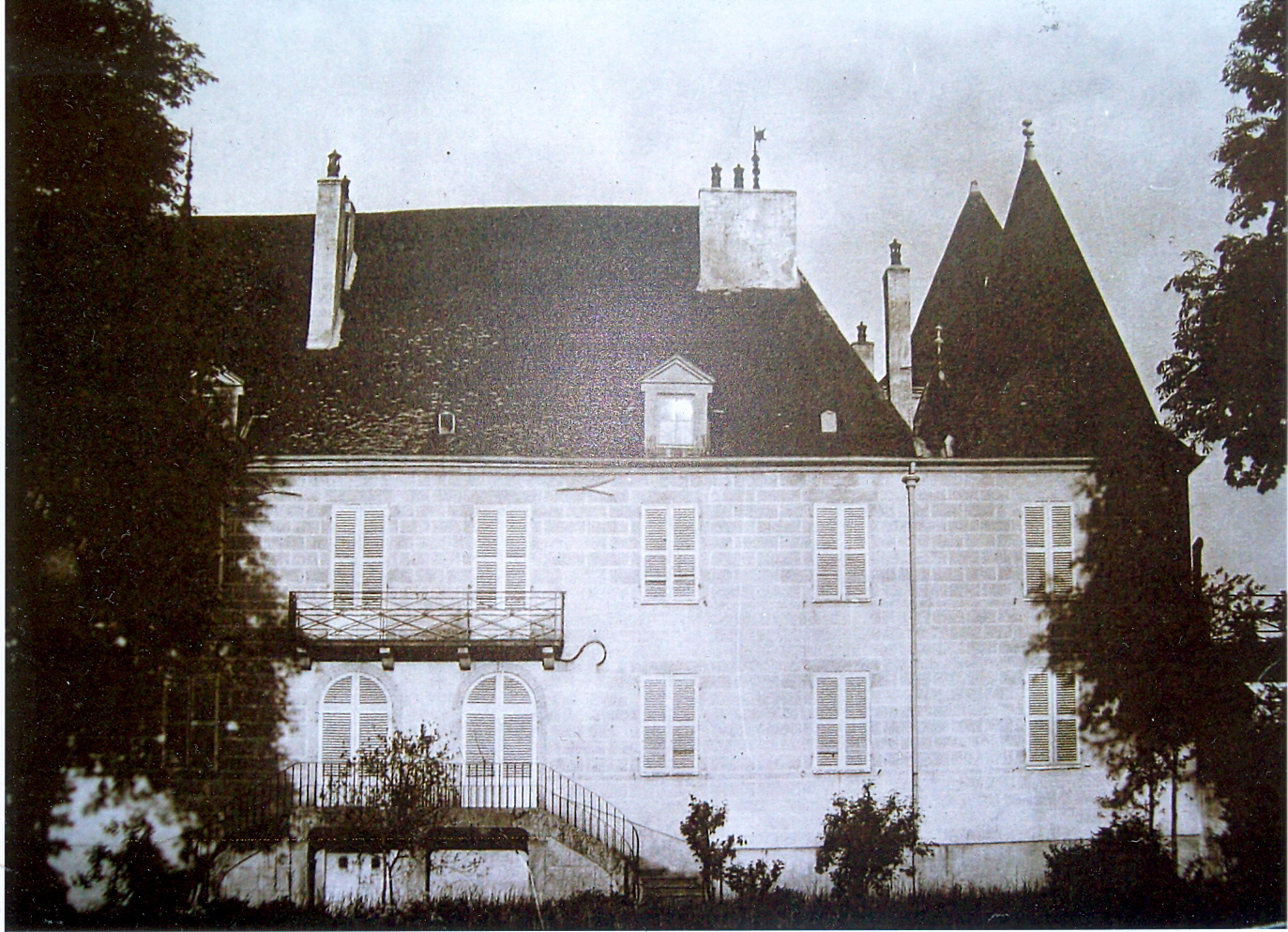
The Dumas party had arrived at the gracious, comfortable little château, set in its paradise of a park, late in the evening of 25 September. It had been a gruelling journey from Paris: eight hours in the train to Châteauroux, then three hours along a bumpy road in a diligence. Théophile Gautier, visiting for the first time in 1862, felt that he had been dumped in the middle of nowhere. ‘They pushed my trunk through a bush. I entered by way of the farm. There were dogs on all sides that frightened the life out of me.’

The guests had been led up the grand staircase to their rooms on the first floor, or, in Marchal’s case, the attic, where he was to sleep on a camp bed. Under the light of her Venetian chandelier, the mannish, cigar-smoking Sand and her son Maurice had awaited them in the opulent salon, with its Louis XVI armchairs and harp and the piano that Chopin (a former lover) used to play, Sand’s own famous portrait by Charpentier and those of her illustrious ancestors, including Maurice de Saxe, natural son of the King of Poland. Marie Lambert had been there, along with Léon Brothier, who had arrived by the morning train. Sand had noted of Marchal, as big and boisterous as her Newfoundland dogs, that he had ‘a nice face’. Dumas had brought depressing news, a mutual friend having suddenly died, and the party had gradually dispersed, sad and exhausted, to bed.

George Sand imposed strict rules on her guests. Breakfast was at ten, followed by bowls in the garden and chat. Certain fixed hours of the day and night were set aside for working, a sacred ritual. At other times she could be found in the salon. For Dumas’s visit, she had dedicated three evenings for performances in her little theatre, with Marie Lambert in a leading role. The one-time library, off the entrance hall, was permanently fitted with a stage, backdrops and curtains. There was an alcove on one side where Maurice gave his spirited puppet shows. Sand had wanted to try out her latest work, a ‘fantastical piece in three acts, a bewildering fantasy’ called Le Drac, and was eager for her friends’ expert opinion. As for her bucolic neighbours who would make up the bulk of the audience, ‘they may not understand a single word, but we won’t care. We don’t want them thinking that this is just for their amusement.’

She had promised a series of demanding performances lasting well into the night and guaranteed to make her audience sweat. Whether Nadezhda and Olga had been able to make sense of Le Drac is unclear, but Sand later reported that it had ‘greatly pleased Dumas fils and other competent observers’. It was perhaps with some relief that the Russian ladies had left on 30 September, to be followed by Dumas on 9 October. The rascally Marchal, an unabashed, unsubtle womaniser who never failed to amuse, had stayed on till 22 November, having charmed his way into his ageing hostess’s bed.

Marchal had soon proved unreliable, but at least Sand seems to have taken a favourable view of ‘the two Russias’ (as Dumas called them), and to have been impressed by their exotic pedigree. Always remembering them to Dumas in her letters, she referred to them as ‘the châtelaines of Villeroy’ or ‘our princesses’, whilst Olga is variously ‘the young autocratess Gachetscowa I’ or ‘the fair young Czarine’. Olga was destined to make an impression, having grown into the image of her mother, with the same delicate features, Roman nose and auburn hair. George Sand was thenceforth to be notably solicitous for her welfare.

Did Katherine of Aragon Sleep Here? New Book Reveals Hidden Basingstoke

June 12th, 2014

A local historian believes he has discovered the Basingstoke house in which Katherine of Aragon spent a night in 1501, on her way to marry the elder son of Henry VII.

Katherine is known to have passed through the town on her journey from Plymouth. She was the guest of Richard Kingsmill, a prominent Basingstoke citizen.

Kingsmill’s house was on the south side of Winchester Street, most of which he owned. It would have to have been very large, as well as grand, to accommodate Katherine’s entourage. The buildings in Winchester Street today are mostly modern, with none appearing to match the description of a grand Tudor building.

However, Rupert Willoughby believes he has identified the house as the one immediately west of Barclays Bank, which was long ago converted into shops. He discovered it by chance while researching a new history of the town.

He describes his book, Basingstoke and its Contribution to World Culture, as a quest for the lost Basingstoke, which he believes has been ruined by post-war developers. To his delight and surprise, he discovered that much of the old ‘Top of Town’ had been preserved, including all but one of its historic coaching inns.

He considers the Maidenhead Inn in Winchester Street, first mentioned in 1671, to have been the former Kingsmill house. Large town houses were particularly suitable for conversion into inns and this is known to have happened to Sir James Deane’s house next door – on the site now occupied by Barclays Bank – which became the Angel.

The Maidenhead has added historical interest as the landlady, Mrs Martin, was an acquaintance of Jane Austen. Jane’s father is thought to have been a member of the Hants Club which regularly met there. Mrs Martin organised the Town Hall assemblies that are re-created in her novels.

Mr Willoughby points to evidence of an archway for coaches that has since been filled in. He calls for an urgent investigation by architectural historians, so that the date of the building can be established, and steps taken to ensure that it is properly preserved.

Katherine of Aragon’s marriage to Arthur, Prince of Wales, which took place shortly after her visit to Basingstoke, was an event that changed the course of history, as it gave her second husband, Henry VIII, the pretext for his divorce.

The people of Basingstoke are likely to have turned out in large numbers to greet her, though they may not have been impressed by her Spanish entourage. Sir Thomas More was to describe them as ‘undersized, barefoot pygmies’ and ‘refugees from hell’.

Rupert Willoughby’s book, Basingstoke and its Contribution to World Culture, is available now from all good stockists, priced at £10.99. For more information, see http://www.rupertwilloughby.co.uk/books.

Brocas of Wokefield and Beaurepaire – and Sir John Soane’s Gates

June 9th, 2014

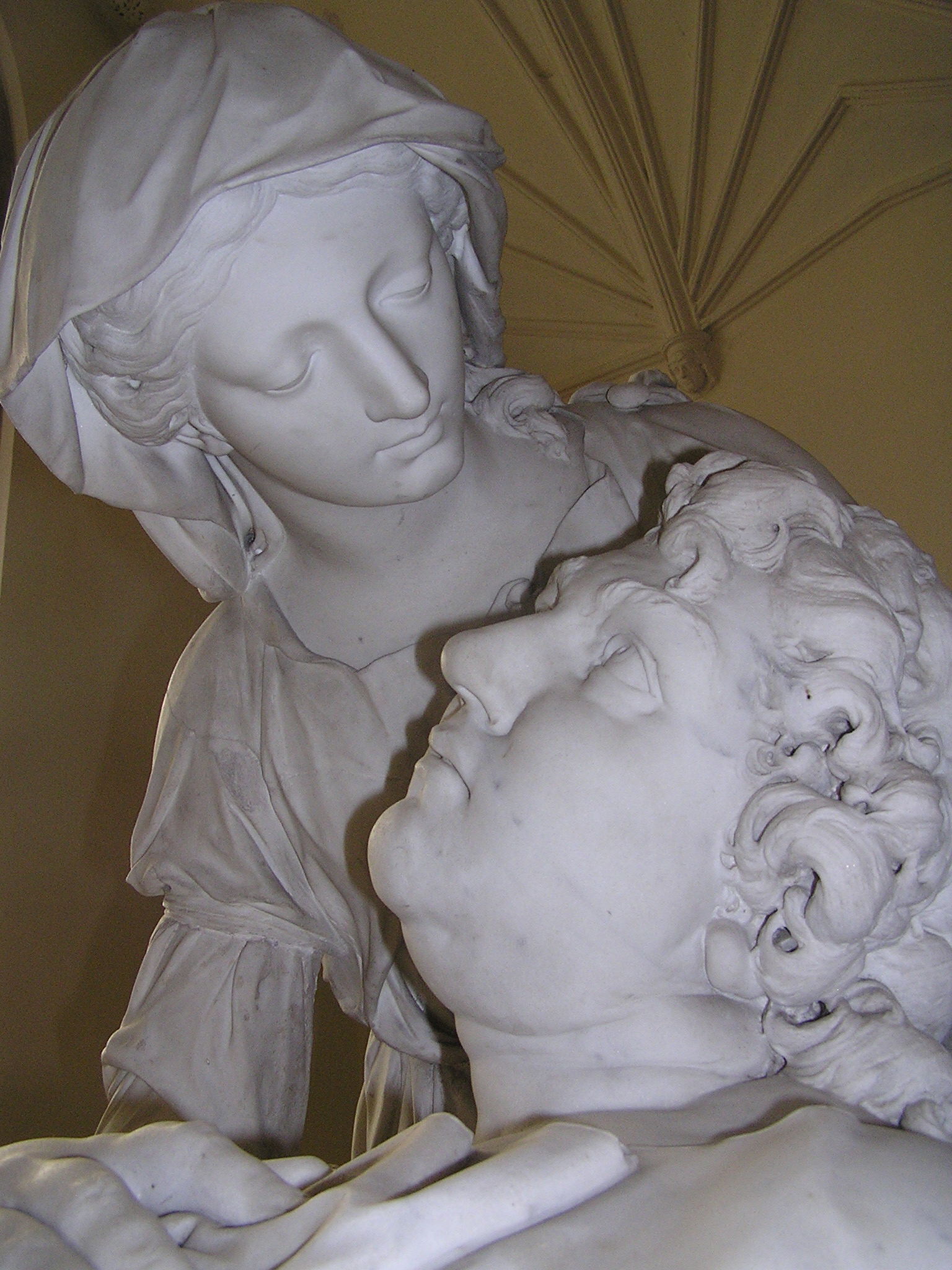
The Brocas monument in Bramley Church. The couple were patrons of Sir John Soane

(The following is a press release dated January 2008)

HISTORIAN FINDS LOST ARCHITECTURAL TREASURE AT SHERBORNE ST JOHN

Lost work by Sir John Soane, one of England’s most influential architects, may have been rediscovered at Sherborne St John – five miles from its original location.

The discovery has been made by historian Rupert Willoughby at Beaurepaire Park, one of Hampshire’s least-known treasures.

Beaurepaire was the seat, from 1353 to 1873, of the Brocas family, whose land stretched continuously from Burghfield Hill to Basingstoke.

Set in glorious parkland and surrounded by a medieval moat, the remains of the eighteenth-century mansion, wrecked by fire during the Second World War, were beautifully restored in the 1960s.

A prominent feature of the property is its moat-bridge entrance – a pair of elaborate wrought-iron gates supported by tall, brick pillars, each surmounted by the Moor’s-head crest of the Brocas family.

The Soane gates at Beaurepaire - formerly at Wokefield

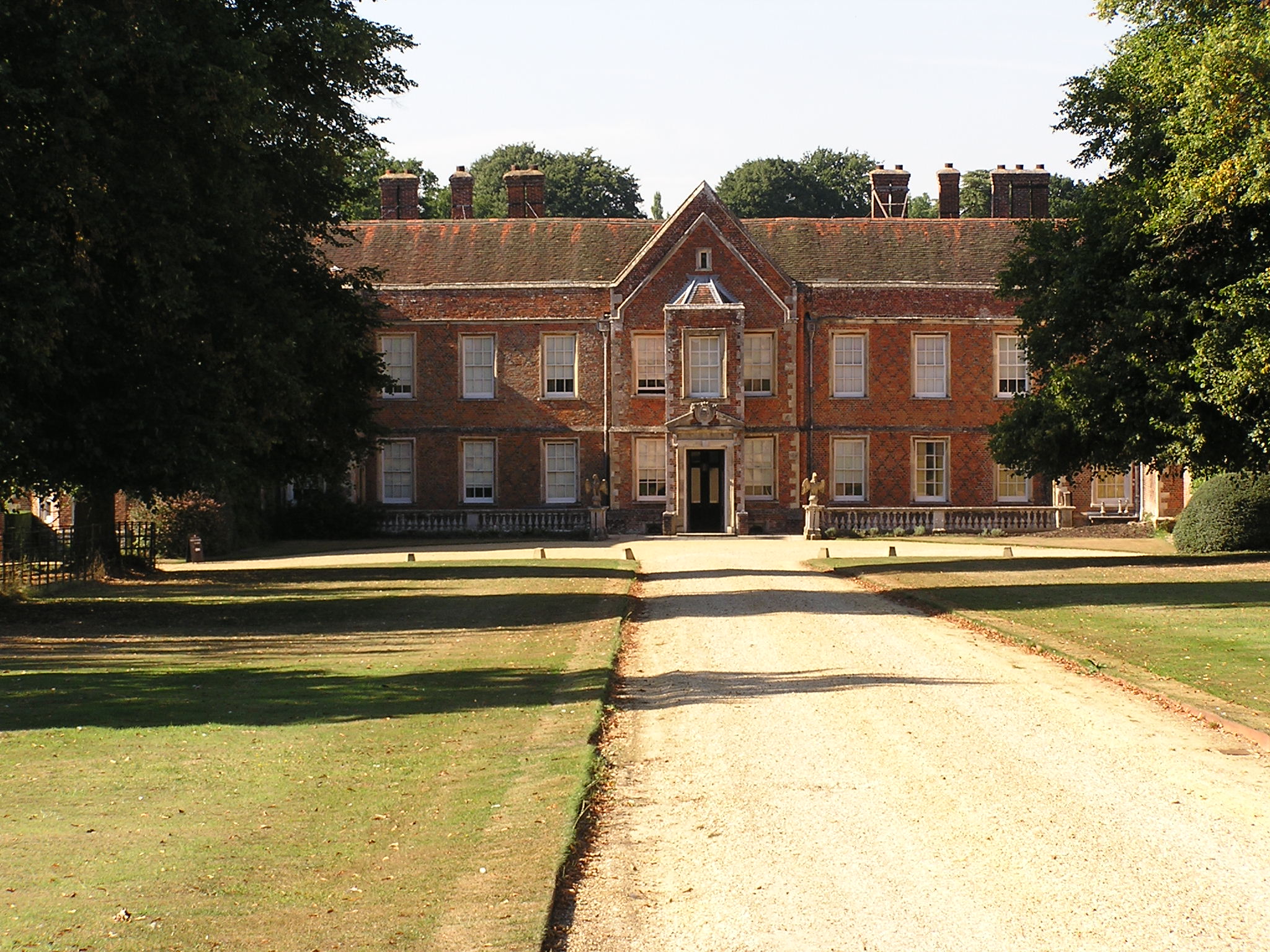
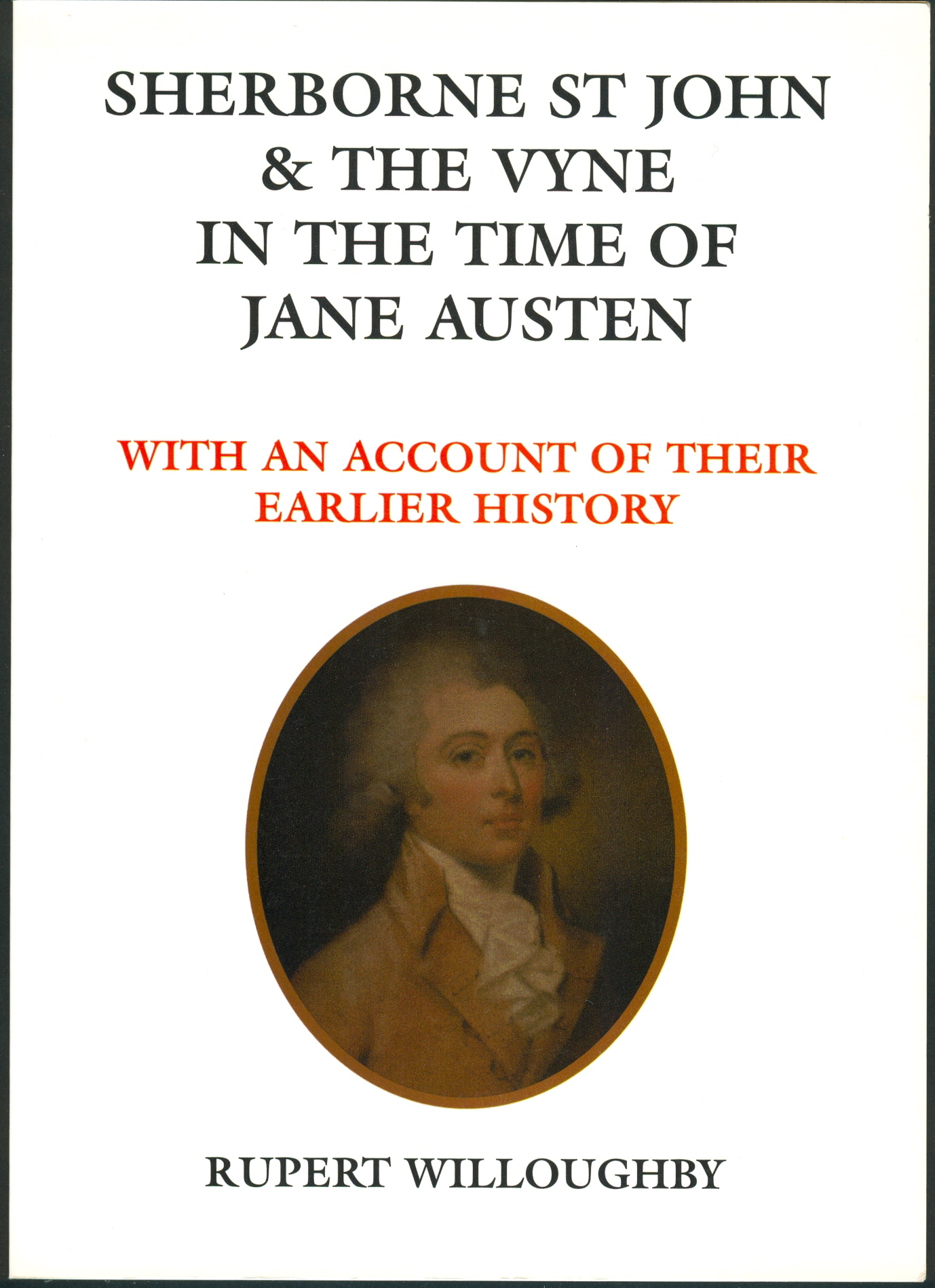
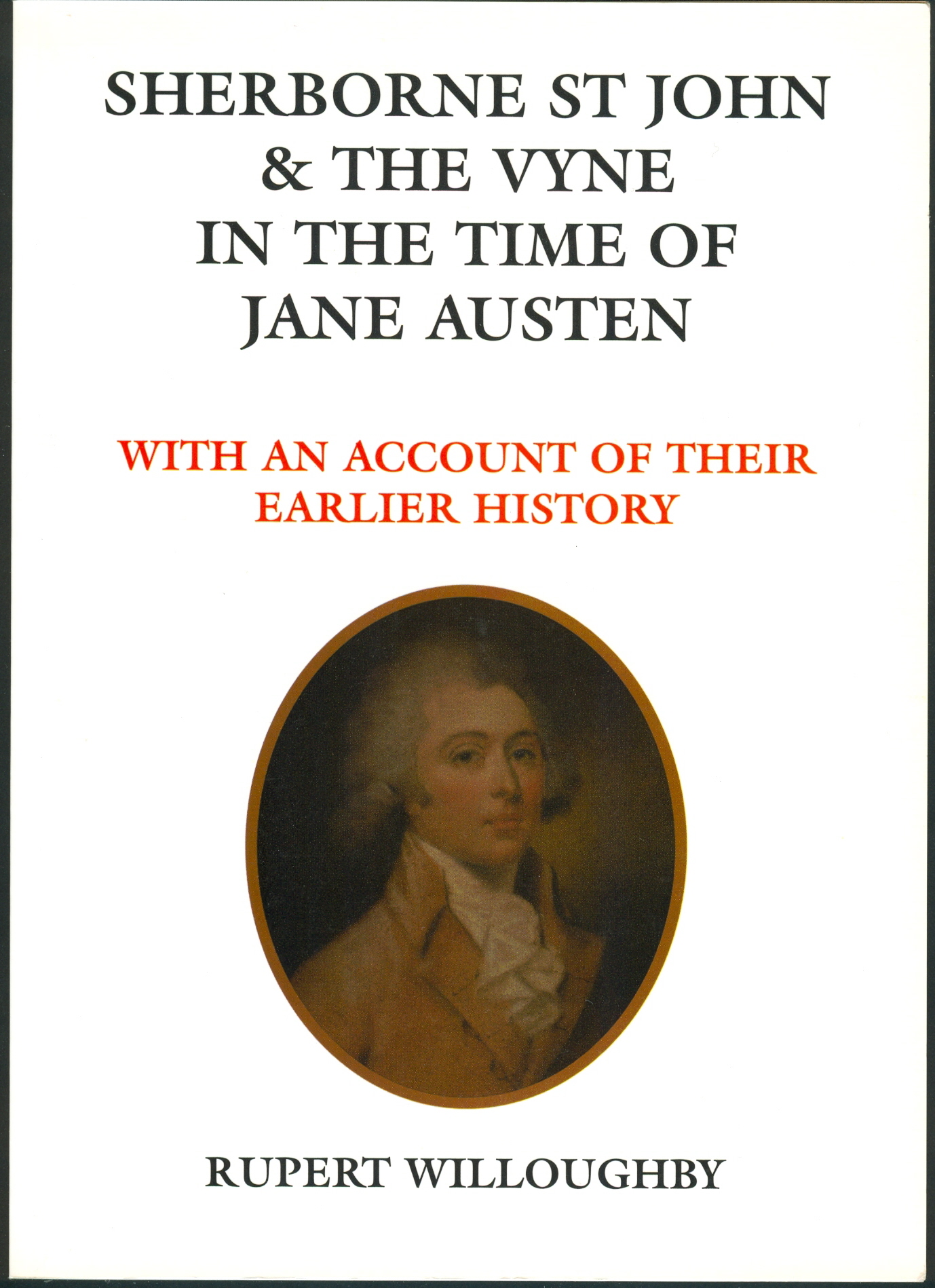
The romantic, often dramatic story of Beaurepaire and the Brocases – including royal visits and a lengthy Civil-War siege when it was defended by the lady of the house – is told by Rupert Willoughby in his book Sherborne St John and the Vyne in the Time of Jane Austen.

It was while researching the book that Mr Willoughby discovered a reference to the construction of the bridge. ‘An old Bramley farmer called William Clift, who was born in 1828, recalls the event in his memoirs. According to Clift, the “large iron gates at the entrance over the moat” were brought from Wokefield Park, on the Brocas estate at Stratfield Mortimer, which had been the family’s favoured residence in the eighteenth century. Clift’s father provided the timber for the bridge. This occurred during his childhood and presumably coincided with the sale of Wokefield in 1839.

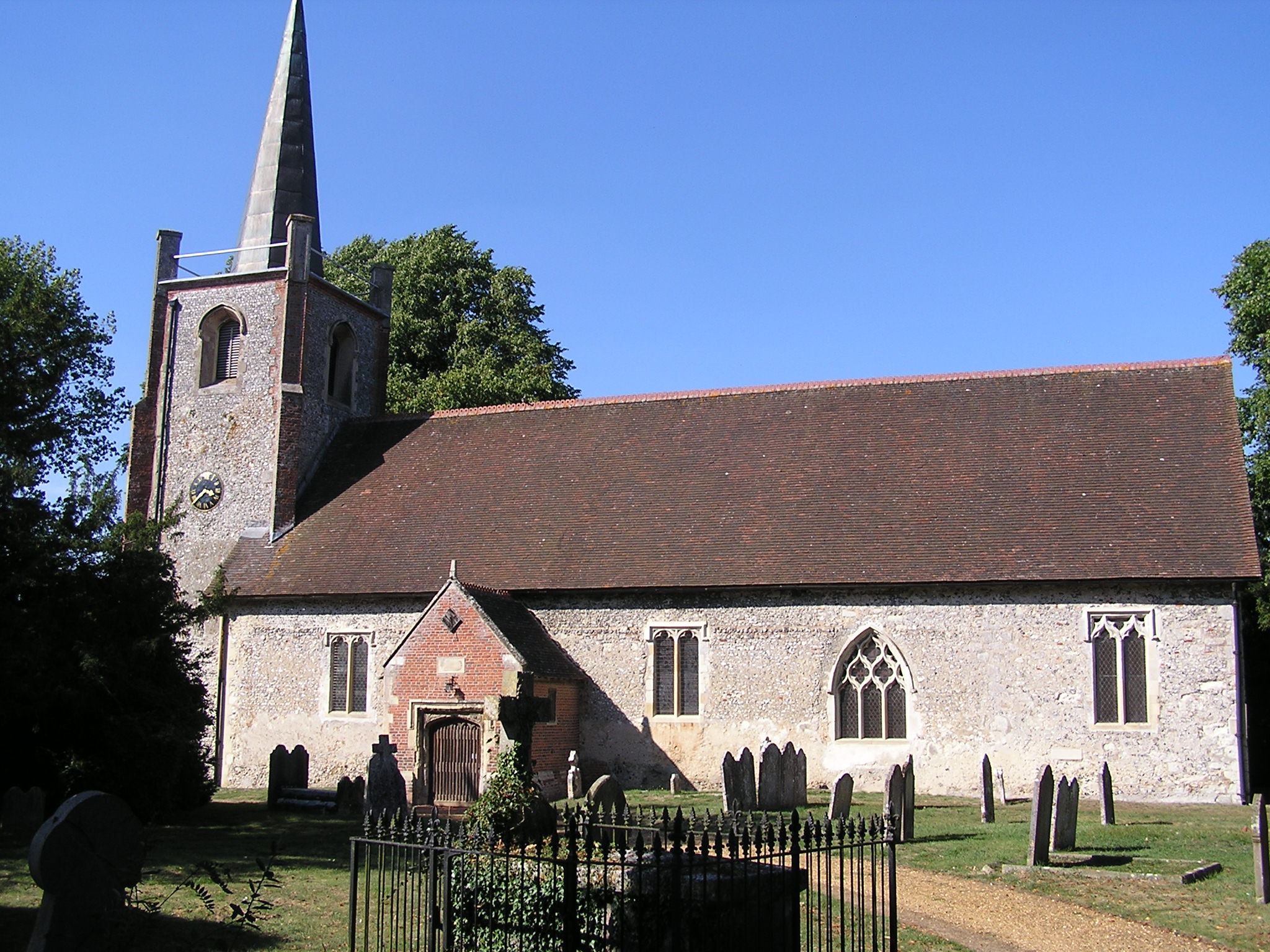
‘Soane, the foremost architect of the day and a local boy, brought up in Reading, had worked for Mrs Brocas at Bramley Church. He built the so-called Brocas aisle, completed in 1802, which houses the monument to her late husband.

‘It appeared that the couple had earlier employed him at Wokefield, where he made alterations to the house and designed a new gateway in 1788.’

Mr Willoughby found a drawing for the Wokefield gates in the archives at Sir John Soane’s Museum, in Lincoln’s Inn Fields – the architect’s former home which he left to the nation, along with all its contents – and compared them with those at Beaurepaire.

‘The entrance at Wokefield was much wider, so the iron gates are not the same. The brick posts now at Beaurepaire are, however, identical to those in Soane’s drawing, complete with the Moor’s-head crests. Plaques bearing the Brocas arms of a lion rampant are missing, but they may have been damaged in transit or never even executed. Not all the relevant drawings survive. The likelihood that Soane erected these posts at Wokefield in 1788 and that they were transported to Beaurepaire in 1839 is, however, very strong.’

The records show that Soane made nine journeys to Wokefield in 1788 and charged £650 for his services, a substantial sum. Soane was at the height of his profession. In the same year he was appointed architect to the Bank of England. The building was his masterpiece and its demolition in the 1920s has been described as the twentieth century’s ‘greatest architectural crime in the City of London’.

Rupert Willoughby’s book, Sherborne St John and the Vyne in the Time of Jane Austen, is available at all good stockists, priced at £10.99. Sir John Soane’s Museum in London is open throughout the year and admission is free.

The Origins of the Naryshkin or Narischkine family of Muscovy

May 29th, 2014

At a recent family gathering, it was noticed that five of us were wearing the same signet ring, inherited from our Russian great-great-grandmother or, in one case, great-grandmother. Olga Aleksandrovna Naryshkina (or Narischkine, as it was usually spelt in the West) was born at Paris in 1847, and died at Southsea, Hampshire, in 1927. There was some discussion about what the arms represented. Alternative explanations were offered, but here is mine.

Olga Aleksandrovna Naryshkina, Marquise de Faletans (1847-1927)

The Naryshkins had been a relatively obscure gentry family until the late seventeenth century, when a certain Natalya Kirilovna Naryshkina had caught the eye of the ‘Most Gentle’ Tsar, Aleksey Mikhailovich. As a child Natalya had been sent to Moscow from the remote province of Torussa, to be brought up there by her godmother, a Scotswoman called Madam Matveeva. This lady, whose maiden name was Hamilton, was married to the Boyar Artemon Matveev, the Tsar’s close friend and adviser. At a time when foreign influences were generally abhorred and when women were shut away from the world in separate quarters, the Matveevs were open to the progressive ideas, habits and customs of the West, which were imbibed by Natalya herself as she grew up. The widowed Aleksey, an occasional visitor to the Matveev house, was charmed by their young ward and, on 22 January 1671, they were married. The following year, Natalya gave birth to a son who was the future Tsar and Emperor Peter the Great.

Natalya Kirilovna Naryshkina, mother of Peter the Great

Natalya’s father and a throng of brothers, uncles and cousins had immediately descended on the court to receive patronage from the uxurious Aleksey. The status of the family was transformed, almost overnight. They were received into the Duma of Boyars and were loaded with lesser titles, as well as gifts of land and serfs. Quick to conceal their undistinguished origins behind a mythical version of their genealogy, they cultivated social pretensions to match. In 1686, when the then joint Tsars, Ivan and Peter, created the famous Velvet Book in which the pedigrees of the nobility were to be inscribed, the Naryshkins entered one that took them back to ancient times. It was claimed that they descended from the Naristi, a Germanic tribe mentioned by Tacitus. As the Naristi were thought to have inhabited the north-west corner of Bohemia, the Naryshkins took as their arms those of the capital of that region, the imperial city of Eger (modern Cheb in the Czech Republic). The arms adopted by the family thus consisted of an imperial eagle with the lower part of its body covered by a grille, alluding to the fact that the incomes of the city had once been placed in pawn by the Emperor. It was further claimed that, as their ancestors had reigned over Eger, the Naryshkins had inherited princely rank, a privilege that in Russia was traditionally reserved for the male-line offspring of former ruling houses (those of Kiev, Lithuania, Tatary and a few others). However, among the Naryshkins, it was a point of honour that the title of prince should never be used. They maintained that their surname was dignity enough.

Ivan Aleksandrovich Naryshkin, Olgas's great-great-grandfather

Tsar Aleksey had died in 1676, to be succeeded by Fedor, the son of his first marriage. After Fedor’s death in 1682, the Naryshkins had hoped to promote Peter to the throne, but had been thwarted by his half-sister Sofya, who, on seizing power, had purged the court of Naryshkin influence, brutally putting leading members of the family to death. Seven years later, they had had their revenge, deposing Sofya in a coup (she was shut away in a convent) and inaugurating the sole reign of Peter, although his mother became the de facto ruler of Russia until her death in 1694. Since that date, the Naryshkin family had never ceased to occupy a position of prominence in the Romanov court.

Given the uncertainties of his early life, it is not surprising that Peter grew up to be remarkably ignorant and uncouth, but it seems he owed all his most remarkable qualities to his mother’s side. The first Romanovs had all been feeble, either in body or mind. Peter was a giant of just under seven feet. When he walked, his officials had to run along beside him in order to keep up. He was naturally athletic, and so dexterous that he could twist a silver platter into a scroll, and cut a piece of cloth with his knife in mid-air. His manners were appalling. On one occasion, when a guest was boring him at dinner, he spat full in his face. The Russian upper classes were not noted in that period for their refinement. Yet it was from Natalya that Peter had inherited the nervous energy which enabled him to modernise and transform his country. His mental agility, his enquiring mind and his admiration for the West were further legacies from his mother. Physically, he is said to have resembled one of her brothers, Fedor Naryshkin.

Ekaterina Aleksandrovna Naryshkina (born Stroganova), wife of Ivan, by Jean Voile

Olga Naryshkin was descended from one of Natalya’s great-uncles, Ivan Ivanovich. All her ancestors since Ivan had held office at the imperial court. Her great-great-grandfather, Aleksandr Ivanovich (1735 – 82), Chamberlain and Privy Councillor in the reign of Catherine the Great, had married the Princess Anna Nikitishna Trubetskaya, daughter of Prince Nikita Trubetskoy, Procurator-General of the Senate, from the old Lithuanian royal line. Their son, the Senator and Ober-Tseremoniymeister Ivan Aleksandrovich Naryshkin, had in turn married in Catherine’s presence into the fabulously rich Stroganov family, though he had been sentimentally attached to a certain Mademoiselle Vertel, a Frenchwoman who kept a shop in St Petersburg. The Baroness Ekaterina Aleksandrovna Stroganova had nevertheless borne him three sons, Aleksandr, Grigory and Aleksey, and two daughters, Elisaveta and Varvara. Aleksandr was an officer in the Life Guards who had died pointlessly in a duel, having been rash enough to challenge Count Fedor Ivanovich Tolstoy, the most famous duellist of the day. Grigory, the elder surviving son, became a Colonel in the Semenovsky Guards’ Regiment, died in Sorrento in 1835, and was the father of Aleksandr Naryshkin, Olga’s father.

A gathering of Naryshkin descendants, May 2014 (photo by Paul Spillane)

A Corfiot Romance: The Marriage Between Admiral Charles Bayley Calmady Dent and Corinna Kourkoumelles of Afra – and the Adventures of H.M.S. Edgar

May 26th, 2014

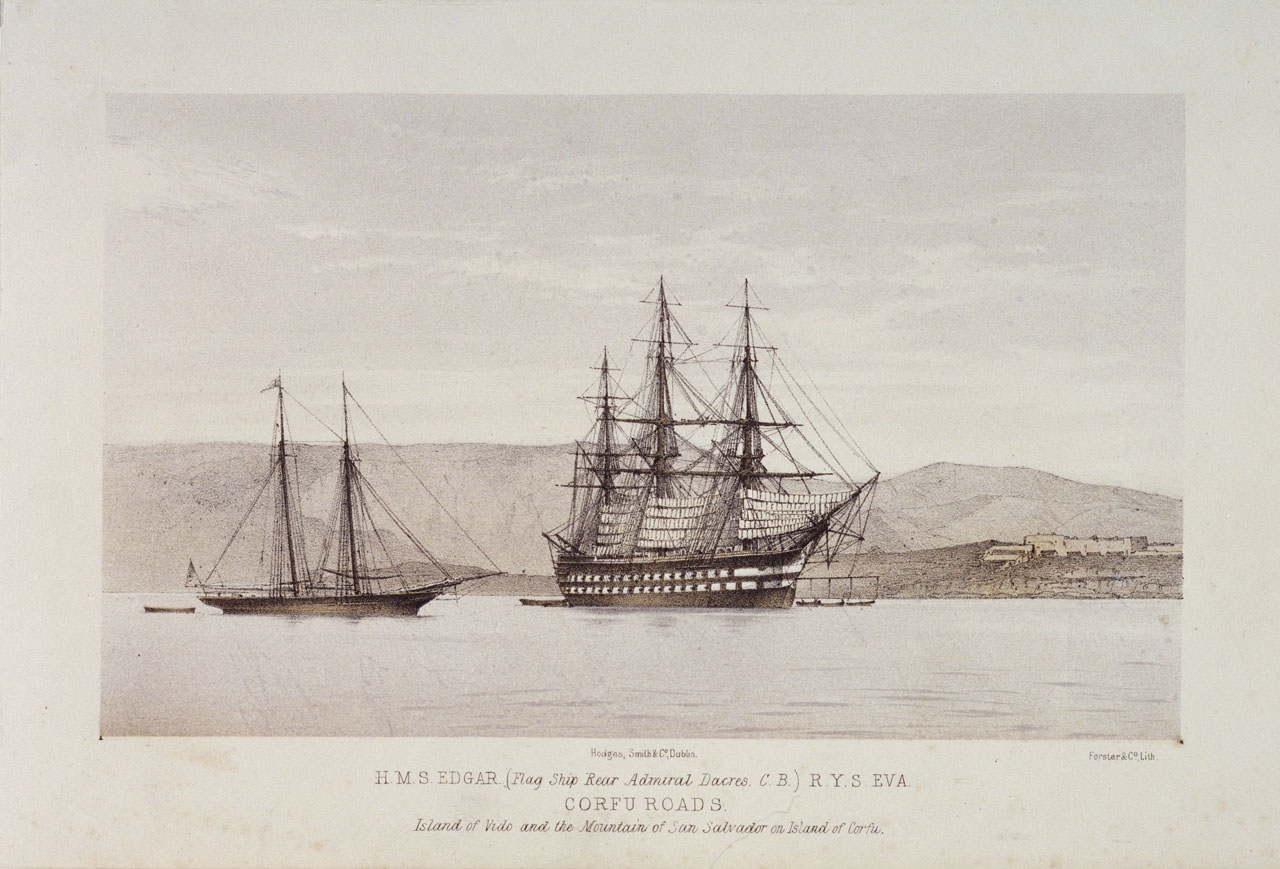
H.M.S Edgar (in which Charles Dent was the First Lieutenant) with the R.Y.S. Eva in Corfu Roads, the Island of Vido and the mountains of San Salvador in the background, by Forster

‘If I wrote a book about Corcyra it would not be a history but a poem.’ That is the promise that Lawrence Durrell fulfils in his beautiful Prospero’s Cell: A Guide to the Landscape and Manners of the Island of Corfu. First published in 1945, the book is one of the fruits of his Alexandrian exile during World War II.

Among the curiosities of the island, Durrell mentions ‘the remains of a Venetian aristocracy living in overgrown baronial mansions, buried deep in the country and surrounded by cypresses’. More curious still is Corfu’s relationship with the British, who ruled the Ionian Islands, of which it is part, for fifty years from 1814 to 1864, when they were ceded to Greece. Britain’s legacy to ‘Corcyra’ today includes, apart from some ‘nostalgic love and admiration’ (notwithstanding their resentment of them at the time), an addiction to cricket – ‘a mysterious and satisfying ritual which the islanders have refused to relinquish’ – and to ginger beer.

A blending between the decaying aristocracy of the island and its ‘bluff rulers’ – Durrell quotes Viscount Kirkwall’s description of them as exasperatingly self-satisfied with their paper-chases and tea-parties – occurred in my own family. Admiral Charles Bayley Calmady Dent, born at Plymouth in 1832, was my grandfather’s great-uncle. My grandfather was brought up by Charles’s sister. Steeped him in naval lore (the Dents had been serving continuously since the late 1600s), my grandfather himself embarked on a naval career at the age of only thirteen.
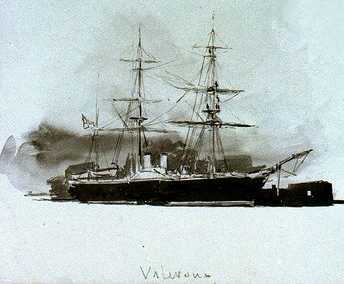
H.M.S. Valorous in 1851. Charles Dent served in her in the Baltic campaign during the war with Russia

Charles Dent’s period of service had been full of incident. The youthful First Lieutenant of H.M.S. Valorous during the war with Russia (the so-called ‘Crimean War’), he had been posted not to the Black Sea but to the Baltic, and had led a raid on the port of Uleaborg on the Gulf of Bothnia, destroying its stores and installations. The citizens of Uleaborg had already abandoned the town, leaving a ‘large number of spirit-stores open’, but Charles’s marines had maintained their discipline, despite the ‘great trials and temptations’ to which they were exposed, not to mention ‘the almost uninterrupted sleet’.

Transferring to H.M.S. Gorgon, which, like Valorous, was a paddle-steamer, Charles saw further action in the Baltic, in September 1855. In command of a detachment consisting of the pinnace, the cutter and a gig from Gorgon, together with forty of her crew, he was sent ‘to examine the Siela Sound, entrance [to the] Gulf of Riga, with directions to take possession of a small islet in that quarter; a position for stopping the trade passing in or out, as also forming a good shelter for the boats’.

In a period of five days, Charles succeeded in capturing ‘nine small vessels’ with their cargoes, and was able to report that ‘no vessel had escaped the line referred to, although the weather was rather unfavourable for boating operations’. These were actions almost worthy of Charles’s father, Rear-Admiral Charles Calmady Dent, a naval officer of the heroic age, who had assisted in assaults on Possitano and other Italian ports in the Napoleonic War, at the capture of Port d’Anzo (where there was heavy loss of life) and, later, in the boarding of a pirate vessel in the Persian Gulf, in which a misplaced thrust in the head from a boarding-pike is said to have ‘half-killed’ him.

The ‘heroic age’ was further recalled when Charles, by now a Commander, was appointed, on 11 July 1862, to the two-decker battleship H.M.S. Edgar, again as First Lieutenant. This was a time when ‘the transition from sails to steam was being gradually accomplished’. The Channel Squadron, of which she was part, consisted of ‘a mixture of wooden ships and ironclads: most of the former could not steam, none of the latter could sail. Nevertheless the Admiralty, who always have an eye to economy, decreed that, as the ships had masts and yards, they must sail.’ In the midst of all the advances in technology for which that era is famous, H.M.S. Edgar was a steamship, yet wooden-hulled and fully masted, looking exactly like something from Nelson’s fleet at Trafalgar, nearly sixty years before.

It was during a cruise of the Mediterranean in the summer of 1862 that Charles sailed in the Edgar into Corfu Harbour, to a fateful meeting with his future wife, Corinna Kourkoumelles. Born on Corfu on 21 November 1840, she was the eldest of the three daughters of Sir Demetrios Kourkoumelles, K.C.M.G., an Advocate, who served as Regent of the British Military Protectorate of Corfu from 1862 until the end of British rule in 1864, after which he became a Member of the Hellenic Parliament.

Sir Demetrios’s picturesque family seat at Afra (‘Breeze’), in the centre of the island, had been built in the 18th century in the Venetian style, above the cloisters of a deserted monastery – the family having migrated to the island from Kephalonia in the about 1750. The house at Afra is, or was until recently, still in the possession of the family (and occasionally visited by Corinnas’s descendants), but may be the old mansion there that is currently being offered for sale – http://rrcorfurealestate.com/pages/en/sales.php?prod=291&cat=5. It is just the sort of ‘overgrown baronial mansion, buried deep in the countryside and surrounded by cypresses’, to which Durrell refers.
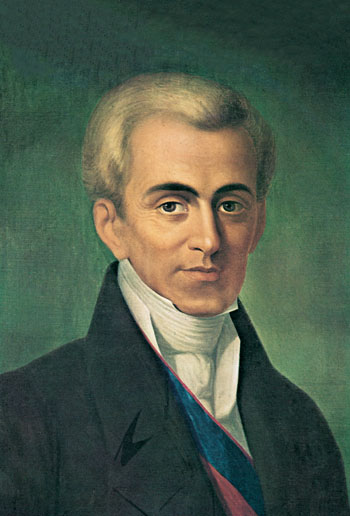
Ioannes Kapodistrias, the Corfiot who was Greece's first President - the great-uncle of Corinna Kourkoumelles

The family had impeccable Corfiot connections. Corinna’s mother was Elisa, daughter of Nicolo Rodostamo, member of the Ionian Parliament, by his wife Maria, daughter of Count Antonio-Maria Kapodistrias, Doctor of Laws at Pavia, Member of the Grand Council of Corfu, Senator, and sometime Ambassador to the Sultan and the Tsar. Antonio-Maria was the brother of Ioannes Kapodistrias, undoubtedly Corfu’s most famous son – Minister of Foreign Affairs in the Tsar’s service (1816-22), and first President of Greece between 1827 and 1831 (when he was assassinated).

Charles and Corinna’s wedding took place in London, at Kensington Parish Church, on 6 August 1863 – the Edgar’s First Lieutenant was able to absent himself from a summer cruise around the British Isles. His address was given as 1 Norwood Place, and that of his bride as 40 St James’s Place. The then master of the Edgar was no doubt present – the future Admiral-of-the-Fleet Sir Geoffrey Phipps Hornby, a grand Victorian figure (and a connection by marriage), who was to be celebrated, at the end of a long naval career, for never having fired a shot in anger.

Corinna’s family clearly did not share the general distrust of Corfiots for the British. Her father is said to have preferred to be called ‘Sir Demetrios’ rather than ‘Count’ – the Order of St Michael and St George, to which he belonged, is nowadays doled out to diplomats and others serving overseas, but had been instituted in 1818 specifically to reward natives of the Ionian Islands and of Malta. While in England, Sir Demetrios matriculated an elaborate coat of arms at the Herald’s College which included a variant on the Dent family motto – to their Ne Cede Malis he had added Sed Contra. Corinna’s younger sister Euphrosyne was also to marry an English officer, a Major Jettars.

The newly-wed Corinna had quickly to inure herself to the prolonged absences of her husband, the Channel Squadron spending the winter of 1863-4 between Madeira, Teneriffe, Gibraltar and Lisbon. At Portland on 25 April 1864, it was to receive a visit from Garibaldi and his entourage. They were entertained to a substantial late lunch – it began at 6 p.m. – aboard the Edgar, as flagship of the commander-in-chief, Admiral Dacres.

From the middle of the following August, the headquarters of the fleet was at Portsmouth, where the ships remained until 27 March 1865, ‘when the Edgar came out of harbour under sail – the last line-of-battle ship that ever sailed out of Portsmouth Harbour’. The crew of the Edgar were no doubt unconscious at the time of their moment in history. The squadron had cruised down to Lisbon by 22 April, bearing a mission (under Lord Sefton) to invest the King of Portugal with the Order of the Garter. The ensuing festivities included a visit by the King himself to the Edgar, and a match against the Lisbon Cricket Club, in which the naval team was victorious. Perhaps Charles and others of his crew had already played a part in inculcating the Corfiots with a love of the game.

Charles never achieved a command of his own, and the Edgar was his last ship. He retired from the service on 16 December 1865, and took up a post with the London North Western Railway, as their Marine Superintendent at Holyhead on the Isle of Anglesey. He was nevertheless to enjoy promotion on the superannuated list (having commuted the pay), eventually attaining the rank of Admiral in 1893. He died at Chester on 20 March 1894. Corinna died at a cottage called ‘Decoy’, near Beaulieu, on 27 January 1918.

The product of a hard school, Charles was no doubt a tough, stoical seaman and stern disciplinarian. The log-book of one of his officers in the Edgar, G.S. Rolph, was recently sold by a dealer and offers insights into the routine of life aboard in 1864: ‘Sailmakers repairing mainsail… Carpenters variously employed’; ‘Mustered by divisions. Performed Divine Service’; ‘Punished Wm. Shipper with 36 lashes as per warrant.’ ‘Fired Royal Salute.’ (http://www.baumanrarebooks.com/rare-books/ship-s-log-ralph-george-s-/illustrated-manuscript-log-of-the-h-m-s-edgar/83728.aspx) Charles’s son Douglas Lionel Dent, who served in a successor to H.M.S. Edgar and also became an Admiral, was a notorious martinet, known in the service as ‘The Rogue Elephant’; a daughter, Cora, was the formidable Matron of the Royal Infirmary, Bristol, known as ‘The Acid Drop’. The men of the family were conspicuous for their height and build: one piece of family lore that has passed down to me is that Charles could contain Corinna’s tiny waist within the span of his hands.

(National Archives, ADM 196/13/Vol.I, p.257; Navy Lists; The Russian War, 1854: Baltic and Black Sea. Official Correspondence, ed. D. Bonner-Smith and A.C. Dewar (Navy Records Society, 1943), pp.64-5, 74-5, 79; The Russian War, 1855: Baltic. Official Correspondence, ed. D. Bonner-Smith (Navy Records Society, 1944), pp.320-3; Mihail Dimitri Sturdza, Grandes familles de Grèce, d’Albanie et de Constantinople: Dictionnaire généalogique (Paris, 1983), pp.251-2, 286; Rupert Willoughby, ‘The Naval Dents and their Marriages’, Genealogists’  Magazine, Vol.25, No.12 (Dec. 1997).)
Heaven-Sent Brightness

May 4th, 2014

παμεροι· τι δε τις; τι δ`οὐ τις; σκιας ὀναρ

ἀνθρωπος. ἀλλ` ὁταν αἰγλα διοσδοτος ἐλθῃ,

λαμπρον φεγγος ἐπεστιν ἀνδρων και μειλιχος αἰων.

Creatures of a day! What is a man? What is he not? A dream of a shadow is man. But whenever Zeus-given brightness comes, a shining light rests upon men, and a gentle life.

(Pindar, Pythian Odes 8, lines 95-7, 446 B.C.)

Peddling One’s Wares at the NADFAS Annual Directory Meeting (24 March 2014)

April 23rd, 2014

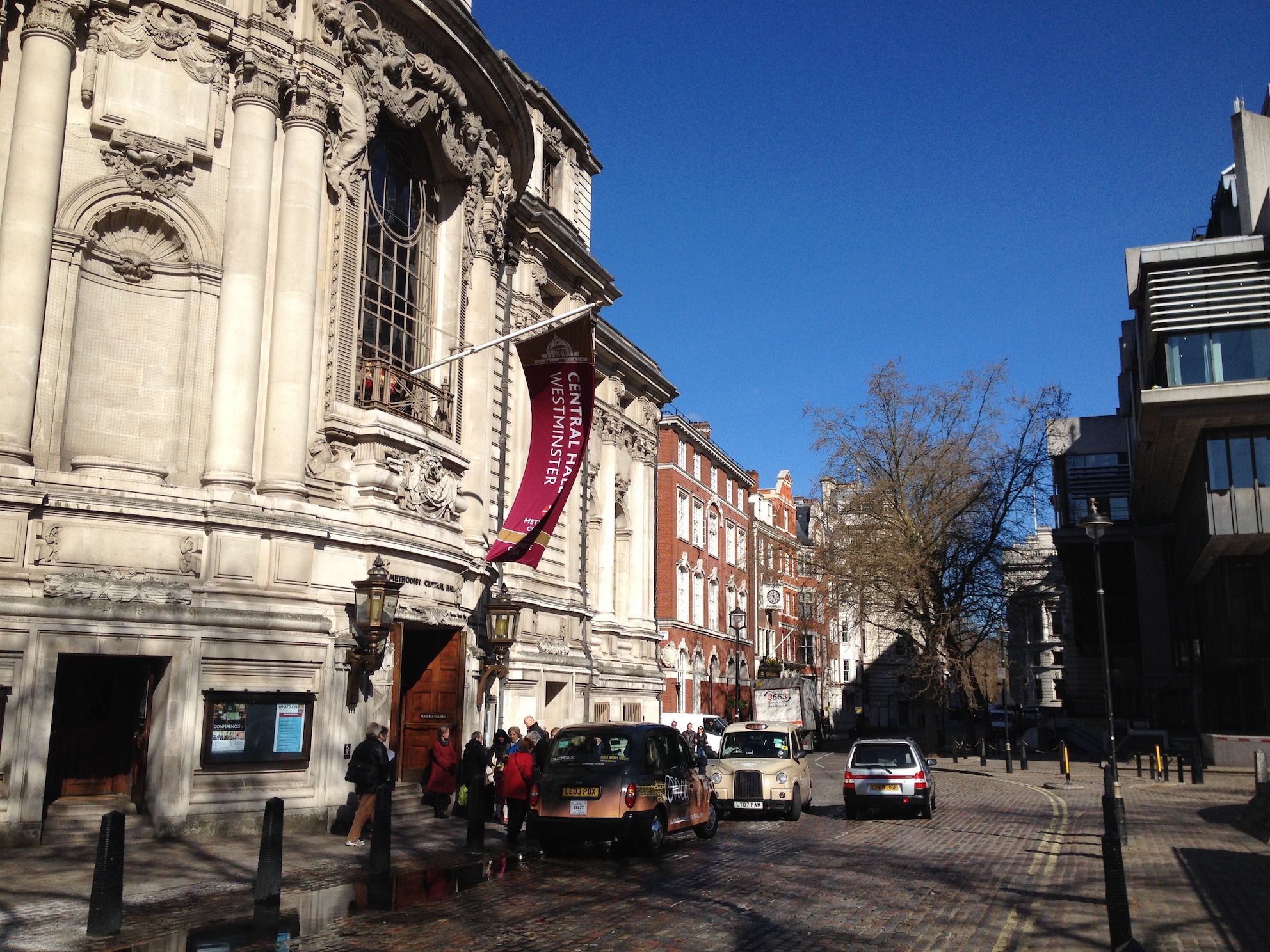
The Central Methodist Hall, Westminster

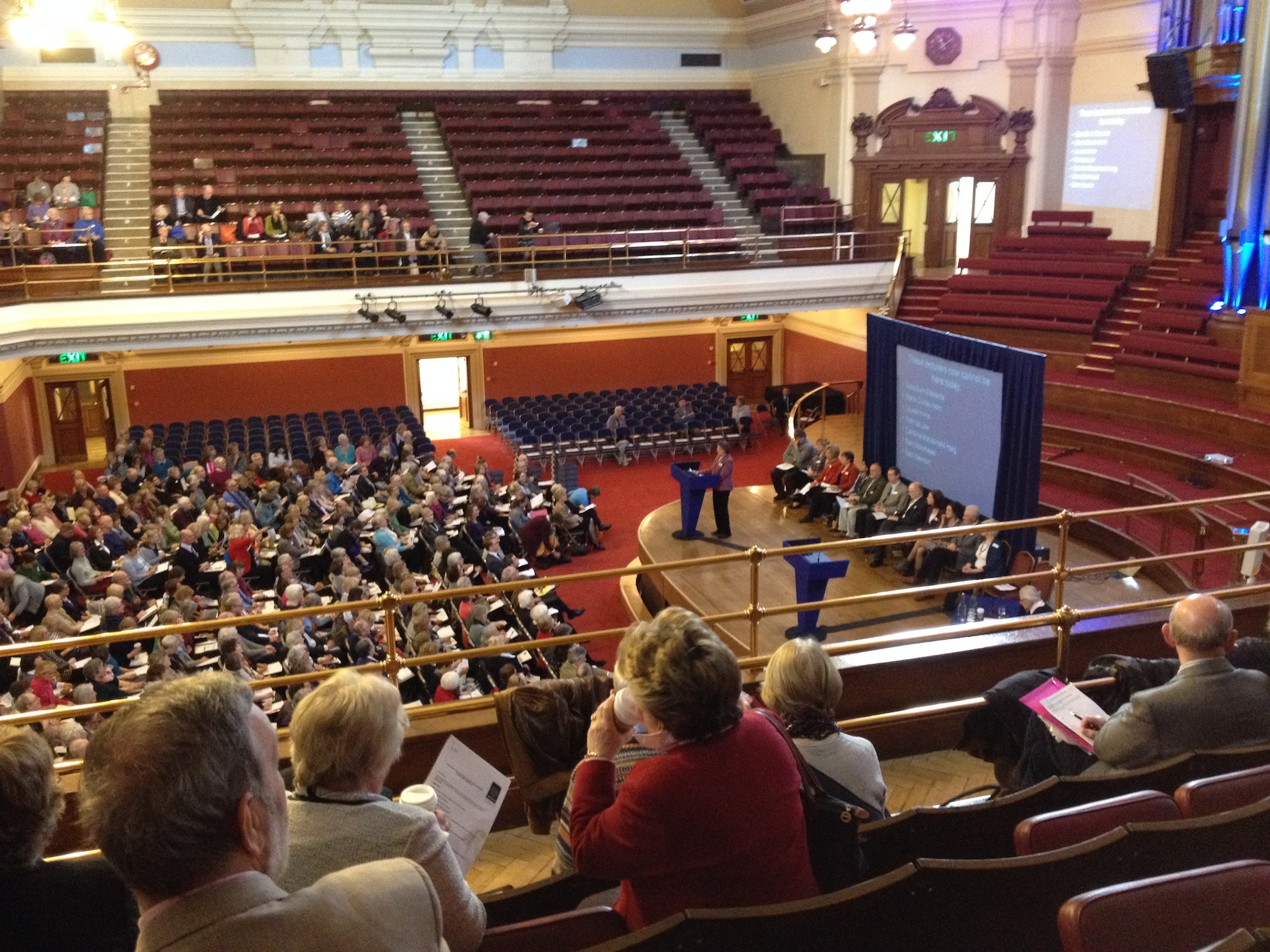
Every second year, I am given a precious opportunity to address the NADFAS Annual Directory Meeting at the sumptuous Central Methodist Hall, Westminster. Established lecturers are allotted a mere minute in which to peddle their wares. The aim is to introduce new talks and to persuade the secretaries of the regional societies, by their charm, eloquence and originality, to book them.

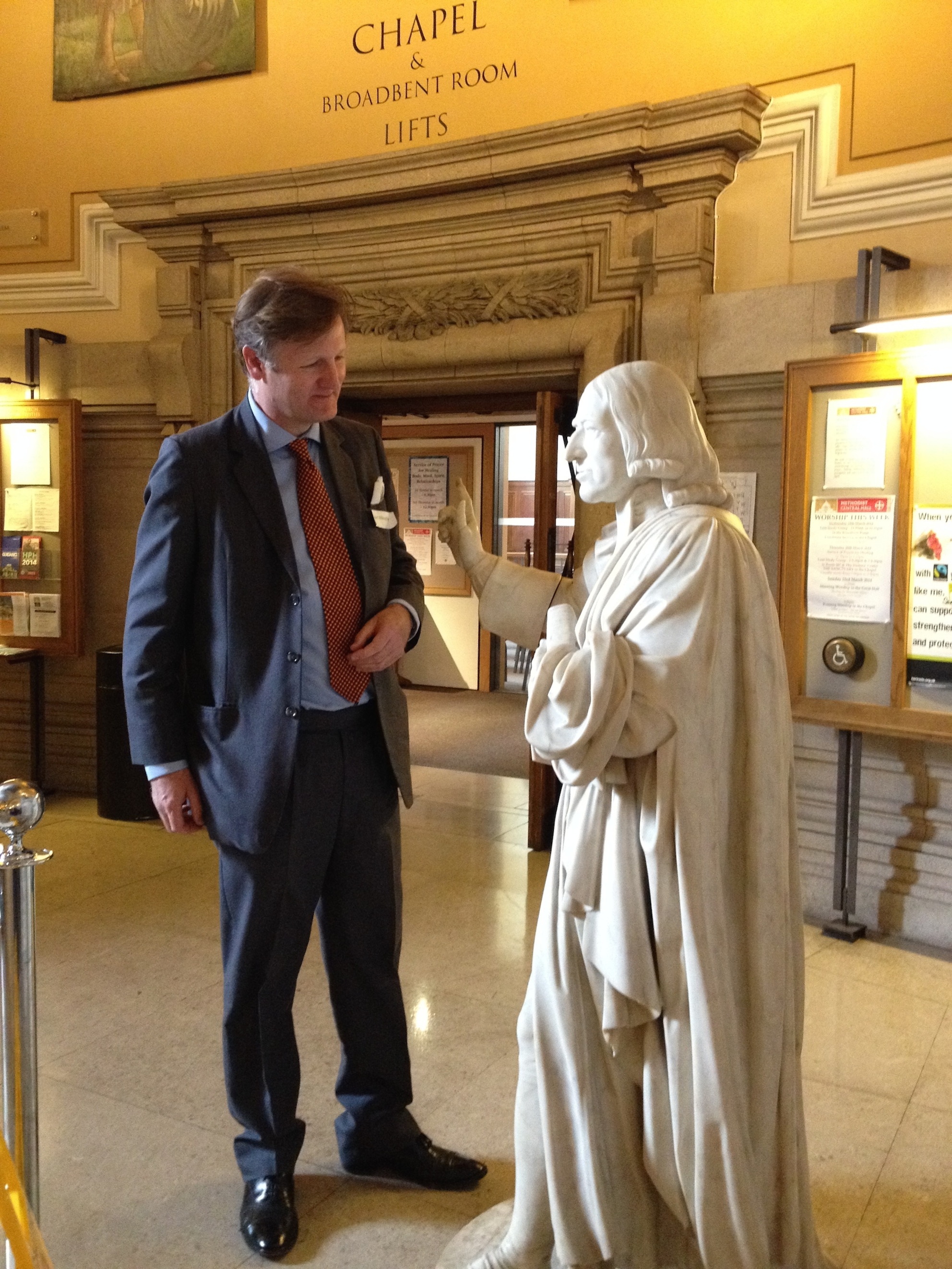
Rupert Willoughby in conversation with John Wesley

The new lectures that I am offering this year are ‘The Normans – Conquest and Legacy’, and ‘Knight Errant: The Life and Adventures of William the Marshal’, which I have already delivered many times on the provincial circuit. It is almost a cruelty to have to compress one’s enthusiasm into a mere minute. If only I been allowed to speak for two minutes, I would have said the following:

Ladies and gentlemen, in 2016, it will be 950 years since the Normans invaded England. The roughest of company, they came to this country not to civilise, but to seize. A mere eleven men in Duke William’s inner circle enjoyed an unprecedented bonanza, receiving almost half the land of the conquered kingdom. There followed an orgy of building in what was described as ‘a new manner’ – castles, churches, monasteries and cathedrals – that all but effaced the physical traces of Anglo-Saxon England. It was their way of showing us who was in charge.

These fabulously rich Norman patrons, many of them crusaders who had witnessed the marvels of the East, enabled a great flowering of indigenous craftsmanship. The ebullience of ornament that characterised this period is termed ‘Norman’. It was, in fact, peculiarly English.

My account of the mass of post-Conquest masonry, from landmarks like Dover Castle to humble parish churches, is made personal by reference to individual invaders – men like the deeply unpleasant Baldwin de Redvers, lord of the Isle of Wight. Baldwin’s coterie of Norman knights have left a considerable physical and cultural legacy on the Island, as well as actual descendants. I can offer you an insight into the lives of these men – as well as the disgusting details of William the Conqueror’s funeral.

Not for the faint-hearted

Continuing the Norman theme, my lecture on William the Marshal thrillingly evokes a gorgeous world in which the knights were dominant. In their coats of mail like silk shirts and their golden spurs, these were ‘the angels men complain of, who kill whatever they come upon’. William has a key role in the story of Magna Carta. He is a national figure of the stature of Drake or Nelson, and deserves to be better known.

By the way, if the diet of medieval stuff is too heavy for you, rest assured that ‘Basingstoke and its Contribution to World Culture’ is still available.

For the text of my address in 2012, outlining my other NADFAS lectures, see the earlier blog ‘Wooing NADFAS: Setting Out One’s Stall at the Annual Directory Meeting’, at http://www.rupertwilloughby.co.uk/archives/912.

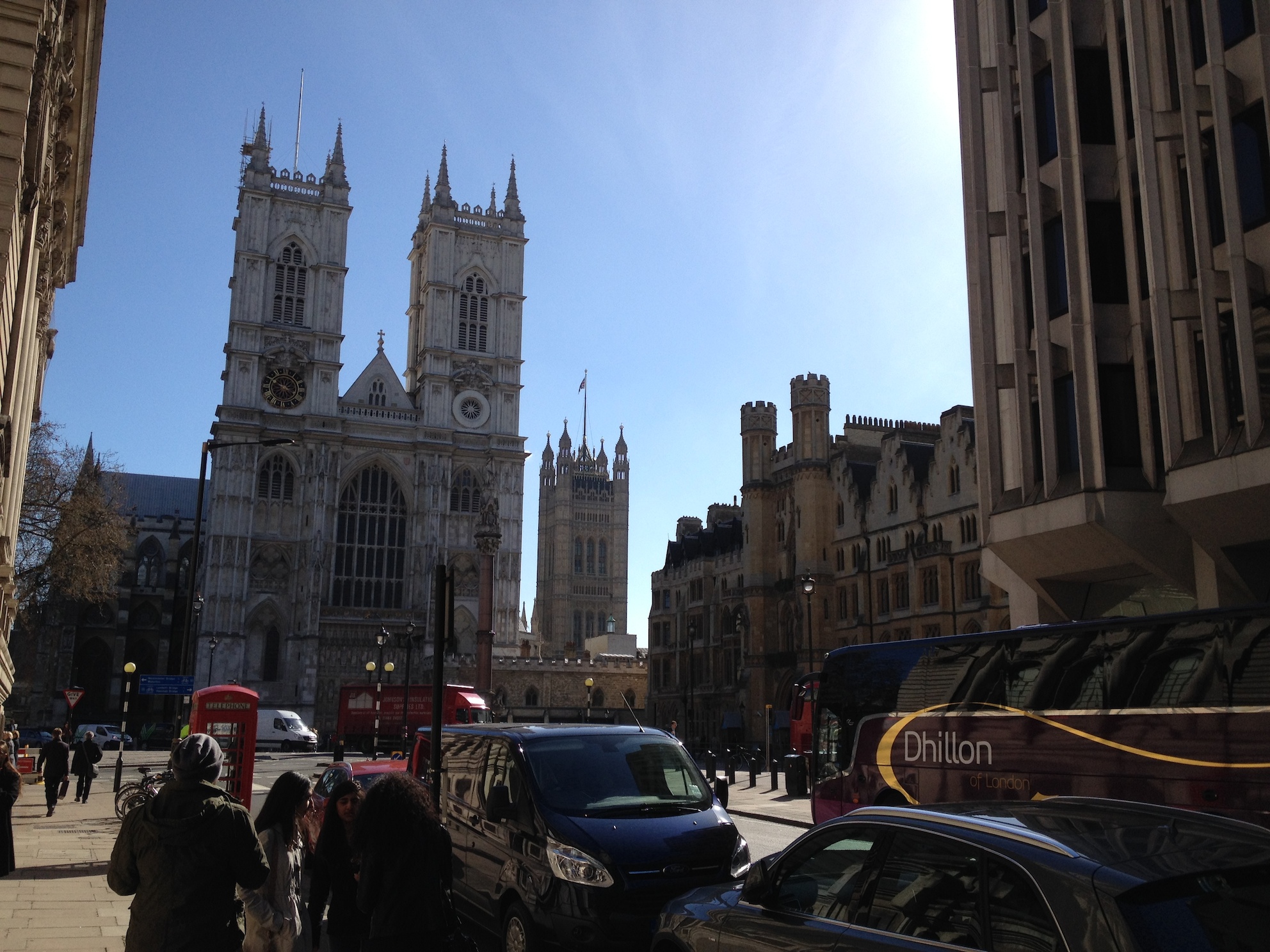
Westminster Abbey from the Central Methodist Hall

Sir Walter Ralegh’s Tobacco Pouch

March 27th, 2014

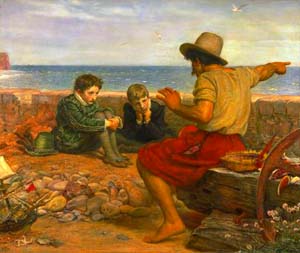
Millais, The Boyhood of Raleigh (1870)

Commenting on my previous blog, my brother (a keen smoker) writes of Sir Walter Ralegh: ‘I am bewildered as to why he was beheaded. He is a national hero not least for introducing tobacco to this country. I still have a copy of the famous painting of him in Budleigh Salterton just outside the gentlemen’s club on the seafront.’ We were both brought up on Millais’s ‘Boyhood of Ralegh’, which hung in our bedroom in our grandparents’ house in the town, close to Ralegh’s birthplace at Hayes Barton. The same house, which had an enormous library and stained glass windows, and paths made up of pebbles from the beach, had been the residence of Dr Brushfield, the distinguished antiquary, to whose ‘Raleghana’ I owe much of the information in my article.

My brother may enjoy this image of Sir Walter’s tobacco pouch:

http://wallacelive.wallacecollection.org/eMuseumPlus?service=ExternalInterface&module=collection&objectId=64809&viewType=detailView.

Made of leather, clay, bamboo, wood and silver, it dates from the period of his incarceration in the Tower and is inscribed ‘W.R. 1617’, within a heart. A further inscription reads: ‘Comes meus fuit in illo miserrimo tempore’ (He was my companion during that unhappy time). Ralegh gave the pouch to a friend, Sir Henry Spelman. Thence it passed to Ralph Whitfield of the Barbican and by descent through the Whitfield family until acquired by Sir Richard Wallace. When I visited the Wallace Collection the other day I was disappointed to discover that it is not on display there, but is kept in the Reserve Vault in the basement.

The Head of Sir Walter Ralegh, and its Supposed Burial Place in West Horsley Church

March 27th, 2014

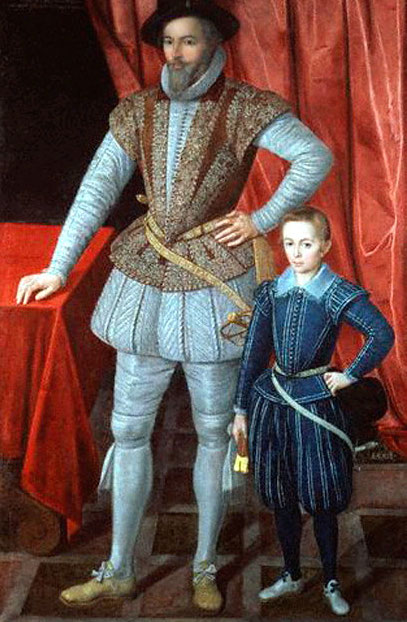
Sir Walter Ralegh and his son Wat, 1602

On the eve of his execution, Sir Walter Ralegh bade farewell to his wife, Bess, at the Abbey Gatehouse at Westminster. She was distraught, and particularly anxious that his body should be given up to her for burial. ‘It is well, dear Bess, that thou mayest dispose of that dead which thou hadst not always the disposing of when alive,’ he said.

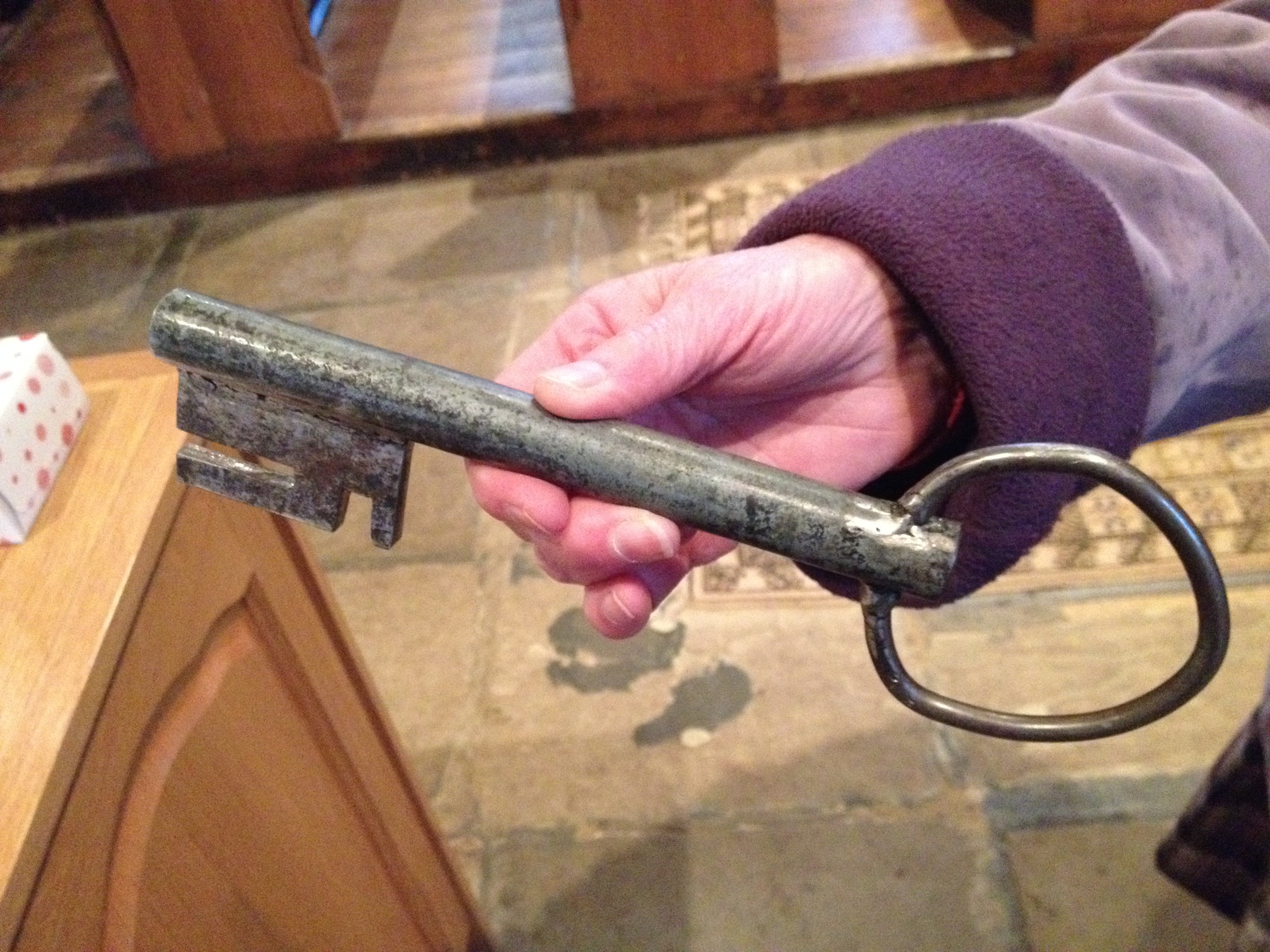
Key to West Horsley church

Ralegh went bravely to the scaffold on the morning of 29 October 1618. It took two strokes of the axe to sever his head which, bleeding profusely, was then held up for the inspection of the stunned onlookers. The silence was broken when a clear voice called out from the throng: ‘We have not such another head to be cut off’. It was an expression of the general mood.

Having been ‘showed on both sides of the scaffold’, Ralegh’s head was ‘put into a red leather bag, and his wrought velvet gown thrown over it, which was afterwards conveyed away in a mourning coach of his lady’s’. As she had feared, Bess was to be denied the disposing of her husband’s body. It was buried not at her brother’s church of Beddington in Surrey, as she would have wished, but in St Margaret’s, Westminster, on the south side of the altar.

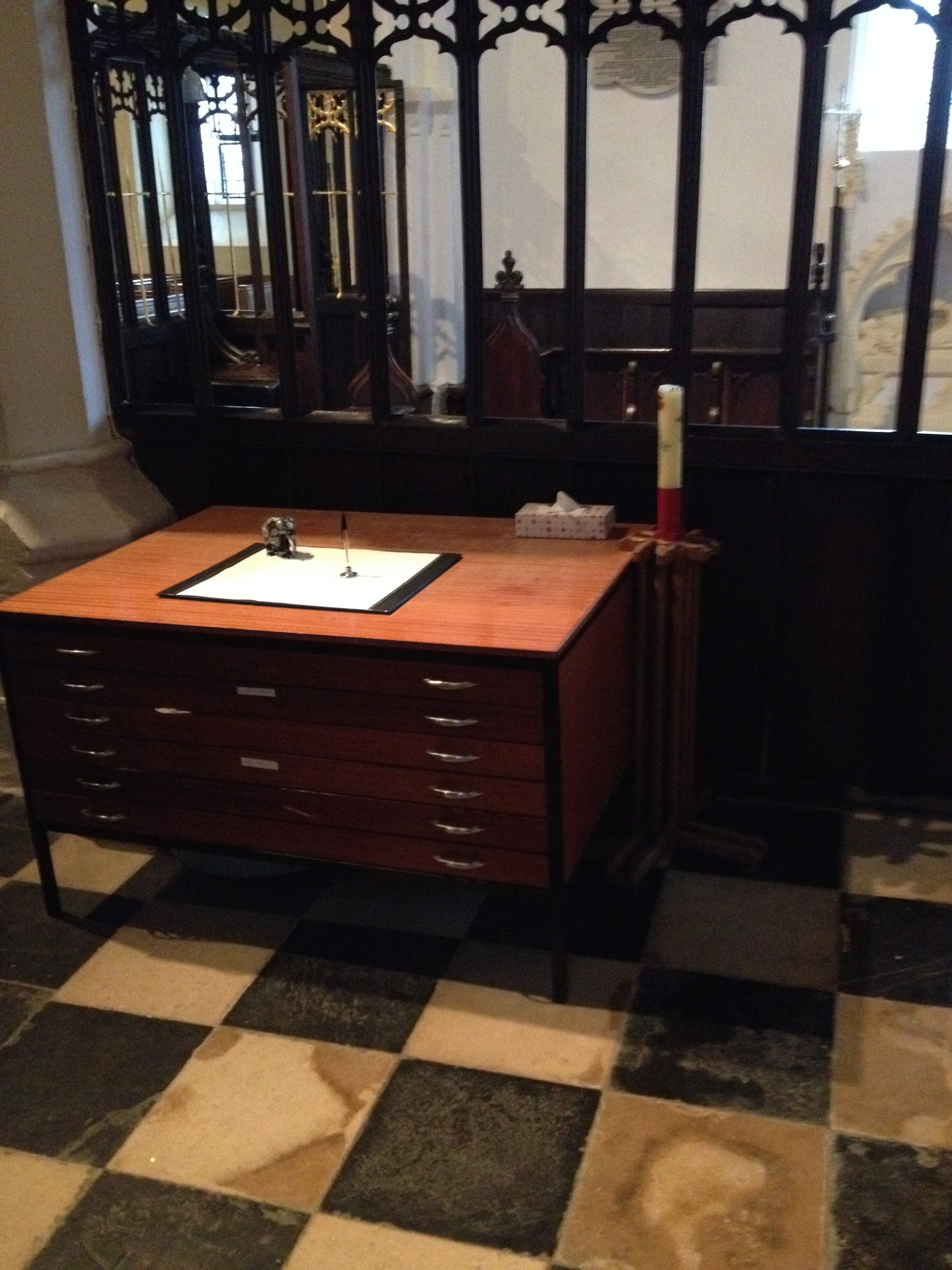
Filing cabinet marking Ralegh tomb

As for the head, it ‘seems that Bess had it embalmed and kept it with her to her dying day, and after her it came to her son Carew, with whom it was buried’ (A.L. Rowse, Ralegh and the Throckmortons, London 1962, p.319). Bess died in 1647, having lived with Carew, from 1628, in the manor-house at East Horsley in Surrey (which he purchased), and from 1643 in that of neighbouring West Horsley, where he succeeded his uncle, Sir Nicholas Throckmorton (Rowse, pp.329, 330). They also had a house in St Martin’s Lane, Westminster: Carew retired to it late in life, after selling his Surrey estates. He was ‘killed’ in unknown circumstances towards the end of 1666, and buried close to his father in St Margaret’s Church.

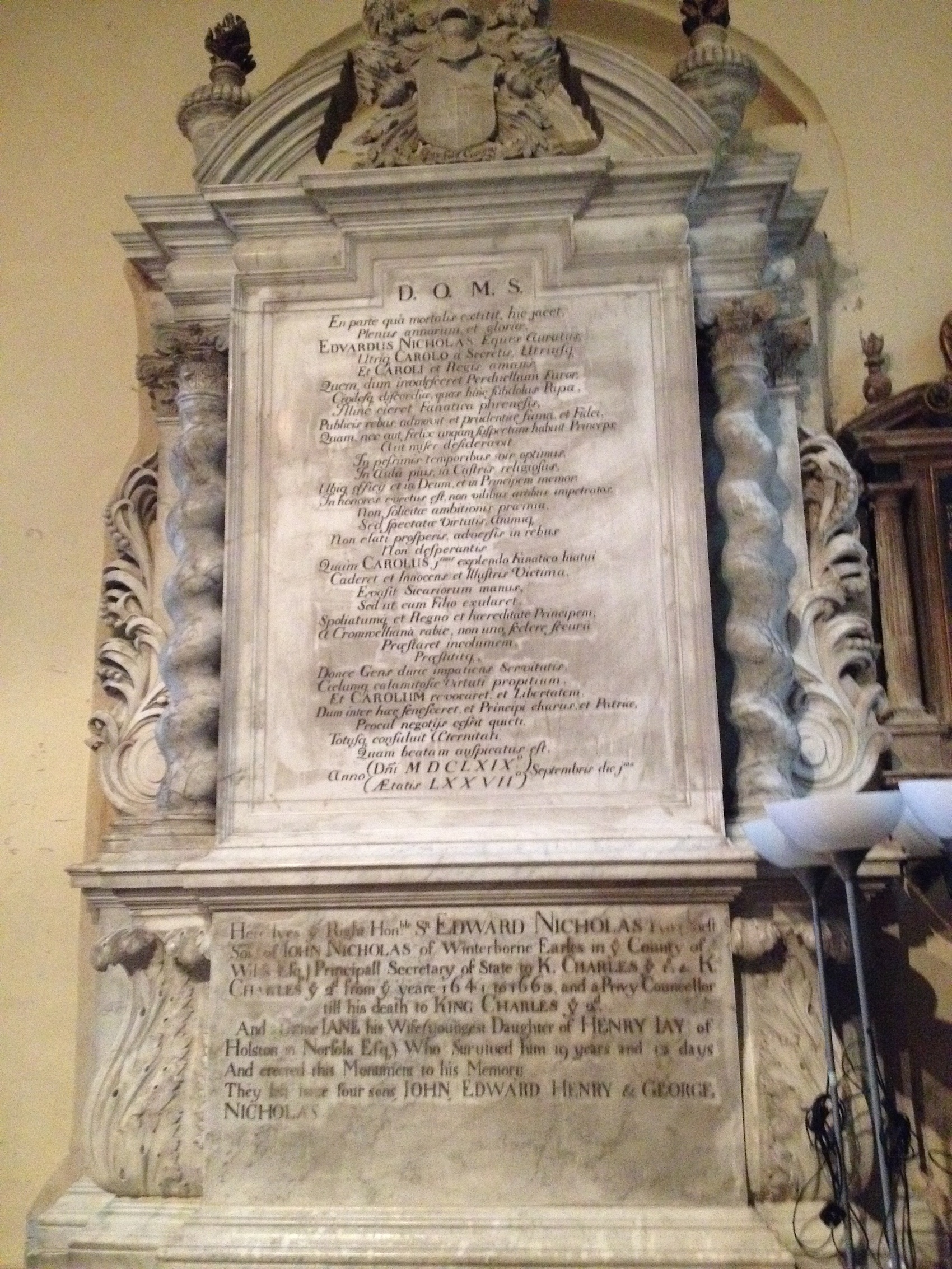
However, the parish register of West Horsley records Carew Ralegh’s re-burial in the church there in September 1680. According to the evidence of a young lad who witnessed the event – the son of Sir Edward Nicholas, to whom Carew had sold the estate – he was reunited in the tomb with his father’s head.

The tomb – in a side chapel, surrounded now by splendid monuments to the Nicholas family – is unmarked, but a kindly and well-informed member of the West Horsley Decorative and Fine Arts Society, to whom I lectured the other day, admitted me to the church with a magnificent key and pointed out the position to me, precisely under the front right-hand leg of the filing cabinet in my picture, but occupied until quite recently by a monstrous Victorian organ.

Nicholas monument in West Horsley Church

The Horn of Ulphus in York Minster, the first ‘Algernon’ and the Origin of the Scrope Family – in tribute to the Harrogate Decorative and Fine Arts Group

January 23rd, 2014

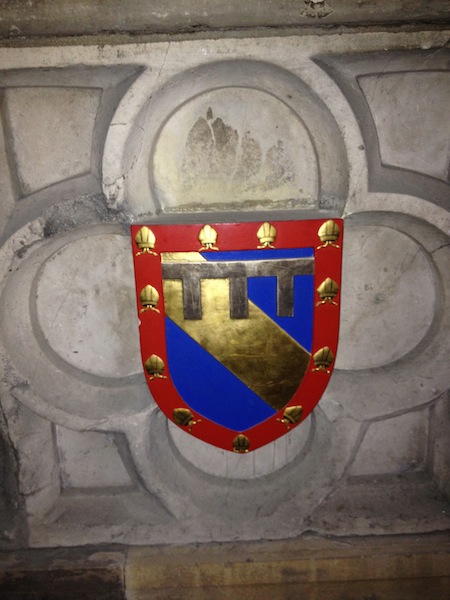
Heraldry on the restored tomb of Archbishop Scrope in York Minster

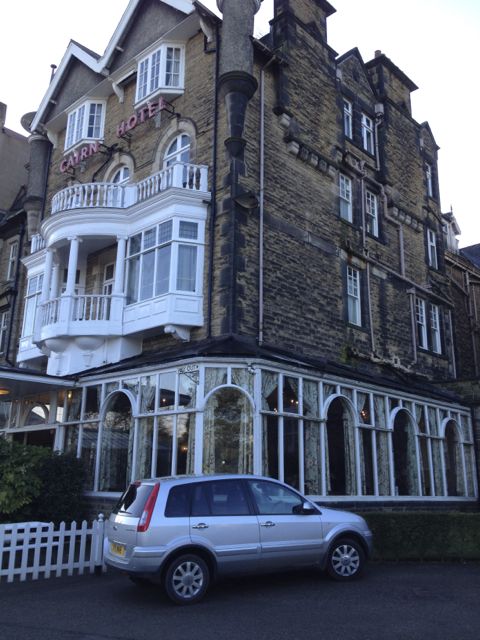
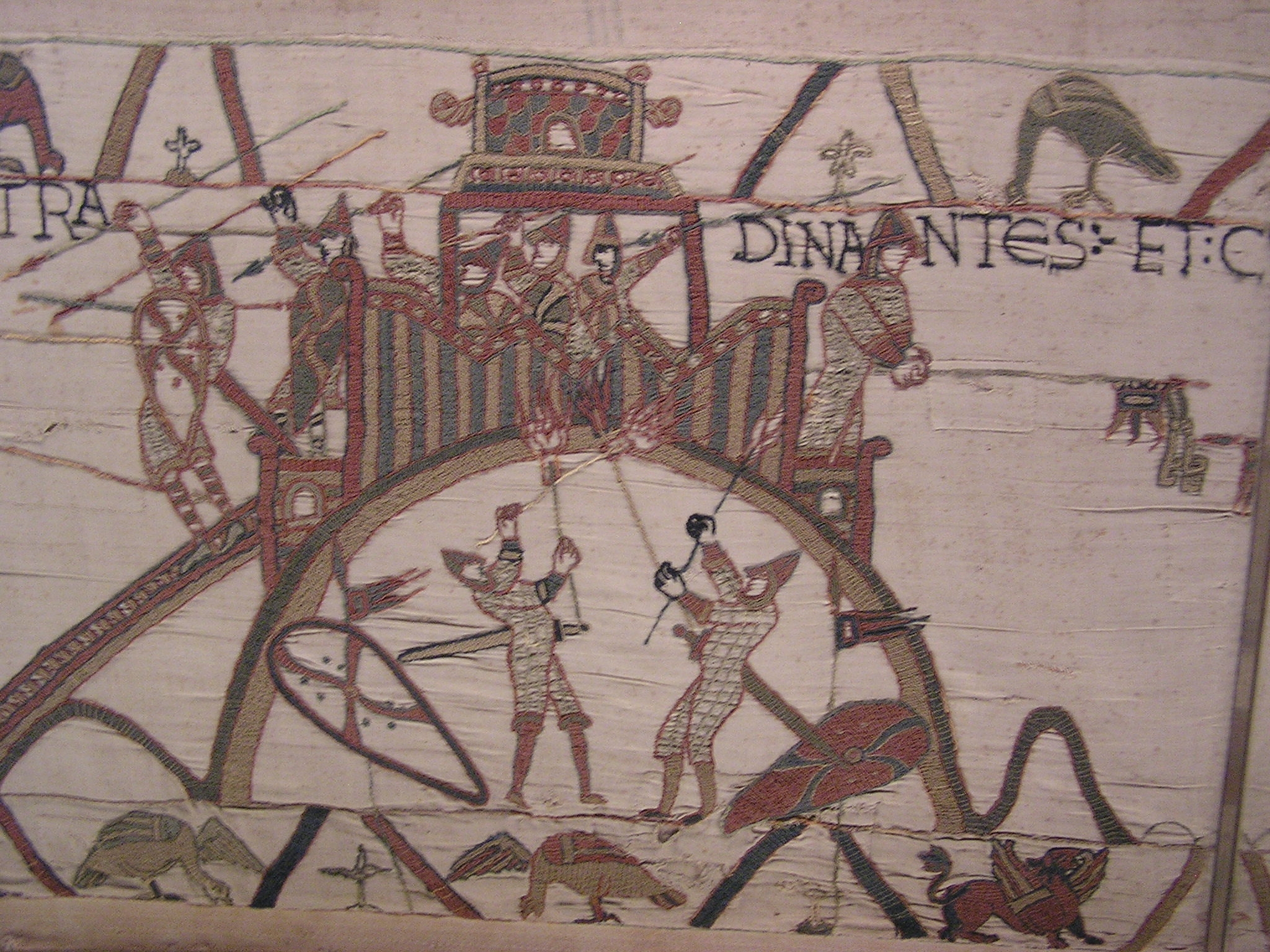
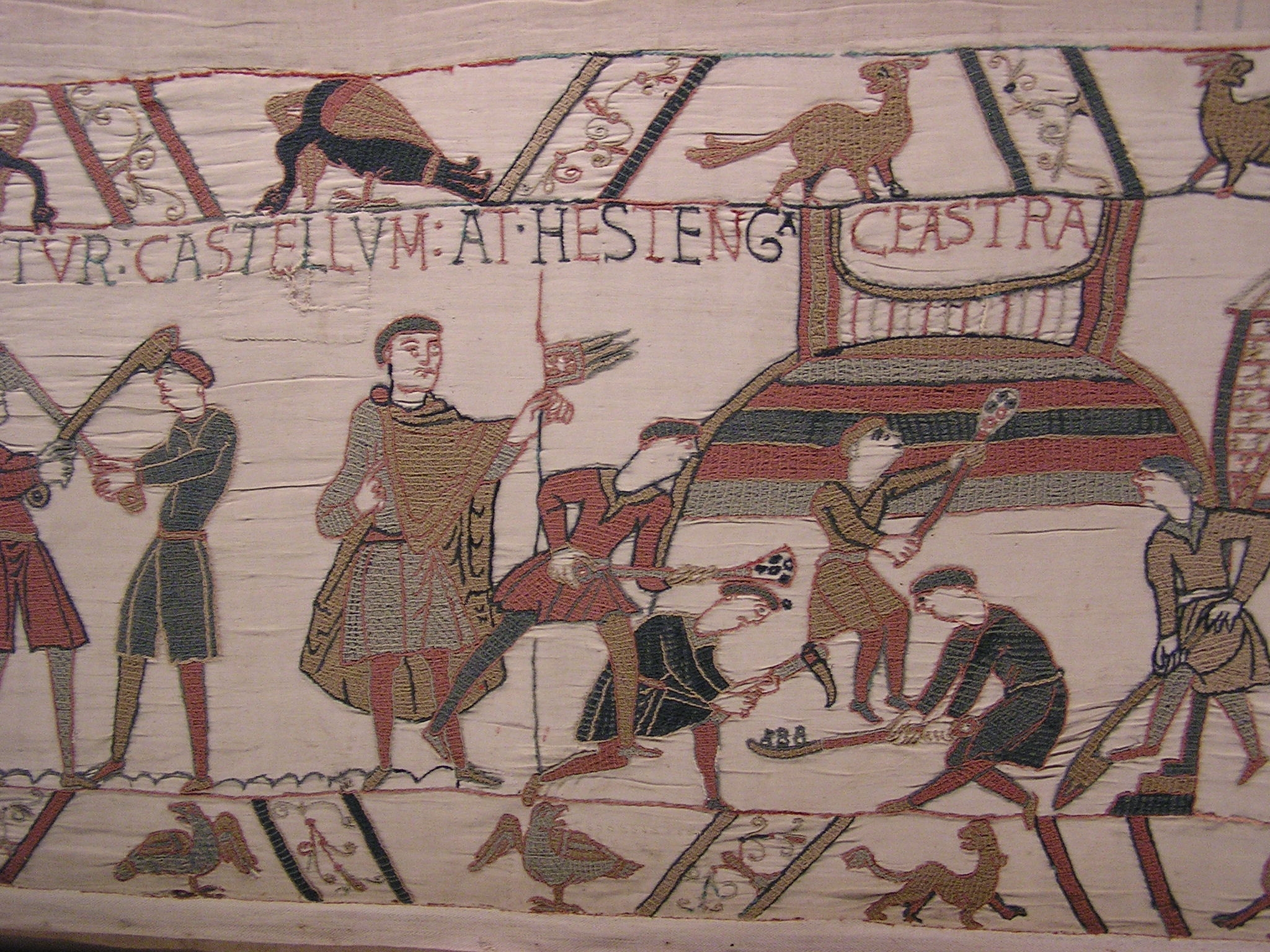
It is the agreeable and, I think, unique custom of the Harrogate Decorative and Fine Arts Group to invite visiting lecturers to contribute to their scrap-book. On Monday 20 January I lectured to them on the Bayeux Tapestry, in the elegant setting of the Cairn Hotel. I expected the ballroom to be cleared at any moment in readiness for the next thé dansant. My talk was not short of references to North Yorkshire, which, apart from anything else, was the scene of Harold Godwinson’s triumph in 1066 over the Viking army at Stamford Bridge. Here, then, is a summary of such references as my offering to the society.

The Cairn Hotel, Harrogate

The Bayeux Tapestry, completed within a decade of the Battle of Hastings, is wonderfully revealing of the life of the time. Harold Godwinson and other nobles are, for example, inseparable from their hawks, a detail that written histories tend to omit. Moreover, the artist is strictly accurate in his depiction of the hairstyles of the day. The smart, military haircuts of the French knights are contrasted with the shoulder-length hair and wispy moustaches of the English.

A Norman with facial hair stood out from the crowd. One such was William de Perci, the founder of Whitby Abbey, who was known (in the Norman dialect) as als gernons – ‘with the whiskers’. Since the fifteenth century, generations of William’s descendants, who became earls and then dukes of Northumberland, have been christened ‘Algernon’ in his honour. Undoubtedly the most famous ‘Algernon’ was the Victorian poet Algernon Charles Swinburne, whose grandmother was a Percy.

In a scene of Harold feasting in his manor-house at Bosham, Sussex, his retainers use traditional drinking horns. These were prized possessions of the English nobles, often chased with gold and silver and jewels. Usually of ox-horn, they had a design fault: one was obliged to drain them before putting them down. The cup-bearer was constantly in attendance, napkin in hand, to recharge them, and there were endless pledges and toasts. As a result, the English nobles became rapidly inebriated. They were renowned for it.

Incidentally, they would not have been drinking ale or even wine, which was somewhat of a luxury, but mead, which is made from honey. Domesday Book is evidence of immense honey production in England, fuelling the demand for this drink.

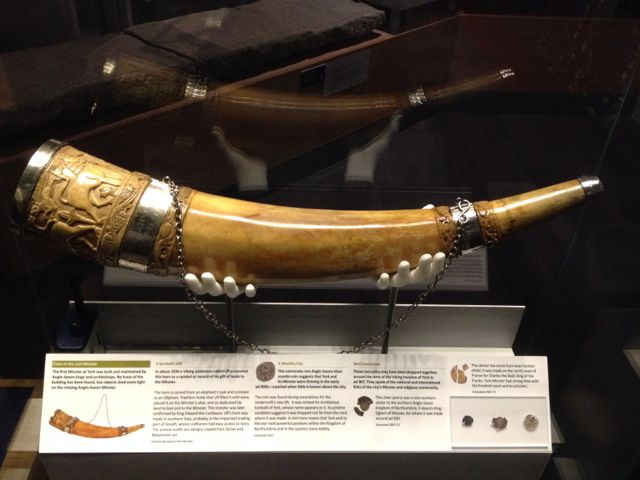
The Horn of Ulphus

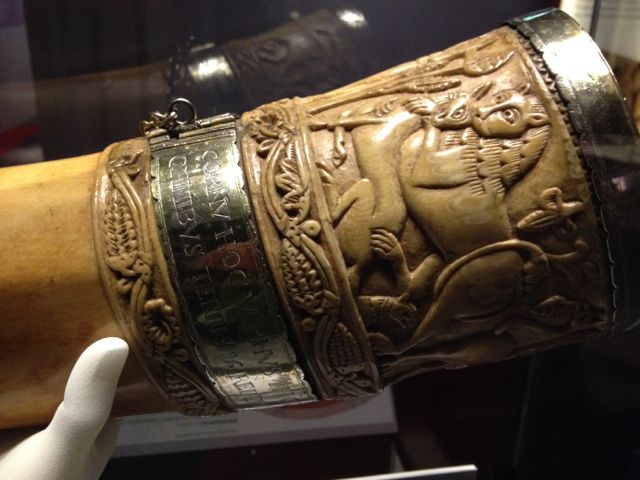
York Minster happens to possess the only horned cup that, to my knowledge, survives from that period. It is known as the Horn of Ulphus. The eponymous Ulf was a Viking who, about 1030, made a gift of it to the Minster, along with a grant of land. He is said to have poured a libation of wine over the altar as a way of marking his donation. A particularly fine example of such a cup, the Horn of Ulphus is not, in fact, an ox-horn but an oliphant – carved from an elephant’s tusk. It is thought to have been a product of Amalfi in southern Italy, where there were ready supplies of ivory. The animal motifs are, moreover, copied from Syrian and Babylonian designs. An early Frith postcard shows it hanging from a hook on the panelled wall of the Vestry, where it was no doubt kept for centuries. It is now displayed, more reverentially, but less in the original spirit of the gift, in a glass case in the Treasury.

Finally, North Yorkshire is the heartland of the Scropes, one of the most prominent British families of Norman descent. Unusually, they were already settled in England at the time of the Conquest, their ancestor, Richard FitzScrob, being one of Edward the Confessor’s Norman favourites. They had no doubt met during Edward’s twenty-five years in exile in Normandy, while Cnut and his son held sway in England. Richard seems to have built Richard’s Castle in Herefordshire, one of a number of pre-Conquest outposts against the Welsh. Presumably of the ring-work (ditch and palisade) type, these were the earliest true castles in England. They are an innovation otherwise associated with the Norman Conquest.

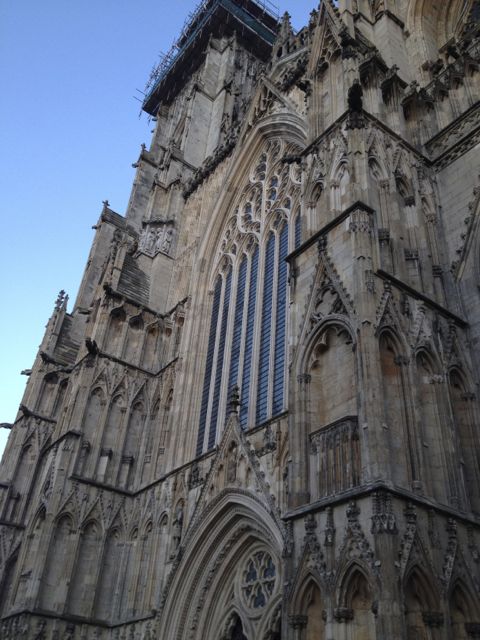
York Minster

The Scrope family motto, Devant si je puis (‘Forward if I am able’), is a sardonic allusion to their name. Scrob means ‘crab’ in the Norman dialect. Establishing themselves in Wensleydale in the 12th century, Scropes distinguished themselves on the Crusades and in the Hundred Years War, were regularly summoned to medieval parliaments as barons, and have produced five Garter knights, as well as an Archbishop of York in the person of Richard Scrope. My obituary of a recent head of the family, Simon Scrope (1934 – 2010), can be read on The Daily Telegraph website – http://www.telegraph.co.uk/news/obituaries/7607958/Simon-Scrope.html.