God Bless Nellie Lemar: Patrick Leigh Fermor and his Expulsion from the King’s School, Canterbury

November 11th, 2013

No.2 Dover Street, Canterbury (second building from right) - scene of Patrick Leigh Fermor's romantic encounter with Nellie Lemar. The city walls are in the distance

The King’s School, Canterbury, in the precincts of the Cathedral, is reputedly the oldest school in the world. Believed to have been founded by St Augustine in 597, it was incorporated by Henry VIII in 1541. Its foundationers are called ‘King’s Scholars’ in his memory.

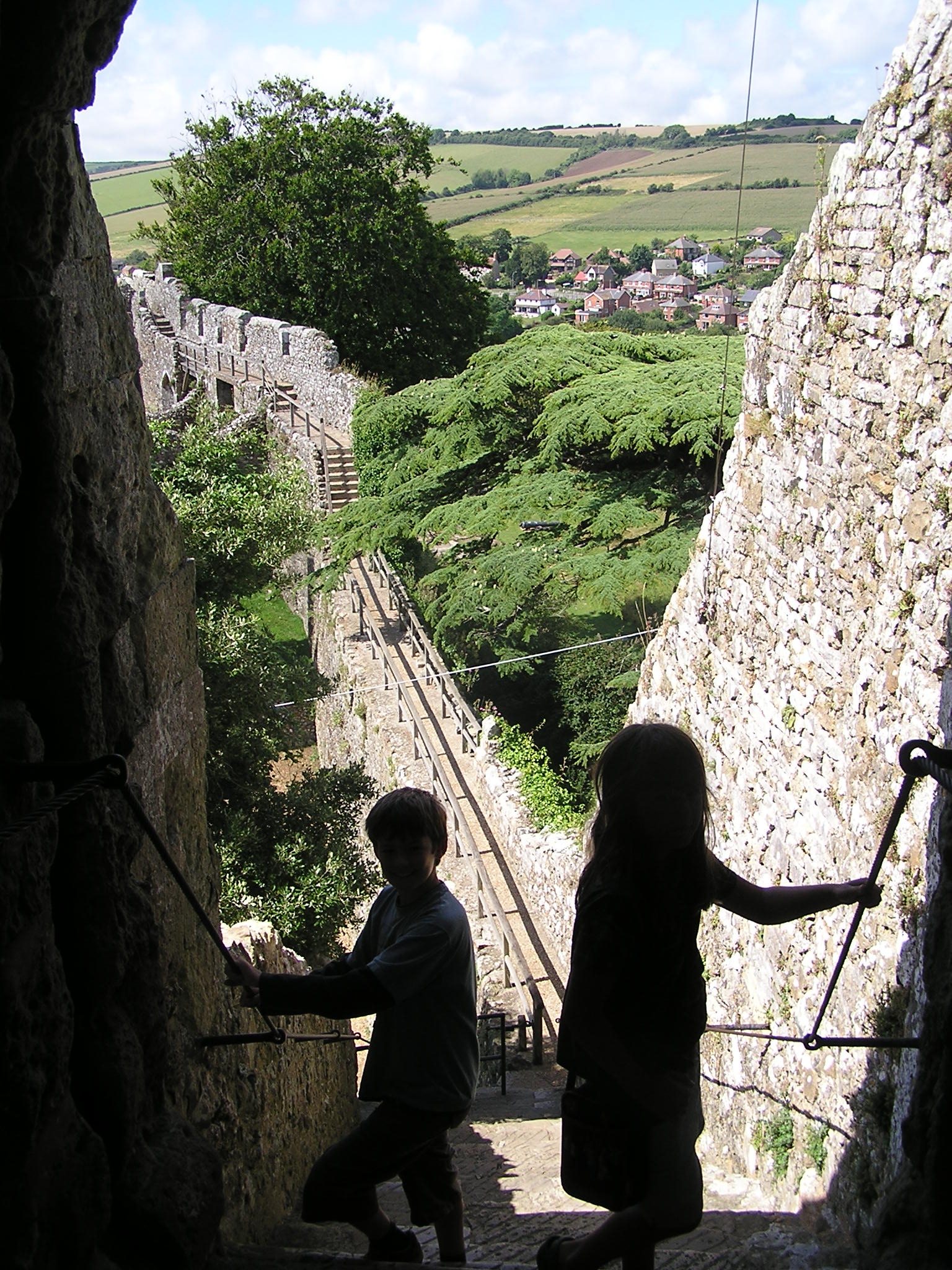
The stupendous Norman staircase at the King's School, Canterbury - Galpin's in the background

For Patrick Leigh Fermor, who attended the school from 1929 to 1932, there was ‘a wonderfully cobwebbed feeling about this dizzy and intoxicating antiquity’ (Time of Gifts, p.15). Paddy boarded in The Grange (now the music department), where his housemaster was Alec Macdonald. Humane and unconventional, Macdonald struggled against the prevailing snobbery, reminding his boys on one occasion that they would all have ‘common’ accents if they ‘lived a hundred yards from here’. I remember that as late as the 1970s, the boys at my own nearby prep school – a ‘feeder’ for King’s – gave short shrift to anyone affecting such an accent.

Though a natural rebel and misfit, Paddy threw himself into school life. It was at Canterbury that he discovered Horace’s Ode 1.9, ‘To Thaliarcus’, famously recited in a mountain-cave in Crete to General Kreipe. However, ‘it was a one-sided love in the end’. Paddy’s downfall was what he described as ‘a bookish attempt to coerce life into a closer resemblance to literature … Translating ideas as fast as I could into deeds overrode every thought of punishment or danger; as I seem to have been unusually active and restless, the result was chaos’ (Time of Gifts, p.16).

The Old Grange - Patrick Leigh Fermor's boarding house

Inflamed by images of ‘long-necked, wide-eyed pre-Raphaelite girls’, Paddy flirted in desperation with one of the school kitchen-maids, who is described by his contemporary, Alan Watts (In My Own Way, London 1973, p.73), as ‘dowdy’. He then discovered a more deserving object of his gallantries in the person of a grocer’s daughter, one Nellie Lemar, who was ‘the vision of just such a being’.

Paddy describes how his ‘latest wanderings’ had led him ‘beyond the Cattle Market’ to an area of the town – just outside the city walls – that was decidedly on the wrong side of the tracks. Dover Street was – and is still, for it survived the ‘Baedeker Raid’ that devastated much of the surrounding area – made up of creaking jettied buildings of great age and mean Victorian terraced houses that would have been occupied by the very poorest members of the community, interspersed with a sprinkling of disreputable-looking pubs and beer shops. To frequent such an area ‘broke a number of taboos too deep-rooted and well-understood to need any explicit veto’.

A quaint mixture of styles - the farther end of Dover Street

Paddy describes the greengrocer’s shop that Nellie ‘tended for her father’ as ‘a sweet-smelling cave set dimly with flowers and multicoloured fruit and vegetation’. She ‘was twenty-four, a ravishing and sonnet-begetting beauty … I can see her now and still hear that melting and deep Kent accent. This sudden incongruous worship may have been a bore but she was too good-natured to show it, and perhaps she was puzzled by the verse which came showering in.’

Heading for the shop as often as he could, Paddy was hardly inconspicuous in his black clothes, wing-collar and boater. ‘My footsteps were discreetly dogged, my devices known and after a week, I was caught red-handed – holding Nellie’s hand, that is to say, which is about as far as this suit was ever pressed; we were sitting in the back-shop on upturned apple-baskets – and my schooldays were over.’ An exasperated Alec Macdonald, who regarded Paddy as a persistent troublemaker, had duly sent him to the headmaster and he had been summarily ‘sacked’ (Artemis Cooper, Patrick Leigh Fermor: An Adventure, London 2012, pp.20-7).

His expulsion from King’s was a considerable setback for Paddy, who had yet to sit his School Certificate exams. Had he remained at school, he might have ended up at Sandhurst or at Oxford. As it was, he was to embark in December 1933 on the epic journey across Europe that would take him, on foot, to Constantinople and beyond, immortalised in his trilogy, The Time of Gifts, Between the Woods and the Water and The Broken Road. Literary history owes much to Nellie Lemar, without whom these books would never have been written.

According to Kelly’s Directory of Kent and Sussex (1927 edition, p.157), the premises of ‘Edward Jn. Lemar, greengro.’, were at no.2, Dover Street. (The Lemars were well entrenched here: I note that a Mrs Emily Mary Lemar was the landlady of the Bee Hive Public House, further down the street at no.52.) I am glad of the opportunity to recognise this literary landmark, pictured above, which today is the Lanna Thai Restaurant. It is otherwise unmarked.

Not a suitable area for well-bred boys

Mottes, Baileys and the Bayeux Tapestry

October 25th, 2013

J.M.W. Turner's 'Okehampton' (c.1826)

The Bayeux Tapestry, made within about ten years of the Battle of Hastings, splendidly illustrates the military architecture of the time. There are five depictions on the tapestry of ‘motte-and-bailey’ castles – those that consisted not of battlemented stone walls and lofty towers, which are characteristic of a later period, but of earthworks and wooden palisades.

The bailey or courtyard was usually on high ground, surrounded by a deep ditch and entered by means of a drawbridge. It was intended to accommodate an entire community. To one side of the bailey, or occasionally in its midst, was the motte, a great cone of earth topped by a wooden stockade, where there was space only for the lord and his immediate entourage. The banks of mottes were notoriously steep and difficult to storm.

These were relatively cheap, hastily-erected fortifications, which any peasant or soldier had the skills to construct. They had proved their usefulness during the minority of William the Conqueror, when Normandy had been ravaged by private wars. The erection of numerous motte-and-bailey castles had been a feature of this dark period, when country people had had to organise their own defence, sometimes under the leadership of the parish priest.

Many of the feuding families of that time, such as Montfort, Tosny, Beaumont and Montgomery, were subsequently to participate in the conquest of England. As they spread across the land, reaping their rewards, they erected yet more motte-and-bailey castles as a means of subduing the native population, who had enjoyed years of peace and stability and were unfamiliar with castles of any kind.

The Englishman who designed the Bayeux Tapestry, thought to be an artist of the Canterbury School, had clearly experienced the post-Conquest castles at first hand. In some of the early panels of the Tapestry, we see Harold and William participating in a minor campaign in Brittany. The artist depicts the Breton castles of Dol, Rennes and Dinan, which he would never have seen, as typical motte-and-bailey castles, though all three were probably at least partially built of stone. The ducal castle at Bayeux is also credited with a motte which, in reality, it never had.

The Castle at Dinan was never of the motte-and-bailey type

The observant artist is very precise in matters of detail. The tower at Dinan appears to consist of a fighting platform raised on stilts. Evidence of such a tower has been found at Abinger in Surrey. He neatly illustrates the inherent weaknesses in their design. Wood is flammable, and the Normans have only to apply firebrands to the walls of Dinan in order to smoke out their enemy. Moreover, it is not possible to raise walls of wood to any great height: those at Dinan are so low that the surrendering rebel, Conan, is able to lean over them and pass the heavy keys of the castle to William at the end of his lance.

Further on, we see the construction, within days of the landing, of a motte-and-bailey castle at Hastings – ‘at Hestenga caestra’, according to the caption. (The Latin should have read ‘ad Hestenga castra’; by slipping into his own tongue, the artist reveals his nationality.) The Englishmen conscripted to perform the task, all armed with shovels, seem thoroughly disgruntled. Such unhappy scenes were soon to be enacted across the land.

Englishmen conscripted to raise a motte at Hastings

At least 84 motte-and-bailey castles had been raised in England by the end of the eleventh century. There are examples in every county. In some cases, temporary wooden walls had soon given gave way to more permanent ones of stone. Castles like Dover, founded by William the Conqueror on the motte-and-bailey pattern, are still dominant features of our landscape.

The subject of two watercolours and other sketches by Turner – the one illustrated above dates from about 1826, and is in the National Gallery of Victoria in Melbourne, Australia – Okehampton, on the edge of Dartmoor, is a castle of the motte-and-bailey type. Early in 1068, William marched into Devonshire at the head of his army, intent on mopping up the remaining pockets of resistance. He took the surrender of Exeter and threw up a castle there, before proceeding into Cornwall, where a further four such castles were swiftly raised.

William gave the lordship of Exeter, and of 200 other manors in Devonshire, to his second cousin Baldwin de Meules, the son of his former tutor, Gilbert, Count of Brionne. By the time of Domesday Book (1086), Baldwin, now called ‘the Sheriff’, had built his chief residence on a raised spur at Okehampton. The motte there, formed of material cut from the surrounding rock, rose a further 80 feet above the natural level. Unusually, it was surmounted from the start by a tall, square tower of stone, which may, indeed, have been three storeys high. The earliest fortifications at Okehampton seem otherwise to have been of wood.

Meanwhile, Baldwin’s brother, Richard FitzGilbert de Clare, was acquiring estates at the opposite end of the country, including the lordship of Tonbridge in Kent, where he built an equally impressive motte that commanded the Medway crossing. Richard was one of William’s inner circle, a mere eleven men among whom he distributed about half the land of the conquered kingdom, apart from that held by the church. The Saxon thegns whom they displaced, men like the shadowy Osfrith at Okehampton, were, if not already killed or exiled, simply dispossessed.

As for Okehampton, it was the eventual inheritance of Baldwin’s great-granddaughter, the lady Hawise, who married Renaud de Courtenay. Their descendants – hereditary sheriffs of Devon, keepers of Exeter Castle and, from 1355, Earls of Devon – have been, ever since, the foremost family in the county. Okehampton Castle was abandoned by the Courtenays in 1538, and is now a romantic ruin, but the present (Eighteenth) Earl, seated at Powderham, near Exeter, continues to occupy ancestral land.

The new ruling class imposed by the Normans has proved remarkably durable. As Melvyn Bragg points out in a recent article, ‘more than half the land is still in the hands of the ancient looters from the time of the Conquest to the Dissolution of the Monasteries and the occupation of the common land’. To describe the current Earl of Devon in such terms seems a little strong. One has to concede that, as far as Baldwin or Richard are concerned, Lord Bragg has a point.

(David C. Douglas, William the Conqueror, London, 1977, pp.41-3, 213, 216-17, 269; Lucien Musset, The Bayeux Tapestry, Woodbridge, 2005, pp.138, 144; Alan Endecott, Okehampton Castle, Devon, English Heritage Guide, 2003. For Melvyn Bragg’s article, see http://www.telegraph.co.uk/culture/9093724/British-culture-may-be-our-new-great-industry.html.

Constant de Thierry des Estivaux, Marquis de Faletans – inventeur du taille-crayon

September 17th, 2013

Constant, Marquis de Thierry de Faletans

L’invention du crayon «de plomb» est créditée aux Anglais en 1564. L’inventeur du taille-crayon était un Français, Thierry des Estivaux. À Paris en 1847, il fait breveter sa conception du tube classique équipé d’un cône qui rétrécit et d’une lame. Il s’agissait d’une invention qui a sauvé les doigts de générations d’écoliers, qui auraient dû tailler la pointe de leurs crayons avec leurs canifs. Il s’agit d’un objet qui est universel et pris pour acquis.

Constant de Thierry des Estivaux était un vaillant officier et patriote. Celui-ci  est né à Paris en 1797, le fils aîné du colonel Gaspard de Thierry, baron des Estivaux en Lorraine, le commandant fringant des 9e hussards pendant les guerres de la Révolution, et sa belle épouse Romarine, comtesse de Faletans et Digoine, une franc-comtoise.

En 1814, alors qu’il était encore écolier, Constant participait à la défense de Besançon, et en 1815, âgé de 17 ans, combattait aux côtés de son père à la bataille de Waterloo,  d’où cinq blessures. Il servit ensuite dans les dragons de Besançon et, à partir de 1822, dans l’armée russe, en tant qu’aide-de-camp personnel de son «oncle», le général comte de Langeron. L’un des grands hommes de son âge, Langeron avait sauvé la vie du duc d’York, le «grand vieux», combattit les Turcs sous Potemkine et commandait une division à Austerlitz. Un parent éloigné, il traitait Constant comme son propre fils.

Constant quittait la Russie après la mort de Langeron en 1831, avec l’intention de s’installer à Paris. Il est arrêté à Briançon, à la frontière française, apparemment sur ​​les ordres d’Adolphe Thiers, le ministre de l’Intérieur. Ses bagages, contenant des documents volumineux de Langeron, ont été saisis. Les documents sont éventuellement placés au ministère des Affaires étrangères à Paris, et dont diverses parties ont depuis été éditées et publiées. Sans toujours l’avouer, Thiers tire pleinement d’eux dans son Histoire de l’Empire (publié dès 1845), duquel, à son tour, son livre fournissait Tolstoï avec beaucoup de son matériel de base pour la Guerre et la Paix (publié dès 1868). Le récit de Langeron du briefing de Weyrother avant la bataille d’Austerlitz constitue la base d’une scène particulièrement mémorable (Livre III, chapitre XI). Tolstoï le fait jouer avec une tabatière en or, tandis qu’il écoute les inanités de Weyrother, un sourire ironique sur son visage alors qu’il tente de piquer sa vanité. Langeron, que Byron avait déjà évoqué flatteusement en vers dans Don Juan, n’aurait pas été mécontent.

Le Château d’Abbans-Dessus (Doubs)

Autant que l’on sache, Constant ne devait plus jamais être officiellement employé. Au lieu de cela, il a essayé sa main comme inventeur. Il  brevetait une de ses inventions en Angleterre en 1839, et, pour aucune raison particulière  utilisait le pseudonyme de «Morillon». Le 21 Avril 1846, il brevetait, cette fois-ci en France, sa conception d’un «propulseur palmipède propre à la navigation maritime et fluviale». Sa tentative d’améliorer la propulsion nous fait penser au  «pyroscaphe», le bateau pionnier avec des rames équipées de lames rotatives propulsé à la vapeur, inventé par son parent âgé, le marquis de Jouffroy d’Abbans, et testé sur le Doubs à Beaume-les-Dames en 1776. À la retraite au château d’Abbans-Dessus (Doubs) dès 1816 Jouffroy d’Abbans était un proche voisin des Faletans (ces derniers s’étaient retirés pendant les périodes troublées dans leur propre château de Busy); transférait-il, peut-être sa passion pour l’ingénierie au jeune Constant. Jouffroy d’Abbans avaient reçu peu de récompense ou de reconnaissance pour son invention, et décédait comme retraité nécessiteux dans l’Hôtel des Invalides, en Juillet 1832. Si Constant ne s’est pas ruiné positivement par ses efforts, de même, ils ne lui ont guère enrichi.

Le Château de Faletans (Jura)

Constant de Thierry des Estivaux a été autorisé à ajouter à son patronyme celui de sa mère, de Faletans, par décret en 1851, et en 1863, après s’être installé au Château de Faletans (Jura) a été créé marquis de Faletans en tant que représentant de la famille marquisale de Faletans, dès lors éteinte. Il était mon arrière-arrière-arrière-grand-père. Jusqu’à tout récemment, je n’avais aucune idée qu’il était l’inventeur du taille-crayon. C’était surement sa plus belle  réussite, mais, malheureusement, celle-ci n’est pas la base d’une fortune familiale. La production en masse de crayons date de la fin du 19e siècle. La demande énorme et continue des crayons, pour les écoles et les bureaux, a décollé dans les années 1900. Constant, lui, est mort en 1871. Il mérite d’être mieux connu.

Mon histoire de la famille, The Incredible Journey of Victor Hugo’s Dog, est en préparation: http://www.rupertwilloughby.co.uk/books.

(This blog was originally published in English in July 2011: see http://www.rupertwilloughby.co.uk/archives/683.)

What the Victorians Did For Us: Sherborne St John as it was 200 Years Ago, and the Interminable Sermons of the Rev. James Austen

September 6th, 2013

St Andrew's Church, Sherborne St John

There was great consternation in St James’s, Bramley, last winter, when the boiler failed, and doughty congregants were left perishing in the pews. However warm the welcome, church-going became a distinctly uncomfortable experience!

To generations of our ancestors, however, central heating would have seemed an unimaginable luxury. Until the nineteenth century, in the absence of all the comforts and conveniences that we now take for granted, attendance at a country church was almost invariably a penance, if not an ordeal.

Vivid descriptions of Sherborne St John, the neighbouring parish, remind us of the sheer discomfort and, frankly, the squalor of our relatively recent past. In 1827, the lordship of the manor was inherited by Wiggett Chute. The estate had been mismanaged for a century and was, in Wiggett’s view, a blot on the landscape. A typical Victorian reformer, he had a keen sense of responsibility towards his tenants and was determined to sweep away the unwholesome relics of the past. He was to do so very successfully, and was the architect – literally – of the prosperous community of today.

Sherborne St John: not so pretty then

The Sherborne of two hundred years ago was an agricultural settlement perched on a sea of mud, with cattle and horses passing to and fro in areas where they are never seen today. There were open streams across the roads that served as sewers (all drinking water was drawn from back-yard wells). The villagers lived in ancient, dilapidated cottages with thatched roofs and, usually, only one bedroom, although they often had large families. Such cottages were not then regarded as picturesque, but as slums.

Sherborne would have seemed much busier and livelier than today, with most people employed at or close to home. The workshops of the various tradesmen – the carpenter, miller, blacksmith, tailor, shoemaker, brewer and so on – were scenes of noise and activity. The place would have swarmed with children, as there was no school to keep them occupied. It was Wiggett Chute who founded the school at Sherborne St John, on the site of a working farm, directly opposite the church. Much to his outrage, the churchyard had been regularly used as a pasture for sheep.

The medieval church was still intact. It bore no resemblance to the spacious and well-ordered church of today, another of Chute’s creations. The seating was crammed into the original nave and chancel. With a low, lathe-and-plaster ceiling that sounds positively dangerous, the building was stuffy in the summer, and freezing cold in the winter.

Prominent among the interior features were the boxed pews of the ratepayers, which occupied the top end of the nave, on either side of a single, narrow aisle. These were high, narrow and uncomfortable. In some cases, there was barely space to kneel.

Whilst the ratepayers sat bolt upright in their allotted pews, the poor of the parish were segregated to the rear according to their sex. They perched on make-shift seats that were ‘not much better than benches with backs’, females on one side of the aisle, males on the other. Attendance was generally good, probably a majority of the village population. Some of the men had to be accommodated in a gallery at the back. They included the best singers, loosely affiliated into a ‘choir’, accompanied by a band consisting of both wind and stringed instruments. Their music, of the type evoked by Thomas Hardy in his novels, is described as ‘primitive’.

The seating arrangements at St Andrew’s were much the same as in any country church. A bizarre and possibly unique feature, however, was the ‘Esquire’s Pew’. So far forward in the nave that it was almost in the chancel, it is described as ‘a large square room with a ceiling over it’. The Chutes could only see out by standing up and peering through a narrow grill. Remarkably, this was a double-decker pew, as there was an upper gallery, reached by a narrow flight of steps. The overhead pew belonged to their grand neighbours, the Brocases of Beaurepaire, although they no longer used it.

Brocas monument in Bramley Church

The Brocases had long since abandoned St Andrew’s for St James’s, Bramley, where their supremacy was not in dispute. The rival families must at one time have had adjacent pews, but one or other of them must forever have been nudging his pew a little further forward, in an attempt to outrank his rival. Eventually, having crossed the line into the chancel, they must have agreed to a compromise in the form of the double-decker pew, ‘in which arrangement,’ says Wiggett Chute in his memoirs, ‘the Brocas appear to have certainly got the upper hand’.

One wonders what the parishioners had made of it. Needless to say, those sitting immediately behind the pew – apparently these were the servants at the Vyne, well forward of ‘the poor’ and clearly ranking high in the village pecking order – would have had no view at all.

This would not have concerned many of the male congregants, whose attendance was unwilling but a condition of their hiring agreement as labourers on the estate. They were not obliged to stay awake. All along the walls on the men’s side, there were permanent stains that had been made by their greasy heads as they slumbered during years of interminable services.

It is as well that they were clad in their warm peasant’s smocks, as winters were harsher then than they are today, there were no double doors, and a single stove provided the only heating. There were no lights, either, except for the pulpit candles, which the clerk would only light immediately before the sermon. The stove almost invariably smoked, adding to the general discomfort.

Few, if any, took part in the responses. Many were unable to read. The lugubrious parish clerk, Smallbones, was himself barely literate. One of his duties was to call up the children to recite their Catechism, a terrifying ordeal. Otherwise they must have been bored stiff. There was a lot of bad behaviour, and Smallbones was constantly administering discipline with a stick. The worst troublemakers could expect to be beaten with the bell ropes after the service.

The Vyne, seat of the Chute family, where Jane Austen's brother dined every Sunday

Presiding over these strange scenes was the vicar, Jane Austen’s brother James, dressed in his black gown and perhaps with powdered hair. There is no knowing whether he preached a lively sermon. Perhaps, like his father, he kept a collection of his own sermons and used them again and again. They were probably sprinkled with archaisms, uncompromisingly erudite and far above the heads of most of the congregation.

The later nineteenth century was marked by the widespread renovation or even rebuilding of country churches, the removal of boxed pews, the introduction of organs and the composition of lively and inspiring hymns, all of which transformed the experience of going to church. Wiggett Chute was in the vanguard of this movement. James Austen’s son was to sum up his achievement as a landlord: it was, he said a general ‘draining and letting in of air and sunshine to the dark places of the earth’. The reforms of Wiggett Chute exemplify in miniature the general improvement in our lives that we owe to the Victorians.

Rupert Willoughby is the author of Sherborne St John and the Vyne in the Time of Jane Austen. See www.rupertwilloughby.co.uk/books.

Queen Victoria’s Private Beach at Osborne, and the Pink-Eyed Cadets of the Royal Naval College

August 5th, 2013

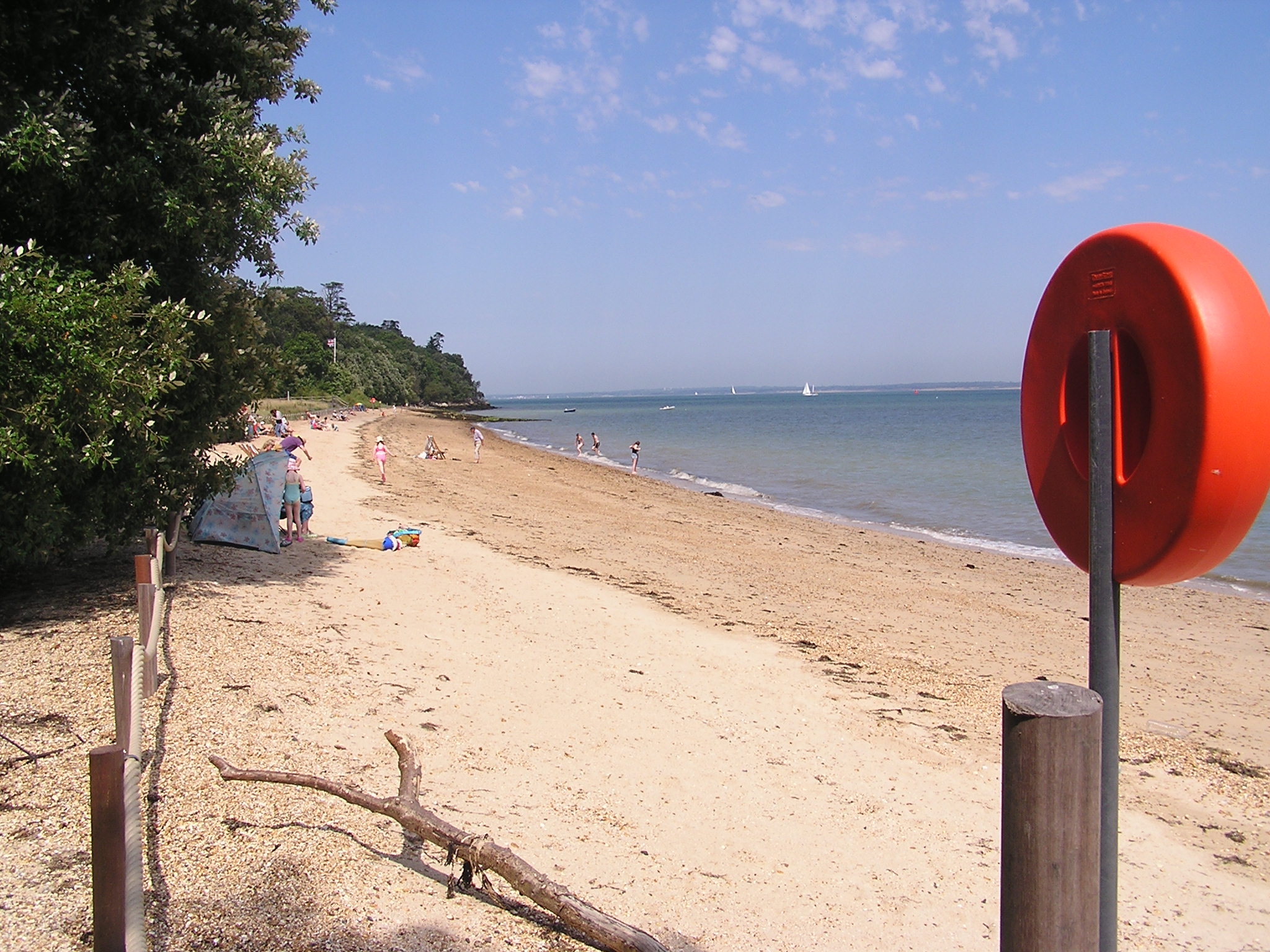
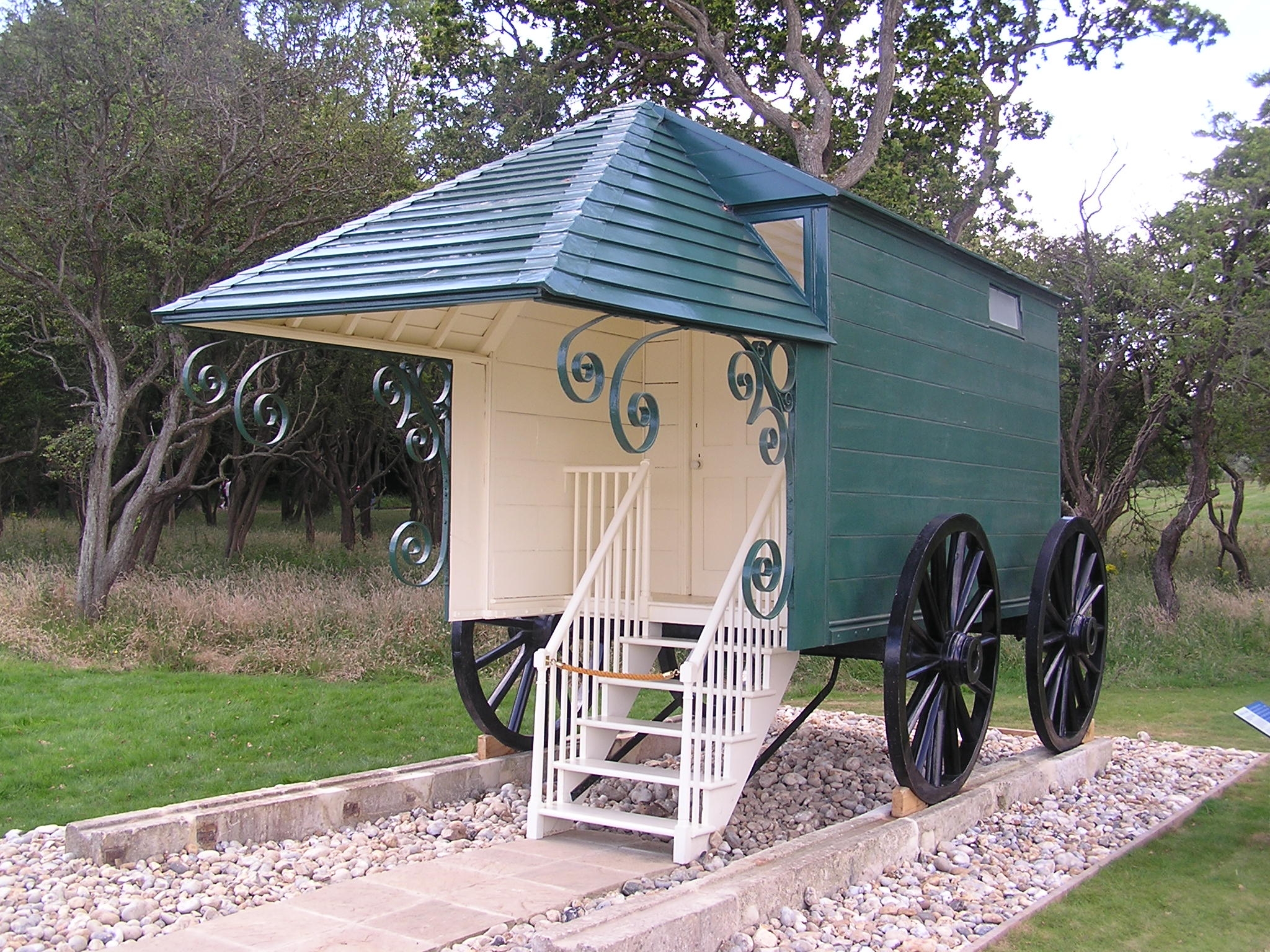
I have been to Queen Victoria’s private beach at Osborne, on the Isle of Wight, to swim. English Heritage, who manage the estate, have restored the alcove or exedra, colourfully decorated with blue and pink tiles, which she favoured for letter-writing and sketching. The Queen’s bathing machine, also restored – after lengthy service as a chicken coop – is displayed there, a very superior construction akin to a small house. Deck chairs may be hired, there are regular Punch and Judy shows, brass bands occasionally perform and there is a pleasant café with changing facilities.

Queen Victoria's bathing machine at Osborne. It would be lowered into the sea on metal tracks.

It was here that Queen Victoria bathed for the first time, when she was in her late twenties. In her journal for 30 July 1847 she writes: ‘Drove to the beach with my maids and went in the bathing machine, where I undressed and bathed in the sea (for the 1st time in my life)… I thought it delightful till I put my head under water, when I thought I should be stifled.’

In fact, the sea here is so shallow, except at the highest tides, that one could almost walk to Portsmouth. As a swimming place it is ideal for young children, as there is little danger of their getting out of their depth. Queen Victoria’s own children played happily on the beach for hours and had swimming lessons from Prince Albert, a firm believer in the health-giving properties of sea-bathing. Although the Solent is a narrow strait, the view from here reminded him of the Bay of Naples.

The private beach at Osborne

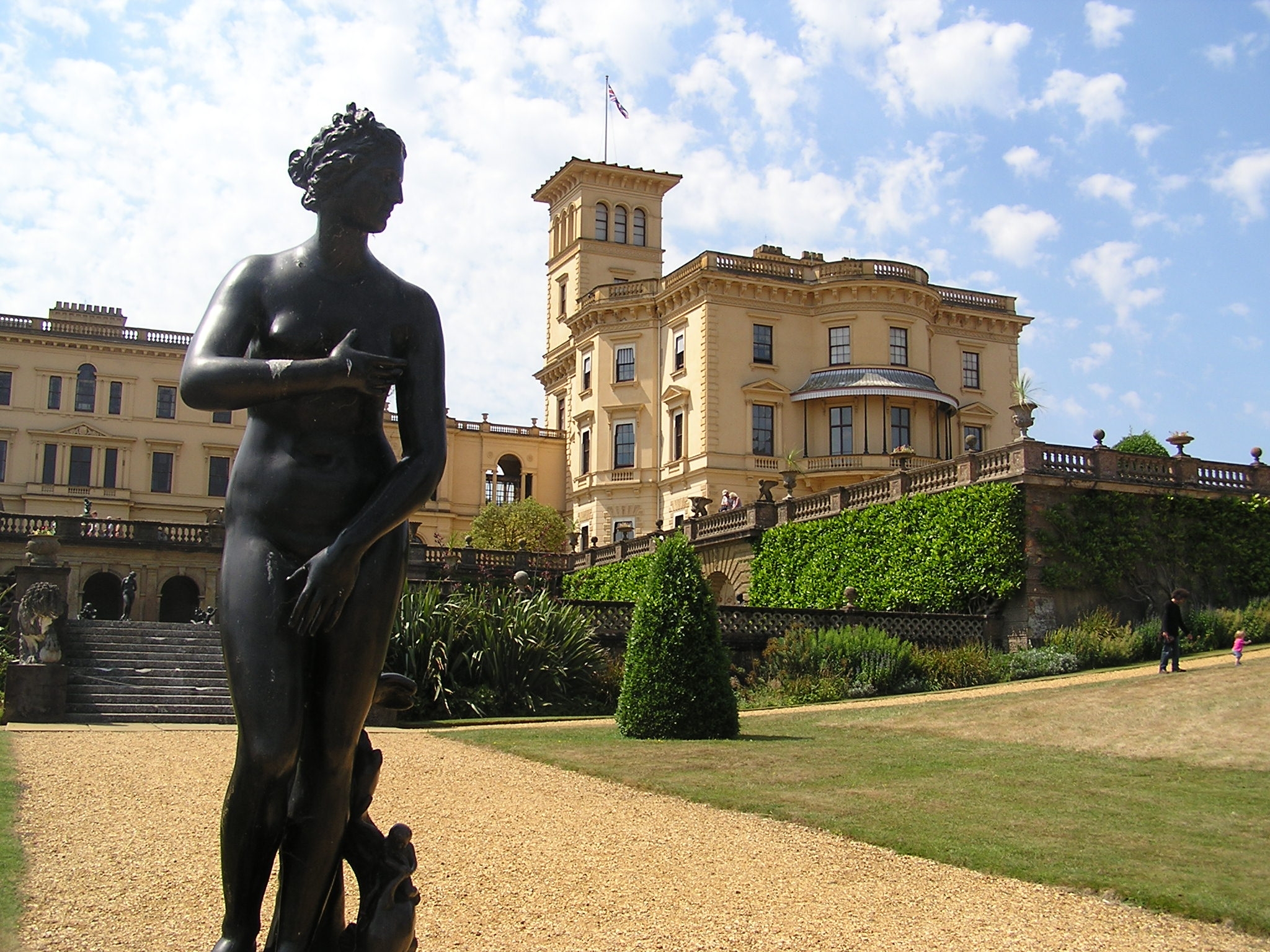
I wondered whether my grandfather, a cadet at Osborne during the First World War, would also have swum here. In 1902, Edward VII presented Osborne to the nation. A year later, a Royal Naval College was opened in the former stables, the main house being put to use as a convalescent home. The accommodation was damp and spartan, a suitable training ground for the nation’s martial élite. (These included Prince George, later the Duke of Kent, who was my grandfather’s servant.) The College was to become notorious for its epidemics of ‘pink eye’, a minor but unpleasant infection, treatable with drops, that was said to have been left behind by the horses.

Disappointingly, I discover that there were no opportunities to swim, nor indeed swimming lessons, in my grandfather’s day. There was no pool, and the Admiralty had banned swimming in the Solent, on the improbable grounds that it was unsafe! Swimming lessons were deferred until the boys arrived at Dartmouth, which had a pool, though I suspect my grandfather would already have been a competent swimmer.

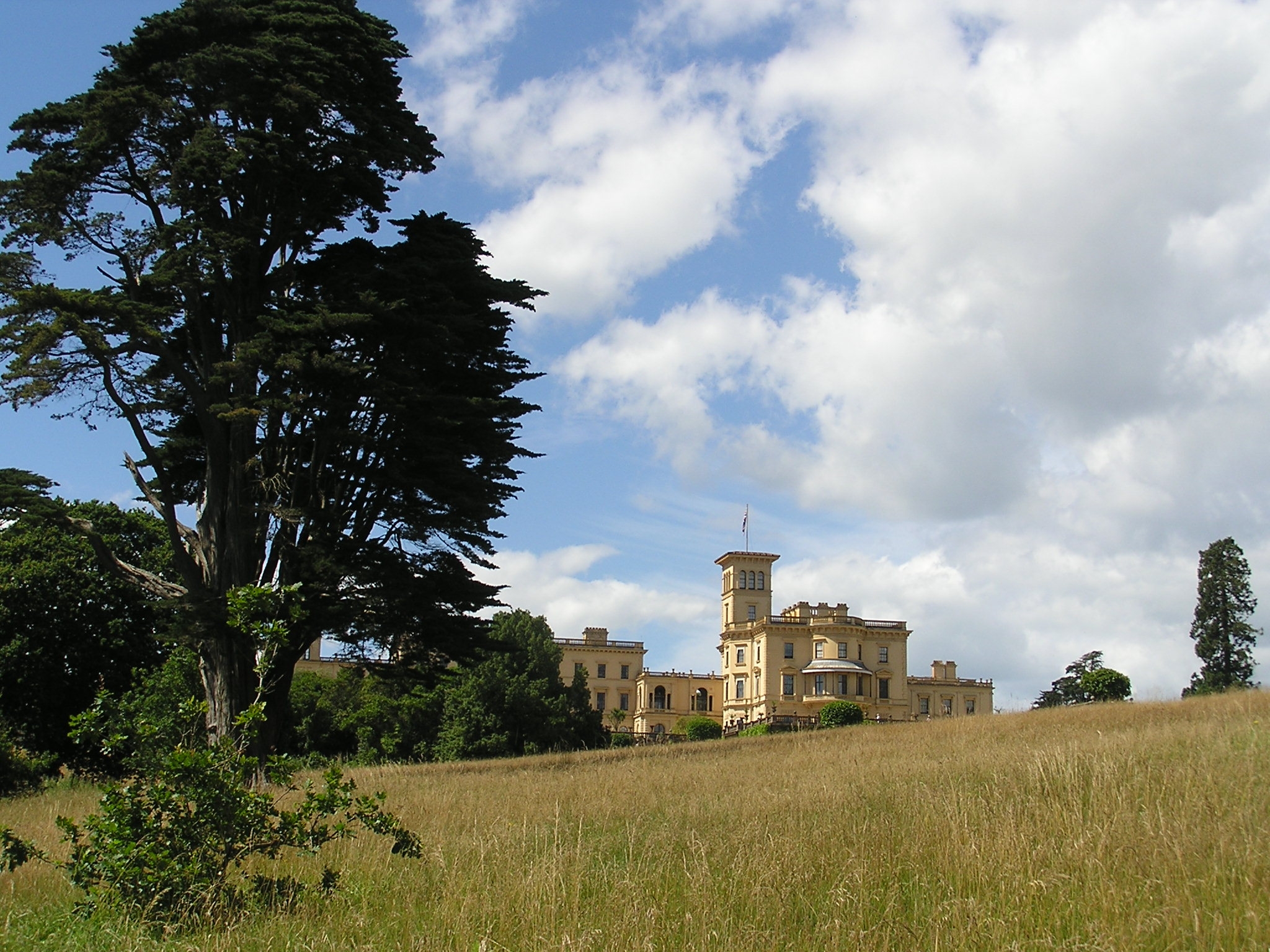
View of Osborne House from the Valley Path down to the beach

One of the delights of visiting this beach is the path from the main house that leads to it. A near contemporary of my grandfather writes: ‘the grounds which formed the park of Queen Victoria’s favourite country home … were quite lovely. Though we were not allowed to approach the house, on half holidays and Sunday afternoons the paths through the woods and down to the sea were open to us, and in the infrequent intervals between organised games I used to love to wander there. But our lives were so strictly circumscribed and controlled that these opportunities were rare.’

Osborne House itself was off limits. Another former cadet recalled: ‘Funnily enough, while I was at Osborne I never saw Osborne House. I never caught sight of it at all and we were quite close by, just through a few trees and shrubs and things.’

Personally I am much taken with Prince Albert’s Italianate fantasy, which appears at its best under a blue sky. I feel sad for Queen Victoria, fussing about with her maids and bathing machine and voluminous costume, failing to enjoy the sense of liberation that comes with even a moderately wild swim. She should have been as untramelled as the voluptuous statuary that surrounded her at Osborne.

(See Michael Partridge, The Royal Naval College, Osborne: A History, 1903-21, Stroud 1999, pp.29, 30, 116-17, 105-6, and

http://www.english-heritage.org.uk/daysout/properties/osborne/beach/history-of-the-beach/

Nikephoros Phokas, White Death of the Saracens, the Siege of Chandax and the Foundation of the Greatest Lavra on Mount Athos

July 28th, 2013

In the summer of 960, the great Byzantine general Nikephoros Phokas set sail for Crete. Occupied by the Arabs since 826, the island had become a nest of pirates who were the curse of the eastern Mediterranean, paralysing its economy. Nikephoros had been campaigning for years on the eastern frontiers of the Empire. The emirs of Aleppo, Tarsus and Tripoli had all been humbled. The youthful Emperor, Romanos II, had recently appointed him ‘Domestic of the East’, commander-in-chief of the forces of Anatolia. Confident that Nikephoros would finally re-take the island, Romanos had entrusted him with an overwhelming force, consisting of 307 warships and hundreds of smaller vessels, with 77,000 oarsmen and soldiers on board.

Nikephoros swept through the island, killing a reported 40,000 Arabs, and laid siege to Chandax (modern Heraklion), their well-fortified capital. Both sides suffered terrible privations that winter, but in March 961 the Byzantines broke into the city. The Cretan emir was taken, along with the accumulated spoils of a century and a half of piracy. Nikephoros put the rest of the population to death and the city was burned to the ground. With the island restored to imperial rule, missionaries set about re-converting it to Christianity. It was the greatest Byzantine victory in centuries.

Born in 912 into one of the great military dynasties of Anatolia, Nikephoros, known to his enemies as ‘the White (or Pale) Death of the Saracens’ was personally unprepossessing, with unusually long, curly black hair and a straggly beard. He was rough-mannered and sullen, and lived a remarkably simple, ascetic life, habitually sleeping on the floor. When not covering himself in glory on the battlefield, Nikephoros spent his time in prayer or consorting with holy men. A widower, whose only son had been killed in a tragic accident, he had taken a vow of chastity and hoped one day to become a monk.

Instead, owing to Palace intrigue, Nikephoros was to be crowned Emperor in St Sophia on 16 August 963, following the death of Romanos at the age of 23. To ensure his legitimacy, he was married within the month to Theophano, Romanos’s widow, and became step-father to her sons, the co-emperors Basil and Constantine. Theophano, a publican’s daughter, was extraordinarily beautiful, but unprincipled in the pursuit of her ambitions. Romanos had been completely under her spell. Ill-matched with the dour Nikephoros, she took a lover, his nephew John Tzimiskes, who brutally murdered him on the floor where he lay in 966. He was buried secretly in the Church of the Holy Apostles. An epitaph attributed to John of Melitene was later circulated. It ends with a pun on Nikephoros’s name: ὠ πλην γυναικος τἀλλα δ’αὐ Νικηφορος (Mark Diederich Lauxtermann, Byzantine Poetry from Pisides to Geometres, Texts and Contexts, Vol.I, Vienna 2003, pp.305-16.) – which I venture to translate as ‘bringer of victory over all in turn, save a woman’.

Nikephoros believed that he was fighting a ‘holy war’ against Islam, and that those who perished in it were martyrs, although this was a view rejected by the Church. During the siege of Chandax, he had summoned his old friend, Athanasios, to provide him with spiritual support. Athanasios, a native of Trebizond, renowned for his holiness, had abandoned a successful teaching career in Constantinople to become a hermit, and had settled in 957 on Mount Athos, in northern Greece. The promontory had long been favoured by hermits, as it had no other inhabitants. Thanks to the Cretan pirates, normal life there had become impossible.

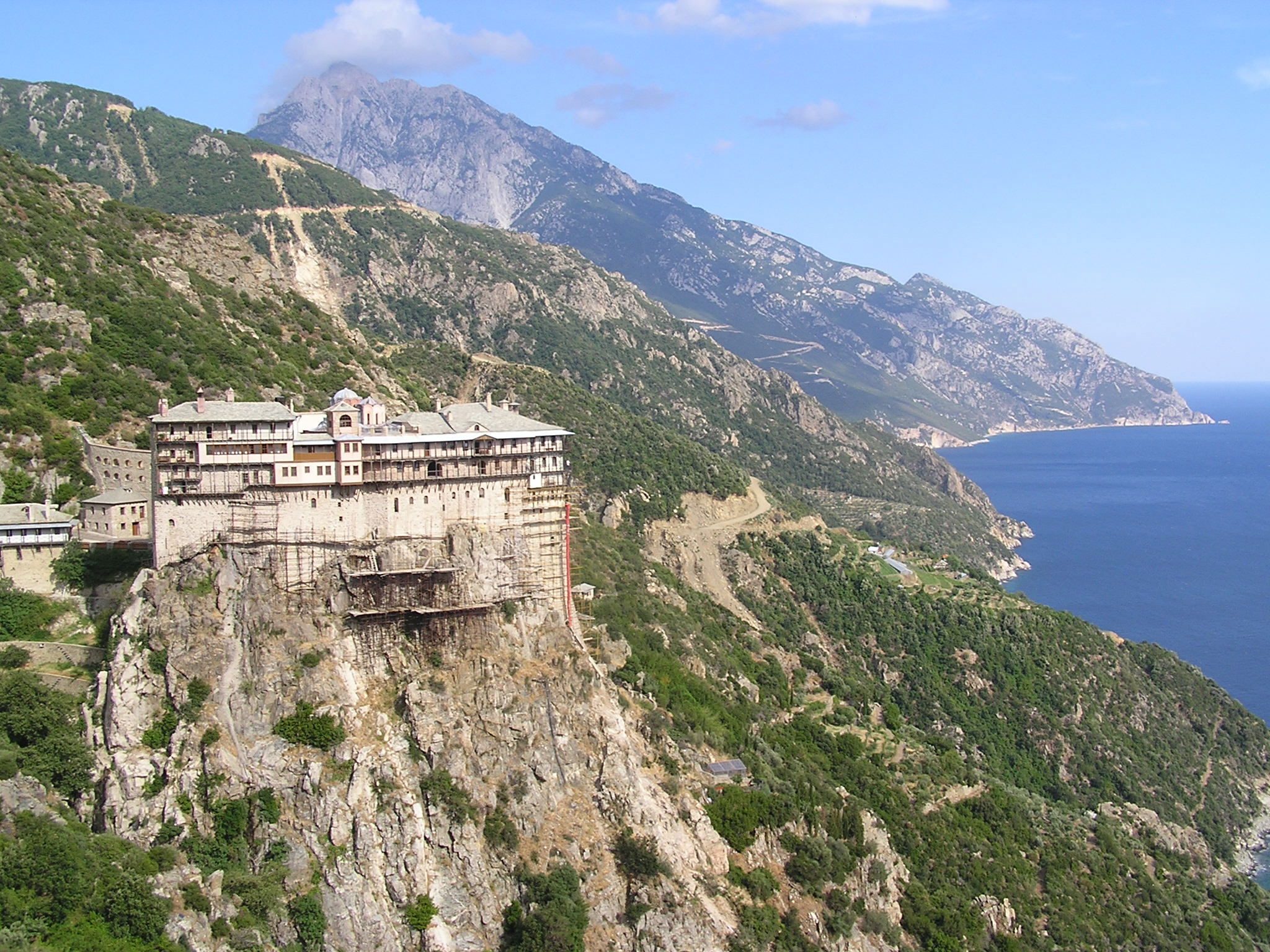
The Holy Monastery of Simonos Petras, Mount Athos

Nikephoros heaped plunder from Chandax on Athanasios, who used it to found a small monastery or lavra on the south-easternmost point of the promontory. It was the first of many monastic houses on Mount Athos, as opposed to the sketai, or loose affiliations of hermits, that had existed before. Nikephoros had originally intended to join him there. Instead, as Emperor, he re-founded Athanasios’s lavra as an imperial monastery, endowing it with generous annual grants in money and in kind and with tax-free estates in nearby Chalkidiki. He even sent three holy relics from the imperial collection, including fragments of the True Cross. Athanasios’s humble lavra was thus transformed into ‘the Greatest Lavra’ (Μονη Μεγιστης Λαυρας), with accommodation for eighty monks, despite the objections of the hermits who were disturbed by the immense scale of the construction and by the fact that the new monastery had its own boat, an unwelcome connection with the outside world.

There are surviving sketai on Mount Athos where hermits continue to subjugate the flesh and endure lives of the utmost austerity, some of them perched in caves on the edges of cliffs. I have witnessed them myself. Although I have not been to the Greatest Lavra, I have visited other Athonite monasteries and can attest to the strength of the asceticism there, which has certainly wavered over the centuries. At the monastery of Simonos Petras, for example, the monks spend most of the time at prayer in their tiny cells. These are sparsely furnished, and there are no beds. Like Nikephoros Phokas, the monks at Simonos Petras, who are close to being a spiritual elite, sleep on the hard floor. (See Simopetras, Mount Athos, E.T.B.A., Athens 1991.)

Nikephoros, to whom the twenty surviving monasteries on Mount Athos all owe a debt, left no direct descendants, but has countless blood relations in Western Europe. His sister who married Theodoros Kourkouas was the ancestress of Maria of Bulgaria, wife of Andronikos Doukas. Their daughter, Eirene, was the matriarch of the Komnenos dynasty.

Nikephoros’s brother Leon Phokas had a daughter, Sophia, who married Konstantinos Skleros, and was the mother of the famous Theophano, wife of the German Emperor Otto II.

Leon had another daughter, married to a Botaneiates, who was the great-grandmother of the Emperor Nikephoros III Botaneiates (1078-81), and of his sister who married Theodoulos Synadenos. Their daughter, Synadene, married Gesa I, King of Hungary, who died in 1077.

Through these three Byzantine women, there are innumerable well-established lines of descent to the present day.

Charles Mumby & Co., Gosport and Portsmouth: Memories Evoked by the Isle of Wight Steam Railway

July 18th, 2013

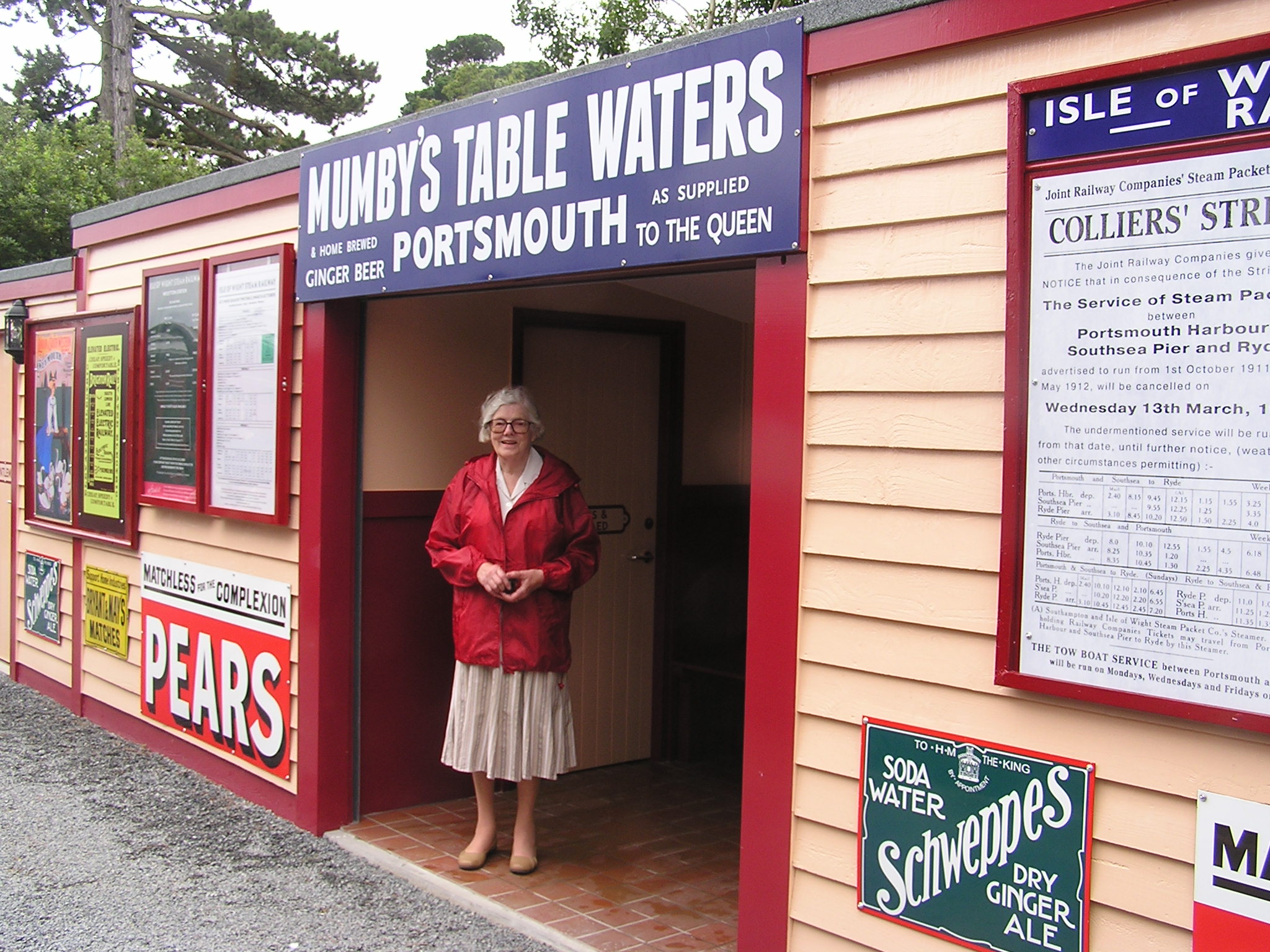
A Mumby descendant at Wootton Station

To travel on the Isle of Wight Steam Railway is to step back in time. I love the waiting room at Havenstreet with the piles of leather suitcases. The redundant station at Wootton has been reconstructed and looks like a typical country terminus of a hundred years ago.

The station building itself is an authentic recreation of the pre-1920s one at Havenstreet, based on a photograph from 1905. The building is festooned with the same notices and advertisements as in the photograph, the most prominent being one for ‘Mumby’s Table Water and Home Brewed Ginger Beer, Portsmouth, as Supplied to the Queen’. I feel a flush of pride, as this was my grandmother’s family firm.

It was founded by Charles Mumby (1823-1895) from Chatteris in Cambridgeshire, a pharmaceutical chemist, who settled at Gosport in 1844. An ancient sea-port that juts into Portsmouth Harbour, Gosport was a ‘well-built, handsome town’ with flourishing, thrice-weekly markets and a railway terminus, contained by ramparts and a moat dating from the 1750s.

A remarkably personable and impressive young man, rather short, but muscular and very good-looking with his wavy blond hair, Charles went into business on his own in 1849, at 47 High Street. He was keen to diversify and, applying his skill with concoctions, soon set himself up as a manufacturer of mineral waters. To ensure the necessary supply of water, he sank a large bore-hole or artesian well in the large yard at the back of his shop, which had a rear access from North Street. At 384 feet, the well was deep enough to reach the aquifers in the chalk subsoil, for Gosport is almost surrounded by the sea, and penetrated by a number of salty creeks.

His next step was to instal elaborate machinery to increase the output of manufactured ice. The fame of Charles’s soda water, ginger beer and lemonade spread rapidly across the south of England and within a few years he was supplying large quantities to both the army and the navy, which were traditionally victualled from Gosport. His crowning glory was to receive a Royal Warrant from Queen Victoria, Mumby’s being one of only four brands of mineral-water that were served at her table.

Charles Mumby was a classic Victorian entrepreneur, a Nonconformist, as many of them were, commended for his ‘marvellous activity and energy, admirable business talent, sterling honesty and genuineness of purpose’. By then a rich and influential man, he became in 1864 a member of the Board of Trustees that governed the town. He was to serve for thirteen years (from 1881 to 1894) as Chairman of the Board, overseeing a vast improvement in the borough. Streets were widened, the old fortifications removed. Areas of open ground were acquired for recreational purposes, and a Free Library was created.

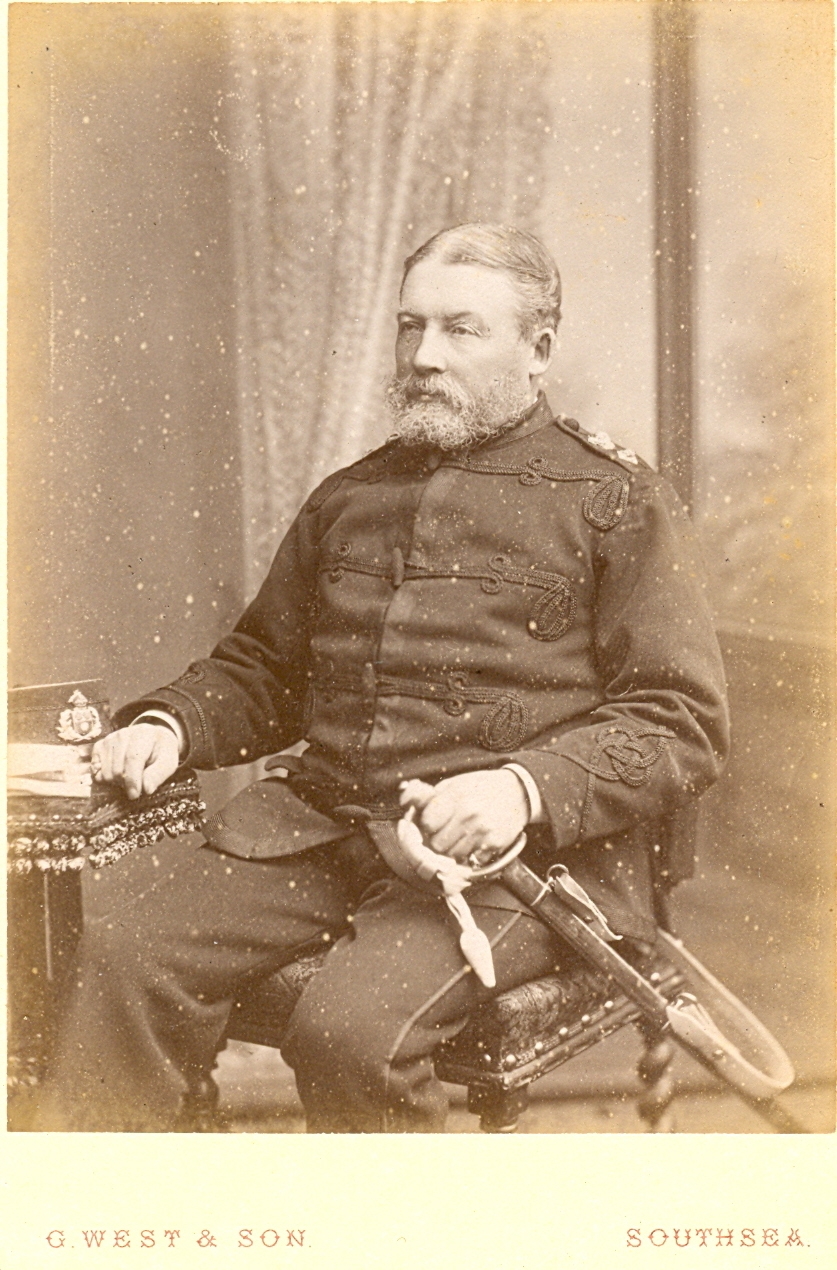
Colonel Charles Mumby

Charles became a Poor Law Guardian, a magistrate, a County Councillor for Hampshire, and sat on innumerable public and social committees. The manufacture of mineral waters continued at his original premises in the High Street, and an office was opened up at Portsmouth, first at 71 St George’s Square, then, from the late 1870s, at 34 The Hard. Charles was a founder member of the National Liberal Club (where he rubbed shoulders with Gladstone) and Colonel of his local territorial unit, the Third Hampshires.

Charles Mumby retired from the active management of his business in 1885. The chemist’s shop, reduced by this time to a sideline, was given up. His eldest son, Everitt, was appointed managing-director of the mineral-water company, from which he derived a good living, though he had neither the capacity nor the inclination for a career in business. It was Everitt who oversaw the public flotation of the company in 1898, an event which greatly enriched the family, and further allowed him to indulge his penchant for travel.

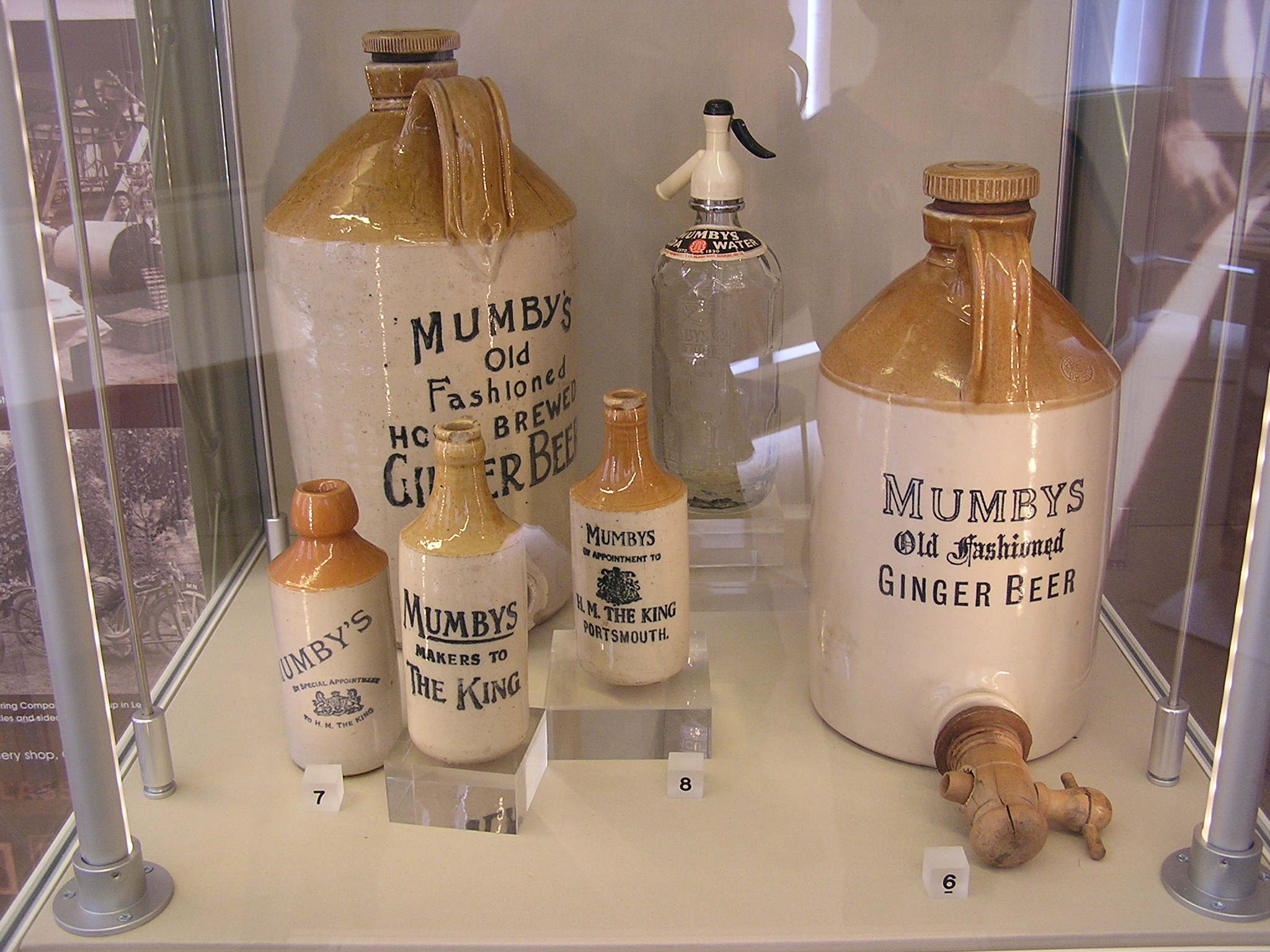
Display of Mumby bottles in Gosport Library

Everitt Mumby died in 1906, leaving a third of his majority holding in the company to his only son, Cyril, although the young man would have preferred a career in the army and held the rank of Captain in a militia regiment. When Cyril Mumby was appointed managing-director in 1907, the firm employed about a hundred hands (manual and clerical) in its two factories and had capital of £45,000. He installed himself in the finest house in Gosport, Stanley House (later known as ‘The Hall), next to Holy Trinity Church, on the edge of Portsmouth Harbour, and was the owner of an expensive motor-car and a yacht.

Cyril’s good fortune ended in 1914. Serving with the First Battalion the Lincolnshire Regiment, he was severely wounded at the Nonne Bosschen. After the war, he was to make a new life on the Continent, resigning his directorship of the company in 1924. He died in 1938, by which time the company had been sold out of the family, though it continued until the 1960s to trade under the Mumby name. My mother recalls seeing its advertisements at the cinema in her youth.

The prosperous, elegant Gosport that the family had helped to create was destroyed by a combination of the Luftwaffe and post-war planners. Nothing remains of the firm’s headquarters at 47 High Street, nor of its offices on Portsmouth Hard. Stanley House, my grandmother’s childhood home, was demolished in 1965 by a philistine local authority, which had already razed most of the surrounding area to the ground. The site is now an open space, hedged by two hideous tower blocks that are familiar landmarks to anyone passing in or out of Portsmouth Harbour.

(See The Isle of Wight County Press, 25 May 2012. The full story of the Mumbys is in my forthcoming book, The Incredible Journey of Victor Hugo’s Dog.)

The Norman Colonisation of the Isle of Wight. Part 2: The De Aula Family of Yaverland and Arreton

July 12th, 2013

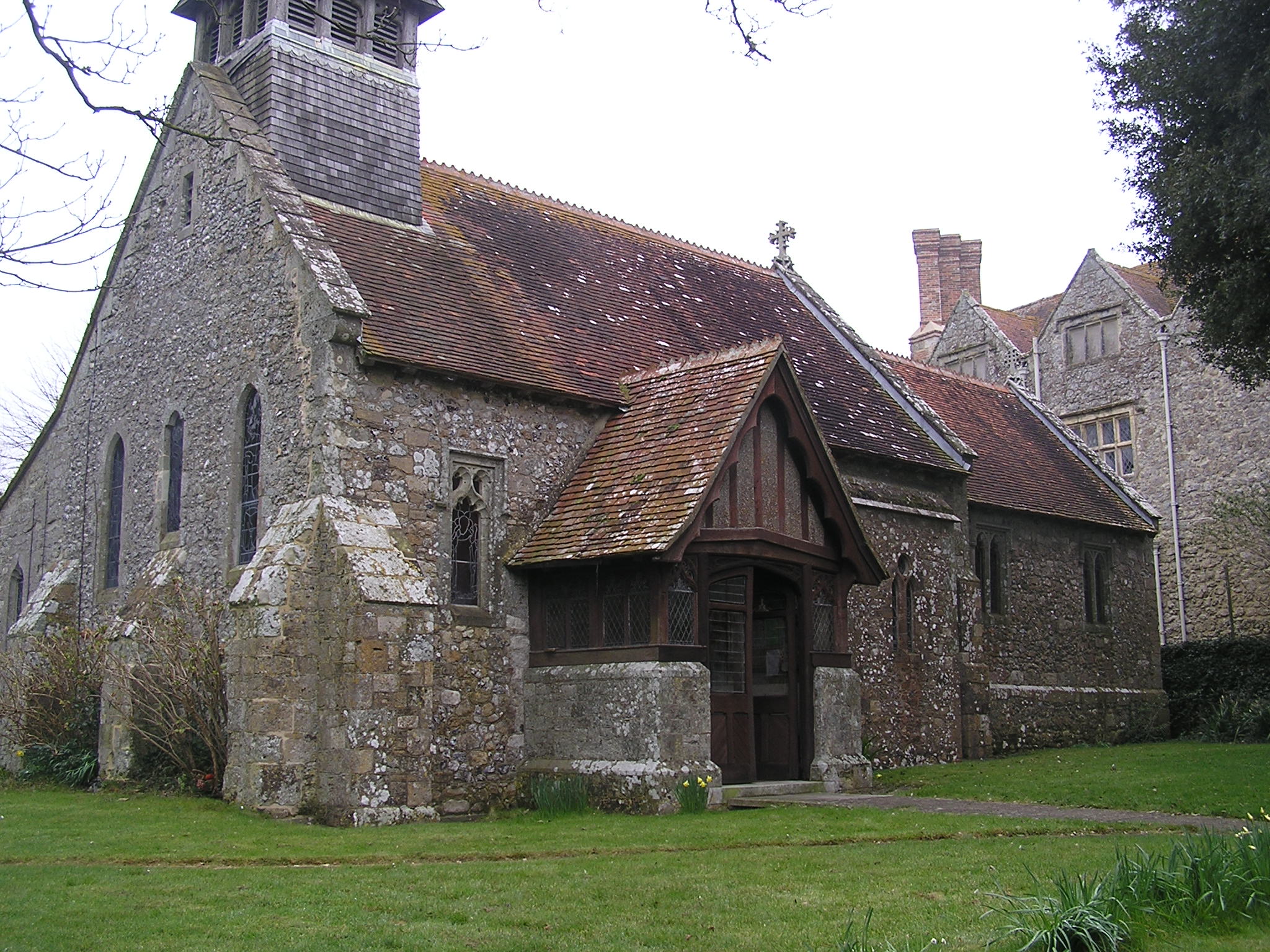
Yaverland chapel, with adjacent manor-house

The coterie of Norman knights who surrounded Baldwin de Redvers, Earl of Devon and lord of the Isle of Wight, are revealed in the foundation charter for Quarr Abbey, dating from the 1140s. Many were granted estates on the Island and settled there, giving rise to all the most prominent local families of the medieval period. Among them were the Wavells and the Oglanders, who persist on the Island to this day.

Together with Robert d’Orglandes, Godfrey de Wauville and others, a certain Warin de la Halla is mentioned in the charter, having endowed his chapel of St Nicholas to the abbey. He was clearly in favour with Baldwin, from whom he held the lordship of Bampton in Devon, as well as land on the Isle of Wight, south of Carisbrooke Castle.

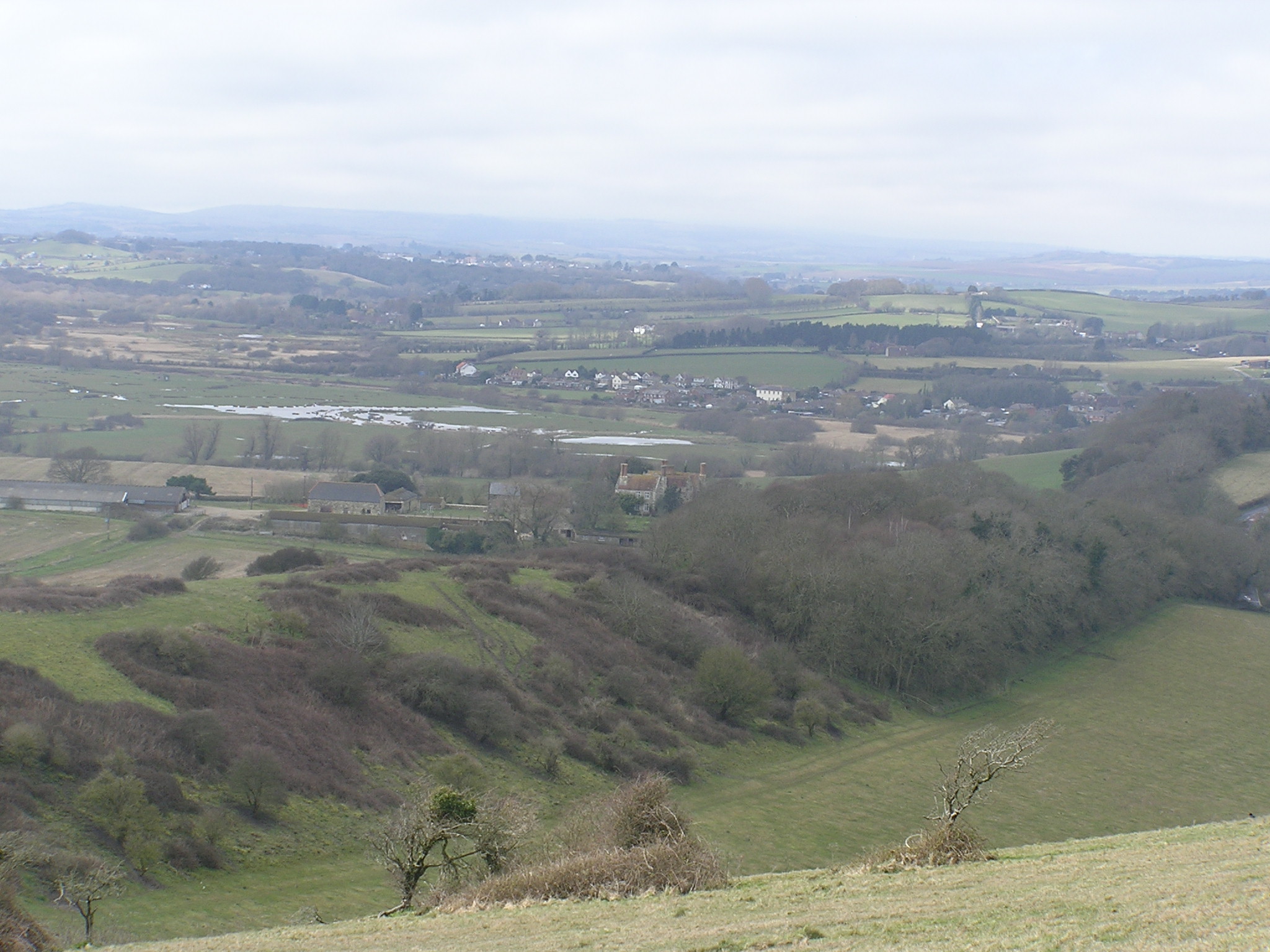
View of Yaverland from Culver Down. The distant wetlands are part of the reclaimed Brading Haven

Warin was ancestor of the ‘De Aula’ family of Yaverland (meaning ‘Overland’ in the Island dialect), in the parish of Brading. As its name suggests, Yaverland was virtually isolated on a spit of land under Bembridge Down. Cut off from the parish church by the tidal Brading Haven, the family built a chapel of ease there, with fine Norman features, alongside their sturdy manor-house of stone.

The male line at Yaverland died out in the reign of Edward I. Eleanor, daughter and heiress of Sir Thomas De Aula, married William Russell, who built the causeway connecting the ‘overland’ with Brading. It was a key moment in the history of East Wight: part of the Haven was thus enclosed, the first step in the process of reclamation that was to be completed in the nineteenth century.

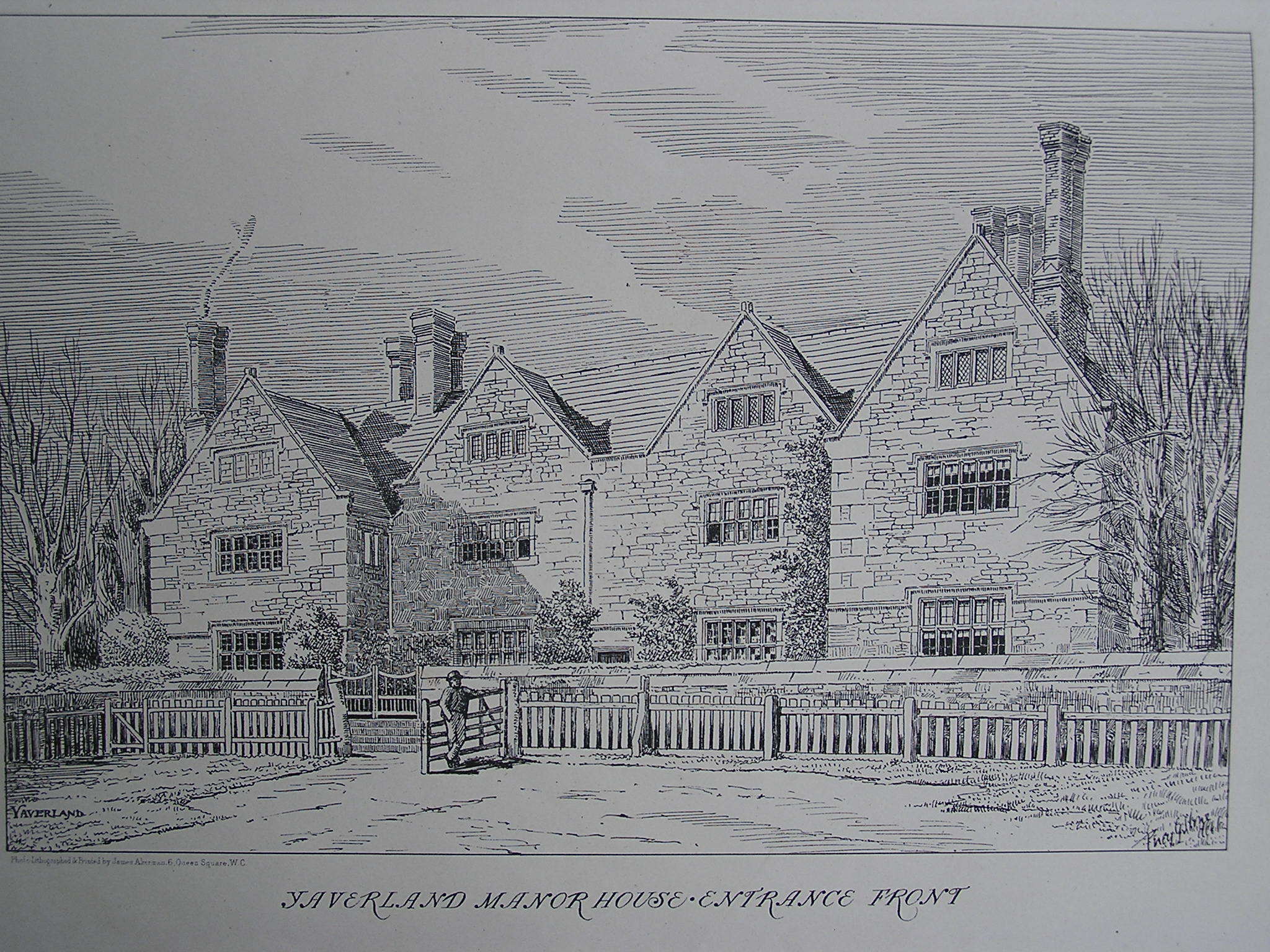
Yaverland Manor

The Yaverland estate was sold by the Hatfields, descendants of the Russells, in 1553, and the manor-house rebuilt, in its present form, in 1620, on the six-foot-wide Norman footings. Mainly of Wight stone under a red-tile roof, it occupies a stupendous position and is one of the finest houses on the Island, a monument in its way to the Norman Conquest of England. The little chapel beside it, built by the De Aulas, is still used for services.

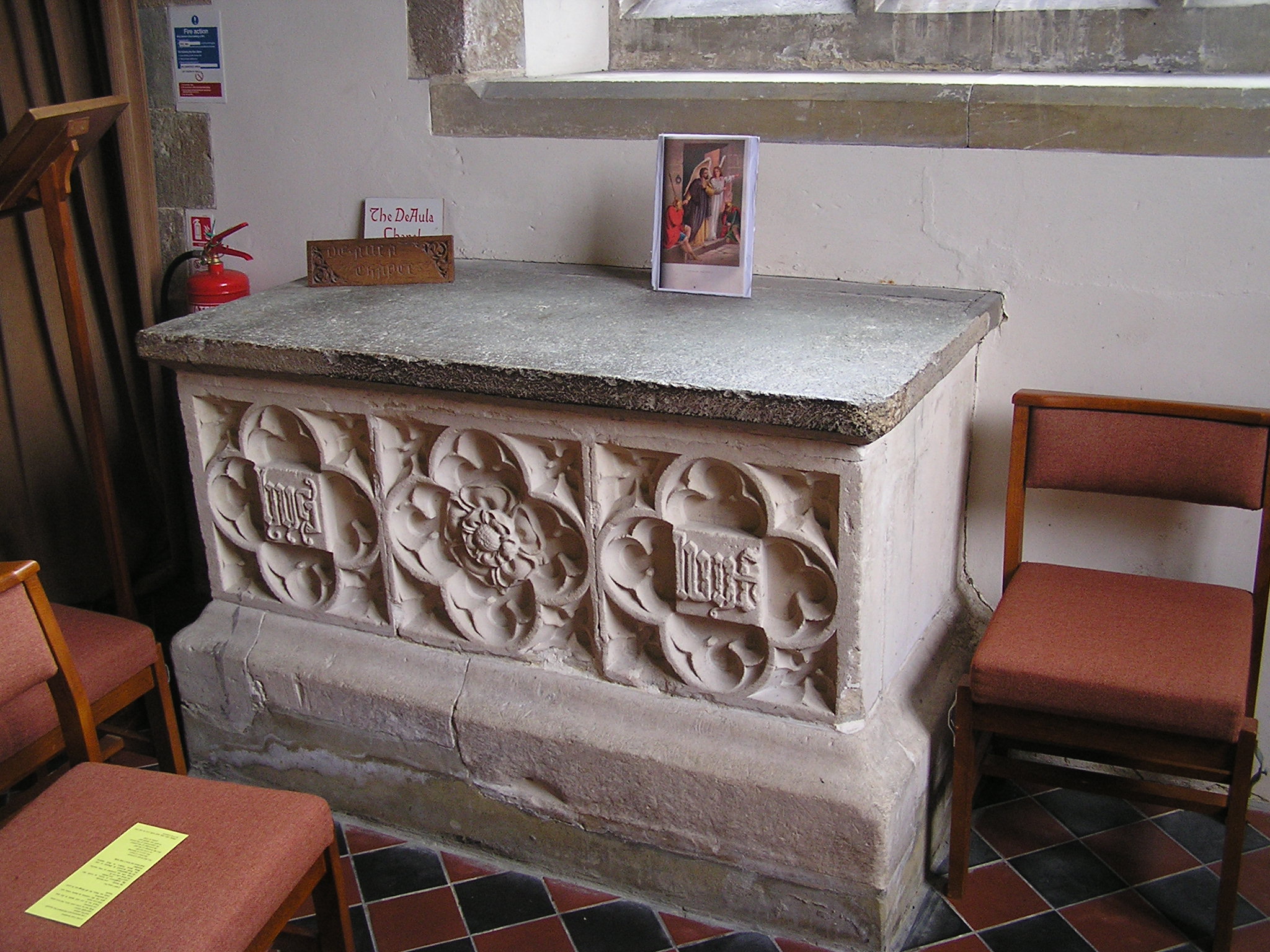
Writing in the seventeenth century, Sir John Oglander says that members of the De Aula family favoured Godshill for burial. Others, no doubt from the main branch, were buried at Brading. The north chapel of Brading Church, reconstructed after a fire in the late-fifteenth or early-sixteenth century, is a monumental chapel to the family and is still known by their name. It contains the tombs of William and Elizabeth de Aula, their name corrupted to ‘Howley’ in the vernacular tongue. ‘Both are altar tombs, bearing the Tudor rose, and are inscribed, in rough sixteenth century letters,


Tomb in the De Aula Chapel, Brading

                          Jhu have merci on Wylyam Howly’s sowl. Amen. MCCCCCXX.

                                                               Helizabeth hys Wyf.’

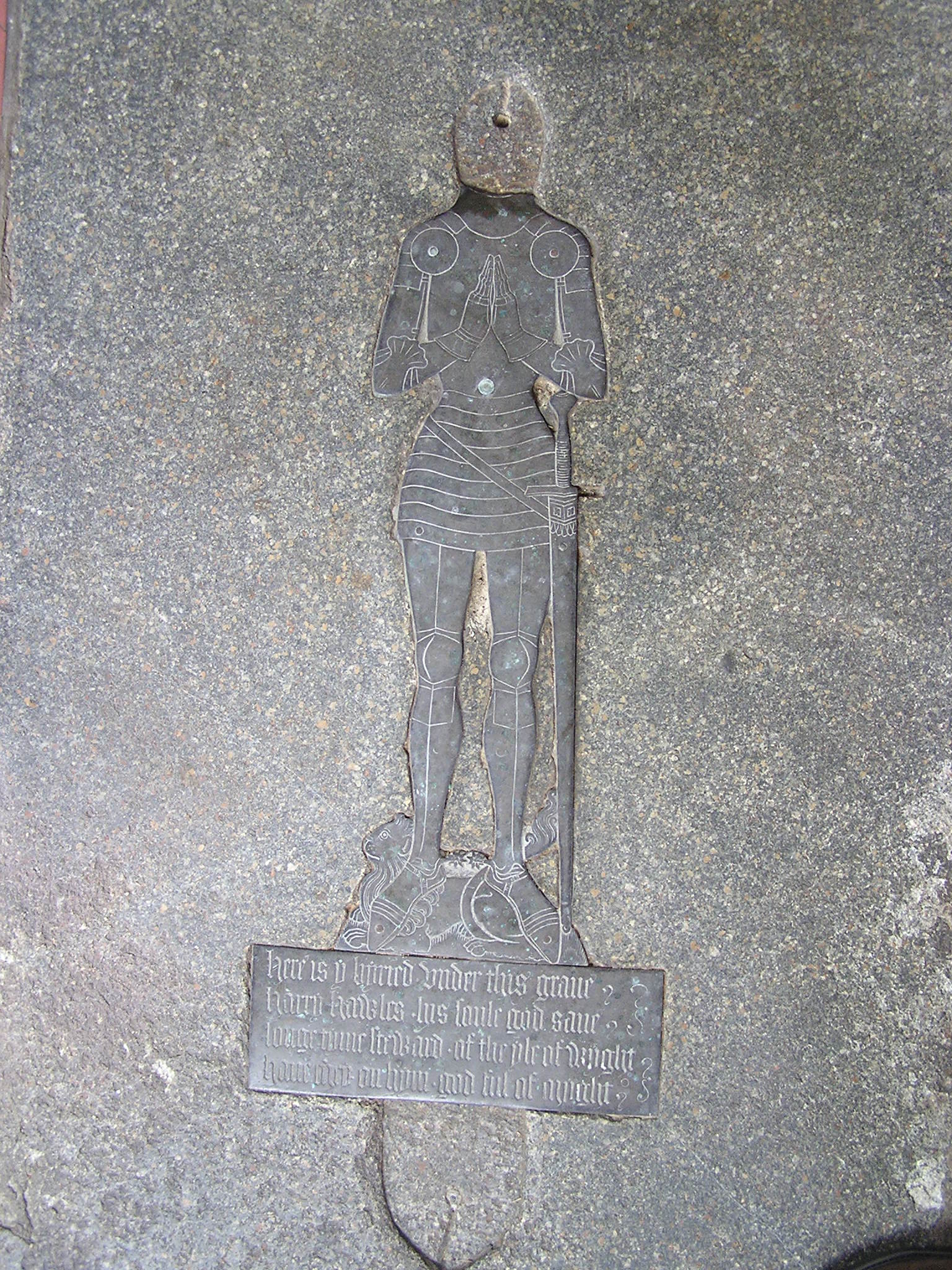
Others of the line settled at Arreton. The manor of Arreton was part of the original endowment to Quarr Abbey and in the parish church, rebuilt by the first monks in the best Norman style, the ‘only remaining pictorial brass is that of Harry Hawles, an honourable member of the ancient De Aula family, who probably held office under Montacute, Earl of Salisbury, Lord of the Island from 1386 to 1397, under grant from Richard II. The head is missing, otherwise the figure is perfect, and is a good example of the period.’

Harry Hawles brass in Arreton Church

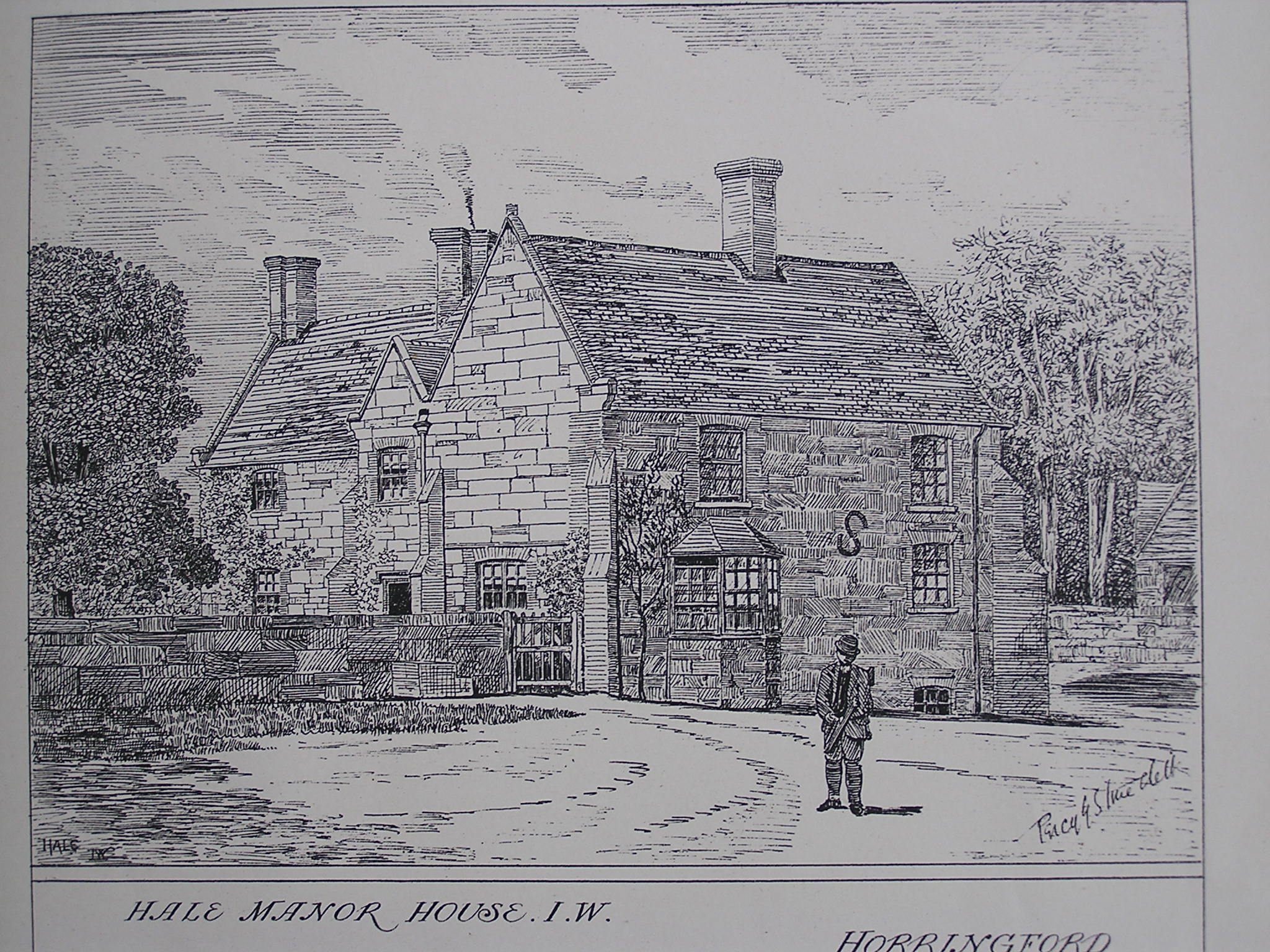
Harry Hawles is thought to have lived at Hale, the small, stone manor-house in the parish that in 1686 was occupied by the descendant of another prominent Norman family. George Oglander had inherited the Oglander name and seal, but was mystified when asked, by visiting heralds, to explain his connection with the Nunwell branch. These people were by then deeply rooted in the soil, bastardising their names, conversing in the local speech and forgetful of their origins. It is a matter of regret that there are no ‘Howleys’ or ‘Hawles’ in the current phone book. One would be surprised, however, if they had not left a fair distribution of female-line descendants among the existing Island population.

In the same way, the Norman colonisers have even infected the local speech. There is a pub at Brading called the Bugle, and another at Newport, which, during the Civil War, was the headquarters of the Parliamentary Commissioners, who included a debased Wavell. In the Island dialect, the word does not mean ‘trumpet’, but ‘steer’. It derives from the Latin word buculus, and is yet another legacy of the Norman Conquest.

(See S.F. Hockey, Quarr Abbey and its Lands, Leicester 1970, pp.7, 10, 257; Percy Stone, The Architectural Antiquities of the Isle of Wight, I, London 1891, pp.7, 15, 69, 87, 120; G.D. Squibb ed., The Visitation of Hampshire and the Isle of Wight, London 1991, p.88; Yaverland Manor Estate, Dreweatt Neate Sale Particulars.)

Hale Manor, Arreton, where Oglander succeeded Hawles

Why Learn Ancient Greek?

June 11th, 2013

Schoolboys and girls learning classical Greek are often heedless of their good fortune. They refer to it scornfully as ‘a dead language’. However, the death of Greek has been grossly exaggerated. A language is never dead as long as a body of literature survives. And what a body of literature: Homer and Herodotus, Aristophanes and Plato – men whose words, thoughts and stories resonate through the ages, still well-known, loved and relevant after nearly three millennia.

Boys and girls grappling with the Greek alphabet should bear in mind that, but for the Greeks, it is doubtful that we would be able to write at all. The ancient Greeks improved on the system of symbols that they had learnt from the Phoenicians, and invented vowels, so that it was possible for the first time to represent the full range of sounds in a written form. The Greek alphabet was the world’s first true alphabetic writing system. The unwilling pupil may disagree, but their system was so simple to learn that it made widespread literacy feasible for the first time. All modern western alphabets are directly descended from the Greek alphabet. The Romans borrowed from it shamelessly and the Latin alphabet, in which English is written today, includes no fewer than nine unaltered Greek letters.

This supposedly ‘dead’ language lives on, moreover, in all modern European languages, including English. We, the speakers of English, continue to use not only Greek letters but numerous Greek words in their original form – chaos, orchestra, climax, zone, analysis, idea, crisis, character, emphasis, echo, scene. There are countless other English words that have been adapted from the Greek – economy, philosophy, aristocracy, democracy, strategy, zoology, catholic, holocaust, psychiatry. How impoverished our language would seem, if all these words were taken away!

It is, however, in the language of modern Greece that we see the strongest signs of life. Modern Greek is far closer to ancient Greek than Italian is to Latin. Visitors to Greece who have studied the classical language will easily interpret the sign that reads Ἐθνικη Τραπεζα της Ἑλλαδος (National Bank of Greece). They might wonder how the word for ‘table’ (ἡ τραπεζα) has come to mean ‘bank’ – except that it had already acquired that sense in classical times. Similarly, they will readily understand the signs in parks that read: ΑΓΑΠΑΤΕ ΤΑ ΔΕΝΔΡΑ – ‘Love (or be kind to) the trees’. There are unadapted words still in use in modern Greece that appear on the earliest recorded Greek texts, dateable to about 1400 B.C. (they are contained in the clay tablets, written in the so-called ‘Linear B’ syllabic script, found at the Mycenean palaces of Knossos and the mainland) – words like ἐχω, I have, θεος, god, μελι, honey, παλαιος, old. It is only the pronunciation that has changed, and that is easily mastered.

Modern schoolboys and girls are taught ‘Attic’ Greek, the dialect of Athens (capital of Attica) in its classical heyday. The power and prestige of Athens ensured that its dialect became the standard speech throughout the Greek world. Most of the surviving classical Greek literature is in Attic Greek. It was spoken, or at least written, in the East Roman or ‘Byzantine’ Empire, which survived the fall of Rome by a thousand years, until it, too, fell to invaders, the Turks, in 1453 A.D. In modern Greece, Attic is still considered the ‘correct’ form of the language, other usages being merely colloquial.

He may not appreciate it, but ancient Athens is as relevant to an English schoolboy as it was to his Byzantine counterpart. In 508 B.C., one of its elder statesman, Cleisthenes, proposed at a public meeting that the Athenian constitution should be changed, and that all major decisions should thenceforth be agreed at a public assembly. Those eligible to attend would eventually include all male citizens, whatever their class or means, over the age of thirty. Slaves (mere chattels) and women (unreasoning inferiors) were of course excluded, but every male citizen was included equally. The invention of ‘democracy’, the means by which Athens was to be governed during its classical age, was the Athenians’ enduring legacy to the world.
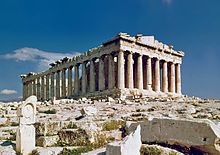
It was during that enlightened period that Athens also gave the world both tragic and comic drama and some of the wonders of classical art, of which the Parthenon complex, on the Athenian acropolis, is surely the defining monument. Medicine, mathematics, philosophy, even atomic theory, were all advanced there. It was in Athens, too, that another form of literature was invented, by Herodotus: the writing of ‘history’, based not on myth and hearsay but on reasoned enquiry. History-writing as we know it had simply not existed before, and Herodotus was its father. Athens, ‘the great democracy’, was thus the ‘seat of a culture which could be said to be the “education of Greece”. The thinking, the theatre, the arts, the varied lifestyle which we still admire were all Athenian or based in Athens’ (Robin Lane Fox, The Classical World, London, 2006, p.161).

The limited vocabulary and subject matter that are required for Common Entrance and Scholarship exams are all redolent of ancient Athens, that tiny city, of only about 50,000 inhabitants, where such remarkable things happened. Words that appear frequently include:

ὁ δεσποτης, master, and ὁ δουλος, slave. It is ironic that a citizenry believing in ‘democratic’ freedom should also have been slave-owners. In fact, there were at least two slaves (almost all non-Greeks, traded on the wharves of Piraeus) for every citizen. They were central to the Athenian economy, working in the silver mines that were its mainstay, as well as in agriculture or in various crafts or as household servants. Many were recognisable only by their tattoos. A general in the Persian Wars once had an important message tattooed onto the shaved head of a slave, not trusting him to convey it verbally.

The native-born Athenian is a citizen, ὁ πολιτης (origin of our word ‘politician’), entitled to have his democratic say, who considers it humiliating to serve any master but himself – hence the number of one-man businesses and crafts in the city. He is jealous, too, of ὁ οἰκος, his house, often built round a courtyard, with an upper storey to accommodate the slaves. Here, the οἰκος νομος, law or organisation of the household, prevails – whence our word ‘economy’. The streets are so narrow and crowded that is it usual to knock before you exit – the doors are large and they open outwards.

ἡ ἀγορα, the market-place, is a focal point of the city. All roads lead to it, a meeting place as well as a shopping centre, enclosed by colonnaded buildings and numerous shrines, where I might θεραπευω (worship) or θυω (sacrifice) to my favourite θεος (god) or θεα (goddess). Here also the judge, ὁ κριτης, administers justice. Other prominent features are τα μακρα τειχη, the long walls that surround the city.
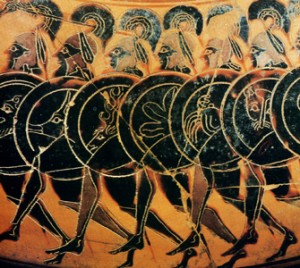
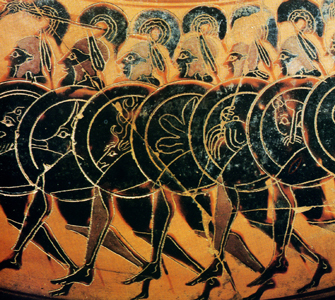
Most noticeable of all are the frequent military references in the exams, for the Athenian army, ἡ στρατια, was a citizen army. The soldier, ὁ στρατιωτης, must equip himself – if he can afford it – with τα ὁπλα, the arms, that are required of ὁ ὁπλιτης, the ‘hoplite’ or infantryman. Consisting of a gleaming breast-plate, helmet and greaves (to cover the calves and shins), and a large, circular shield (about three feet in diameter), these are prominently displayed in ὁ οἰκος. These weapons probably weighed up to fifty pounds, but made the wearer almost invincible to frontal attack, and the Greek hoplites in their legendary formation, ὁ φαλαγξ, one of the most effective fighting forces in the ancient world. The general, ὁ στρατηγος, who led them was a tribal official and there were regular opportunities to στρατευω, march or go on an expedition, or to pitch camp, το στρατωπεδον. Nor should one forget the real source of Athenian military might, the fleet of triremes, αἱ τριηρεις, manned by οἱ ναυται, the sailors, who are also proudly free.

The purpose of studying classical Greek is to understand the rich heritage of Athens, and to be able to read the ancient authors in the original. That is why candidates for Common Entrance are asked to translate simplified passages from ancient literature, such as the story of the death of Hector at Troy that is in the January 2013 paper. To be able, in the process, to prove one’s superior intellect is just a happy side-effect.
The Norman Colonisation of the Isle of Wight. Part I: The Founding of Quarr Abbey and the Oglanders of Nunwell

May 30th, 2013

Oglander tomb in Brading Church

Richard de Redvers (from Reviers in Normandy) was a loyal supporter of Henry I, who received as his reward lands in Devon and Hampshire and the lordship of the Isle of Wight. The likely builder of the polygonal stone keep and inner curtain wall at Carisbrooke Castle (his Island fortress), he probably also founded the borough of Newport, which would previously have been little more than an obscure port.

The shell keep and inner curtain wall at Carisbrooke, built by Richard de Redvers c.1100

Richard de Redvers died in 1107 and was succeeded by his son Baldwin, eventual Earl of Devon. Baldwin was a figure of national significance, an opponent of King Stephen, but he left his own mark on the Island’s history by his foundation, in 1131, of the Abbey of Quarr.

Nearly two decades in the building, Quarr was colonised by Cistercian monks from the Abbey of Savigny, near Avranches, and endowed by Baldwin with estates including the manors of Arreton, Haseley, Combley and Newnham, all on the Isle of Wight. Meanwhile, Baldwin continued to maintain close links with his native Normandy, where he was lord of Néhou, Reviers, Amfréville and Varaville and, from 1135, of Douvres in the Bessin. His father, Richard, had been buried in the Abbey of Montebourg (on the Cotentin peninsula), of which the Redvers family were the protectors and benefactors.

Baldwin himself, who was harsh, warlike, ambitious and unforgiving, chose to be buried at Quarr, where his supposed tomb was excavated in 1891. The remains had been disturbed, but included the thigh bone of ‘a man of abnormal stature’. One can imagine Baldwin towering above his followers as they gathered to witness the foundation charter of the Abbey, intending by his beneficence ‘to forestall the calamity of our dissolution … and to investigate to our profit how we may attain pardon in the presence of the divine majesty’. According to Sir John Oglander, writing in the mid-1600s but relying on sources now lost, ‘every inhabitant in this Island wase in somethinge or other a helpor and furtheror of ye said woorke’. He relates that the Abbey Church was consecrated on 1 June 1150 by Henry de Blois, Bishop of Winchester, and marked by ‘a greate and solemn feast theyre for ye whole Island, for ye finischinge of so goode a woorke’. (Percy Stone, The Architectural Antiquities of the Isle of Wight from the XIth to the XVIIth Centuries, Vol. I, London, 1891, pp.31 et seq.)

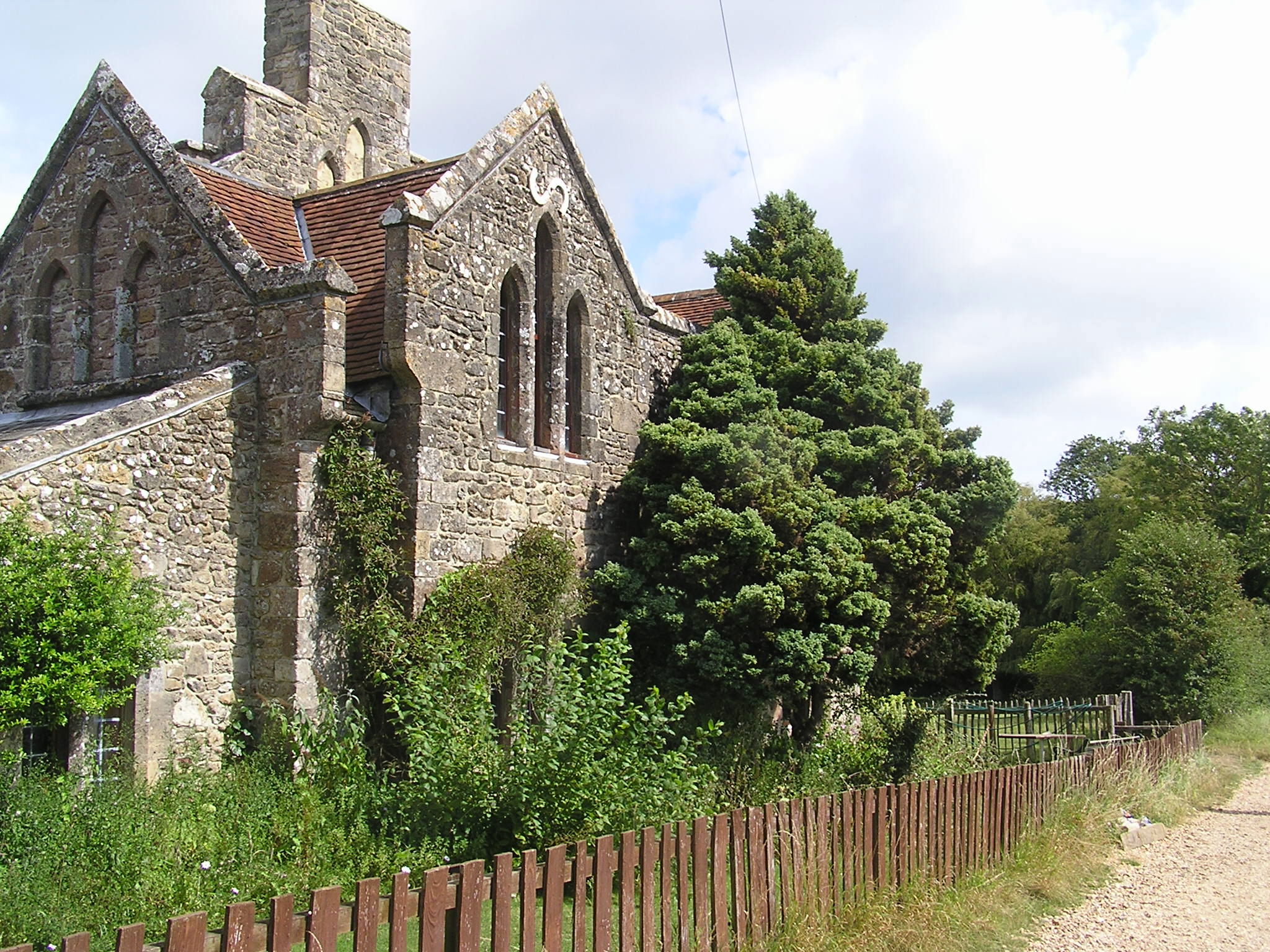
This 18th-century cottage, built amid the abbey ruins, incorporates masonry from the former church, which was on the right of the picture

The foundation charter for Quarr is undated (probably 1141 – 4) but records the construction of the abbey that was then in progress. From this document (a rare example of a ‘diploma’ charter), it is apparent that Baldwin surrounded himself with knights from the Cotentin, men like Robert of Orglandes (only 7km from Baldwin’s chief lordship at Néhou), Warin of Halla and Godfrey of Vauville, none of whom, incidentally, could write his own name. One imagines that they were pretty rough company, the sons, no doubt, of thuggish participants in the Norman Conquest and perhaps also in the First Crusade. Baldwin encouraged them with grants of land to settle on the Island and their descendants ‘will appear constantly in the later story of the abbey, as the local aristocracy during the medieval period: the Gernons or Vernons of Chale, the Trenchards of Shalfleet, the de Lestra of Niton, the Oglanders of Nunwell, the de Barnevilles of Chale and especially the de Insula family, destined to a rank of great local importance. The names of many serve to remind us how closely the history of the Isle of Wight was linked to that of the Cotentin peninsula as a result of the Conquest.’ (S.F. Hockey, Quarr Abbey and its Lands, 1132 – 1631, Leicester University Press, 1970, pp.9-10.)

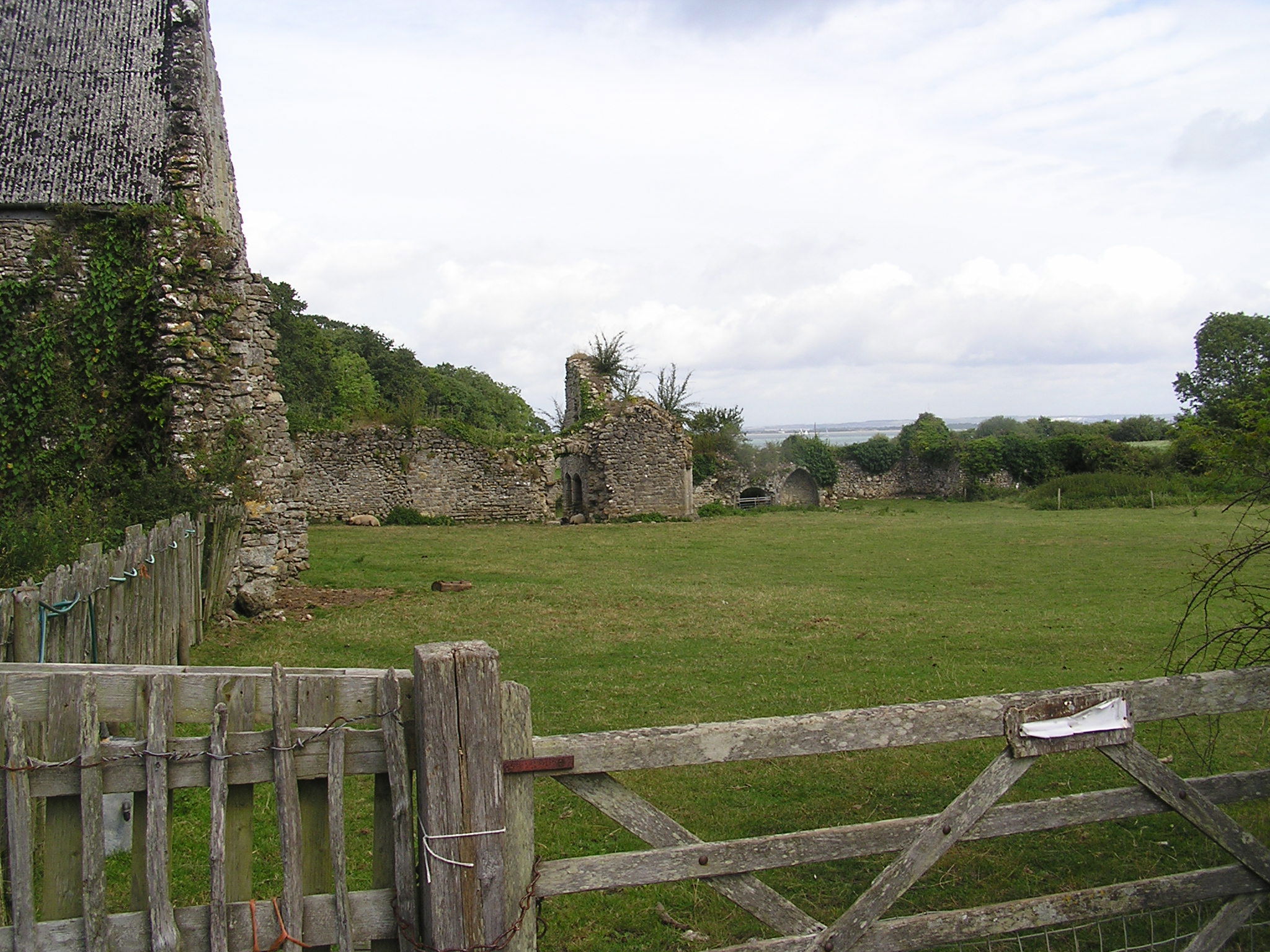
Quarr Abbey was dissolved in 1538 and quickly dismantled. Only the former Dorter or Dormitory block, on the left of the picture, survives intact

Sir John Oglander, the proud descendant of Robert of Orglandes, writes of the prestige of the Abbey of Quarr, where scions of the best Island families were eager to obtain positions. To hold an office such as treasurer, steward, chief butler or even rent collector was considered a great honour. ‘One of my own auncestors,’ he writes, ‘was theyre steward, and theyre dyed.’ Sir John Oglander himself neatly exemplifies the enduring impact of the Norman Conquest. Blissfully settled at Nunwell, the estate granted to his ancestors by the de Redvers family, he lorded it over an indoor staff of thirteen people, whose wages amounted to a meagre £40 per annum, compared to nearly £700 that he lavished on himself and his dependants. On the other hand, Sir John was deeply rooted and assimilated, so that even ‘in the way he wrote you can hear his Isle of Wight accent and manner. Barns, fields and trees were all “him” and “he”, “fallow” fields were “vallow” and ferny grounds “vearnie grounds”.’ (Adam Nicolson, Gentry: Six Hundred Years of a Peculiarly English Class, London 2011, pp.111, 115.) Sir John had been educated at Balliol College, Oxford, and at the Middle Temple, yet he instinctively conversed in the local dialect. To refer to inanimate objects as ‘he’ is still an Island peculiarity – or was when I was growing up there – where, they used to say, ‘everything but a tom-cat is a “he”’.
The Oglanders (or, at least, their female-line descendants, who have taken the name) still hold part of their ancestral estate at Nunwell. Their name seems to have appealed to Evelyn Waugh, an Oxford contemporary of Denys Oglander, whose ‘Mrs Stuyvesant Oglander’ has a walk-on part in Brideshead Revisited. Another notable Norman family that persists on the Island is that of Wavell, the descendants of Godfrey of Vauville, who are the subject of an earlier blog (http://www.rupertwilloughby.co.uk/archives/999). It would be surprising indeed if the Norman genes were not widely distributed among all levels of Island society.