Ernest Golledge, Headmaster of St John’s School, Ealing, and the Visits of the Antarctic Explorers Ernest Shackleton, Teddy Evans and Frank Wild

April 5th, 2013

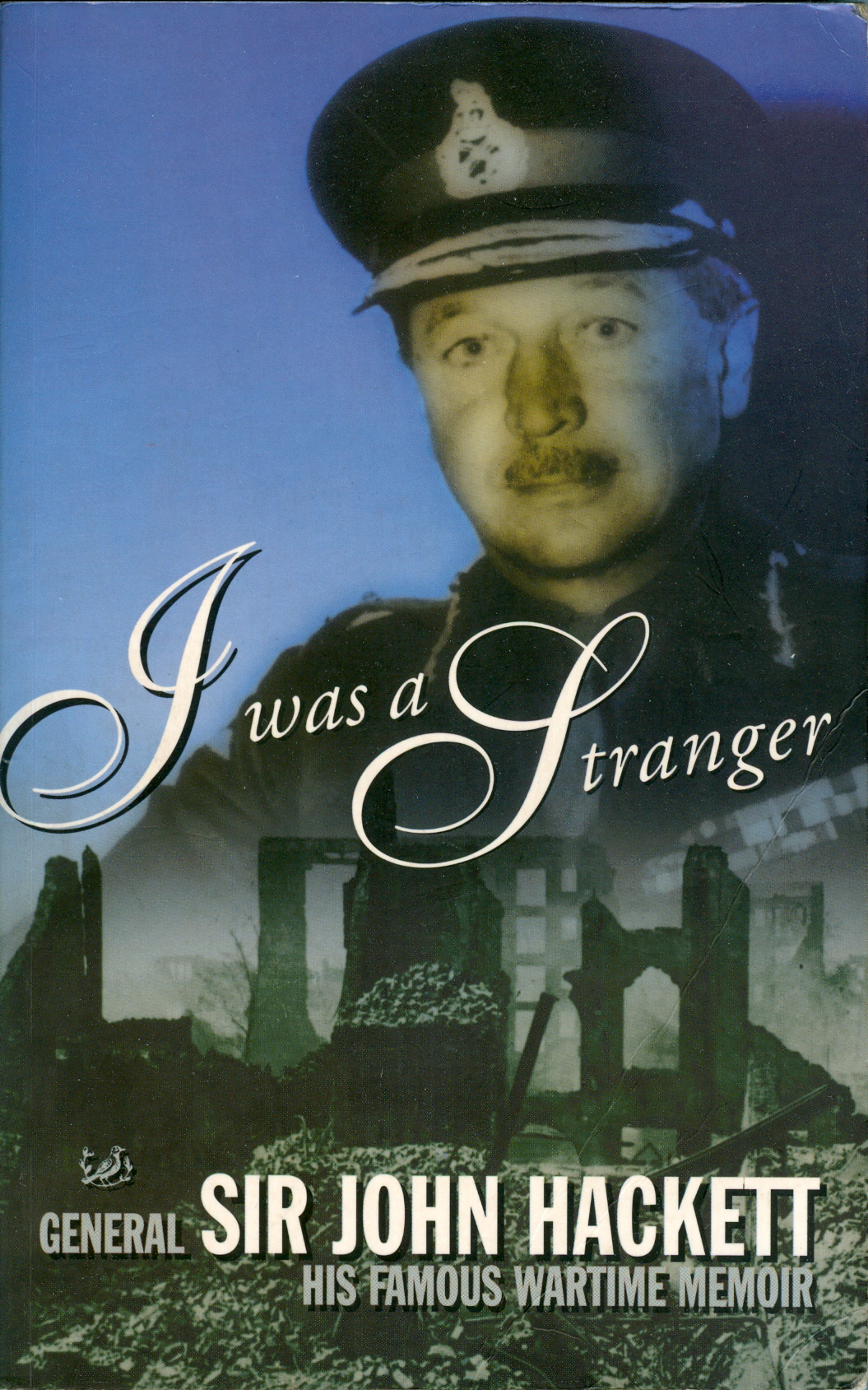
Ernest James Golledge was for twenty-seven years – between 1907 and 1935 – the headmaster of St John’s Boys’ School in Felix Road, Ealing. Situated in a rapidly expanding suburb of London, St John’s was a typical free elementary school of the period. It occupied purpose-built premises on a three-quarters-of-an-acre site, but the number of children on the roll was double that intended by its Victorian founders. Coming from poor, if mainly respectable homes, they were generally undernourished, often infested with lice and, in many cases, inadequately shod. Their expectations in life were pitifully low. Their parents were anxious to put them to work as errand boys as soon as the law would allow, not even aspiring for them to become office clerks. A large proportion of Ernest’s boys had never seen the sea or even been to London.

Ernest, a proud Yorkshireman, was notable for his energy and enthusiasm and for his innovative teaching methods. In the pages of the school magazine that he launched soon after his appointment, he declared war on mediocrity and the self-limiting of his boys’ aspirations, urging them to ‘be something, be anything, but mean’. He aimed above all to instil in them the habit of reading. A passionate admirer of Dickens, Ernest was haunted by his example of a deprived childhood – sent to work in the blacking factory by an unfeeling mother – and his salvation through reading. He opened a ‘Dickens Room’ at the school as a shrine to his hero and as a reminder of the success that can be achieved through the love of books.

Ernest thought his boys should be exposed to the finest works of art as well as the finest literature. Prints of famous paintings were hung throughout the school, and artefacts displayed from all over the world. Before long, he was boldly inviting some of the greatest men and women of the day to visit the school and address the boys, as living examples of excellence. Ernest’s most striking achievement is the number of famous or distinguished people that he enticed through the school gates – from Queen Alexandra to Lords Haig, Jellicoe and French and countless others. All tended to be in sympathy with his own world-view as an arch-imperialist.

Ernest successfully invited a succession of famous explorers to the school. It would be hard, then or since, to think of any speaker more likely to excite an audience of boys than Sir Ernest Shackleton, the Antarctic explorer, who in 1909 had marched further south than any man before him, to within 97 miles of the Pole, thereby preparing the way for the expeditions in 1912 of Amundsen and Scott.

Shackleton was even then deep in preparations for his next trip to Antarctica – the Endurance was to embark on her fabled voyage from Plymouth on 8 August 1914 – and must have been frantically busy, yet he found time, that April, to contribute to Ernest’s series of talks for the Livingstone Centenary. According to Ernest, he delivered ‘a delightfully graphic account of the [1909] expedition’, emphasising the pluck, loyalty and devotion to duty of his comrades. ‘Several of the stories he told of almost certain death to himself and others held the boys breathless with excitement e.g.: he fell down a chasm 1,000 feet and was only just rescued in time by Mr Wild when four of the five strands of the rope which held him in suspense had given way. On another occasion he broke a blood-vessel and heard Dr Wilson say that he couldn’t live until morning. When their rations were reduced to 18 ozs. per day per man, these heroes would share their food with their ponies.’ Both Shackleton and Frank Wild, his loyal collaborator and confidant, will reappear in Ernest’s story.

Shackleton helpfully reinforced Ernest’s own persistent message that ‘“imagination” is a splendid incentive to “strive on”’. The explorers had had a substantial library of 3,600 books on the Nimrod, from which they had packed a small selection onto their sledges before setting out for the Pole. These were Dickens’s Sketches by Boz, Borrow’s Bible in Spain, Shakespeare’s Comedies and Scott’s Ivanhoe.

In conclusion, Shackleton told the boys that ‘they all had a “pole” or “goal” to aim at in their lives, and the requirements for an arctic expedition were equally suitable to them viz.: Ideals, Patience, Physical endurance, Optimism, and Co-operation’. It would have been superfluous, if not presumptuous, for Ernest to add to his remarks. He merely said ‘Thank you, Sir Ernest’, and called for three cheers.

Left to Right: Ernest Golledge, Commander Teddy Evans and F. Klein, the assistant master who laid out the playground map, at St John's School, Ealing. Klein was later killed in the war.

Three months later, Ernest achieved another impressive coup. His near neighbours at ‘Wynnfield’, Sutherland Road, were the barrister Frank Evans and his wife, parents of Commander E.R.G.R. ‘Teddy’ Evans, R.N., second-in-command to Scott on his last, fatal expedition to the South Pole. By 1916, the Golledges were on sufficiently close terms with the family to be invited to Teddy’s wedding. It took place at Christ Church, Westminster, the guests including Lady Shackleton and the mother of the gallant Captain Oates. The bride, Miss Elsa Andvord, was described by an admiring reporter as a beautiful Nordic goddess.

As the leader of the survivors of the British Antarctic Expedition (his experiences had been truly harrowing, though he was not one of the party that made the final push to the Pole), Teddy Evans – the future Admiral Lord Mountevans of the Broke – was invited to St John’s on 16 July 1913, to unveil a portrait of Captain Scott. With his alert, handsome face and sturdy figure (though he was not much taller than Ernest), Evans was the archetypal ‘Boys’ Own’ hero. He began the proceedings by driving a steel peg into the middle of the star that marked the South Pole on the huge playground map, along with a Union Jack. The boys then listened with rapt attention to an account of his adventures. They laughed when he said they went 150 days without washing, and when they heard that Petty-Officer Crean had lost his trousers while sliding down the ice (‘though they realised it was serious when they looked into the matter’). They were fascinated to learn that the explorers thought of nothing but food, and of their fantasising about meals in the Hotel Cecil or from the corner fish shop, according to their rank. The message from this fine example of manhood was ‘that life was just slogging on, and the amount of success achieved would depend on the way we slogged’. As for Captain Scott, ‘he set you a fine example to play the game, how to strive for the right, and how to die’.

For good measure, Ernest also sent invitations to Roald Amundsen (in November 1913) and to Sir Douglas Mawson, leader of the recent Australasian Antarctic Expedition. Amundsen’s sister was in charge of his correspondence and thought it unlikely that he would be returning to England. Mawson, responding in May 1914, regretted that he would be leaving shortly for Australia, and had ‘but 2 months in which to write a book describing the whole expedition’. Disappointingly, neither man ever made it to St John’s.

When Shackleton returned from his Antarctic adventure in May 1916. Ernest was unable to engage him for a talk, but settled for his unassuming right-hand man, the ex-Merchant Navy officer – and son of a Yorkshire schoolmaster – Frank Wild. Gaunt and tough, with thinning hair and a large moustache, Wild was a huge attraction. Introducing him on 11 January 1917, Frank Evans, the father of Commander Evans, said he knew from his son that Mr Wild had ‘done more walking in polar regions than any other man, alive or dead … He was as fond of a cold climate as a polar bear.’ He was to list the four great expeditions of which he had been a member on a signed, postcard-style photograph sent to Ernest in 1917: ‘Scott 1901-04, Shackleton 07-09, Mawson 11-14, Shackleton 14-16’. It is one of the treasures of the Golledge archive.

Wild’s enthralling, two-hour lecture included accounts of all four expeditions. He mentioned casually ‘that the temperature experienced was often as low as seventy-four below zero’. He spoke appreciatively of Shackleton’s ‘self-sacrifice and determination under adversity’; of the advantages of ‘abstinence from alcoholic liquors and smoking during sledge journeys’; of the ravenous cravings for food. One comrade, he said, had lived for weeks on an exclusive diet of limpets and sea-weed, the latter acting as a ‘tonic’. The boys and girls were fortunate indeed to hear such a speaker. Wild had been the inspirational leader of the Elephant Island party, while Shackleton, in search of help, had embarked on an 800-mile journey across the Southern Ocean in an open boat. It has been justly called one of the greatest adventures of all time.

Wild had arranged with Ernest that his talk would be illustrated with lantern slides. They included numerous views of Antarctic scenery and wildlife. Wild had suggested as an alternative that he show ‘some cinema film of Shackleton’s 1907-9 journey’. It is intriguing that Ernest should have had the facilities to project both slides and moving pictures. It was later to be Ernest’s proud boast that his was one of the first schools anywhere to introduce the cinema as an educational tool. He records this milestone in the school log-book for 17 November 1916: ‘The cinematograph was used for the first time as a means of instruction – the “industry of Tapiocea” & “Rice Fields of the East”.’

Rupert Willoughby has just completed a commission to write a biography of Ernest Golledge, based on his archive, which is in private hands.

My Barefoot Childhood: Life with the Basutoland Mounted Police – and the Oldest Man I Ever Knew

February 24th, 2013

Christopher Willoughby, Basutoland Mounted Police

A fascinating Pathé news film from 1968 shows Basutoland, the country of my birth, as I barely remember it.

It describes the newly-independent country, re-named ‘Lesotho’, as a ‘proud, poverty-stricken mountain state’, where most of the population live in ‘mud-hut villages’. The landscape is spectacular, but blighted by a lack of trees. As a result, fuel is scarce. ‘Erosion is this country’s curse – and challenge. Acres of over-cropped topsoil can be lost in just one thunderstorm … It is subsistence farming for the most part, and primitive.’

A farmer bends over his plough which is drawn by two pairs of oxen. Another farmer appears to be driving a tractor, but, as the camera turns, it becomes clear that it has broken down and is also being drawn by a team of oxen.

Seven-year-old herd-boys lead flocks of sturdy sheep ever higher into the mountains in their desperate search for pasture. Woven mohair is one of Lesotho’s few exports, but more significant are the 100,000 men who migrate annually to neighbouring South Africa to work in the gold mines. The alternative is starvation, and their wages are ‘crucial to the country’s revenue’. However, Roman Catholic missionaries have long ago brought schools and hospitals, and deep faith, to Basutoland, which has the highest literacy rate in Africa. A ‘flying doctor’ service operates in the remoter parts.

Most Basutos get about on horseback. The young King, Moshoeshoe II, himself daily ‘rides among his people’. The most fascinating scenes are of Maseru, the capital town, which boasted the only metalled road in the entire country – the ‘Kingsway’, built for the visit of King George VI in 1948. The commentator describes Maseru as ‘something of a shanty town’, and there are lingering shots of ‘Main Street’, a dusty thoroughfare lined by thatched huts, stalls with cardboard awnings and a scattering of glass-fronted modern buildings in the local sandstone. (One that I particularly remember was a shop with a thatched roof in the shape of a Basuto hat.) It seems a sleepy place, like something out of the American Wild West, with lone horsemen ambling by, a procession of pack-mules and women wrapped in distinctive Basuto blankets carrying loads on their heads. Almost everything in Maseru has had to be imported, from the oranges sold in the market to the barber’s clippers and the cardboard that he uses for his awning.

Christopher Willoughby leads a parade at the Police Training School, Maseru

It is reassuring to see ‘the precision drill of their new police recruits’ at the Lesotho Mounted Police Depot in Maseru, knowing that the high standards set by my father have been maintained. As his last job in Basutoland, my father co-raised the paramilitary ‘Police Mobile Unit’ of the Basutoland Mounted Police, which was to be the nucleus of the defence and security force of Lesotho. He maintained that his recruits were addicted to drill and enjoyed practising it in their spare time.

I suspect that my father came to Basutoland, a British protectorate since 1880, in search of adventure rather than professional advancement. Even as they travelled out in 1958, my parents knew that it was being groomed for independence. To my mind, my father typified the professionalism, selflessness and incorruptibility of the colonial administrator. By the time I was born, Christopher Willoughby was an acting Senior Superintendent, commanding Basutoland Special Branch at Maseru. With subversives deemed to be everywhere, he could not afford to take any chances. A friend, Colin Smith, recalls joining him for some target practice:

‘Chris Willoughby had a smart automatic pistol, a 9mm Beretta I think it was, and I took my rickety Browning, and off we went shooting at beer cans in a suitably secluded bit of countryside up near the race course.

‘It was then that the scales fell from my eyes. Chris, who gave the impression of being a slightly simple but tall, handsome and extremely well bred gentleman, was in fact a crack shot. It is a mistake to underestimate such men. Beer can after beer can flew away when he was shooting, while mine remained stubbornly in place. I began to treat the Special Branch, which I had previously seen as a bit of a joke, with more respect.’ (Colin Smith, Green Mountain Doctor (Beaminster, 2000), p.133.)


The Oldest Man I Ever Knew 

It was in this improbable, timeless landscape that I roamed barefoot during my early years. I have only vague memories of the place, one of the strongest being of our last few days in Maseru.

My barefoot childhood (front left), with my brother Simon (back left) and friends

Having packed up all our belongings for shipment back to England, we took up residence in the Lancer’s Inn on Kingsway, which passed for Maseru’s smartest hotel. It was – and is – more of a ‘motel’, with guest accommodation in a jumble of single-storey blocks at angles to the main building.

While there, my elder brother and I encountered a permanent resident of the Lancer’s, a retired trader and old South Africa hand by the name of Bacon, who was reputedly 99 years old. He would therefore have been born in 1867, and would have been in his thirties at the time of the Boer War. Though I do not recall him regaling me with stories of that time, I suspect that not many people can precisely identify the oldest person they have ever known.

My mother recalls that, during our stay at the Lancer’s, there was a commotion one evening as a dead body was stretchered out with a sheet over its head. She frantically tried to shield our impressionable eyes from the grisly scene. It seems we had encountered this living relic in the nick of time!

When I was eighteen months old, I had been taken to Vicksburg in the Orange Free State for a minor operation, and had been put in a ward full of adult men. They were Afrikaaners and spoke no English. My mother would find me at visiting times being dandled on the knees of these old Boers who were attempting to comfort me. It seems very likely that there would have been veterans of the Boer War among them. My own great-grandfather (born in 1869), had also served in the war, on the opposing side, but of course I never knew him.

The 1968 Pathé film about newly-independent Lesotho can be viewed at http://www.britishpathe.com/video/emergent-africa/query/maseru. Pictures of the Lancer’s Inn are at http://www.lancersinn.co.ls/index_files/Page390.htm.

Pagans and Christians at Chedworth Roman Villa

January 4th, 2013

The Roman Villa, Chedworth

The Roman villa at Chedworth, near Cirencester, was abandoned in the fifth century. The roofs must soon have collapsed, and local builders seem to have helped themselves to the stonework, little of which remains. By the time of its romantic rediscovery in 1864, the entire site had been buried under woodland.

The nymphaeum is at top left

The surviving evidence at Chedworth is of a luxurious house that had enjoyed its heyday in the fourth century. It had grand reception rooms, under-floor heating, a pair of bath-houses and fine mosaic floors that are still largely intact.

Even in the century of Constantine the Great (the first Christian emperor), the traditional pagan religion had been observed there. The mosaic floor of the triclinium (dining-room) includes an image of Bacchus embracing Ariadne and it was overlooked, from special bases, by statues of Diana and of Lar, the household god. Another prominent feature (well preserved today) was the nymphaeum, a shrine to the nymphs, that had been raised above a spring at the side of the house. (Chedworth Roman Villa, National Trust Souvenir Guide, pp.5, 8, 18-19, 38-9.)

Bacchic scenes in the triclinium

Despite Constantine’s Edict of Toleration and the example of most of his family, Christianity was still the religion of a tiny minority, particularly in the West. There had even been an ‘Apostate’ emperor, Constantine’s nephew Julian, although on his deathbed in 363 Julian is said to have bitterly acknowledged the triumph of Christ: ‘Vicisti, Galilaee’ (You have won, Galilean). Throughout this period, the most obdurate pagans, ‘often at considerable cost to themselves’, were to be found among that most conservative group, the senatorial aristocracy, who would have included the owners of Chedworth.

Thereafter, as the Church was ‘showered with benefactions, and privileges, invited to undertake responsibilities, and progressively given a directive role in society’, Christianity had become ‘respectable and even fashionable’, attractive to people of all ranks. (J.N.D. Kelly, Jerome (London, 1975), pp.1-2.) One of the more unexpected converts was the owner of Chedworth.

The chi-rho symbol from the nymphaeum

On his orders, the nymphs had been symbolically banished from their shrine, for a coping stone from its octagonal basin was incised with the famous christogram, representing the chi and the rho which are the first two letters of Christ’s name – ΧΡΙΣΤΟΣ in Greek. It was the symbol that Constantine had had his men paint on their shields before his great victory at Milvian Bridge in 311, and it appears on fourth-century baptismal fonts (mostly portable lead tanks) that have been discovered throughout Roman Britain. (Paul Stephenson, Constantine: Unconquered Emperor, Christian Victor (London, 2009), pp.1, 5, 135-6, 232-3.) An old pagan altar had been tossed into the Chedworth shrine, which had probably been converted by its owner to use as a baptistery.

Chedworth baths

Christianity at Chedworth had, however, been an aberration. In the late fourth century, there had been a resurgence of paganism in the West. The coping stone had been peremptorily removed from the nymphaeum, and relegated, as building material, to the steps of the west bath-house. Christianity was to be no comfort to those who had to face the final abandonment of the villa.

The swallows still nest in the eaves at Chedworth, as they would have done in Roman times. Surprisingly, the site teems also with specimens of the rare ‘Roman snail’ (helix pomatia), a protected species that is mainly found today in the Chilterns and on the North Downs. At Banstead Woods, near Epsom, these creatures, distinctive by their size and pale colour, are being poached at an alarming rate, and are apparently fetching high prices from French restaurateurs (Daily Telegraph, 27 June 2012). At Chedworth, where they loiter unmolested by the outdoor tables of the café, there is something almost reproachful about their presence. ‘You brought us all this way,’ they seem to say. ‘You used to think us a delicacy in your triclinium, milk-fed and roasted in sow’s udders. Why don’t you want to eat us any more?’

The Isle of Wight’s Wildest Swimming: Whale Chine, Vauville in Normandy and the Wavells of Atherfield Farm

August 10th, 2012

Whale Chine is a spectacular ravine in the cliffs on the south side of the Isle of Wight. Other examples of such clefts – the word ‘chine’ is peculiar to the dialect of Dorset and the Island – are the better known Blackgang and Shanklin Chines.

Whale Chine is reached from a car park on the Military Road, which is notable for its grand vistas. Some of the greatest wild swimming of my boyhood and youth was to be had there. To descend to the beach, by means of a steep, rickety wooden staircase and narrow path, was an adventure in itself, for the chine is 140 feet deep.

Usually weighed down by a picnic basket, one was overpowered by the grandeur and timelessness of one’s surroundings. The cliffs here abound with the fossilised remains of prehistoric oysters, ammonites and lobsters. The stony beach is steeply shelved, so swimmers at high tide are soon out of their depth. The swell is considerable. So remote and challenging an environment was appealing to naturists, whose presence occasioned much sniggering among us youngsters – all those corpulent bank managers – though swimming naked is, of course, the wildest swimming of all, and they added to the exoticism of the place.

Since 2005, the steps having fallen into disrepair, the beach at Whale Chine has been completely inaccessible from the landward side. It seems the only way of getting there is by sea. The picture at the top was taken the other day from the head of the wooden staircase and evokes many memories.

Whale Chine appears not to have been named for the marine mammal, as I always supposed, but for the Wavell family of nearby Atherfield Manor, who farmed the land up to the edge of the chine. The family left their mark on the place during less than a century of occupation. They are said to have bought the estate in 1557 (from Sir Thomas Trenchard) and to have relinquished it in 1636 (A.D. Mills, The Place-names of the Isle of Wight). The photograph on the left is a distant view of the manor-house, less than half a mile inland – a solid, L-shaped building of stone. From a clearer picture in C.W.R. Winter, The Manor Houses of the Isle of Wight (Wimborne, 1987, p.186), I deduce that it also dates from the time of the Wavells.

These Wavells are a very old Island family. They are recorded there since 1300, when a Roger Wavill witnessed a charter at Afton, near Freshwater. A century later, Adam Wavill was witness to a grant of land at the same place. Their farming descendants had no airs about them and are listed in 1606 among the yeomen of the Island.

Thomas Wavell, who sold Atherfield in 1636, had settled at Limerston, elsewhere in the parish of Brighstone. He served during the Civil War as a major in the Royalist army, but another Wavell was for Parliament, and sat on the ‘Committee of Safety’ that it imposed on the Island. The leading Royalist there, Sir John Oglander, was to deplore the arbitrary government of ‘Ringwood of Newport, the pedlar, Maynard the apothecary, Matthews the baker, Wavell and Legge, farmers’, who ‘overruled Deputy Lieutenants and Justices of the Peace’. He felt this to be contrary to the natural order of things.

Little did Sir John know that the despised Farmer Wavell was assuredly the male-line descendant of a knightly Norman immigrant from the time of the Conquest, which was the proudest boast of his own family (C. Aspinall-Oglander, Nunwell Symphony (London, 1945), pp.11-12, 40, 104). Sir John’s descent was from the lord of Orglandes, near Valognes; Wavell’s was, almost certainly, from the lord of Vauville, also on the Cherbourg peninsula. In the late eleventh century, William de Vauville or ‘Wavilla’ is mentioned in charters in both Normandy and England. Subsequent generations took root in Sussex, Bedfordshire, Somerset and, it seems, the Isle of Wight. From Whale Chine they would unwittingly have looked across the Channel towards their ancestral home, forgetful of their origins and of their former knightly rank, even more than the Durbeyfields of Hardy’s novel.

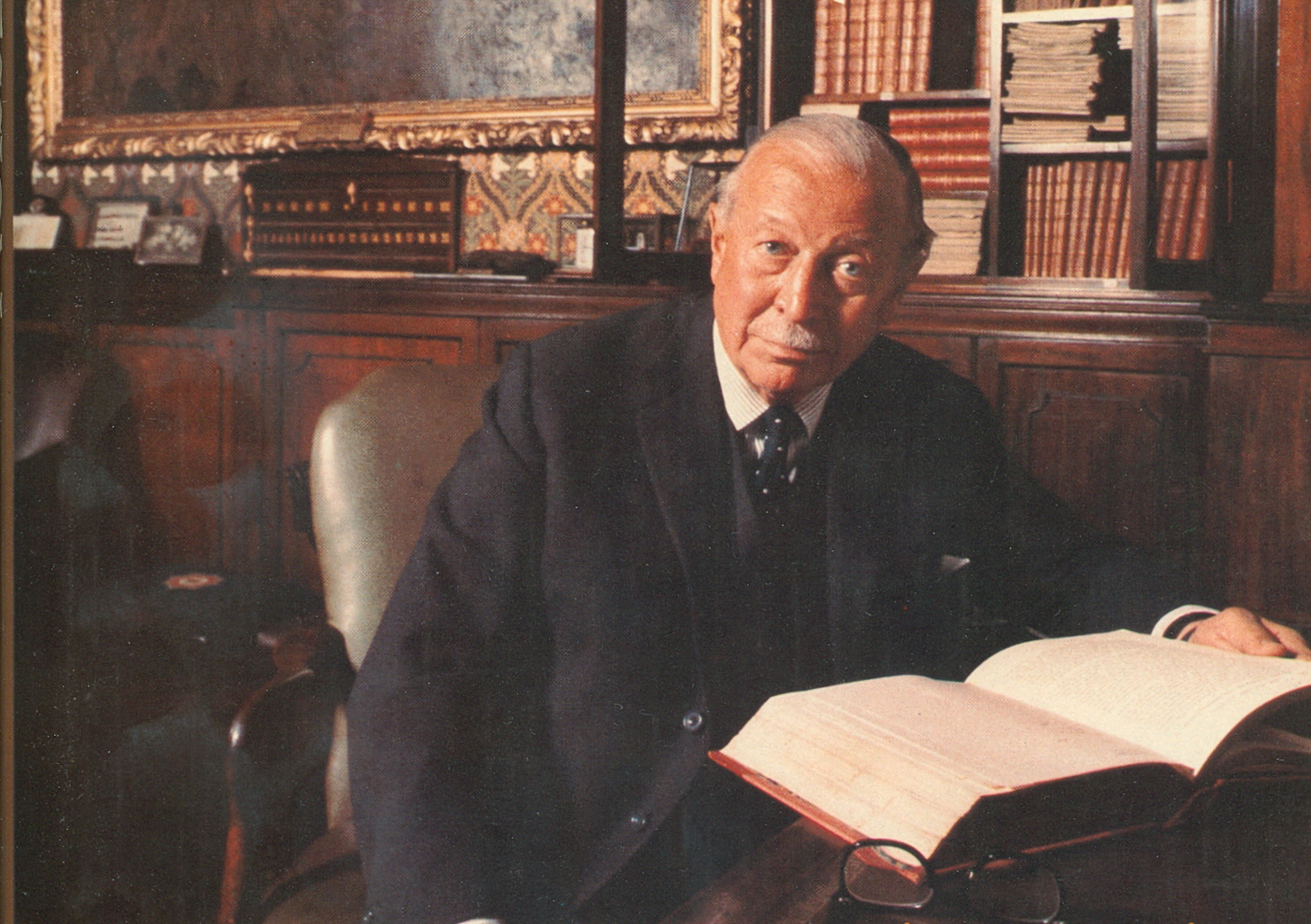
Major Thomas Wavell’s son Richard (1633-1705), sometime of Egham and London, was a celebrated nonconformist pastor, and great-grandfather of Dr William Wavell of Barnstable, after whom the element ‘wavellite’ is named. Three generations of William’s descendants were all educated at Winchester College and became soldiers, the last being Field Marshal Archibald, First Earl Wavell of Cyrenaica (pictured left), the wartime Viceroy of India. (L.G. Pine, They Came with the Conqueror (London, 1966), pp.46-8; G.E. Wavell, ed. L.G. Pine, The House of Wavell (MS in British Museum); Burke’s Peerage 1949.)

Lord Wavell’s son, the second earl, a Major in the Black Watch, was killed leading a patrol against the Mau-Mau, the last of his line. However, branches of this remarkable and illustrious family continue to flourish on the Island. I note that there are nine Wavells listed in the current Isle of Wight telephone directory.

A Day at the Dig Part I: Roman Silchester 2012

July 22nd, 2012

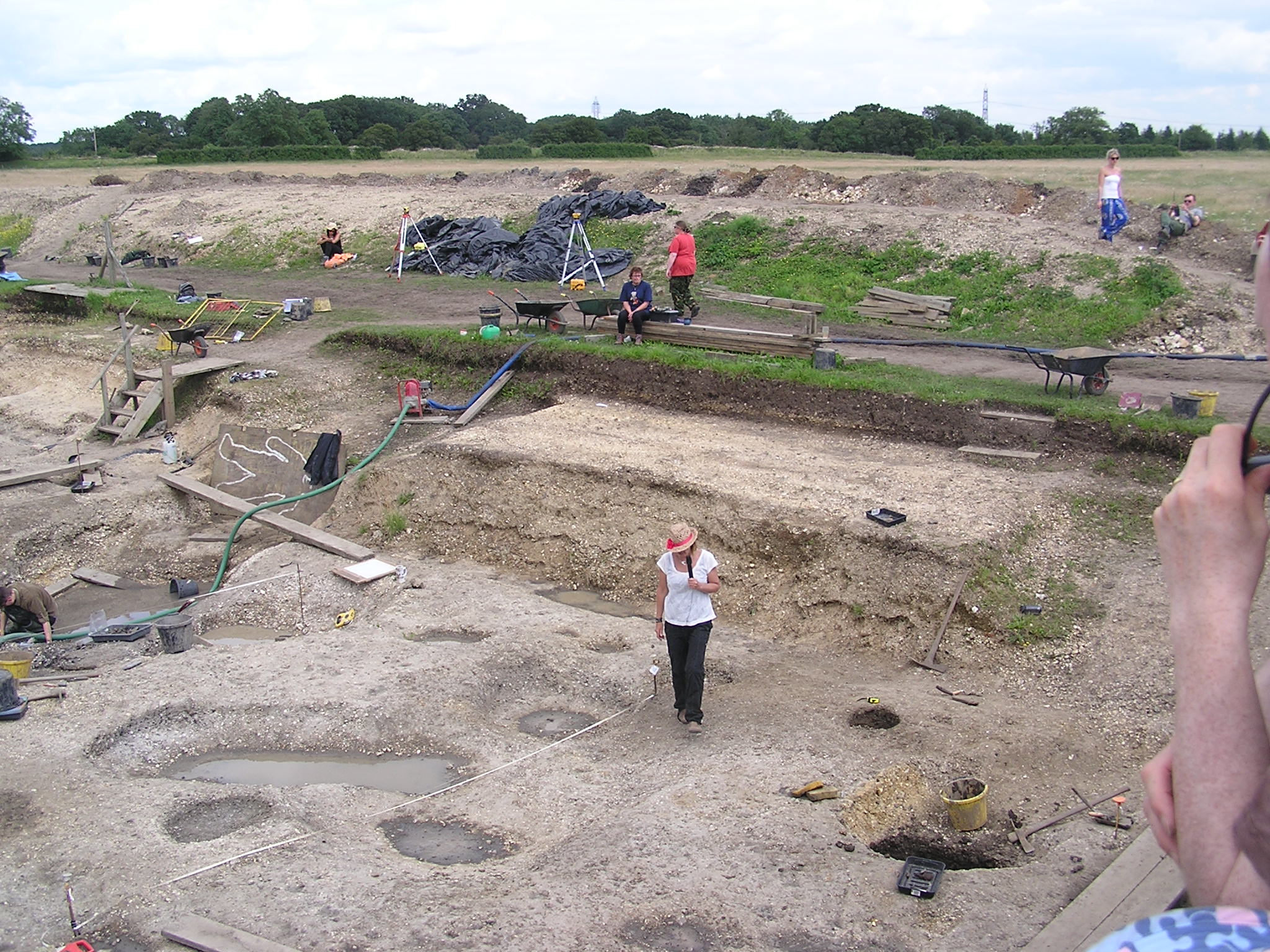
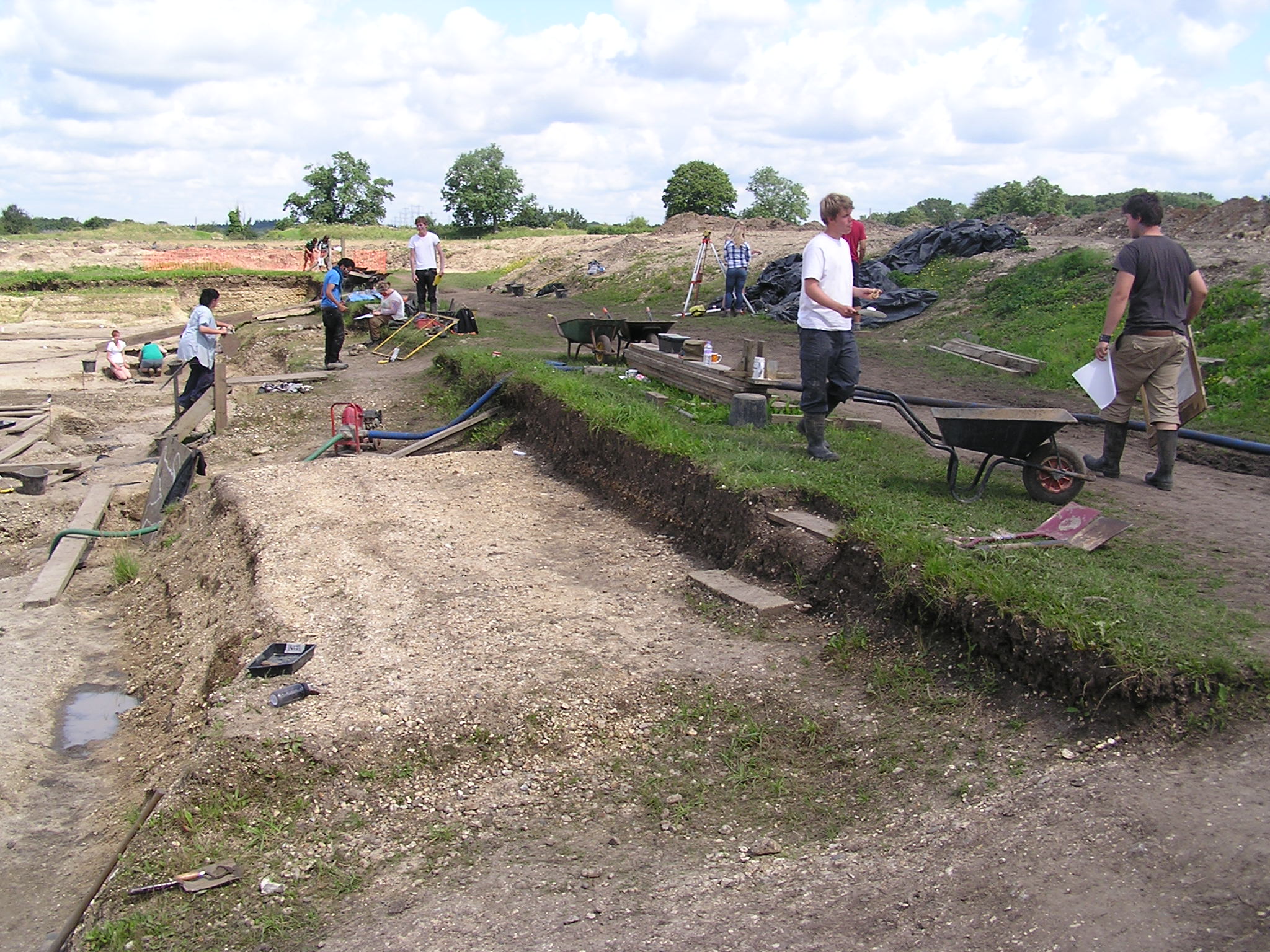
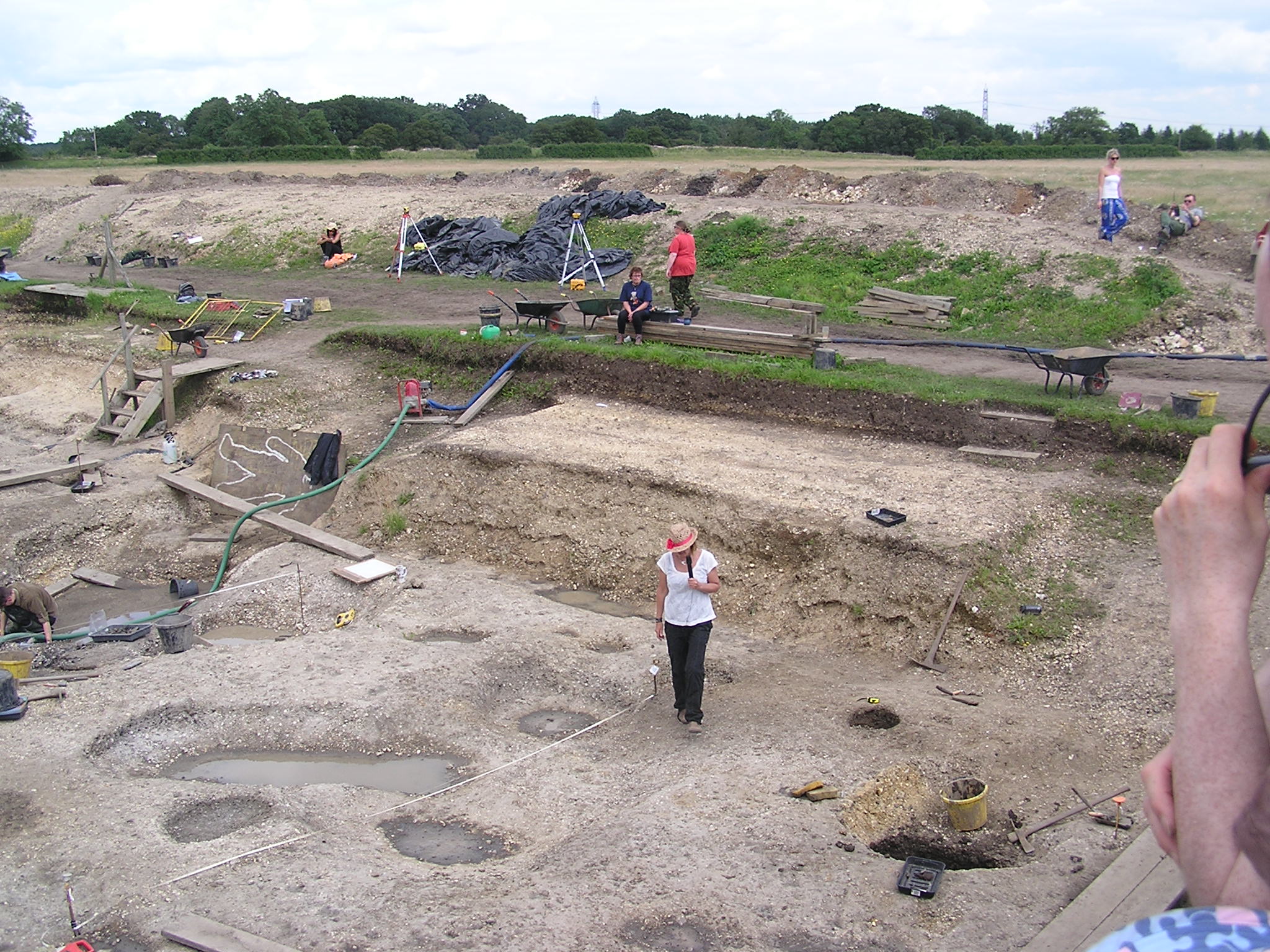
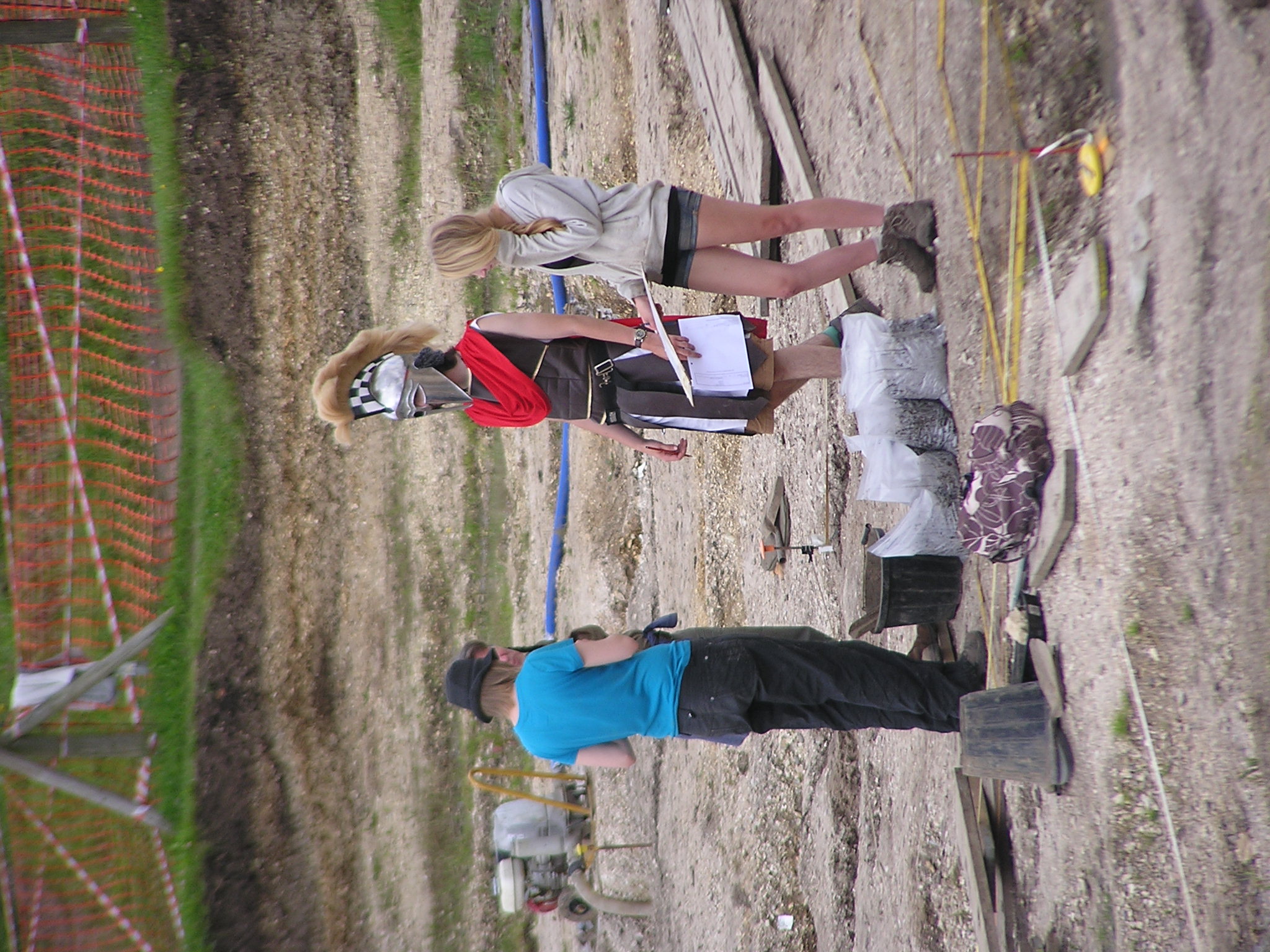
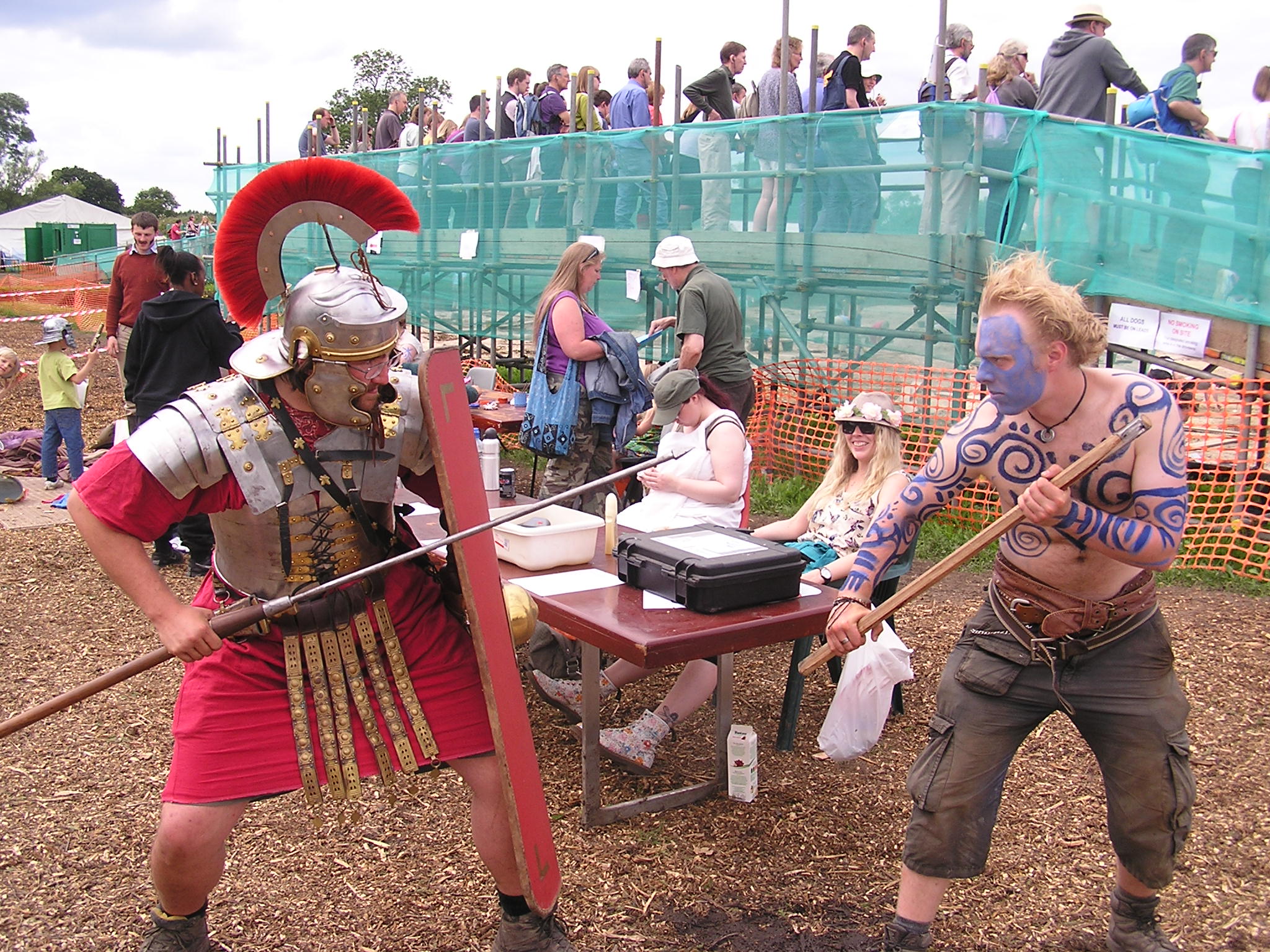
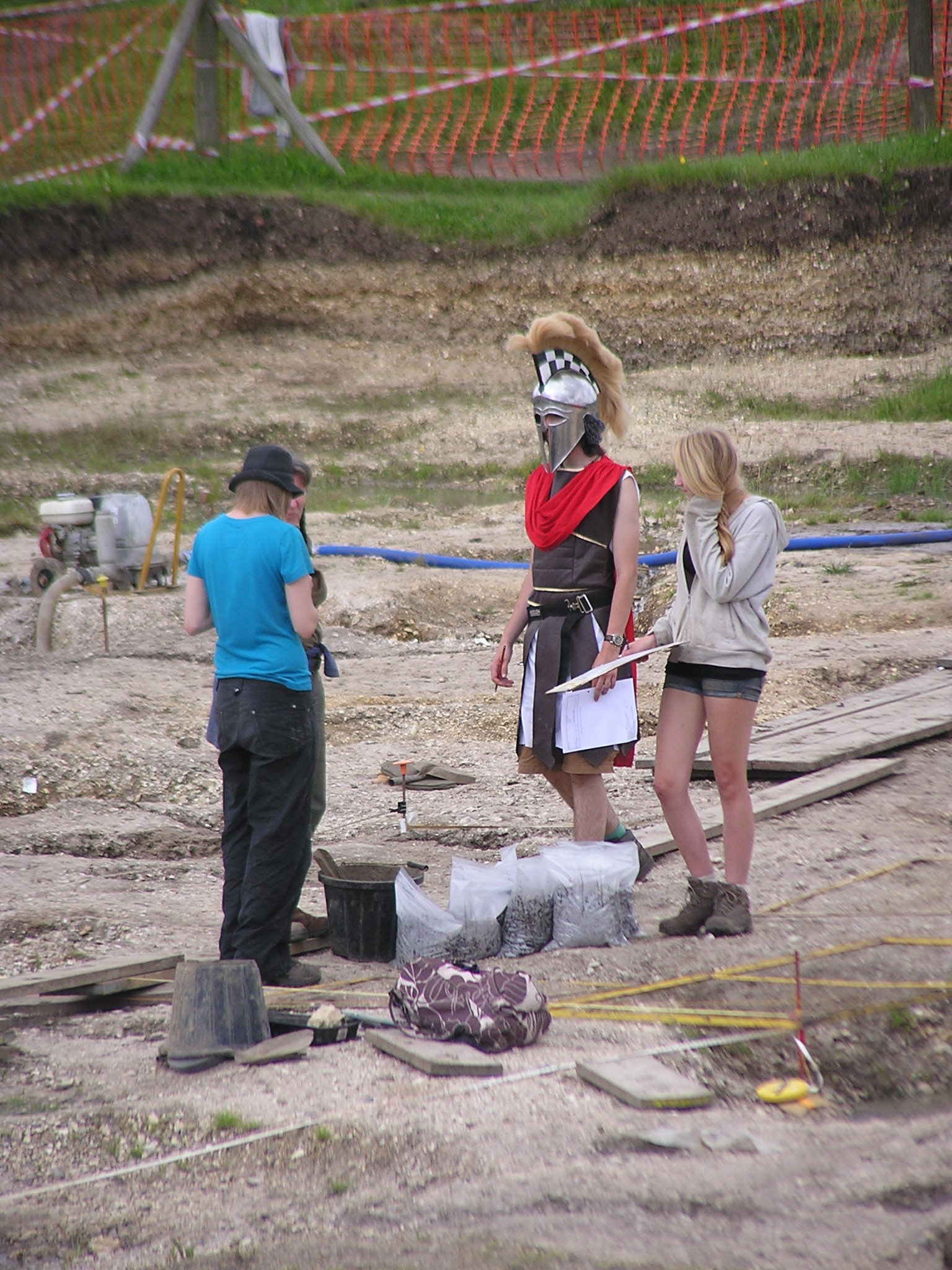
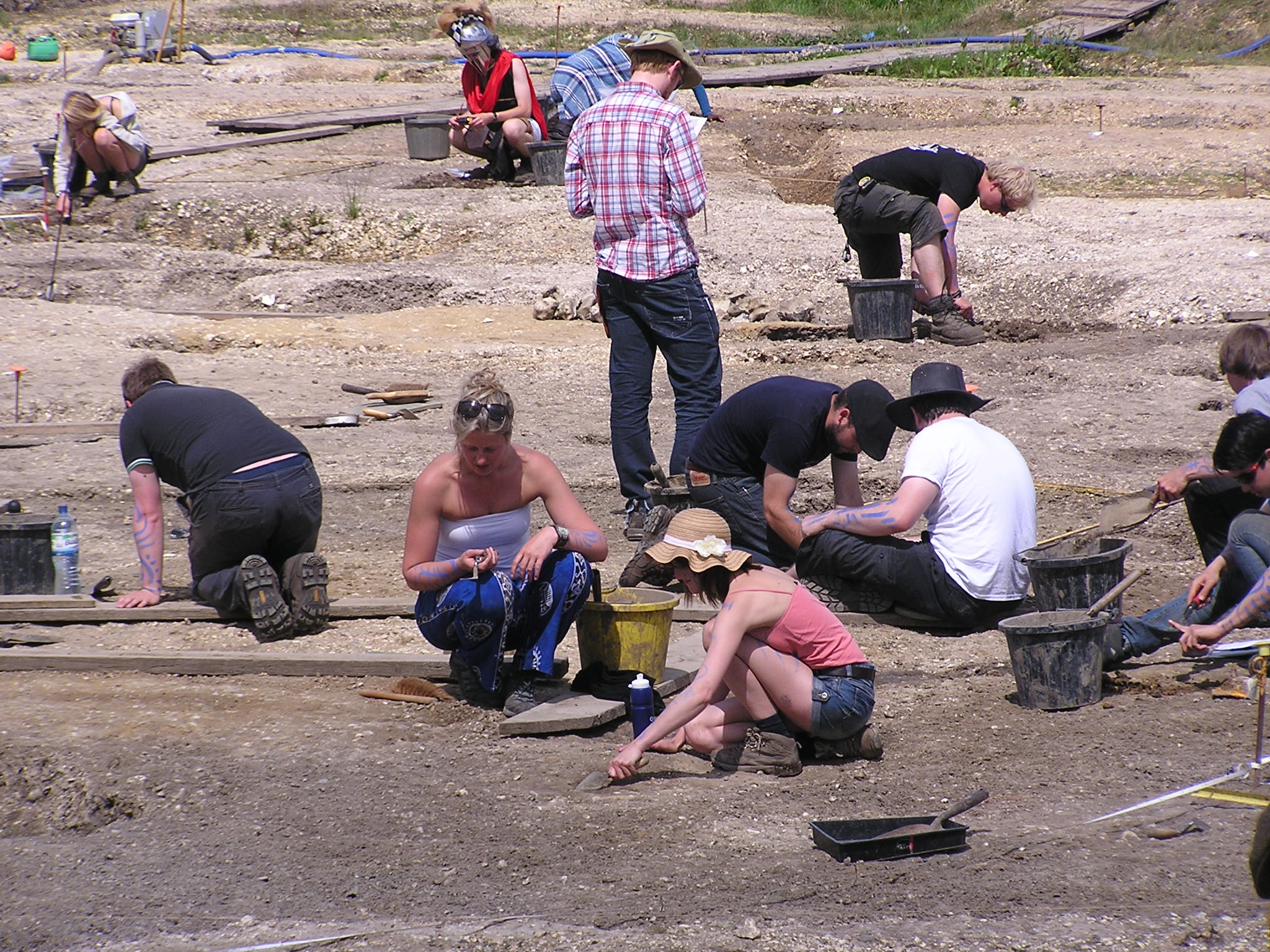
Owing to the continuous heavy rain, this season’s excavations at Roman Silchester have been more challenging than ever. However, the usual festive atmosphere prevails, as was apparent at yesterday’s Open Day, when many of the participants wore ‘themed’ costumes.
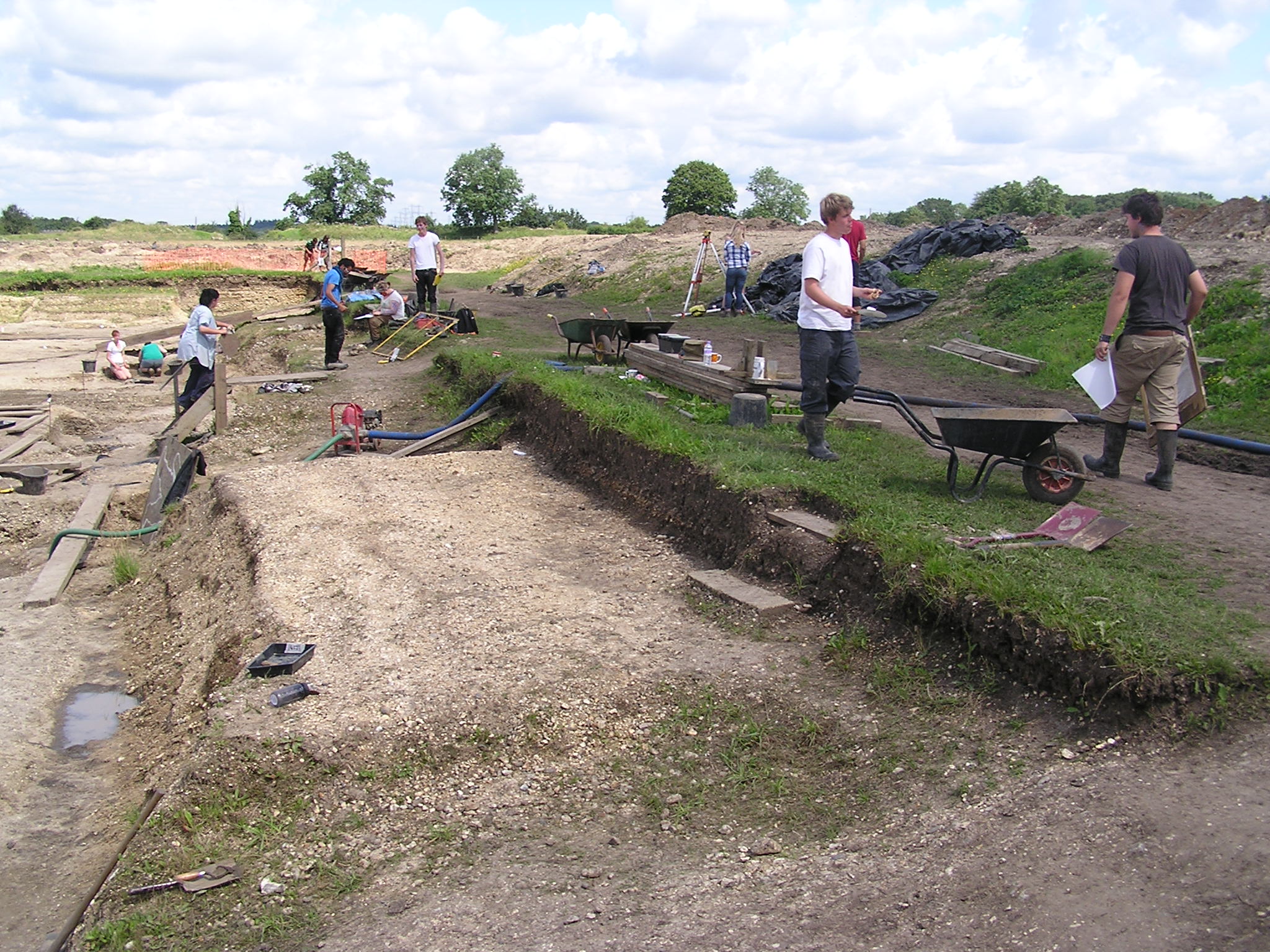
The rain has also beautifully brought out subtle but revealing contrasts in the soil, which are not so obvious on ground that has been baked dry by summer sun. For example, there are dark stripes marking the remains of floor-level beams, dark circular stains indicating post-holes, more dark stripes along the third-century street (pictured left) suggestive of wheel ruts.
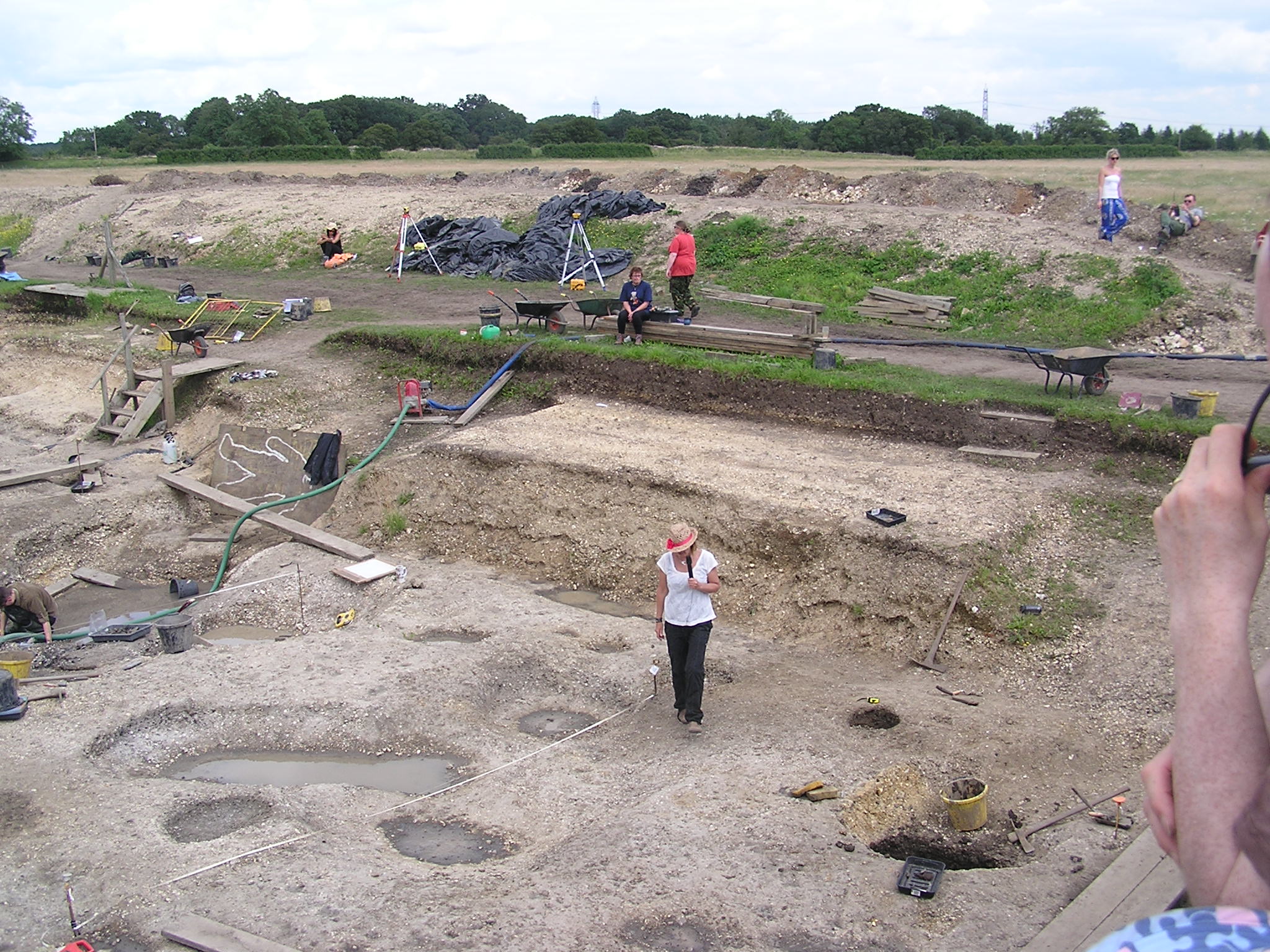
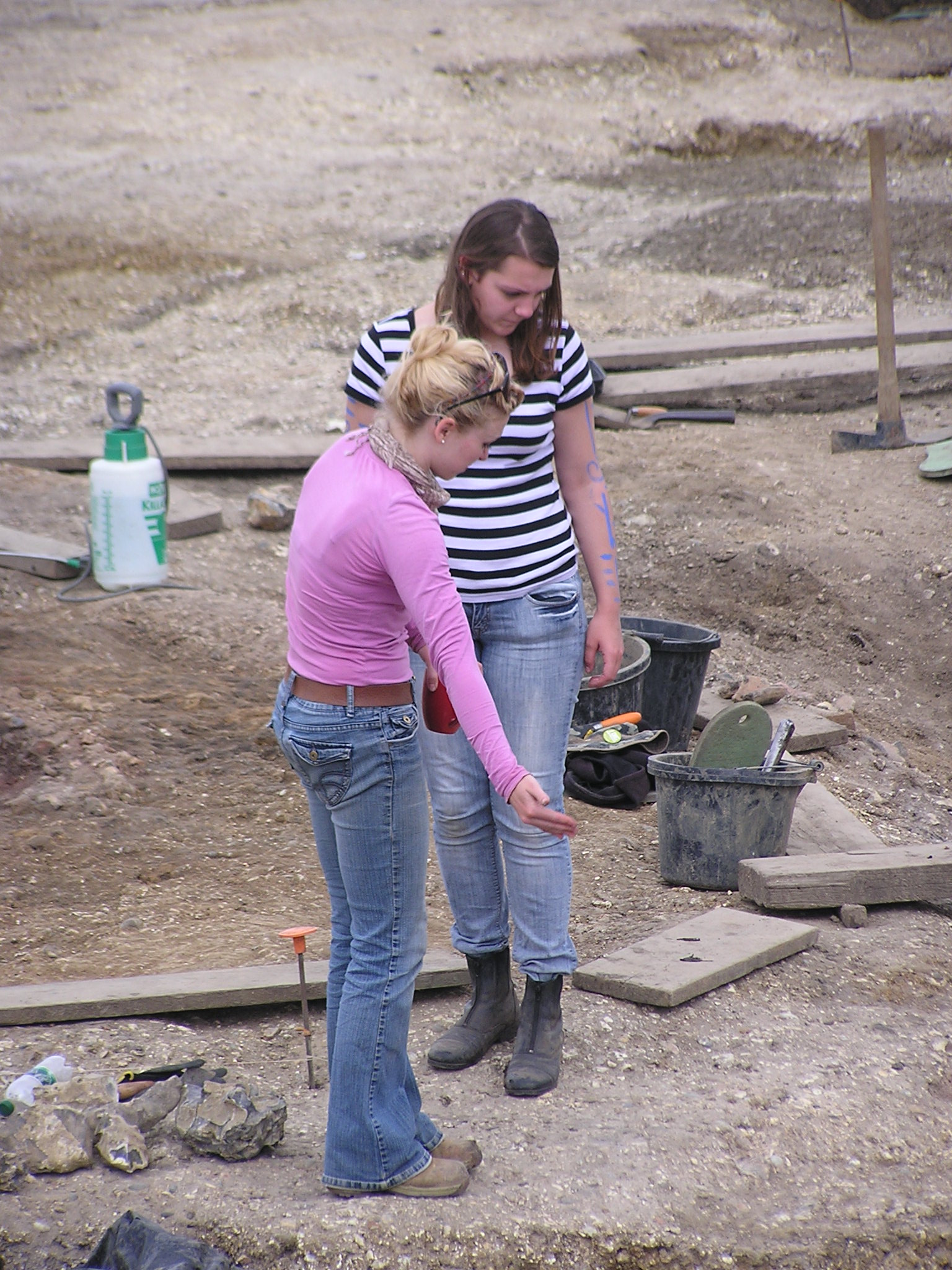
The picture on the left illustrates the progress of the archaeologists over the years from the third-century street level (behind Amanda Clarke, Field Director, in the fetching hat) down to that of the first century (on which she is standing). They are continuing to concentrate on the earliest Roman layer in Insula IX, dating more precisely from about 40 to 60 A.D., where they have discovered a large number of insubstantial wooden buildings.

Michael Fulford and Amanda Clarke, who oversee the dig, remain convinced that these buildings were for military use, and indeed that the Calleva of that period was highly-militarised, if not a garrison town. As Professor Fulford has discovered in previous excavations, there was a square wooden building under the later Forum, which is equally likely to have had a military purpose. In further support of the theory, the finds in Insula IX have included horse harnesses, belts and buckles, a ballista bolt and – in the last three weeks – three tiny pieces of chain mail.
The team are also revealing further traces of the iron-age settlement that existed before the arrival of the Romans, including what may have been the hall of a chief. There is evidence beside it of a substantial track. Its route through adjoining fields is to be investigated by means of ground-penetrating radar. Where the street runs past the chief’s house it is lined by a row of post-holes. There is also a flanking trench, which was either to support a fence, or for drainage.

Remains of amphorae, samian-ware and goblets imported from the Continent are evidence that this was no backwater. The Atrebates enjoyed a relatively sophisticated diet, which included such exotica as dill, coriander and celery. Most exciting of all has been discovery this season, in a well, of a single olive stone, the very earliest to have been found in Britain – a Continental import before ever the Romans arrived. This is not surprising given that Commius and his Atrebates, the first-century B.C. colonisers of this place, were émigrés from Gaul.
The most poignant discovery has been of a little dog in the foundations of the supposed chief’s house. An animal of two or three years old, resembling a miniature poodle, it is of a type never previously seen in Britain, a land better known for its cunning hunting dogs. Professor Fulford thinks the animal was an offering, deliberately buried in the foundations to ensure the life of the building. One wonders if it had been the cherished pet of the chiefly family – and hopes that its death was quick and painless.

Pressed on the causes of Silchester’s decline in the fifth century A.D., Professor Fulford points to evidence of deliberate spoliation, with the rubble of demolished buildings having been tossed into wells. The inhabitants had a habit of digging these wells into ancient latrine pits, which cannot have helped. Whatever the causes of its gradual abandonment, the thoroughly-Romanised Calleva Atrebatum had no future in Saxon-dominated Britain.

For last year’s Silchester blogs, see http://www.rupertwilloughby.co.uk/archives/753.
The Olympic Torch is carried through Reading

July 16th, 2012

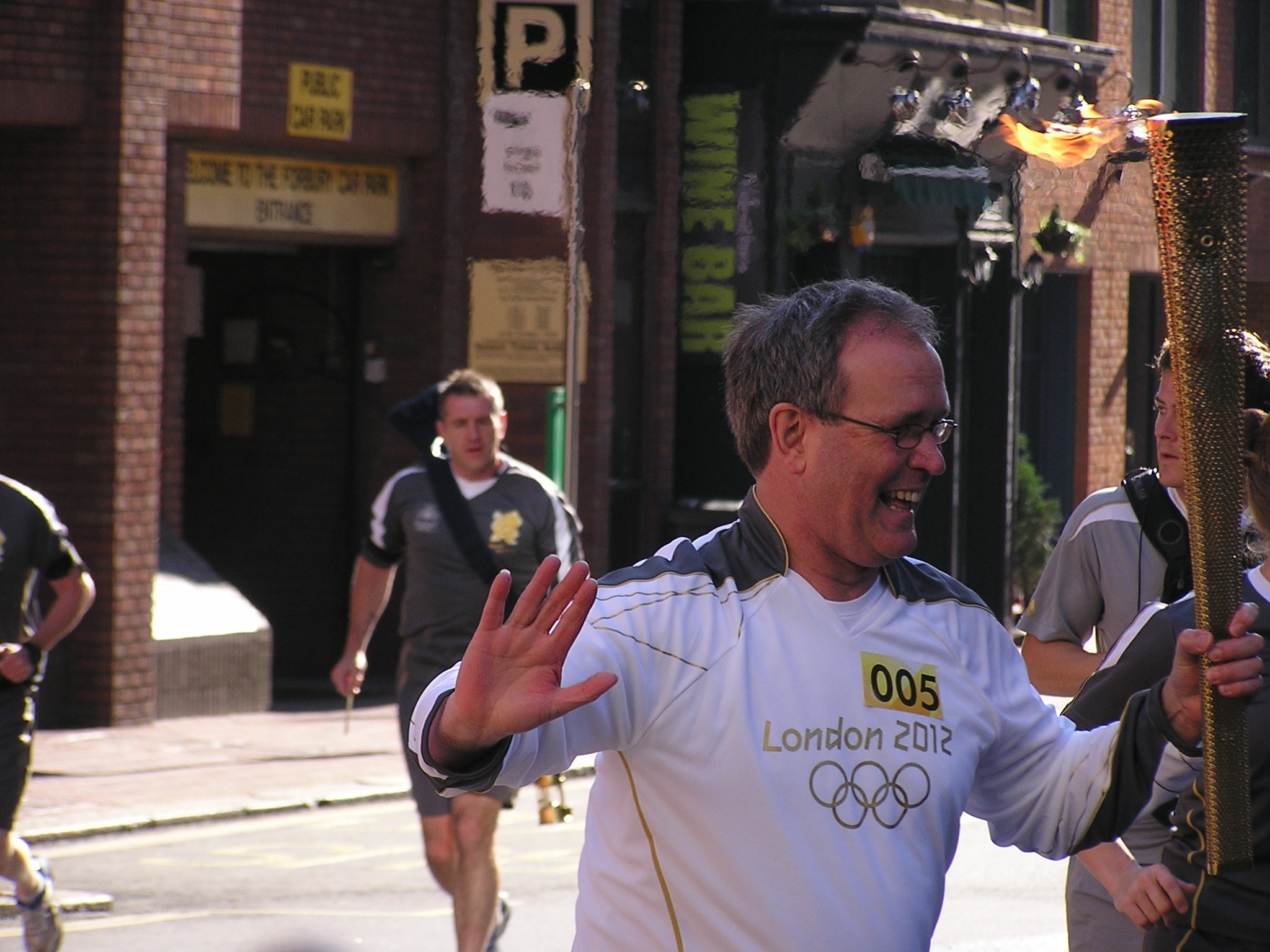
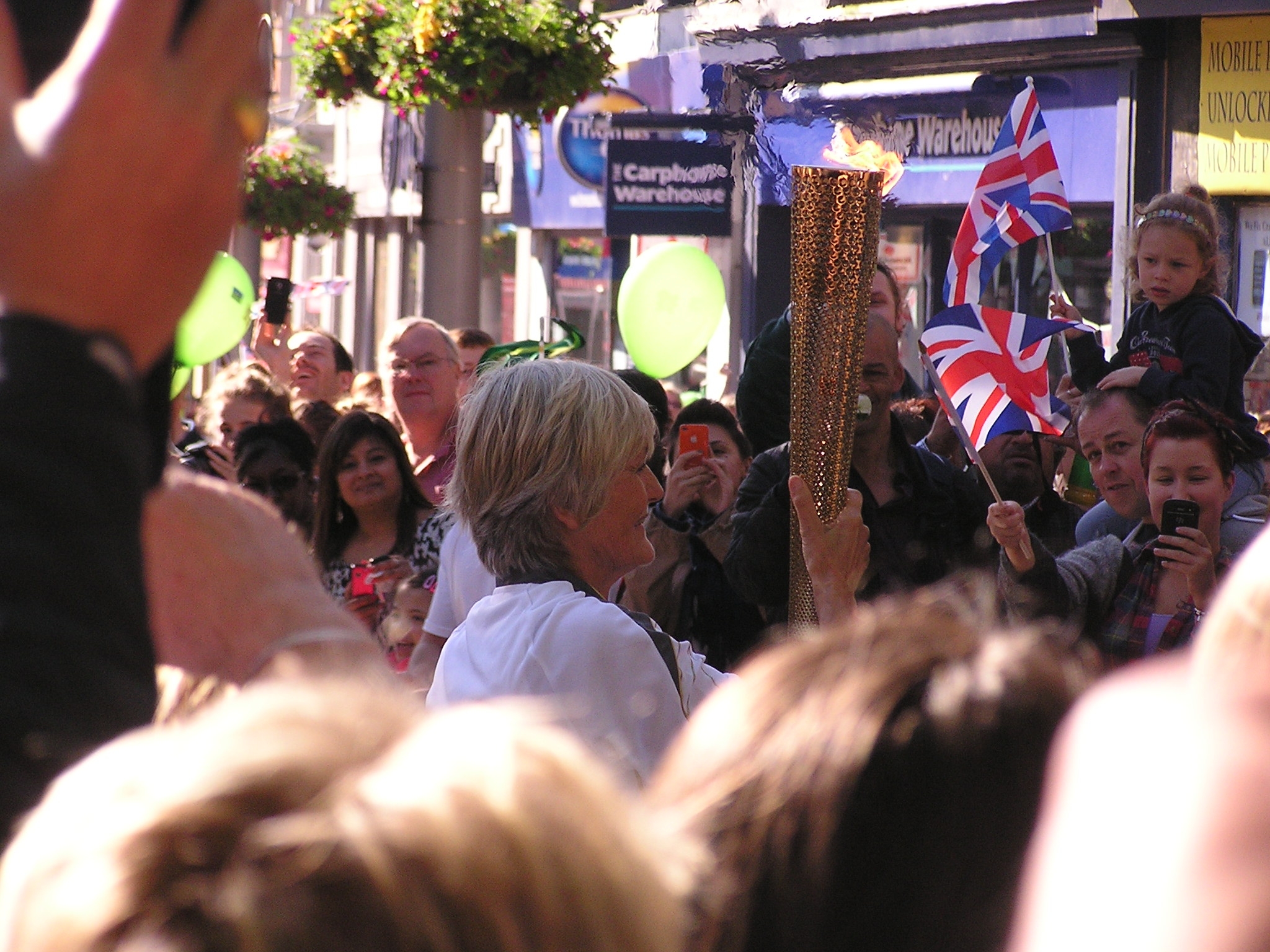
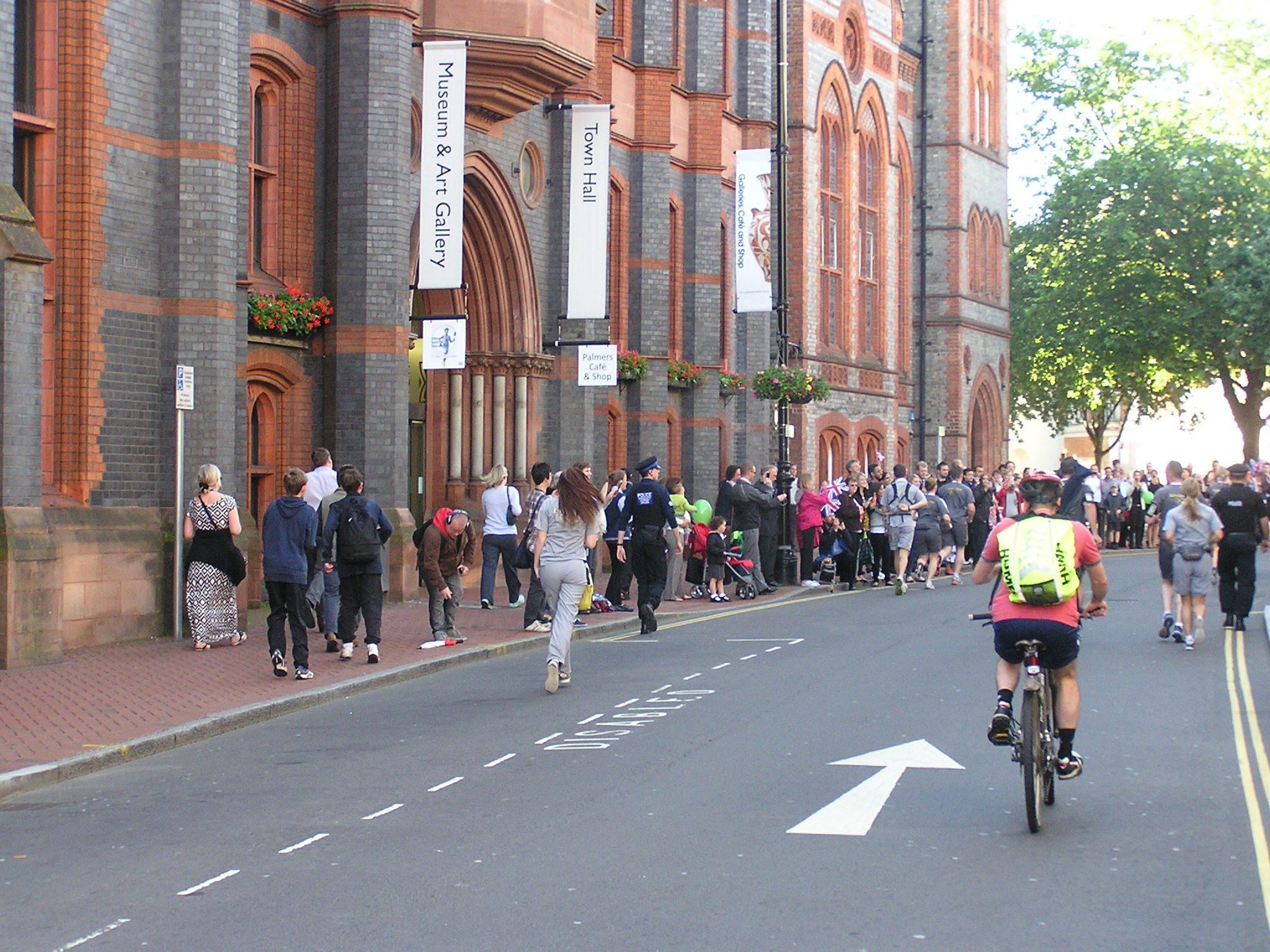
Wednesday 11 July: at 8.15 on a warm, sunny morning in Reading, the ‘Olympic Torch’ is carried through Valpy Street into Blagrave Street. The tune blaring from speakers on the supporting bus is, inevitably, ‘The Final Countdown’. I follow the procession into Broad Street, where the flame is transferred from a male to a female torch-bearer, who looks like Sheila Hancock. Large and enthusiastic crowds line the streets, ‘whooping’ their approval. The torch-bearers are elated.

The event seems strange and artificial, yet it is impossible not to be caught up in the festive atmosphere. In recent days it has been attended by moments of high comedy. One of the torch-bearers in Oxfordshire, the chef Raymond Blanc, came to a clumsy halt when he dropped his mobile phone. In Henley, a male ‘streaker’ stole the show. Possessing more obvious athletic prowess than the official ‘torch-bearer’, he raised the louder cheer, before being hustled away in a blanket by the police. I hope he has not been charged.

Later, I see film of the torch changing hands on Whitley Road, the bearers genuflecting in the course of some strange ritual that reminded me of the Greek evzones. A voice from the crowd utters a derogatory remark. I see pictures of two bearers elsewhere performing some sort of jig. Presumably these routines are choreographed by individual participants on the bus on the way in.

It has also been interesting to observe the official Metropolitan Police escort of young men and women in grey outfits, who take turns to jog along with every runner and must by now be in peak condition. They take a dim view of anyone straying onto the road. At one point recently, a young lad wobbling around on a BMX bike appeared to be wrestled to the ground. On another occasion, also shown on television, a woman on crutches hobbled out of the crowd and attempted to approach the passing torch-bearer, who was in a wheelchair. The escort swooped into action and she was quickly removed. The nearest policeman was heard to say, ‘Sorry mate. Did you know her? We’ve got to keep things moving.’ Animals are, of course, less easy to control and a police runner was nearly tripped up by an enthusiastic Jack Russell that darted out into the road.

The funniest moment (somewhere up north) was when two ‘urchins’ attempted to wrest the torch from the hands of the bearer, who clung on to it for dear life until the tiny assailants were removed, bodily, by the escort. So there can be no question of shaking the torch-bearer’s hand or patting him on the back as he passes.

Oddly enough, I saw the real Sheila Hancock the following day in the London Library – unless, of course, the woman in question was merely an even more convincing ‘lookalike’.

News from Ambridge: Vicky Tucker recognises the story of Sabinus and Ambiorix and reveals her classical education

April 16th, 2012

Ambiorix the Gaul: Brian Aldridge beware

Vicky Tucker wears her erudition lightly. The well-meaning but controversial second wife of Ambridge’s one-eyed milkman, the hapless Mike Tucker, she is known for her ampleness ‘in form and deed’ and for her lack of tact. She is fond of dancing, cooking, gardening and sun-worshipping. She loathes killjoys who might want to interfere with her fun – and exams. A characteristic utterance at Willow Farm, in her pronounced ‘Brummie accent’, might be ‘Ooh Mike, I like the look of that cruise’ (http://www.bbc.co.uk/radio4/features/the-archers/whos-who/characters/vicky-tucker). Who would have thought that she had benefited from a classical education?

On Friday 13 April, conversation in the village shop turned, as it often does these days, to Brian Aldridge’s alarming plans for a massive milking factory. Not only will it be a blot on the landscape: the idea of keeping cows indoors, instead of allowing to them graze in the open, is denounced by the traditionalists as cruel and unnatural.

Brian’s most articulate opponent is undoubtedly the retired academic Jim Lloyd who, in the presence of Vicky and another customer, Bert Fry, referred to him as ‘the most insufferable, pompous, self-centred man’.

‘I grant you he can put on a carapace of charm’ – Jim continued – ‘when he’s trying to sugar-coat this megalomaniac scheme to blight our glorious countryside with a monstrous industrial edifice. But if he thinks he can buy off the deeply-held objections of a community with a cash donation and a few pints of ale, then he’s heading for the biggest disappointment since Sabinus trusted the word of Ambiorix the Gaul – and we all know how that ended.’

The bucolic Bert (likeliest utterance: ‘My Freda bakes the finest cakes in Borsetshire’) seemed not to recognise the allusion. Indeed, Jim’s invective was greeted with a stunned silence, until Vicky artlessly enquired, ‘Was he the one with the potion?’

No doubt Jim has Caesar’s De Bello Gallico constantly to hand, but it must be a while since Vicky read it, for it was not Ambiorix, but Cativolcus who took the potion (an infusion from a yew tree). Ambiorix and Cativolcus were the two kings of the Eburones, a people between the Meuse and Rhine rivers, who rebelled against the Romans in 54 BC. Ambiorix persuaded their beleaguered commander in Eburonia, Quintus Titurius Sabinus, to surrender, promising that he and his soldiers would be unharmed.

Sabinus had been naïve to trust Ambiorix. According to Caesar, he ‘orders those tribunes of the soldiers whom he had at the time around him, and the centurions of the first ranks, to follow him, and when he had approached near to Ambiorix, being ordered to throw down his arms, he obeys the order and commands his men to do the same. In the mean time, while they treat upon the terms, and a longer debate than necessary is designedly entered into by Ambiorix, being surrounded by degrees, he is slain.’ (De Bello Gallico, V, xxxvi-vii).

Colourful detail is added by Cassius Dio (Historia Romana, XL, vi – p.415 of the Loeb edition), who says that Ambiorix seized Sabinus, ‘stripped him of his arms and clothing, and then struck him down with his javelin, uttering boastful words over him, such as these: “How can such creatures as you wish to rule over us who are so great?”’

Few of Sabinus’s soldiers escape. Many take their own lives, rather than fall into the hands of the enemy. It was left to Caesar to wreak his terrible revenge on Eburonia. Ambiorix fled with his men across the Rhine and was never found. As for poor old Cativolcus, ‘being now worn out by age, he was unable to endure the fatigue either of war or flight, so, having cursed Ambiorix with every imprecation, as the person who had been the contriver of that measure, he destroyed himself with the juice of the yew-tree, of which there is a great abundance in Gaul and Germany’ (De Bello Gallico, VI, xxxi). Surely too cruel a fate, even for Brian Aldridge?

It is surprisingly that Jim resisted a rather apt pun by quoting from the original Latin: ‘qui una cum Ambiorige consilium inierat’ (who had entered into the design together with Ambiorix). Perhaps he is saving it for another time.

Wooing NADFAS: Setting Out One’s Stall at the Annual Directory Meeting

April 13th, 2012

The annual ‘Directory Meeting’ is a key event for NADFAS lecturers, as they are able to advertise their wares and take provisional bookings from clients – the secretaries of the regional Decorative and Fine Arts societies – who assemble there en masse. It is a great and splendid occasion.

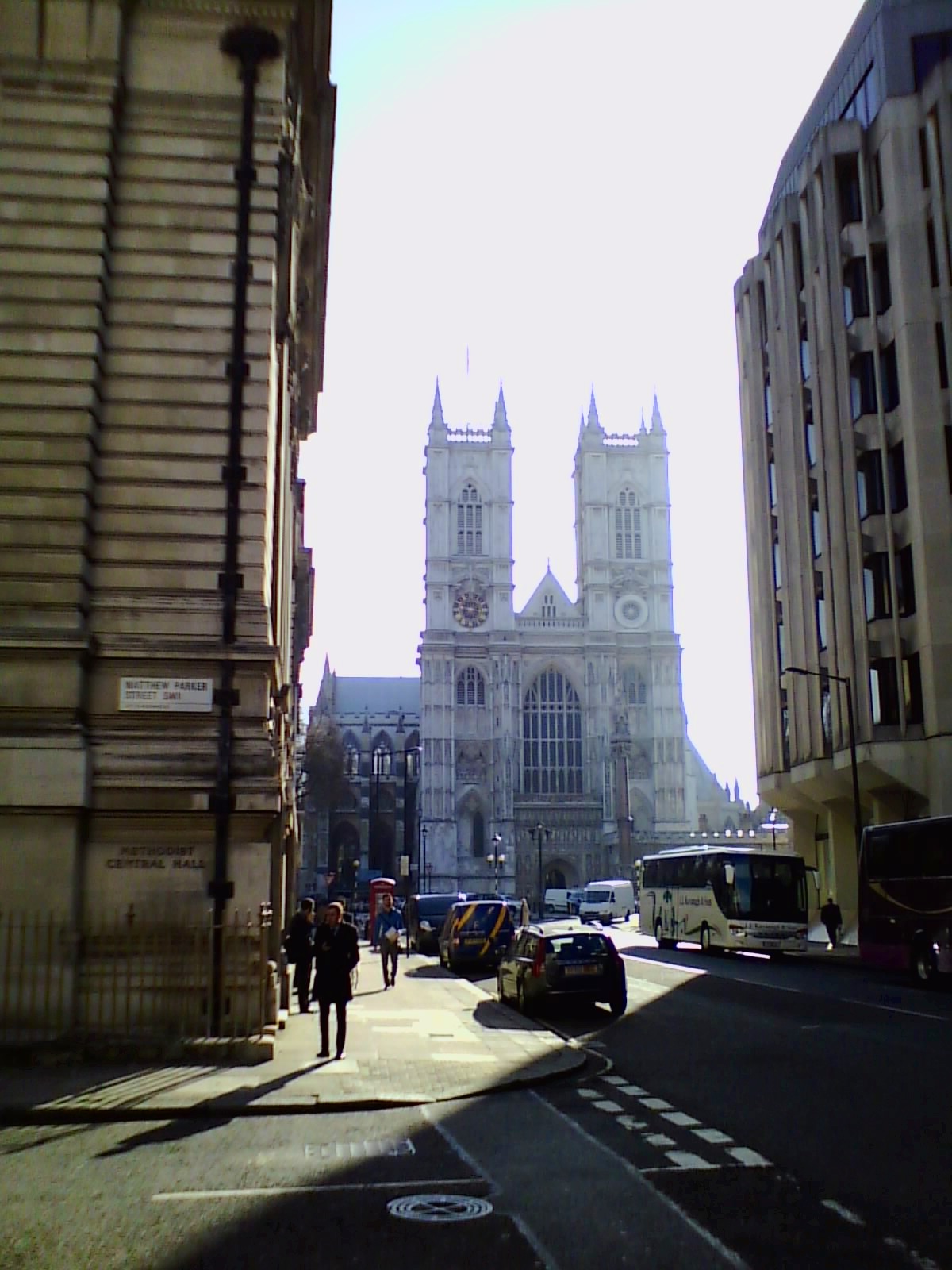
On Tuesday 27 March, the meeting was held for the first time in the sumptuous Westminster Central Hall, a venue much approved of by the writer, who photographed the above view of the nearby Abbey from its entrance.

Newly-accredited lecturers are given a precious opportunity to ‘market’ themselves by means of a two-minute presentation on stage. It is their one-and-only chance to make an impression and stand out from the crowd, on which their future lecturing career may well depend. These are followed by the one-minute presentations of established lecturers, who will have competed by ballot for the limited slots. The occasion is somewhat reminiscent of the auditions on X-Factor: those exceeding their allotted time are ruthlessly silenced by having their microphones turned off.

My new colleagues are all as brilliant as they are congenial and, in successive addresses, each of sparkling originality, they contrived to fascinate on the obscurest of topics. I hoped in my own presentation (the ‘Ws’ came last!) to epitomise the spirit as well as the content of my NADFAS lectures. It is clear that humour, and a strong element of social history, were much appreciated by the audience.

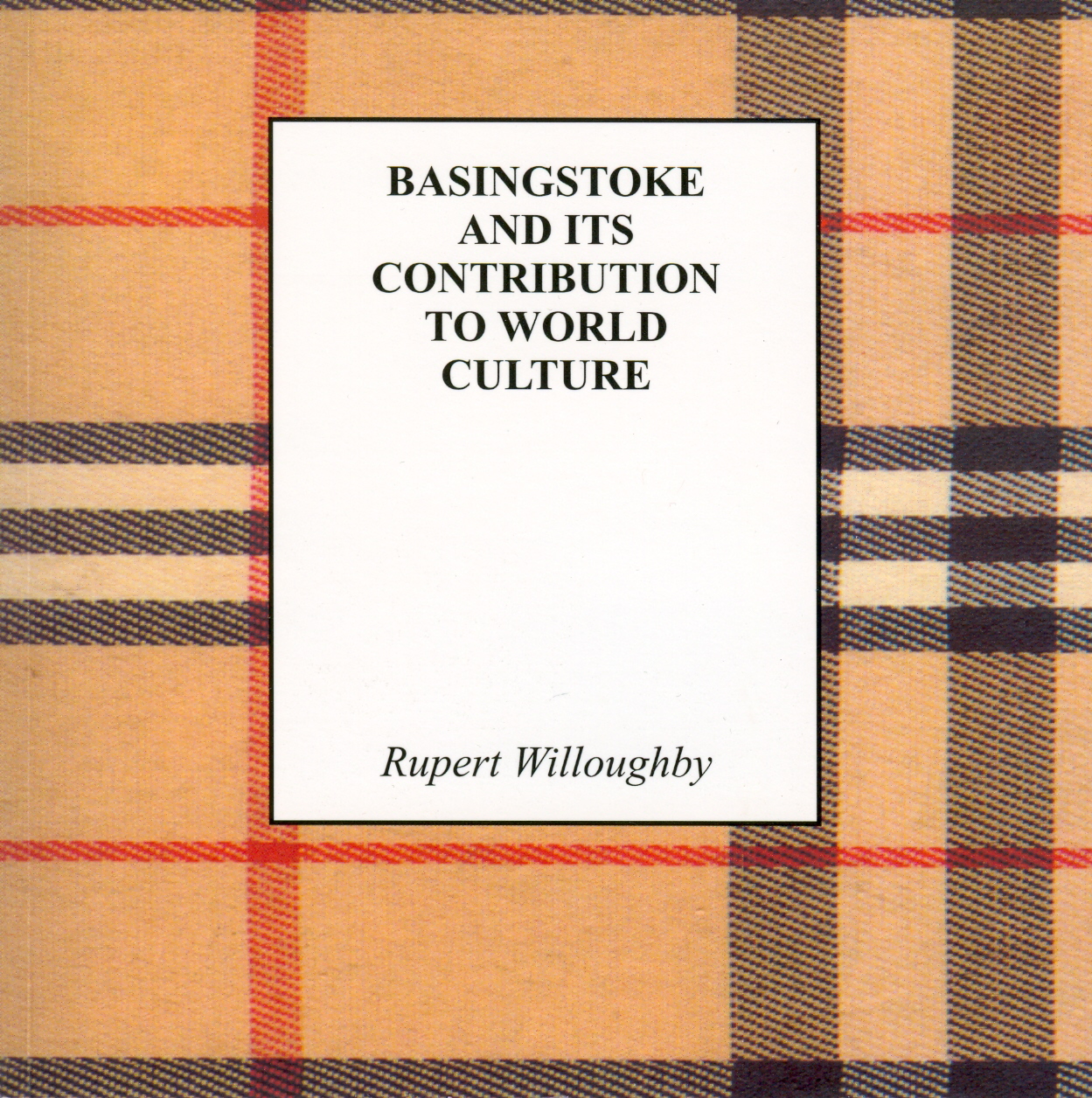
Apparently I am alone in offering a lecture, the teasingly-named ‘Basingstoke and its Contribution to World Culture’, about the most notoriously over-developed town in England. In Gilbert and Sullivan’s Rudigore, the word ‘Basingstoke’ is said to ‘teem with hidden meaning’. Apparently it teems with it to this day as the mere mention of it had the hall in stitches. The joke seems to have been enjoyed by branch secretaries from as far away as Yorkshire and Lincolnshire, who hastened to book the talk.

Indeed, well over half my bookings that afternoon were for ‘Basingstoke’. There was a tense moment when I was approached by representatives of the Basingstoke DFAS. Luckily they were all smiles and it appears that I will be able to deliver the talk to their group in 2014 without the prospect of being lynched.

Here, then, is the text of my address:

Ladies and gentlemen, I am an historian of domestic life. I am interested in fundamental things like fashions, hairstyles, and the living arrangements of both rich and poor.

First, I offer a lively introduction to the Bayeux Tapestry. I demonstrate that the Normans were a bunch of skinheads, and that they attributed the downfall of the English to their girly hairstyles.

Or I can take you on a room-by-room tour of Simon de Montfort’s castle in Hampshire. I will reveal the most intimate details of Simon’s home life, even down to his undergarments.

Or let me guide you through the world of Jane Austen, peeping into peasants’ cottages on the way. I will elaborate on the peasant’s smock and the gentleman’s knee breeches, on powdered wigs and pigtails and on the shocking introduction of the trouser. 

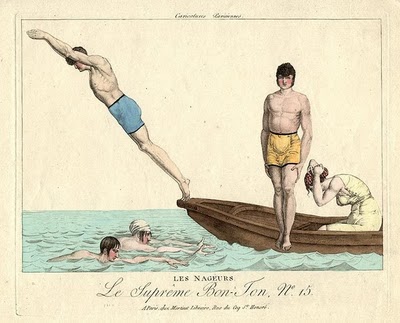
Or I can show you my family photos from the 1890s and early 1900s – scenes of people wearing the latest fashions in the Bois de Boulogne, sitting on bicycles, posing with a new motor car or indulging in mixed bathing, all of which offended or even shocked the conservatively-minded at the time.

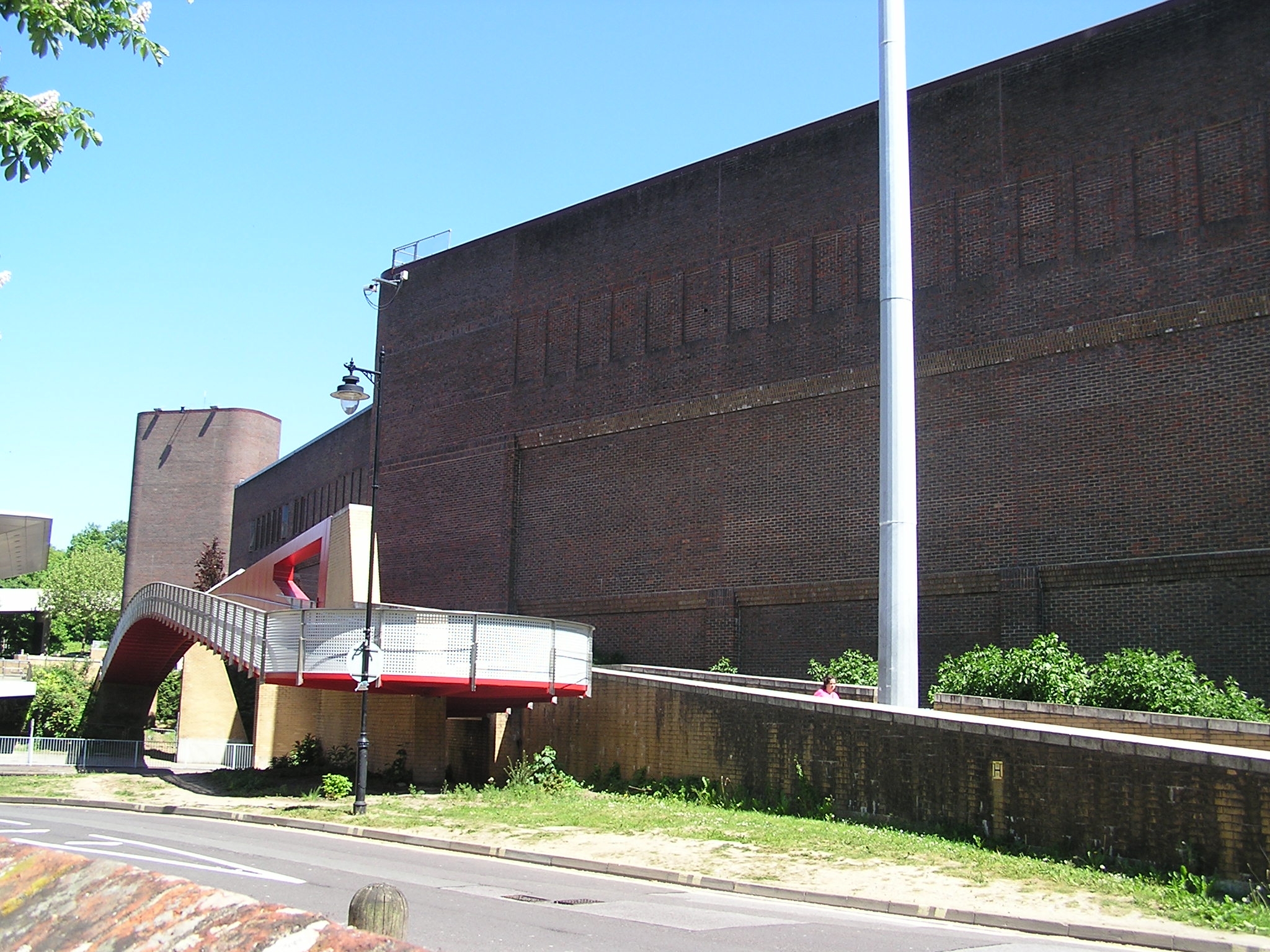
Finally, let me commend to you ‘Basingstoke and its Contribution to World Culture’. It is about the post-war development of a typical English town. What motivated the planners who imposed the absurdities of Modernist architecture on our landscape? It is a story that neatly illustrates the ugliest episode in England’s architectural history. You will be thrilled to discover the largest phallus on public display in Britain. You will marvel at the sudden rise of the chav. Hilarity is guaranteed. Please book now to avoid disappointment! Thank you very much.

Wichita Lineman: The Lost Lyrics

March 21st, 2012

‘Wichita Lineman’ was composed by Jimmy Bell for Glen Campbell and recorded on his album of the same name in 1968. Bell claims that it was accepted by the record company before he had had time to write a final set of verses. Valiantly filling the gap, I suggest two alternative endings (in italics) below.


I am a lineman for the county,

And I drive the mainroad,

Lookin’ in the sun for another overload.


I hear you singing in the wire,

I can hear you through the whine,

And the Wichita Lineman

Is still on the line.


I know I need a small vacation,

But it don’t look like rain,

And if it snows that stretch down south

Won’t ever stand the strain.


And I need you more than want you,

And I want you for all time,

And the Wichita Lineman

Is still on the line.


When I’m lookin’ down them cables,

That connect me to you.

My heart’s soarin’ high like clouds

Across them skies of blue.


The sun is on my back now,

And the dust is in my eyes,

Still I hear your voice singing,

As I cut through the wires.


or …


The wind is getting high now,

And I can’t do no more,

And soon I’ll beat that road

That takes me back to Wichita.


The sun will soon be settin’,

But the mainroad’s straight and true,

Like the heart that always leads me

Right back to you.


(Wichita Lineman has been described as ‘the first existential country song’. In 2004 it was voted No.192 on Rolling Stone’s list of the ‘500 Greatest Songs of All Time’.)


What makes Tadley special?

March 14th, 2012

I was recently commissioned by the National CV Group to write the history of Tadley in an innovative form – that of a ‘c.v.’, as if Tadley were a person. To all appearances, the north Hampshire town is singularly unprepossessing, yet it has a unique character and an astonishingly rich history.

Tadley folk were long regarded as wild, untamed woodlanders. Before World War II, outsiders ventured there with trepidation. If one courted a local girl, one ran the risk of being cast into the legendary ‘treacle mine’ (probably a patch of dark and sticky mud in the adjacent forest). Youngsters out bicycling feared confrontations with the ‘wild lads’ of the village, ‘who seemed as foreign as Red Indians or Hottentots’. The main Basingstoke to Aldermaston road, which ran through Tadley, was much narrower and little frequented in former times. It was out of bounds altogether while ferocious ‘shin-bashing’ contests were taking place, a Saturday-night fixture outside the ‘Fighting Cocks’ until the mid-1800s. Earlier travellers risked encounters with footpads or smugglers.

Since time immemorial the people of Tadley have been sustained by a variety of woodland activities – white-hoop making, hurdle-making, charcoal-burning and, above all, besom broom-making – and by the provision of seasonal labour, especially for the annual coppicing of the surrounding forests and (until the 1960s) for the annual hop-picking in September, during which almost the entire population, in a heightened state of excitement, would migrate south to the Alton area, leaving Tadley a virtual ‘ghost town’.

Many Tadley families have been settled there for generations and in some cases are of well-attested gypsy origin. The ‘Tads’ have been neatly characterised as ‘independent folk, forthright, with a dry sense of humour, a little jealous of their heritage and as united as any Scottish clan’. They have, however, been remarkably tolerant of the Atomic Weapons Establishment and its thousands of employees who have been planted on their doorstep, turning them to their considerable profit and advantage.

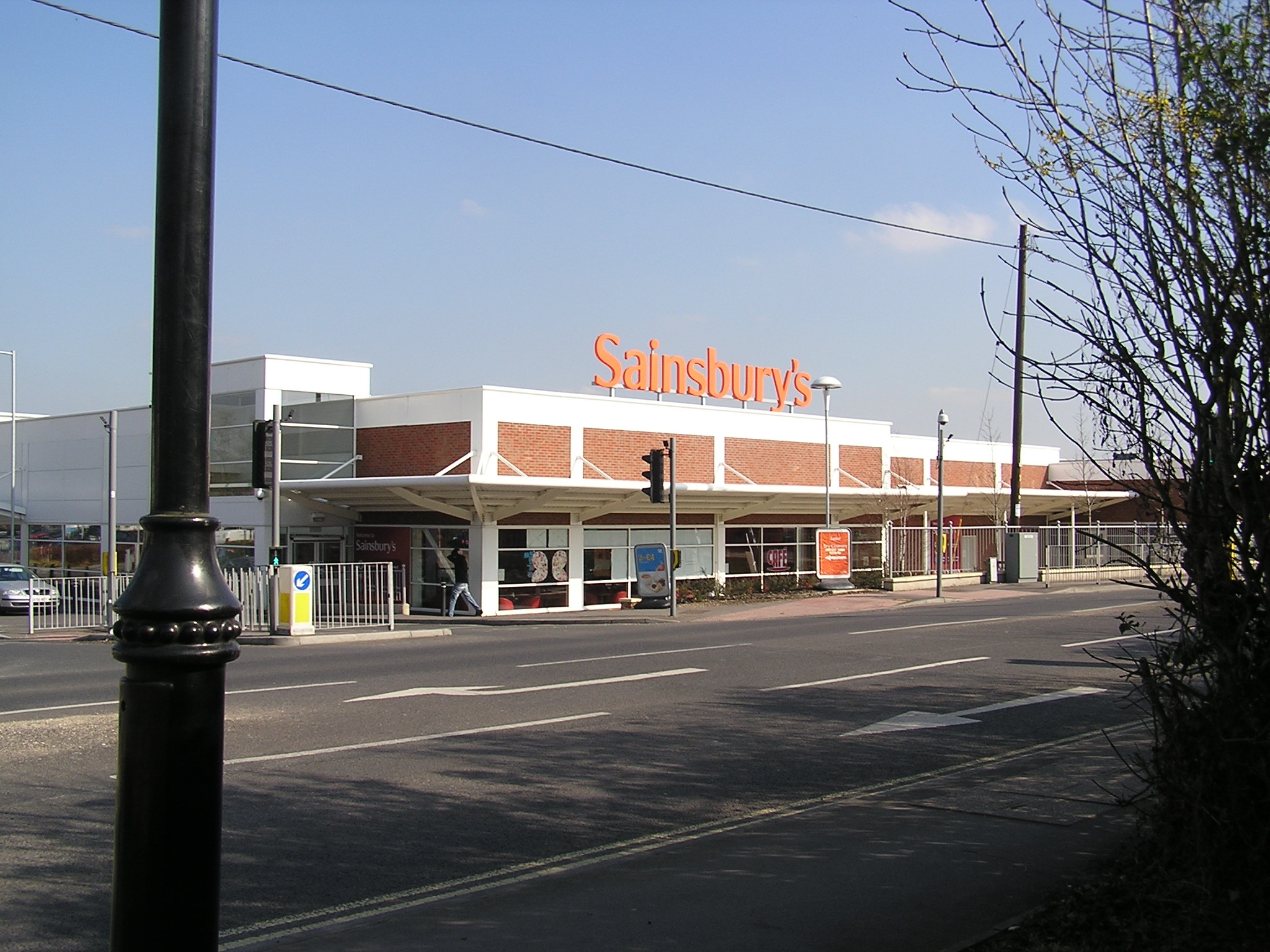
The novelty of writing the history of a place in the form of a ‘c.v.’ is that one can describe the current situation and then trace it back to its origins, with often surprising results. For example, it turns out that the mighty Sainsbury’s supermarket that dominates Tadley (pictured above) is the direct successor to Albert Blake’s ‘General Stores’, run a hundred years ago from the front parlour of his house on the same site.

It is interesting to compare the current opportunities for ‘leisure and entertainment’ with those of a century ago. Whilst the adults enjoyed shin-kicking and games of darts in the pub, the favourite diversion of the young was to watch the butcher at work (they thrilled to see him poleaxe a bullock!). The annual killing of the family pig in the darkness by the light of a bonfire was another entertaining spectacle.

Opportunities to receive an education had been almost non-existent before the founding, in 1850, of the Priory School. Earlier generations were illiterate shack-dwellers who eked out a most precarious living. It was beyond their means to buy coal, but wood, at least, was plentiful. Nor, in the early 19th-century, could they afford tea: they brewed up burnt bread instead.

Everything changed in 1944 when the American army was encamped there. The site of the camp was developed after the war into a housing estate for employees of the AWRE. It incorporates the original military lines and East Street was re-named Franklin Avenue for the wartime American president, Franklin D. Roosevelt. Some of the original Nissen huts (albeit re-located) survive here and in other parts of the town, still performing useful roles. We feel that all Tadley residents should be made aware of, and take pride in, such a rich heritage.

Tadley’s CV, ‘the world’s first local CV’, can be downloaded from http://www.thenationalcv.org.uk/, and soon also from http://www.tadshistory.com/, together with the accompanying ‘CVpedia’. The following may whet the appetite.

Tadley Headlines            

–          Supplier, since 2004, of the witches’ brooms used in the Harry Potter movies; they were hand-made by A. Nash of 46 Mulford’s Hill, the last surviving firm of ‘broom squires’ (besom broom-makers) in Tadley; the late Arthur Nash had also supplied brooms to the royal palaces, receiving a Royal Warrant in 1999

–          Retains some of the finest heathland in Europe, amid rich forests – notably the historic, 478-acre Pamber Forest of the Benyon family, currently managed by the Hampshire Wildlife Trust

–          Services, and accommodates workers for, the Atomic Weapons Establishment, or ‘Bomb Factory’, on the former Aldermaston Airfield

–          Has consistently (since 1958) been beset by anti-nuclear demonstrations, notably the Campaign for Nuclear Disarmament’s ‘Ban the Bomb’ marches 1958-64, which assembled on Tadley turf

–          Included within its boundaries the famous, and once very prominent ‘Hangar 5’ of Aldermaston Airfield, one of two sites used by Vickers Supermarine for the final assembly of the legendary Spitfire fighter planes, 1943-5

–          Housed wartime American soldiers in a vast encampment adjoining Aldermaston Airfield, from which airborne troops were conveyed in Sept 1944 to Holland as participants in Operation Market Garden (famously venturing to capture ‘a bridge too far’)

–          Witnessed the launch of the initial wave of the ‘D-Day’ invasion from the same airfield on 6 June 1944, after which an eerie calm descended over the village

–          Made two further contributions to the development of aviation, for it was around here that Henry Coxwell landed his hydrogen-filled balloon in 1853, a terrified local informing him that he was in ‘Tadley, God help us!’; also provided an early casualty to flight, William Brereton Evans, a famous cricketeer and resident of Fairlawn House, being the luckless passenger in Samuel Franklin Cody’s ‘Floatplane’, which crashed on its test flight at Farnborough in 1913

–          Sacrificed the lives of thirty of its sons in the Great War, their names being remembered on the Tadley War Memorial on the Green; a heavy toll in a small community (World War II accounted for a further seven)

–          Provided the dependable labour force that excavated the buried Roman city of Calleva Atrebatum (in the adjoining parish of Silchester) for the Society of Antiquaries, 1890 – 1909

–          Made a small but significant contribution to the economy in the 19th century, supplying many thousands of besom brooms to the iron foundries of the North (they were perfect for removing the scale from hot metal)

–          Also supported, until the mid-19th century, a thriving white hoop-making industry – the circular bands that held the wooden staves of wash-tubs and casks together. The casks of brandy lugged about by 18th-century smugglers, even the barrels of gunpowder planted under Parliament by Guy Fawkes, may well have been bound by Tadley hoops

–          Maintains a tradition of brass bands that is probably unequalled outside the North of England, the Tadley Silver Band (founded in 1875) formerly ranking in the Premier Grade at the National Brass Band Contest

–          Produced an Olympic (1980, 1984) and Commonwealth (1978-86) medallist in the person of the sprinter, Kathryn ‘Kathy’ Smallwood-Cook, MBE (born 1960), who attended Burnham Copse Primary School