
 Eoin Math (‘John the Good’) MacDonald of Islay was, by 1338, the first of his line to style himself ‘Lord of the Isles’, one of the most romantic and evocative titles in history.
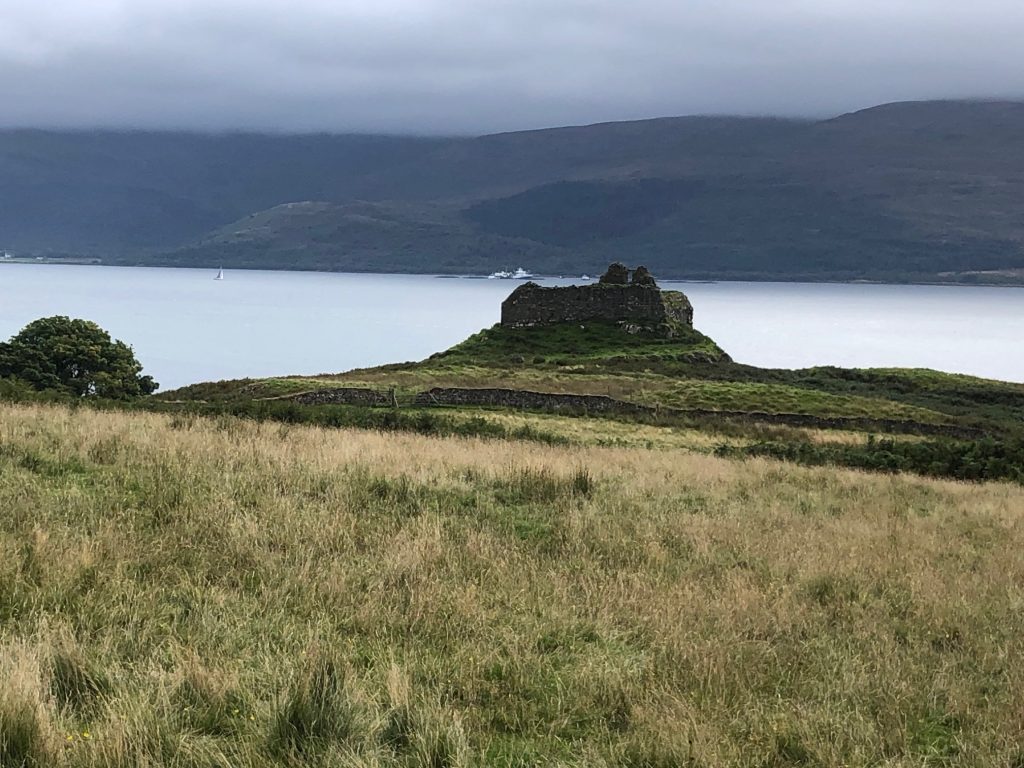
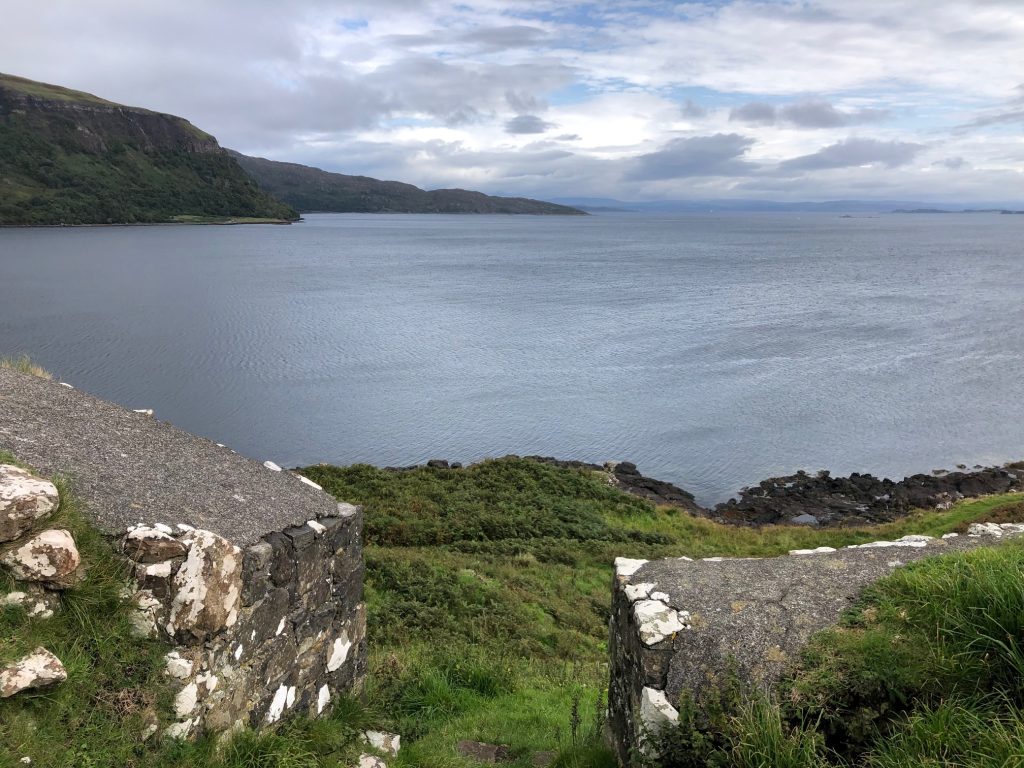
 A favourite residence was Ardtornish Castle in Morvern. It occupies a rocky promontory, commanding the Sound of Mull at its narrowest point; his castles of Aros and Duart are both visible on the opposite shore, and there is the obligatory anchorage for galleys in the bay below.
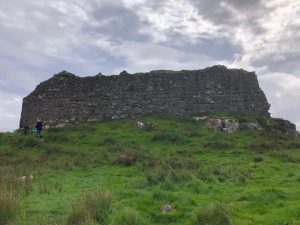
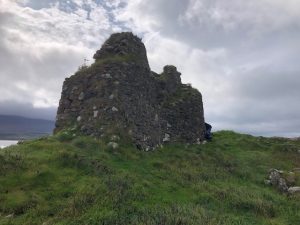
Ardtornish consisted of a stout hall-house, apparently built by the MacDougalls in the previous century, which, for the seat of such a mighty lord, and as the scene of such a memorable feast in Scott’s Lord of the Isles,(1) is surprisingly bare and small (about 75 feet by 50).
There are no historical descriptions of feasts there but, during Lent one year, the guests were served a simple meal of ‘bread and gruthim, consisting of butter and curds mixed together, which is made in harvest, and preserved until time of Lent’. This unappetising fare is said to have been ‘so brittle, that it was not easily taken up with their long knives’. For those who ‘could not eat that meat as it was’, the insulting advice of the master of the household was to ‘put on the nabs of hens [chicken claws], with which they might gather it up easily’. With a view to celebrating Easter at Aros on the Isle of Mull, Eoin Math travelled ahead ‘in a small boat’, leaving the rest of the party to follow in ‘his great galley’.(2)
Eoin Math’s last journey from Ardtornish was in a shroud, for he died there, ‘at an advanced age’, in 1386, 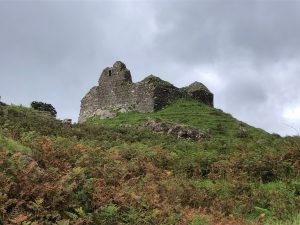 attended by monks and priests, who administered the body of Christ; ‘having been anointed, his fair body was brought to Iona, and the abbot and the monks and vicars came to meet him, as it was the custom to meet a king of the Hebrides, and his service and waking were honourably performed during eight days and eight nights, and he was laid in the same grave with his father in the church of Oran.’ The departure of the fleet from Ardtornish would have been an unforgettable sight for all who saw it.(3)
Without a galley of one’s own, Ardtornish today is not easy to access. In its ruined state, it has been, for at least one visitor, a haunted place. ‘Unseen messengers, huntsmen, suppliants, warriors, the great men of the ancient Gaelic court, seemed to be all round.’ It was timely to remember that this, despite its grim and spartan appearance, was to be ‘the last great centre for the poetry and music, the art and the traditions, of the ancient world of Gaeldom’.(4)
(1)
‘Wake, Maid of Lorn!’ the Minstrels sung.—
Thy rugged halls, Artornish! rung,
And the dark seas, thy towers that lave,
Heaved on the beach a softer wave,
As ‘mid the tuneful choir to keep
The diapason of the Deep …
‘Wake, Edith, wake! in yonder bay
Lies many a galley gaily mann’d,
We hear the merry pibrochs play,
We see the streamer’s silken band.
Walter Scott, The Lord of the Isles, Canto I, Stanzas I and IV.
(2) History of the MacDonalds, in Highland Papers, ed. J.R.N. MacPhail, Vol.I, (Edinburgh, 1914), pp.21-2.
(3) The Book of Clanranald, in Reliquiae Celticae, Vol.II, ed. Alexander MacBain and Rev. John Kennedy (Inverness, 1894), p.161; History of the MacDonalds, p.27.
(4) I.F. Grant, The Lordship of the Isles: Wanderings in the Lost Lordship, Edinburgh and London, 1935, pp.225-7.