Bring on the Wall!

January 13th, 2011

I am delighted that my letter of 17 February 2010 to the Daily Telegraph has been included in Iain Hollingshead’s compendium, I Could Go On. As the original letter has been severely pruned, I am taking the opportunity to publish it in its entirety for the amusement of my loyal readers.

They will recall that the new ‘scanner’ reveals nude images of travellers. These are so graphic and detailed that examples have had to be ‘pixillated’ before publication in the media.

Sir,
 
If the new airport body scanners are intrusive (report, 16 February), why not issue all passengers with Lycra body suits like those worn on television’s Bring on the Wall?
 
Thus attired, ‘celebrity’ contestants are challenged to avoid being tipped into a pool by a polystyrene screen. Nothing in these outfits is concealed or, indeed, left to the imagination.
 
Passengers unwilling to wear them would have to submit to the scan.
 
Yours faithfully,
 
Rupert Willoughby
 
 
I cannot understand why my suggestion has not already been taken up by the airport authorities.
 
For details of I Could Go On, visit
 

A notable anniversary: ‘The Hill’ by Rupert Brooke

December 30th, 2010

Re-reading this poem, I noticed that it was written precisely a hundred years ago, in December 1910. It wears remarkably well. I particularly relish the Swinburnian lines, ‘We shall go down with unreluctant tread/Rose-crowned into the darkness’. Brooke was to do so in April 1915.

Breathless, we flung us on the windy hill,

Laughed in the sun, and kissed the lovely grass.

You said, ‘Through glory and ecstasy we pass;

Wind, sun, and earth remain, the birds sing still,

When we are old, are old …’ ‘And when we die

All’s over that is ours; and life burns on

Through other lovers, other lips,’ said I,

‘Heart of my heart, our heaven is now, is won!’

‘We are Earth’s best, that learnt her lesson here.

Life is our cry. We have kept the faith!’ we said;

‘We shall go down with unreluctant tread

Rose-crowned into the darkness!’ … Proud we were,

And laughed, that had such brave true things to say.

– And then you suddenly cried, and turned away.

Adam’s Wild Swim to Holy Island

November 23rd, 2010

Adam Rattray, the daring adventurer and wild swimmer, resolved, with two companions, to match Robson Green’s recent achievement in swimming the icy waters between the Northumbrian mainland and the Holy Island of Lindisfarne.

Both men chose to disregard the conventional means of access to the island – the causeway of which Sir Walter Scott writes, where

‘Twice a day the waves efface

Of staves and sandalled feet the trace’

– but Green is a tough Northumbrian and Adam half a Viking, descended, no doubt, from some of the fierce marauders who sacked Lindisfarne Priory in 793 and again in 875. According to the Anglo-Saxon Chronicle, the earlier sack was presaged by ‘whirlwinds, lightning storms and fiery dragons seen in the sky’. The seas were hardly enticing for Adam’s visit – in September 2010 – but at least the dragons stayed away. Here is his typically modest account of the feat:

‘It was a little rough. Force 5-7 winds do horrible things to the North Sea so we changed the time and angle of the crossing. Dave (one of our party) drove four hours on the morning despite a 3 a.m. text from me that told him there was no chance that we would be able to swim (the wind was howling, and the coastguard irritated). When we finally started swimming it was actually not too difficult – we had seals to accompany us – but I had foolishly smeared vaseline over my hands and face; this then got onto my goggles so I swam in a greasy mist with little idea where I was going. Reaching the shore line was a relief and we raised over £600 for charity.

Wish-list of domestic accessories

November 13th, 2010

A magnificent library with two rare volumes from Corfe Castle and a display of its keys …

A quirky loo …

A politically-incorrect pot stand …

Leather wall-hangings …

… and ‘tented’ wallpaper.

God bless the Bankes family of Kingston Lacy for their whimsicality, beneficence and impeccable taste!

Reclaiming our Rivers: Swimming in the Thames and Medway

October 20th, 2010


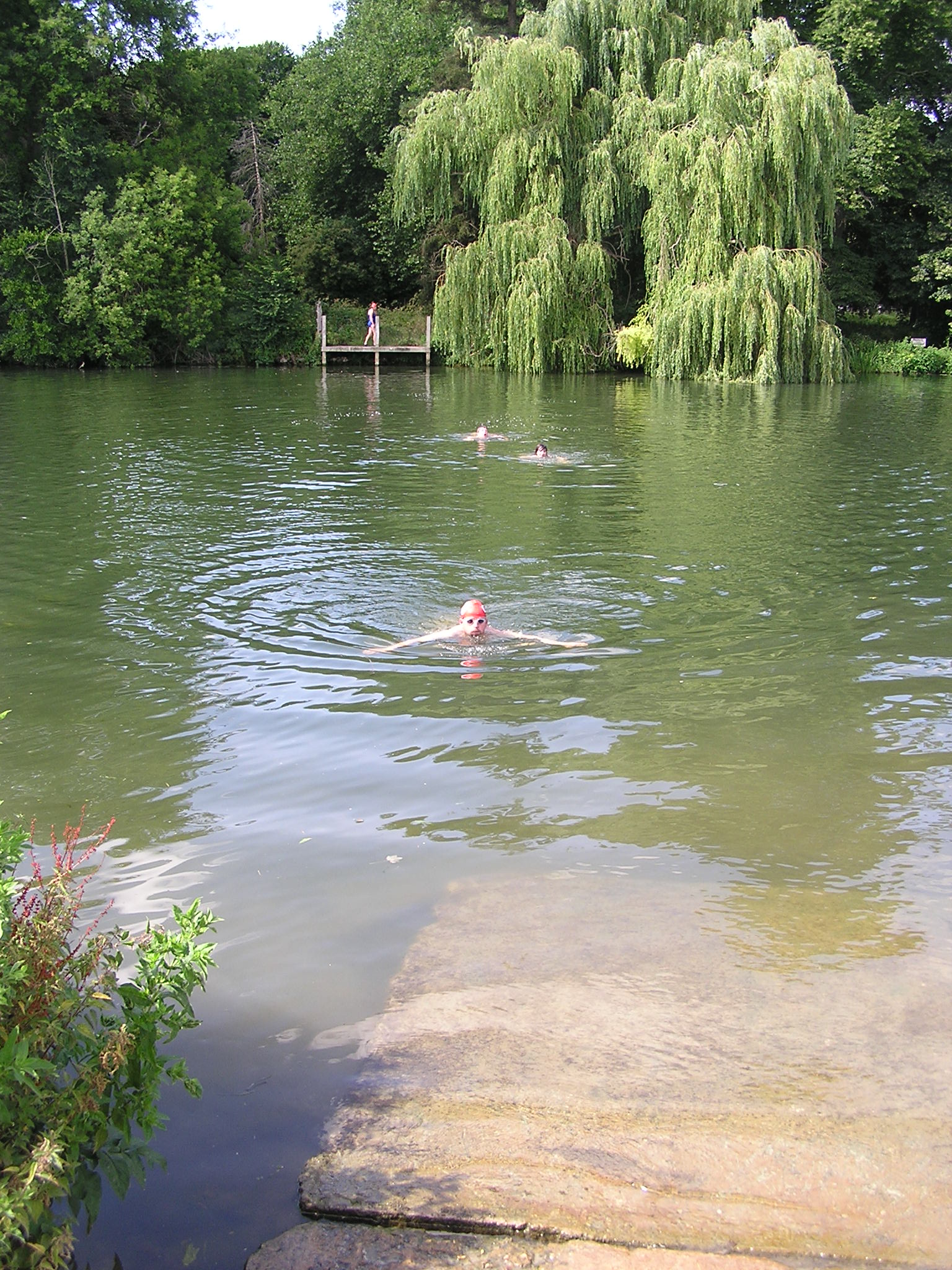
Swim at Pangbourne Meadow, 11 July 2010

Stanley Spencer’s 1935 oil on canvas, ‘Sunbathers at Odney’, was inspired by his boyhood swims, in the early 1900s, at Odney Weir, Cookham. Improbable as it now seems, Spencer and other village boys  used to join the ‘city gents’, about to board their morning train to London, for early-morning dips.

Spencer, who was to speak of Cookham as ‘a village in Heaven’, captured his memories of those days in his series depicting the Baptism of Christ. He wrote: ‘we all go down to Odney Weir for a bathe and a swim … I feel fresh awake and alive; that is the time for visitations. We swim and look at the bank over the rushes, I swim in the path of sunlight, I go home to breakfast thinking as I go of the beautiful wholeness of the day’.

Spencer perfectly encapsulates the pleasures of river-swimming. It is a tonic that should certainly be recommended to today’s stressed commuters. Spencer has them lounging about and stretching, all naked and uninhibited, like the dons of old at Parson’s Pleasure. Presumably the real-life commuters, being out of the sight of shockable females, disregarded the late-Victorian convention of wearing drawers, which they may have felt only applied at the seaside. It is a wonderful, innocent scene.

Our rivers today are a neglected playground. Why are people so reluctant? Concerns about pollution no longer apply. There is a horrible condition called Weil’s Disease, spread by the urine of rats and other animals: I am advised by a microbiologist friend, who lets me swim in the Thames from her own private slip at Burcot, that the risk of contracting it is greatest in stagnant waters, where it is unlikely that one would wish to swim. The chances of being trapped by hidden undergrowth are equally slim, as long as one is sensible. The Thames this summer has been deliciously warm, fresh and clean, with a wonderful peaty smell – fun for all the family, though passers-by have often intimated that nothing would induce them to join us. The main hazard is from passing boats, though they are usually extremely careful; and the atmosphere is unfailingly jolly, for those on board share in the secret and all oarsmen seem unconsciously to assume parts from Three Men in a Boat.
This year I have added the Medway to my repertoire of swimmable rivers – a deep, warm, hidden delight, where friends and family and I swam early one morning, before cooking an enormous breakfast on a stove on the riverbank. Such are indeed times, as Spencer knew, for heavenly visitations.

To see an image of ‘Sunbathers at Odney’, visit www.stanleyspencergallery.org.uk.

For good swimming locations, visit www.outdoorswimmingsociety.com.
How to save the Bakelite Museum

September 30th, 2010

The Bakelite Museum in Somerset, housed in a cramped 18th-century mill, is facing closure. According to The Daily Telegraph, ‘an off-duty fire officer visited the museum and considered a fire escape through a roof hatch to be inadequate’. The problem, it seems, is that this and other escapes are simply ‘not wide enough for overweight visitors’.

Would a solution not be for the museum to impose ‘width restrictions’ at the point of entry, much as there are height restrictions at fairgrounds? There is presumably no law against discrimination on the grounds of one’s size or shape. Stout people are already excluded from numerous activities, such as bobsleighing and flying gliders, so they need not feel affronted.

The ever obliging Devon and Somerset Fire Service should, of course, advise on the appropriate width.

Swinburne’s Bonchurch

September 7th, 2010

The poet Swinburne was born in London and considered himself a Northumbrian, but he spent most of his youth at East Dene, his parents’ house at Bonchurch on the Isle of Wight. A strange little runt of a man, Swinburne had picked up his algolagnia (‘pain lust’) at Eton, along with his fluency in the classics, though his fondest memories of school were of ‘swimming lessons and play in the Thames’. Etonians of the time practically invented modern recreational swimming, though Swinburne took a more masochistic pleasure in immersion. This was evident at an early age, when his no-nonsense father (an Admiral) used to toss him into the waves in Monk’s Bay below the house. Swinburne said that he would emerge ‘shouting and laughing with delight’.

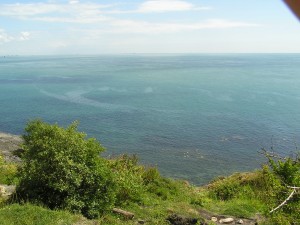
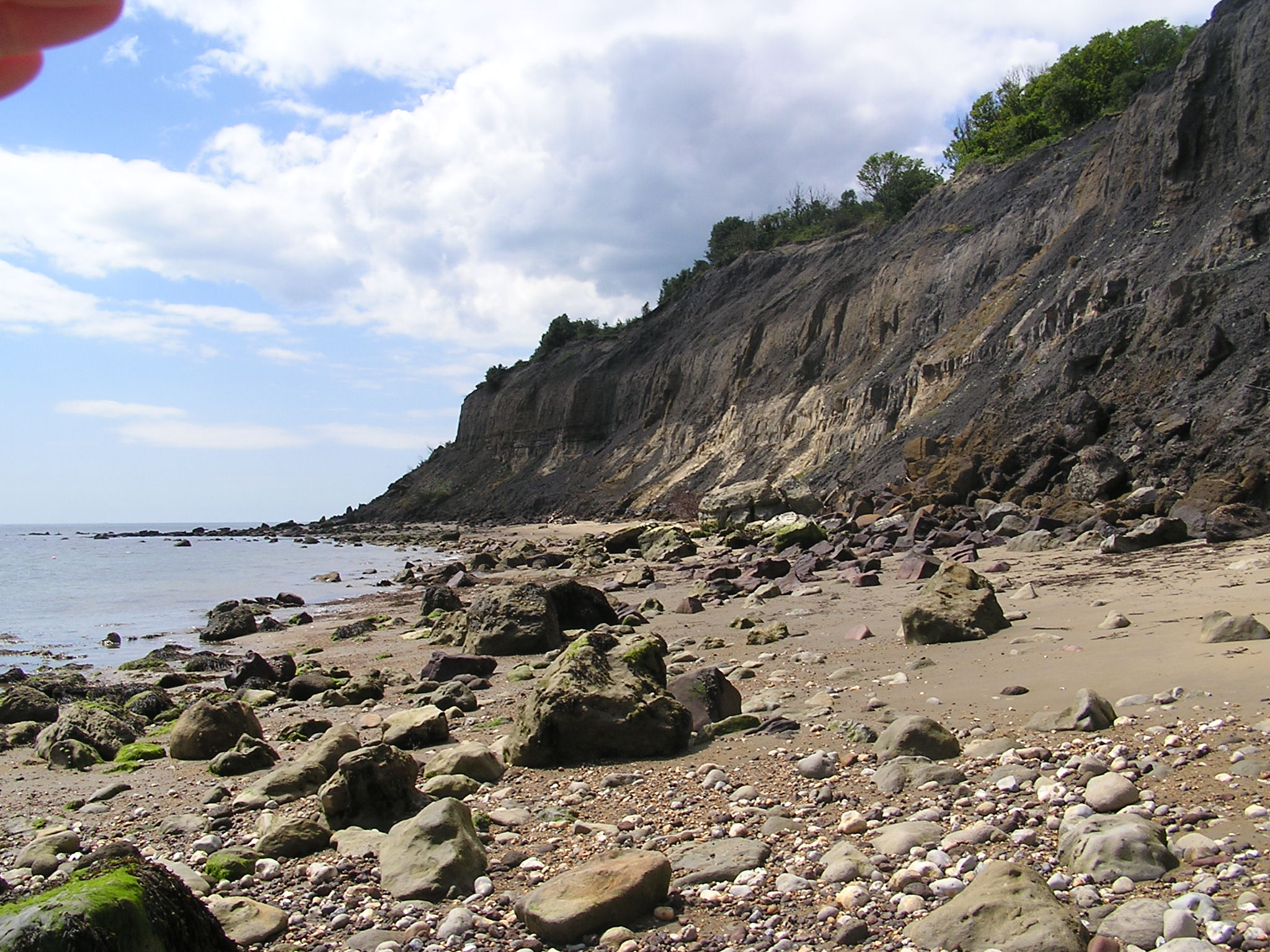
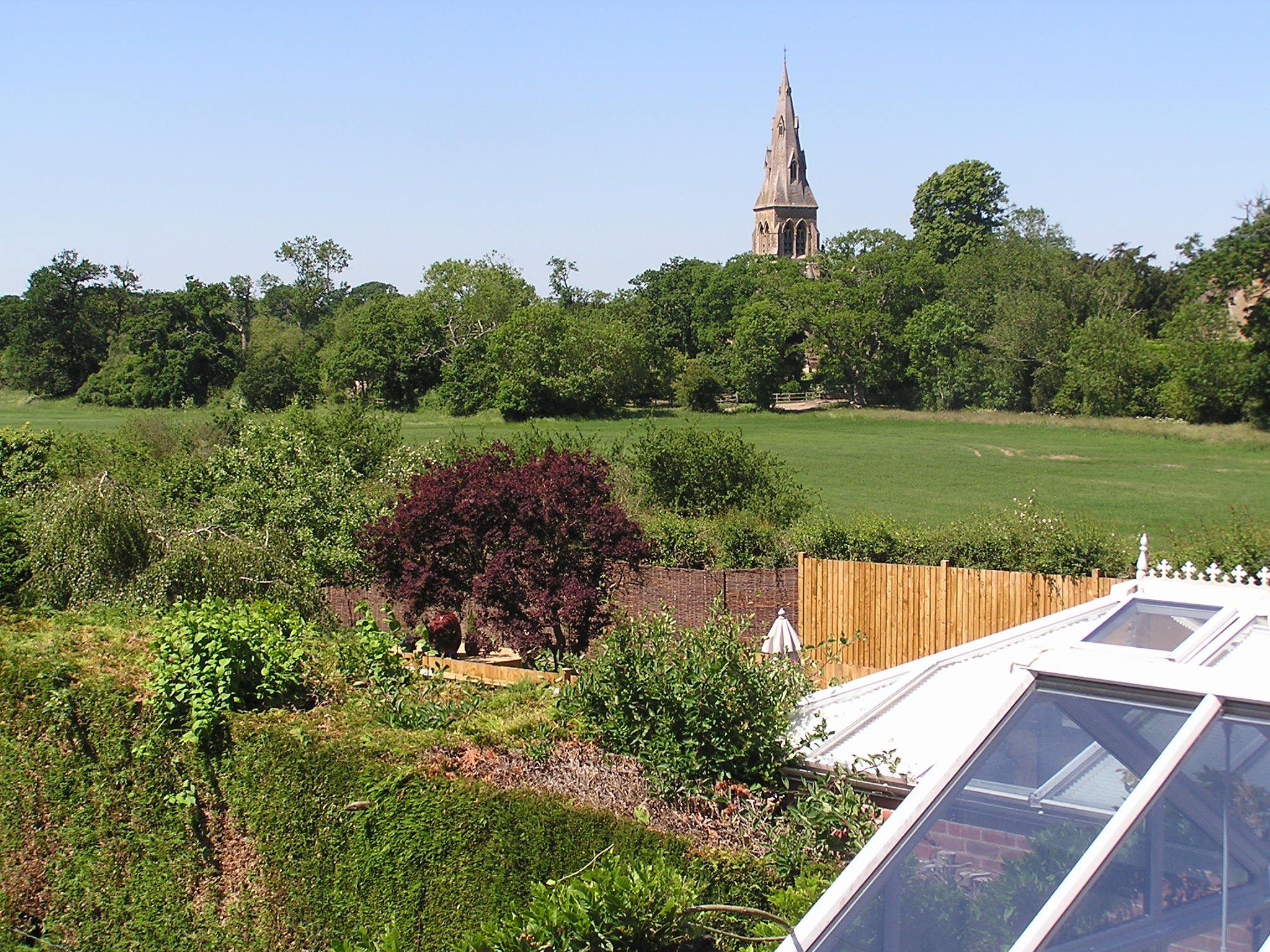
Swinburne never visited Greece, though, like Keats, he wrote as if he were a Greek. The landscape around Bonchurch is, in fact, England’s nearest equivalent to the beauties of Greece (see the view below), and Swinburne seems instinctively to have known this, specifically comparing the two places in ‘Triumph of Gloriana’. Bonchurch is close to my own boyhood home, and I often walk there, approaching it from the densely-wooded Landslip – a place where elves might easily lurk under giant rocks and fallen boughs, or Pan and Bacchus play hide and seek with the Maenad and the Bassarid:

‘The laughing leaves of the trees divide,

And screen from seeing and leave in sight

The god pursuing, the maiden hid.’

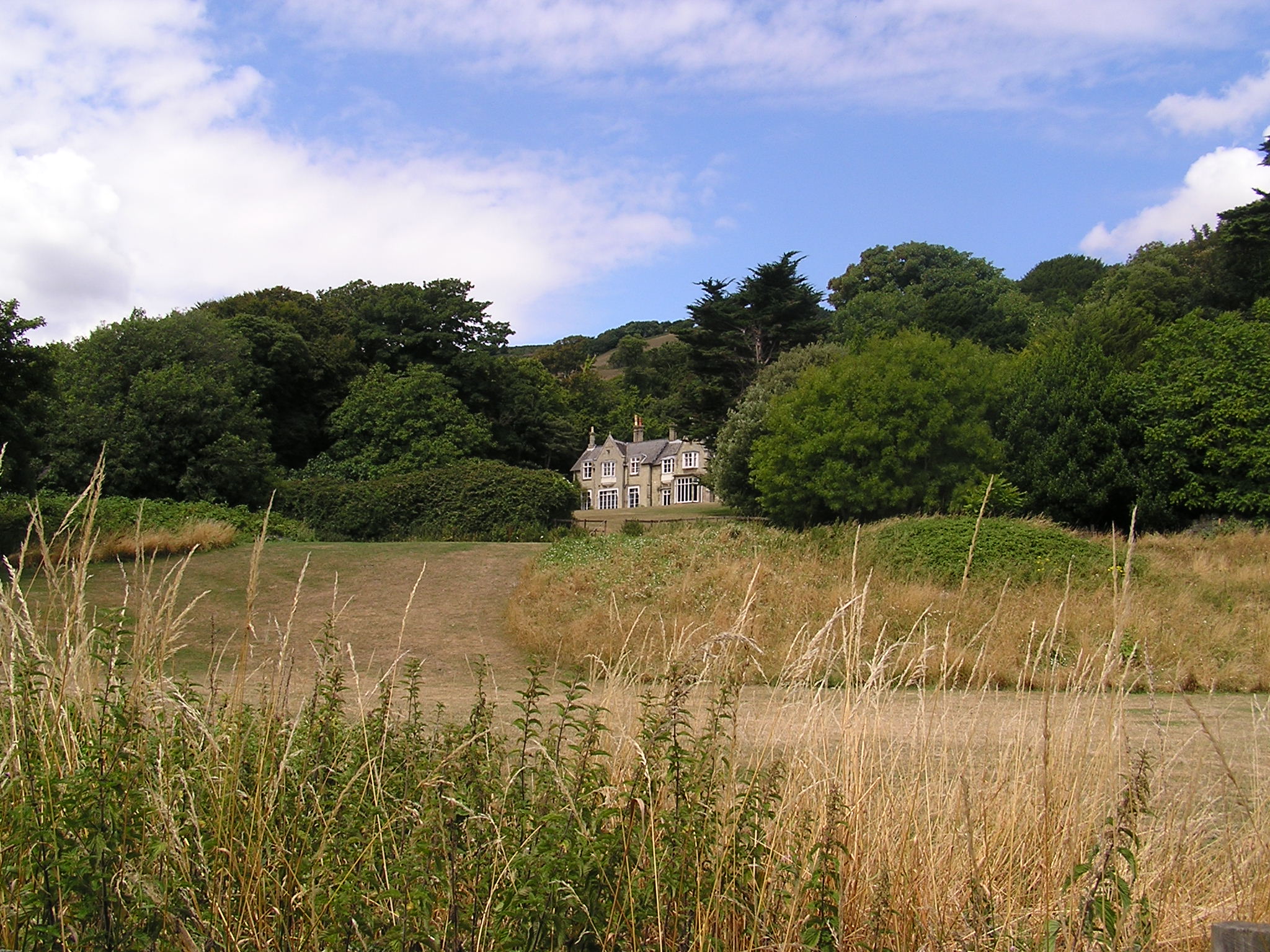
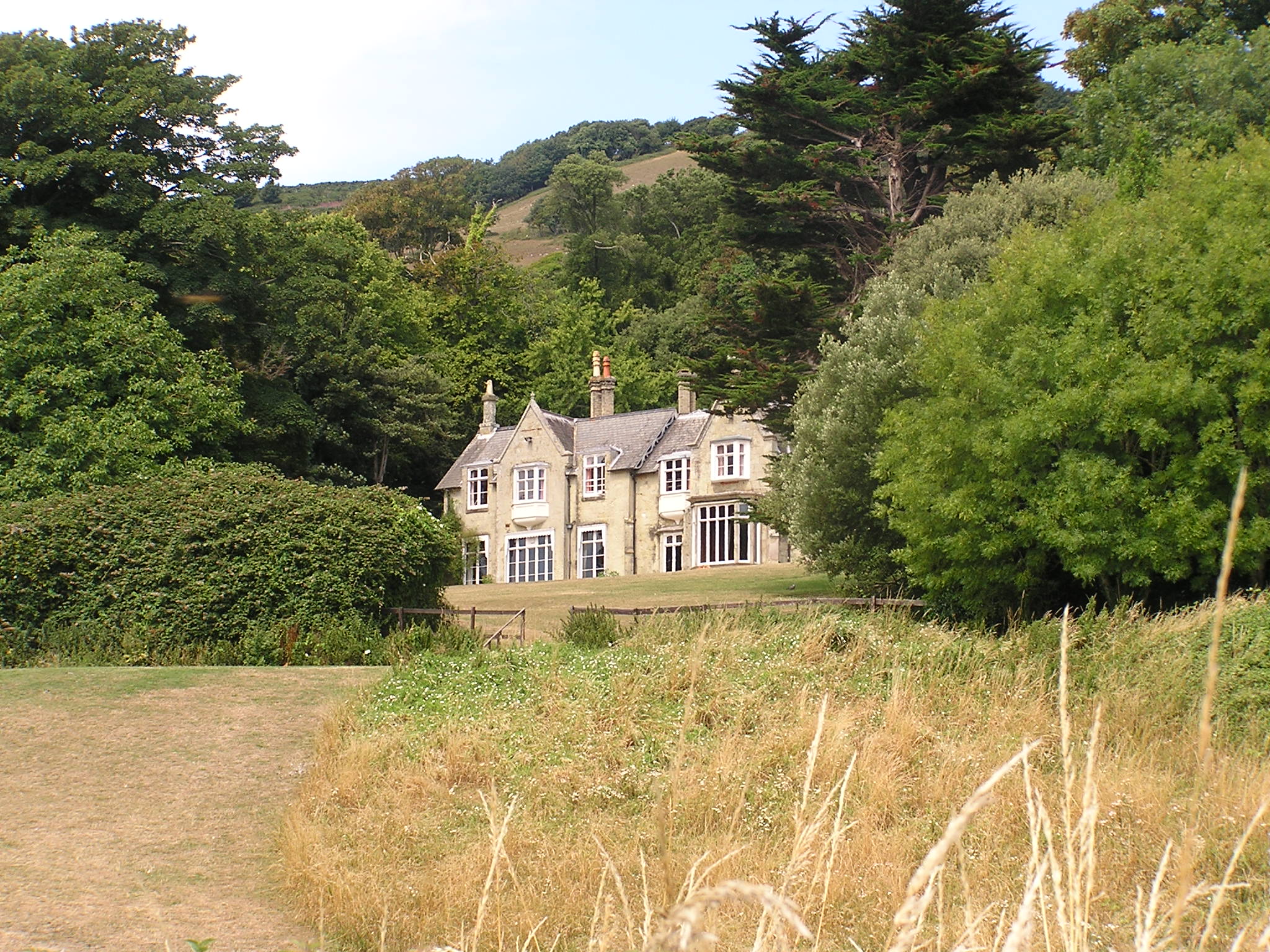
Having paid my respects at the boundary of East Dene (now some sort of residential educational centre), I descend the steep path to the beach. The waters of Monk’s Bay are more placid than they used to be, owing to the construction (within the last ten years) of some major sea defences. Swinburne would have been displeased. He liked his sea to be rough, like his lovers. Turning northwards along the coast, I soon reach a deserted beach where, truly, I have never seen another soul. Perhaps it is just too much effort for people to clamber with their paraphernalia over tricky rocks, though easy for me, familiar with these shores, fired up by my walk and unencumbered. At least once a year, I strip off and swim.

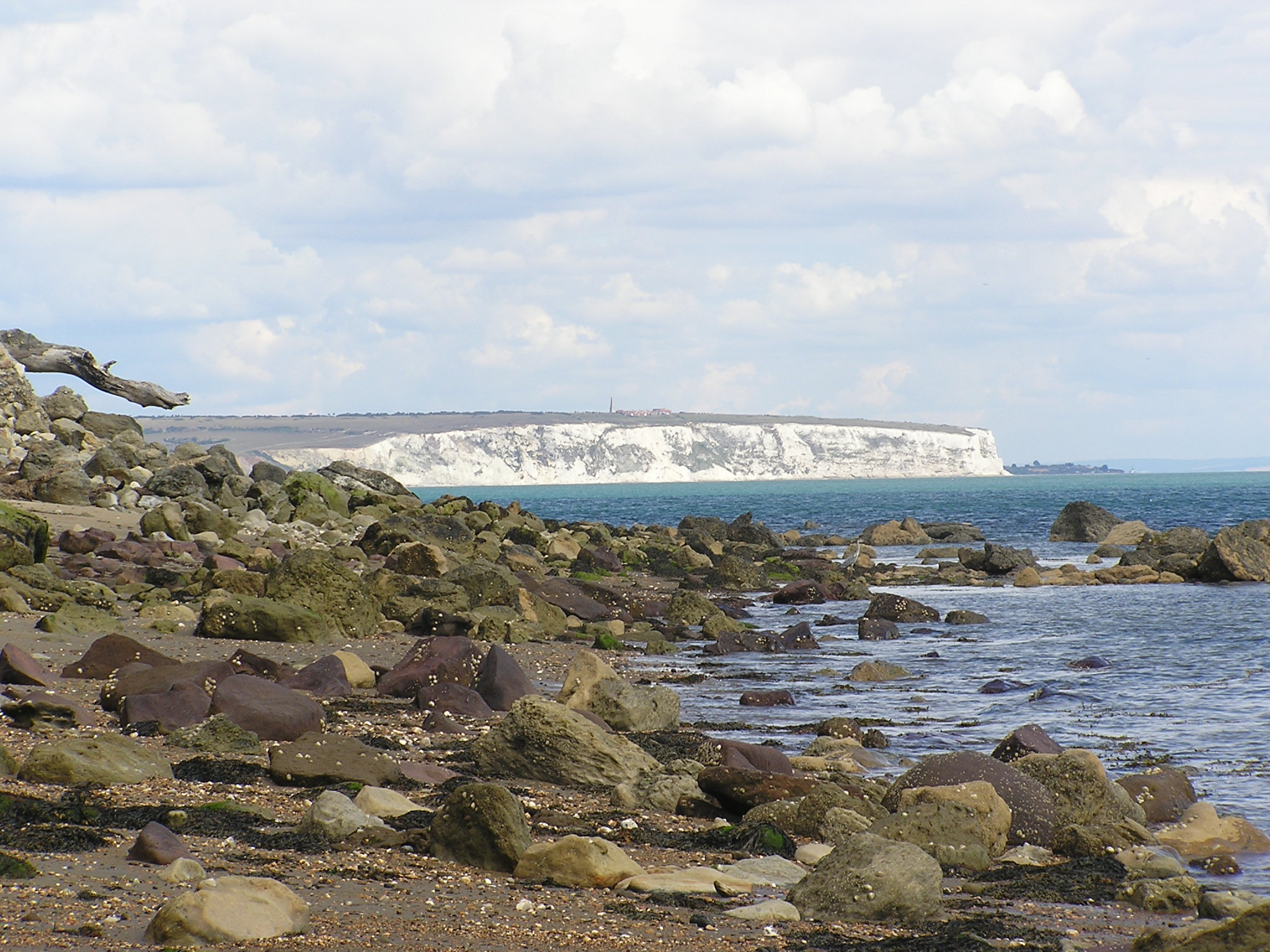
Swinburne would presumably have taken this route to Culver Cliff, the dangerous, sheer, white face of which he famously scaled at the age of 17, to prove his manhood. He wrote that he had had to break off the attempt (which verged on the suicidal) to gather his courage, by bathing in the sea at the foot of the cliff. He must have liked my deserted beach, too. The risk of being pounded by the waves, and scraped on rocks which are just below the surface at low tide, would have had him squealing with delight.

East Dene, Culver Cliff and the beach below the Landslip, Bonchurch

The Homing Instinct of Dogs

July 21st, 2010

On 1 June, it was reported in The Daily Telegraph that a nervous whippet-terrier cross named Jack, who had fled into woods whilst on a country walk with his owners, had somehow made his way home to Penistone (sic), South Yorks, along an unfamiliar and hazardous 15-mile route that  would have involved his crossing both a by-pass and the M1 motorway. His delighted owner discovered him asleep on the doorstep, exhausted and with his feet covered in sores, a day and a half after he had gone missing. The case is further remarkable evidence of the homing instinct of dogs.

Perusing that obscure but delightful monograph, Recollections of the Early Days of the Vine Hunt, by a Sexagenarian (1865), I discover two more. The anonymous author is Edward Austen-Leigh, Jane Austen’s favourite nephew. He writes (p.17) that, in the mid-18th century, Lord Craven would bring his hounds every season to Dummer, near Basingstoke, and hunt the adjoining country. ‘Two or three draft hounds had been sent by Lord Craven to Blair Athol in Scotland, and had been taken part of the way by sea, but found their way back to the kennel at Dummer in some marvellously short space of time.’

He further writes: ‘A relation of mine knew of an instance somewhat similar. A neighbour of his, who kept harriers in the Cotswold Hills, had sent a hound to a pack in Essex, about twenty miles beyond London; I do not know whether on foot or in a carriage. When he was taken out with the pack in Essex, he was observed to be with them when the first hare was killed, but was missed soon afterwards. Some time in the next day, he was found at his old kennel in Gloucestershire. Both these cases seem to prove that dogs are directed to their point by some inexplicable instinct, though they know nothing of the intermediate space which they have to traverse.’

Perhaps the most spectacular example is part of my own family legend. Victor Hugo had a poodle (not a toy poodle, rather the sturdy, water-retrieving type) named Baron, of whom he was very fond. Baron nevertheless demanded constant attention and interfered with his master’s writing. One evening, early in 1877, my grandmother’s grandfather, the Marquis de Faletans, was attending Hugo’s salon in his fourth floor apartment in Paris, at 21 rue de Clichy. Hugo noticed him making a fuss of the dog. ‘Does Baron please you?’ he said. ‘He’s yours!’ Eight days later they departed for Russia, where my ancestor was to reside for a time with his wife at Great Bokino, her country estate, some 200 miles south-east of Moscow.

Regular news was sent to the Hugos, but in mid-December, after a period of ominous silence, the Marquis reluctantly reported that the dog was missing, feared seized by a wolf or a bear.

Hugo, who had resigned himself to the loss, was roused from his bed on Christmas morning by his cook, who lived on the ground floor. An exhausted, emaciated Baron had appeared on the doorstep, and announced himself with frantic barks. Old Hugo was touched to the core, and amazed that Baron had travelled a distance of nearly 2,000 miles in less than a month. He resolved that they should never again be parted, and, indeed, Baron accompanied the family to Guernsey and later to a new apartment in Paris, where he died, a few months before his master, in 1884. Despite extensive investigations, none of the details of his incredible journey had ever been discovered.

The mail coach brings the news of Waterloo to Beaminster!

July 11th, 2010

During the French wars, the mail coaches were used for the official dissemination of news. When the Peace of Amiens was proclaimed in 1801, the coaches carried placards announcing ‘Peace with France’. Each driver wore a sprig of laurel, emblematic of peace, in his hat.

My cousin tells me that her great-uncle, Willie Trotman, had heard at second hand of the arrival of the mail coach in Beaminster, Dorset, in late June 1815. On this occasion, the entire coach was decked in laurel, the breathless driver announcing ‘Bloody news’ – that of the victory at Waterloo – to the excited onlookers. The original eyewitness is said to have been Uncle Willie’s great-grandmother, Ann Cox of Farrs, Beaminster (1770 – 1822), though I suspect that other members of his family would have remembered the event. The pace of life in country towns being rather slow, the arrival of any coach was liable to draw a crowd, if only to see who got off.

Ann Cox of Farrs was the grandmother of Ann Symes Trotman (born Cox), whose grandchildren would pester her to repeat the story, it being so unusual to hear her say ‘bloody’. Similar stories were handed down in other families, such as that of Thomas Hare (1806 – 91, pioneer of the Single Transferable Vote) who is said to have run alongside the same coach at Dorchester as a child. (So he told his grandson, Harold Clayton (1874 – 1963), who told my informant, Richard Hare (1922 – 2010).) See my ‘Dorset Families’ page for this and for a photograph of a later version of the Beaminster stagecoach.

Leonida Georgievna, the Grand Duchess Vladimir of Russia

June 29th, 2010

The late Grand Duchess Vladimir of Russia was a jolly, buxom lady with dark, heavily-coiffed hair and of decidedly Asiatic appearance – she was, after all, Georgian. Peter-Gabriel de Loriol Chandieu, effortless writer and gifted flaneur, recalls the following encounter:

The recent death (23/5/2010) of Leonida Bagration-Moukhransky, the late Grand duchess Vladimir of Russia, and her subsequent obituary on the 28th May in the Times reminded me of an event in her life that brought the reality of her situation into sharper perspective.

I was a very young (just 21) manager of a very exclusive ‘private’ hotel in Chelsea in the late 1970s. Private inasmuch as it was not classed as a hotel, but just as ’11 Cadogan Gardens’, a superior ‘Bed and Breakfast’ for patrons who were habitués or recommended by people known to the manager.

As such, the hotel was a magnet to visiting grandees of all declinations; diplomats, actors, politicians, heads of state, monarchs or elected, senior members of various professional bodies, who wished to come to London in relative anonymity to visit friends, relations or just to shop. They loved the relative cheapness of an establishment of 63 bedrooms and suites with en suite bathrooms, which catered to their every whim, in the centre of London, and with a high Victorian décor and service that put the five star hotels to shame!

On that particular Friday I was waiting impatiently to interview a new member of staff, a cleaner, sent by an agency. She was late – it wasn’t a good start! I’d seen half a dozen and they were either too young, too stupid or couldn’t speak a word of English. I sat in my pin-striped trousers, black jacket, white shirt and black tie behind my huge Victorian desk in my oak panelled office, occasionally looking out of the window onto the street. This one wouldn’t be taken on either, she was too late.

A discreet knock at the door followed by the perpetually surprised face of Antonio, the supremely efficient Spanish Head Porter (on whom, I was sure, the Fawlty Towers Manuel was based), saying that the lady had arrived. I asked him to show her in.

She was large, dressed in an almost bohemian way with swathes of tawny coloured capes and scarves carpeted around her busty carapace. She smiled perfunctorily and plonked herself into the chair opposite me. Irked, I started with the obvious questions: did she speak English, did she know London…the obligatory ‘of course’ followed my every question, at first patiently and then with marked indifference and a glimpse of what I surmised as a bad temper. Not good! I thought I’d put her off by telling her she would be working for six days a week and one Sunday in every four weeks, the times she would be expected to be at work and she would also be fitted with a uniform. It was all too much for her. She bulked up to a standing position.

“How dare you speak to me like this – don’t you realise who I am? I am the Grand Duchess Vladimir of Russia.” Her whole body trembled with rage.

“…And I’m the Emperor of France… “. This charade had gone quite far enough! She was rude, arrogant and I would speak to the agency. What agency? Just then the door opened a crack and a worried Francisco looked around the door. He told me that the lady’s husband was her and would like to introduce himself.

A slim, well dressed middle aged individual walked into the room with a smile on his face. In Spanish accented English he presented himself as Vladimir Grand Duke of Russia. You could have heard a pin drop! She broke into a smile and presented her husband to the ‘manager’ of the hotel.  I, meanwhile, couldn’t stop smiling, at myself, for having made history and put my usual two feet in it, as all Sagittarians do. We did part as friends! Francisco couldn’t stop laughing for days – Senor Peter had done it again!

Pg de Loriol