Roman Silchester, St James’s Church, Bramley and the Little London Tilery

July 24th, 2011

(From the programme of the Bramley and Little London Music Festival, June 2011)

IF WALLS COULD SPEAK: ST JAMES’S CHURCH AND THE EMPEROR NERO

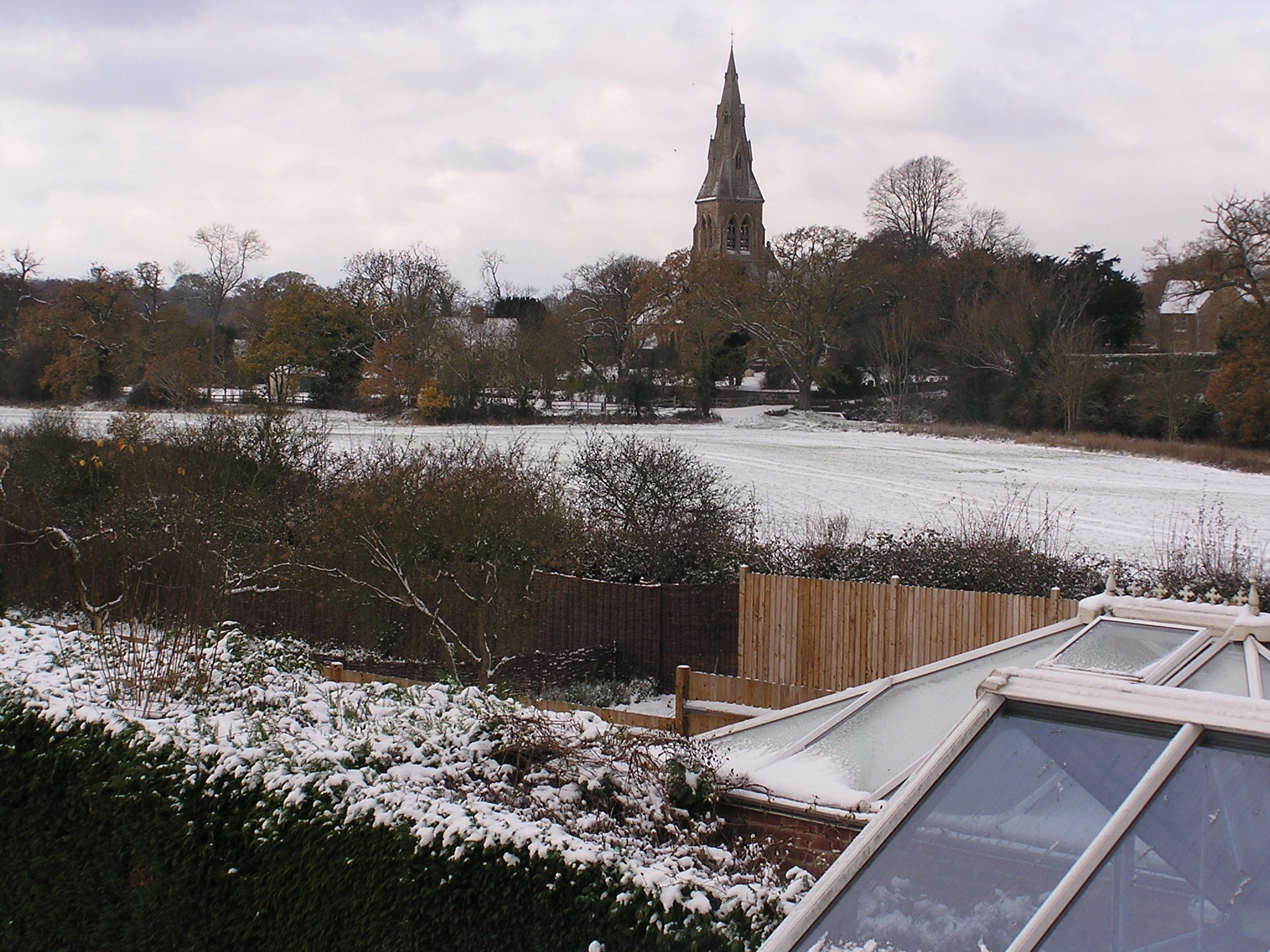
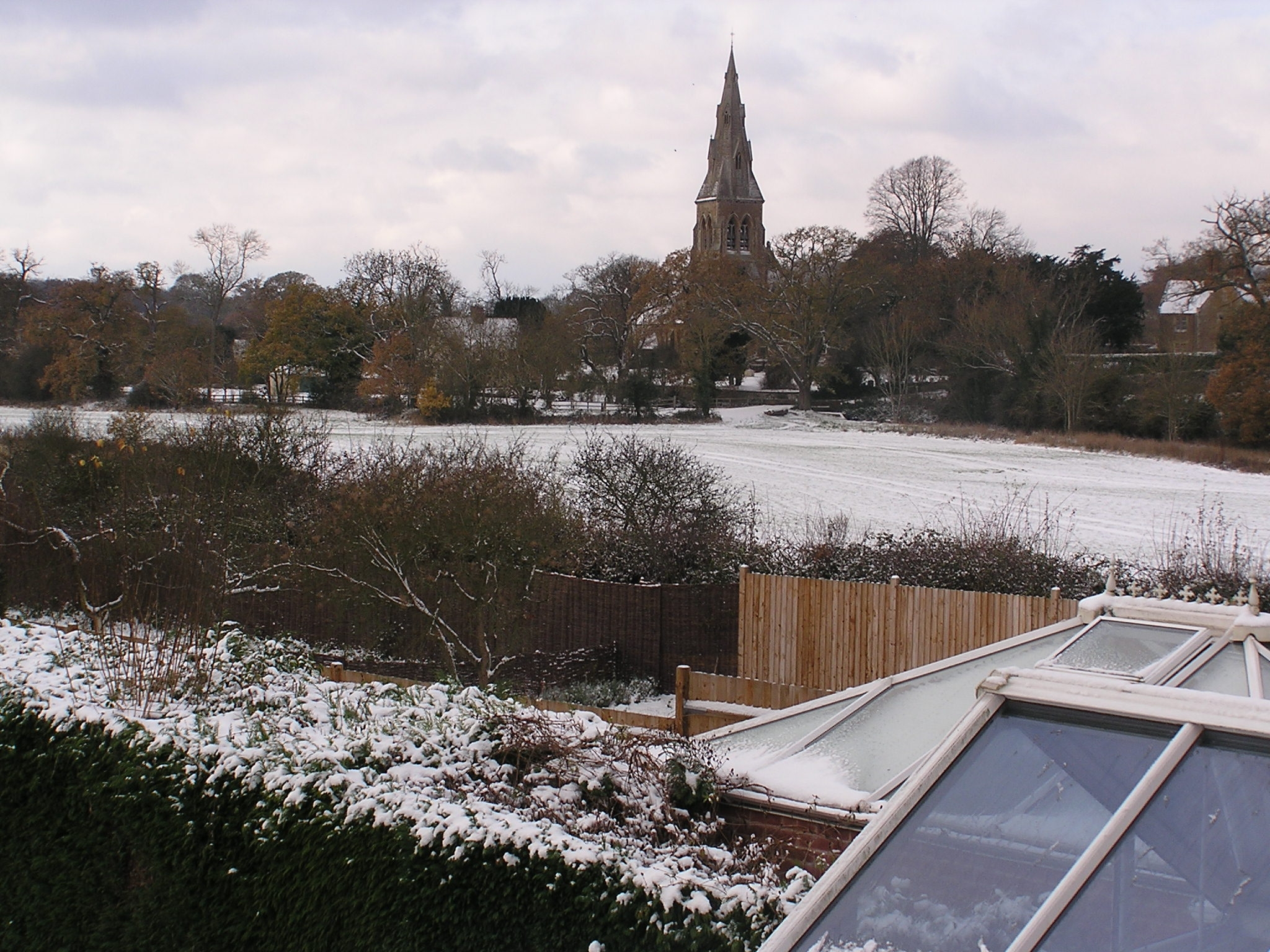
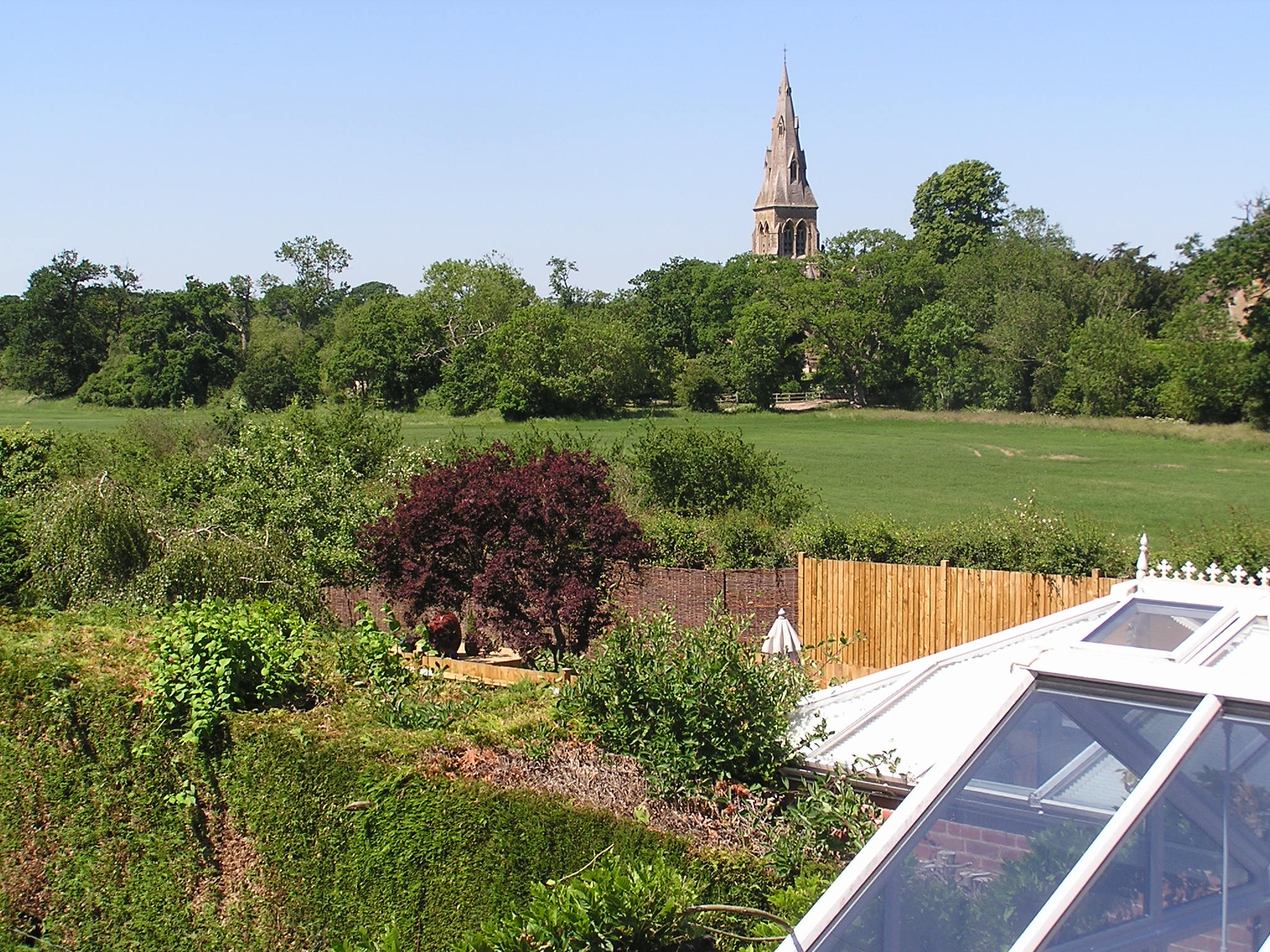
Bramley and Little London’s glorious parish church dates largely from the mid-1100s and contains notable fragments of its original murals – almost universal in medieval churches, but largely lost elsewhere – including a scene of the murder of Becket. The very walls of St James’s are thus redolent of tradition and continuity. Concealed behind the exuberant medieval paintings, there is even the possibility of a link with the Emperor Nero.

The 12th-century builders must have been intrigued and baffled by the ruins, at nearby Silchester, of a once-mighty city – the work of giants, it was said, or of the Devil. Who else could have built the formidable walls, up to eight metres in height, that surrounded it? The Saxons had never colonised the place, fearing its mournful atmosphere and its ghosts.

The site had nevertheless yielded much detritus and occasional treasure, including gold coins. Some seemed to bear the name of the ‘giant’ king, Onion. There were great quantities of dressed stone, including that from the defensive outer walls, for the taking; and the plough regularly uncovered the fallen-in roofs of the houses, with their distinctive red tiles. These proved particularly useful to the builders of our church, who imported them by the cartload to Bramley, mixing them with flint to make up the three-feet-thick walls of the new nave and chancel.

Since the 18th century, it has been understood that Silchester was a Roman city, identifiable with the Calleva Atrebatum of the Antonine Itinerary, and that the legendary Onion was probably a misreading of ‘Constantine’. Calleva has now been excavated with greater thoroughness than any other town or city in the Empire. Many magnificent objects have been discovered – from fine mosaic floors to the famous bronze eagle on which Rosemary Sutcliff based her novel, The Eagle of the Ninth – yet none, perhaps, is as evocative as those humble tiles.

They were clearly made from local material, and in 1926 Colonel Karslake of Silchester, a diligent amateur archaeologist, identified the remains at Little London, in a field opposite ‘The Plough’, of the tilery that was probably their main source. One of Karslake’s finds, a roller-patterned flue-tile, is from the period between 80 and 200 A.D.

Karslake claimed that another of his finds (now lost) bore a round stamp with the name of the Emperor, ‘NER.CL.CAE.AVG.GR.’ (Nero Claudius Caesar Augustus Germanicus – the notorious Emperor Nero, 54-68 A.D.). Something similar had already been discovered in the baths at Calleva. The Little London tilery may thus have been an imperial concern, with the concession to satisfy most or all of Calleva’s requirements for tiles and bricks.

The particular fascination of the tiles (displayed in the Silchester Gallery at Reading Museum) is that many bear marks, inscriptions or even footprints. Each would be shaped in a wetted wooden mould and left to dry on the factory floor. The tile-maker would test its consistency with his finger-tips, leaving a distinctive impression. From time to time – much to his annoyance, no doubt – people and animals strayed into his yard, stepped carelessly on the wet tiles and left their footprints to harden in them and be preserved for all time. Among the culprits were a dog, a cat, a deer, a calf, a lamb, an infant and a man with a hob-nailed sandal, who had perhaps reeled out of an early forerunner of ‘The Plough’.

Remarkably and unexpectedly, the Silchester tiles are also evidence of the tile-maker’s literacy, for there are specimens on which he has written. Someone in the factory used an unbaked flue-tile as a surface for writing. He was an erudite man: the inscription ends with a quotation from Virgil’s Aeneid: conticuere omnes – ‘all fell silent’. The text was probably meant to be copied as part of an on-the-job writing lesson, for tilers needed to keep written tallies. One tile is signed – fecit tubul[os] Clementinus (‘Clementinus made this flue-tile’), whilst a large brick is inscribed with the word Satis – ‘Enough’. These are truly Silchester’s equivalent of the Vindolanda tablets: intimate and personal, they are a hand-written evocation of life in Roman Britain.

RUPERT WILLOUGHBY

From Petersfield to Margaret River – and Back: The Quest for Margaret Whicher

July 20th, 2011

The Margaret River region, in South-Western Australia, is famously wild and beautiful. It is now as well-known for its fine wines as for its whale-watching. This exotic picture has been kindly contributed by Jan Matthews of the Margaret River District Historical Society. She writes:

The view is of the Margaret River at its mouth, just about to break through to the sea. In the summer it is landlocked, but after the first winter rains it gains enough momentum to breach the sandbank and flow steadily until the next summer. I took this photo last week and since then it has broken through – an event always reported like that first cuckoo … We are enjoying a cold winter with quite a bit of rain, which is very welcome, as storages are low due to several below-average winters.

The time that my camera put on the photo is NOT accurate! It was something like 11.30am – much more civilised – and likely.

THE QUEST FOR MARGARET WHICHER

Margaret River, in South-Western Australia, is named after an Englishwoman, Margaret Whicher (1822 – 1915). A cousin of John Garrett Bussell, the pioneering settler and explorer of the region, Margaret was the eldest daughter of James Whicher, a surgeon of Petersfield, Hampshire (pictured left), and his wife Anna, daughter of Lieutenant-General Charles Norris Cookson, R.A.

John and his brothers had set sail from Portsmouth on the Warrior on 9 October 1829. While the ship was loading, the Whichers had generously sent down various treats from Petersfield. Such items as gingerbread and pickles proved to be a great comfort during the voyage, and the brothers were profuse in thanking their ‘Petersfield friends’.

In 1837, having founded Busselton, John Garrett Bussell had returned to England in search of a wife. His proposal to the pretty Margaret (she and her sisters were known in Petersfield as ‘the Bewitchers’) had unfortunately been rejected. She was only fifteen, and her father was reluctant to condemn her to a life of hardship and uncertainty in an undoubted ‘wilderness’.

John had married someone else – a capable widow – and within the year was back in Australia, helping the cartographer Arrowsmith to draw up the first map of the region. As James Whicher was one of backers of his proposed sheep-farming venture, he received the compliment of having a range of low hills named after him. The river that rises out of the Whicher Range was named after Margaret, the child-bride who might have been. John must have had a high opinion of her. None of the other ladies in his family (including his wife) has any sort of territorial feature named after her.

In 1852, Margaret (known as ‘Peggy’) married the Basingstoke solicitor Joseph Shebbeare, a man old enough to have been her father. Joseph died in 1860 and in 1876 she married Samuel Chandler, who had been Joseph’s junior partner. There were no children. Peggy’s home for nearly fifty years was a fine Tudor house (with later additions) in Church Street, known later as Queen Anne House. The building was demolished in 1966 to make way for the Basingstoke ‘megastructure’. It stood beneath what is now Marks and Spencer’s store.

As a great-great-great-nephew of Margaret, I have been delighted to assist members of the Margaret River District Historical Society in their quest for information about her (though I have usually found them to be one step ahead of me). In default of a portrait or photograph (none has been found), the search is on for her grave. On her recent visit to England, Jan Matthews and I inspected the Whicher tomb in Petersfield cemetery, but there is no evidence of Margaret being buried there. To our delight, however, we were able to tour the house on the High Street in which she was born.

Lyndum House, as it is now known, is used as offices by Dalton’s, a firm of solicitors. We were most grateful to Gill Moss-Bowpitt, the practice manager, and her cheerful staff for their hospitality. It is a large, timber-framed house of great age. We were impressed by its fine galleried staircase under a domed roof and by the master bedroom overlooking the back garden. Below it, on the ground floor, is a magnificent drawing-room with tall, shuttered windows. There would have been ample space for the many Whicher children. We even explored the spacious attic, with its series of rooms for the servants, and the narrow back garden which, at one time, ran down to the stream. It is altogether a most impressive and desirable property, sadly sold by my family after the death of James Whicher in 1875.

A full account of the Bussell brothers and of Margaret Whicher’s life in Petersfield and Basingstoke is included in my latest book, Basingstoke and Its Contribution to World Culture. See also:

http://www.petersfieldpost.co.uk/news/top_australian_wine_region_named_after_lost_love_from_petersfield_1_2666638

and

http://www.rupertwilloughby.co.uk/archives/440

Constant de Thierry des Estivaux, Marquis de Faletans – Inventor of the Pencil Sharpener

July 20th, 2011

The invention of the ‘lead’ pencil is credited to the English in 1564. The inventor of the pencil sharpener was a Frenchman, Thierry des Estivaux. At Paris in 1847, he patented his design of the classic tube fitted with a narrowing cone and a blade. It was an invention that saved the fingers of generations of schoolchildren, who would otherwise have had to whittle the points of their pencils with their pocket-knives. It is an object that is universal and taken for granted.

Constant de Thierry des Estivaux was a gallant officer and patriot. He was born at Paris in 1797, the eldest son of Colonel Gaspard de Thierry, Baron des Estivaux in Lorraine, the dashing commander of the 9th Hussars during the Wars of the Revolution, and his beautiful wife Romarine, Comtesse de Faletans et Digoine, a franc-comtoise.

In 1814, while still a schoolboy, Constant took part in the defence of Besançon, and in 1815, aged 17, fought beside his father at the Battle of Waterloo, where he five times wounded. He served in the Besançon Dragoons and, from 1822, in the Russian army, as personal aide-de-camp to his ‘uncle’, the General Comte de Langeron. One of the great men of his age, Langeron had saved the life of the ‘grand old’ Duke of York, fought the Turks under Potemkin and commanded a division at Austerlitz. A distant relative, he treated Constant as his own son.

Constant left Russia after Langeron’s death in 1831, intending to settle in Paris. At Briançon, on the French border, he was arrested, apparently on the orders of Adolphe Thiers, the Minister of the Interior. Constant’s baggage, containing Langeron’s voluminous papers, was seized. The documents eventually found their way into the Ministry of Foreign Affairs in Paris, and various parts of them have since been edited and published. Without always acknowledging it, Thiers makes full use of them in his Histoire de l’Empire (published from 1845), which in turn was to provide Tolstoy with much of his background material for War and Peace (published from 1868). Langeron’s account of Weyrother’s briefing before the Battle of Austerlitz forms the basis of a particularly memorable scene (Book III, Chapter XI). Tolstoy has him toying with a gold snuffbox whilst he listens to Weyrother’s nonsense, an ironical smile on his face as he attempts to sting his vanity. Langeron, to whom Byron had already referred flatteringly in verse in Don Juan, would not have been displeased.

As far as is known, Constant was never again to be formally employed. Instead, he tried his hand as an inventor. In 1839 he took out a patent in England for one of his inventions, for some reason using the pseudonym ‘Morillon’. On 21 April 1846 he took out another patent, this time in France, for his design of a ‘palmiped propeller suitable for coastal and inland navigation’. His attempt at improved propulsion recalls the ‘pyroscaphe’, the pioneering steam-powered paddle propeller invented by his older relative, the Marquis de Jouffroy d’Abbans, and tested on the Doubs at Beaume-les-Dames in 1776. In retirement at the Château d’Abbans-Dessus (Doubs) – pictured left – from 1816, Jouffroy d’Abbans had been a near neighbour of the Faletans (who had retreated during troubled times to their own château at Busy), perhaps passing on his passion for engineering to the young Constant. Jouffroy d’Abbans had received little reward or recognition for his invention, and had died, a needy pensioner in the Hôtel des Invalides, in July 1832. If not positively ruined by his efforts, Constant, likewise, was hardly enriched by them.

Constant de Thierry des Estivaux adopted the surname ‘de Thierry de Faletans’ in 1848 and in 1860, having settled at the Château de Faletans (Jura) – pictured left – was recognised as Marquis de Faletans, a title inherited from his uncle. He was my great-great-great-grandfather. Until recently, I had no idea that he had invented the pencil sharpener. This was surely Constant’s proudest achievement but, unfortunately, is not the basis of any family fortune. The mass production of pencils dates from the later 19th century. The huge and continuing demand for pencil sharpeners, for use in schools and offices, took off in the early 1900s. Constant had died in 1871. He deserves to be better known.

See http://fr.wikipedia.org/wiki/Taille-crayon

and

http://www.lolomolubdo.com/article-942886.html

Tormore School Remembered – at The Vyne and Upper Deal

June 8th, 2011

Earlier this year the National Trust mounted a splendid exhibition in the Stone Gallery at The Vyne. Slugs, Snails and Puppy Dog’s Tails documented the wartime occupation of the house by Tormore School, a preparatory school evacuated from East Kent. The story was of particular interest because I had three cousins (including two of the evacuees), an uncle and a brother at the school, and attended it myself in the 1970s.

The dining room at Tormore was adorned in my day by two large engravings of The Vyne (identical to those now in a passageway of the house) to remind us of the association. Every boy knew that F.G. (‘Fidge’) Turner, the redoubtable former headmaster and proprietor of the school, had served with Charles Chute, owner of The Vyne, during the Great War. Turner (educated at Westminster and Cambridge) was a Captain in the Dorset Regiment. Chute (Eton and Cambridge) served in a Public Schools Battalion and, like Turner, was awarded the Military Cross.

It seems that Turner had raised the possibility of evacuating his school to The Vyne in the event of a future war, to which Chute had readily agreed. Tormore’s location in East Kent, at Upper Deal, had been vulnerable at the time to Zeppelin attack. When German bombing resumed in 1940, Turner, by now an experienced headmaster, renowned for churning out record numbers of scholars and exhibitioners at leading public schools, took characteristically decisive action. On 17 May, the entire school, consisting of teaching staff and sixty boys, with bedding and other furniture, pitched up on Chute’s doorstep. They had travelled for ten hours in a pair of buses, picnicking on Reigate Heath on the way. ‘Hitler will never find you here,’ the disorientated driver had remarked as he negotiated the lanes to their final destination. Chute was equally bemused. He had been given two days notice of their arrival and – so I have been told by his relative, Francis Chute – had forgotten all about his earlier promise.

Lessons were resumed at noon the following day, mostly in the Stone Gallery, though younger boys were taught in the Tapestry Room and Further Drawing Room. The Tormore dormitories, all named after imperial heroes, were reconstituted in rooms upstairs – Wolfe, Kitchener, Clive and Nelson in the Oak Gallery; Drake, Roberts, Gordon and Wellington in the East Tower. Each boy had his own chamber pot and was entitled to a single bath per week.

The normal routine of the school was replicated as closely as possible. The boys assembled twice a day for prayers in the Chapel, with Chute himself (‘very churchy’, according to Francis) conducting the morning service. The Brewhouse was used for choir practice, gym and boxing, and also for the annual ‘Pancake Scrum’, a Westminster tradition, in which the tougher boys attempted to seize the largest portion of a pancake for a prize of half a crown. Turner, who was notoriously strict, set up his study in the Print Room, where he kept a selection of canes in an umbrella stand.

Like all schools in the war, Tormore was rapidly drained of its younger, fitter male staff, who were replaced by injured or elderly men, or by women. Some of these were decidedly eccentric. Miss Hassard was an ardent communist who taught the boys Soviet propaganda songs. It is hard to believe that Turner would have approved. There was a Miss Carey, who sounds a rather spiteful woman. She received her come-uppance during a swimming lesson in the lake, when she lured a terrified non-swimmer off the diving-board into her waiting arms. ‘His frantic struggles managed to strip Miss Carey to the waist, much to the amusement of the audience of small boys.’ The beautiful Miss Longuet-Higgins (daughter, I presume, of the Vicar of Lenham, near Ashford, and sister to two distinguished scientists), was, on the other hand, much appreciated for her charms as well as for her skills as ‘a demon fast bowler’. She left after a couple of terms, but not before a gallant Secker-Walker ma. had presented her with a Valentine’s Card ‘on behalf of all her admirers’.

Food became an obsession among boys whose morning staple was ‘tepid lumps of plaster in a sickly gruel that passed for porridge’. It was noticed that the staff enjoyed thinly-cut slices of bread with butter and marmalade for their breakfasts, while the boys had to make do with thinly spread margarine and barely perceptible quantities of jam. For lunch they were regularly treated to ‘spinach floating in water and smelling of manure’. There were instances of the staff pilfering the treats that had been sent to individual boys. At least they could count on their ‘tuck’, an allocation of boiled sweets, for which they had to queue up in alphabetical order. Some hungry boys resorted to desperate measures: ‘I. Welchman is said to have eaten a slug whole and raw,’ reported a gleeful Secker-Walker to his parents.

There was, however, seemingly endless space in which to roam, one old boy stating that, in spite of the hardships, he ‘loved the Vyne with the same intensity that I hated Upper Deal’. In Morgaston Wood, there was even the thrilling spectacle of an army ammunition dump. The boys were constantly exposed to the realities of the war. In the Chapel on Sunday evenings, they would occasionally sing a hymn chosen by a boy whose father had been reported missing or killed. There was an incident in which the aptly named Slaughter ‘walked into the staff room with an unexploded incendiary bomb’. The excitement was palpable in the build-up to D-Day. Whilst the boys were waiting for a train at Basingstoke Station at the end of term, ‘a train full of G.I.s pulled in on the opposite platform and we were showered with bars of chocolate’. On 6 June 1944, the boys saw the sky ‘filled with planes’ as the American airborne troops took off in their gliders from Aldermaston airfield, the first wave of the invasion. However, it was not until the end of the Easter Term 1945 that Turner considered it safe enough to return to Deal. Chute counted himself lucky to have been spared the destructive presence of the army.

It struck me while viewing the exhibition that the school had barely changed at all by the time I attended it in the 1970s. It still occupied its original premises – a Georgian mansion on Rectory Road, Upper Deal, with converted stables and outbuildings and, I think, thirteen acres; also The Court House, The Old House and The Yews nearby. The uniform – grey shorts and jersey, black and white tie and cap – was certainly identical; so were the names of the dormitories and of the school houses – Tanks, Terriers, Torpedoes, Tigers and Tadpoles (I was in Tanks); the daily routine (with morning and evening prayers held in the ‘Mem’ Room, a dignified shrine to the school’s casualties in both World Wars); even the annual ‘Pancake Scrum’ held in the school gym. There were also the weekly distributions of ‘tuck’, for which we still had to queue up in alphabetical order, an arrangement considered most unfair by those whose names began with W.

Turner was still alive and his influence was still felt in the school, though he had retired in the 1950s. I remember him well. Members of Tormore ‘dynasties’ like myself were invited once a term to take tea with him and his wife, a dapper, diminutive couple, at Orchard House in Deal. One was on one’s best behaviour and conformed to a strict routine. After games of bowls in the beautiful garden we would launch ourselves on a lavish tea. Mr and Mrs Turner – he was always immaculate in a three-piece suit and tie – would ask after the health of my grandmother. A fulsome ‘bread-and-butter’ letter, strictly vetted by the current headmaster who was on his best behaviour as much as we were, would be composed that evening, ready for prompt dispatch the following day.

It would astonish modern prep school children to know that we were still served the same lumpy porridge for our breakfasts (with brown sugar and milk) as our wartime predecessors. Each loaf of sliced bread would be served repeatedly until finished, although the stale left-over slices, identifiable by their curling edges, would sometimes reappear in the sickly-sweet bread-and-butter puddings with which we were also regaled. I shudder to think of them. We were consistently underfed.

As far as I remember we also had only one bath a week (or no more than two) though we were required to wash ourselves daily, queuing up in our underpants to use the washbasins, our efforts being vigorously inspected by the fearsome Matron, Miss Edith Gardiner. This harpie, sometimes kindly, sometimes manically hysterical, would twist our limbs agonisingly in order to inspect every corner of our bodies, and occasionally apply a scrubbing brush or pumice stone to those who had, in her opinion (which varied according to her mood), failed to wash themselves properly. Those of us boarding in The Old House, as I did for a term (it was run by a sad, bibulous widow, Mrs Alcock ‘and no balls’, who reeked of sherry and occasionally sprouted a black eye), depended on hand basins, which one of us had to fill from a jug of water that had been boiled downstairs.

The central heating at Tormore consisted of hot pipes around the skirting board, exactly like those in the Stone Gallery at The Vyne, on which the prefects were allowed to scald the hands of recalcitrant younger boys. There was none of that in my day: the pipes were rarely turned on, and it was punishment enough to be freezing cold all winter. I do remember that the cane was retained in the headmaster’s study as a constant threat. I never received it myself, though I was ‘slippered’ on at least one occasion (when, as the senior boy in ‘Drake’, I was the scapegoat for the whole dormitory during a rowdy ‘midnight feast’). Such punishments may have been character-building, but they are now illegal.

I remember with horror having to go out for ‘Games’ on freezing winter days, sometimes, it seemed, in raging blizzards; chapped legs and chilblains were endemic. As my brother remarks, there is no hardship he cannot face after Tormore. It was certainly a Spartan institution, in a bleak, remote, windswept setting. Boarders at the school were no better off than prisoners, confined for weeks on end to its four walls, and probably with fewer comforts. I rarely saw my parents in term-time and was constantly homesick, which amounted to prolonged trauma for a child. However, I think of Tormore with great gratitude and affection for the skill and commitment of the masters and for the first-class education that they provided. I think particularly of my last headmaster, John Hare (an old Tormore boy himself, then Repton and Brasenose), who began gradually to modernise the school. His last job had been at Millfield. I was delighted by one of Hare’s early pronouncements, on ‘tuck’ day: ‘The distribution of sweetmeats will be conducted in reverse alphabetical order’. His beautiful wife ‘Mo’, known as ‘Nefertiti’, made many improvements to the menu, even introducing egg and chips as a Saturday evening treat. Hare was a rigorous, gifted teacher, whose lessons were exciting and challenging. He and characters like Myles Raven, Michael Webb, John Budden and Adrian Rawlins gave me the groundwork of knowledge on which I have depended ever since, with the emphasis on the Classics, the Scriptures, British history, political geography, English literature and French, all subjects that are more or less sidelined in modern schools. For good or ill, Tormore has made me the man I am today.

For the history of the school in brief see http://www.eastkenthistory.org.uk/place:tormore

For details of my book, Sherborne St John and The Vyne in the Time of Jane Austen, please refer to my ‘Books’ page.

The Vyne now has an individual website which includes a note about Tormore and a link to this page (click on ‘Things to see and do’, then ‘The House’) – http://beta.nationaltrust.org.uk/vyne.

Helen Mirren Bares All

April 8th, 2011

On 5 April, the beautiful actress Helen Mirren was pictured in the Daily Telegraph. Dressed in a lime-green top and black skirt, a resigned expression on her face, she holds her arms aloft in a curious pose, exposing her statuesque profile to the camera.

Miss Mirren is well used to being photographed, with pleasing results. However, on this occasion she had been forced to submit to a ‘full-body scan’ by the security staff at Los Angeles International Airport, an outrageous indignity to have inflicted on one of our great tragediennes.

The scanners now in use at Los Angeles produce remarkably graphic, nude images of the subject, leaving nothing to the imagination. I have suggested in the past (see my blog of 13 January 2011)  that travellers be allowed, as an alternative, to wear ‘lycra’  body-suits, of the type worn by the ‘celebrity’ contestants on TV’s Bring on the Wall, for the duration of their journey. These outfits are extremely tight-fitting and do not allow for the concealment of any form of contraband.

Sadly, my suggestion has not been taken seriously, and full-body X-ray machines have since been installed at many US airports and at a few in Britain. Old people, children, the fat, the thin and the morbidly self-conscious are all prey to this hideous innovation.

My concern is that prurient airport staff, with every passing traveller at their mercy, may derive dubious gratification from the task. What reassurance is it to know that one’s picture will only be viewed by a person of one’s own sex? What if that person is homosexual, or indeed bisexual? Are we to believe that the images are routinely destroyed, or are the ‘fat or funny ones’ indeed pinned to the staff noticeboard, as suggested in tonight’s Now Show? Why is it acceptable, in this context only, to produce ‘indecent images’ of children?

If only the officials responsible had seen Miss Mirren in the National Theatre production of Phèdre – as I did in July 2009, when it was broadcast live to the Picture House at Henley and other selected cinemas, an absolutely unforgettable experience – they might have treated her more respectfully.

Read ‘Bring on the Wall!’ at http://www.rupertwilloughby.co.uk/archives/date/2011/01.
Colin Palmer: English Channel Relay Swimmer

March 29th, 2011

Guest-blogger Colin Palmer’s blasé account of his Channel-swim preparations disguises the fact that he is a man of steel and one of the wild swimming élite – none of which could be guessed from his amiable appearance and manner. Whatever exotic location I think of to swim, I find that he has preceded me, though not if there is any risk of an ‘instant ice-cream headache’. Colin tells me that cross-Channel swimming is firmly discouraged by the French authorities, and exhausted swimmers are liable to arrest when they step ashore. Not the sort of man to be put off by foreign pettifoggery, Colin is undaunted and valiantly supporting a worthy cause.

From Soho down to Brighton I must have swum them all.

I did not realise that signing up for an English Channel Relay swim would quite take over my life in such a major way.  I haven’t quite swum in every pool, lido, river and lake between the aforementioned Soho and Brighton but it is beginning to seem like it.  Although Tadley is my default pool where I often talk swimming to Rupert, every trip away from Berkshire means scouring the internet looking for new challenges, places and people to swim with.

I am undertaking the challenge with Aspire, the Charity that works with people with spinal chord injuries, and so I have a ready body of team members (Aspire has five teams of six people doing the Channel this year) to swim with. So far our location of choice has been London Fields Lido, a hidden jewel deep in the heart of Hackney.  The fact that the lido is heated and open all year is its great appeal, but the after-swim coffee and chat at the Hoxton Beach Cafe – you will detect the irony if you have spent any time in East London – are well worth the trip into London.

The Soho link is my solitary training trip to the Oasis pool in Endell Street,Central London, more Covent Garden really but close enough to use Pete Townsend’s lyrics, and Brighton will be our weekend’s cold water acclimatisation in the sea in early May.

I have already managed some early cold water acclimatisation when joining the massed ranks of the South Wales section of the Outdoor Swimming Society (three hardy souls) last Sunday (27th March) at Caswell Bay on the Gower peninsula.  Although the calves froze on impact with the sea, after a while it became fairly comfortable. Front crawl was impossible however due to the face freezing on contact with the water, creating an instant ice cream headache.  Feeling good I saw off a couple of the experienced hands and managed a creditable 25 minutes immersion.  It was not until out of the sea and the onset of uncontrollable convulsive shivering whilst changing that I realised the wisdom of experience, as the old hands were able to chat and drink coffee in the beach side cafe whilst I shook quietly in the corner. A thirty minute drive with the heater on full blast did the trick and thawed me out before Sunday lunch and had me looking at the calendar for the next chance of a weekend swim in Wales.

This weekend I am aiming to take my first dip in the Thames,  a 1/2 mile section in Goring, one of the many stretches I hope to do in the following months (I am sure David Walliams must have overheard my plans).  Next week I am in Cluj, Rumania, and so I am working out how I can access the University’s 50-metre pool.  What is Rumanian for ‘must I wear a swim hat?’. I will be in Cologne over Easter so I have to check the temperature of the Liblar See (an old quarry) and whether or not the owner of the campsite will let me swim in her lake. She looks at me very strangely when I turn up in the middle of summer and  and so my appearance in April will lead to much wailing and gnashing of teeth.  Unfortunately my limited German, ‘ein Bier und ein Käsebrötchen mit Zwiebeln’, is of little help at such times. Later in the Summer I will have the joy of two weekends’ swimming in Dover Docks, with real Channel swimmers, before the big day in July – August.

As you can see I am looking for tips for interesting places to swim and people to swim with so if you fancy a dip, or maybe just a walk along the towpath when I am doing a section of the Thames, drop me an email. I am more than willing to share the fun.

If you are interested in helping Aspire then you can donate through my website http://www.justgiving.com/Colin-Palmer3.

The Uniqueness of Rupert Willoughby

March 14th, 2011

The uniqueness of Rupert Willoughby appears to have been short-lived.

It began on 2 September 2010 with the death of my only known namesake, Rupert A. Willoughby of Cleveland, Ohio – though apparently there have been other Rupert Willoughbys in America, including one born at Lafayette, Indiana, on 2 February 1889. The musical director of the City of Sunderland Millennium Orchestral Society, Rupert Willoughby Hanson, has otherwise been the nearest approximation to a namesake that I have ever come across. (There was an earlier Rupert Willoughby Hanson, too, appointed a Companion of the Order of the Indian Empire in 1927.)

Willoughbys are numerous in England, yet none seems ever to have borne so distinctive and euphonious a combination of names. Since the death, last year, of Cleveland Rupert, I proudly bore it alone.

All that has changed since the birth, on 23 February 2011, of Rupert James Hugh Willoughby, younger son of James and Lady Cara Willoughby (nee Boyle). James is the grandson of Lord Middleton and Cara is a daughter of the Earl of Cork and Orrery.

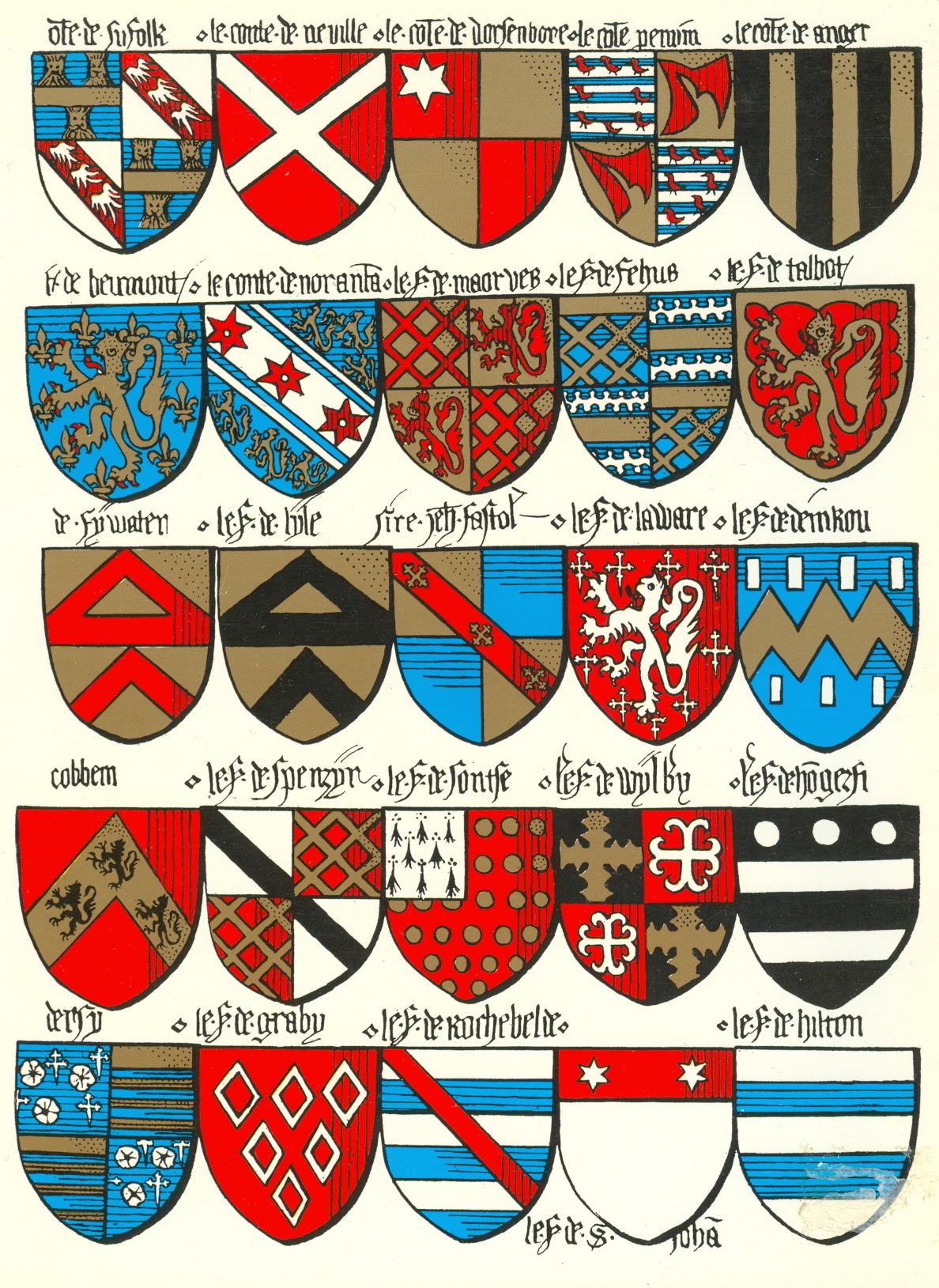
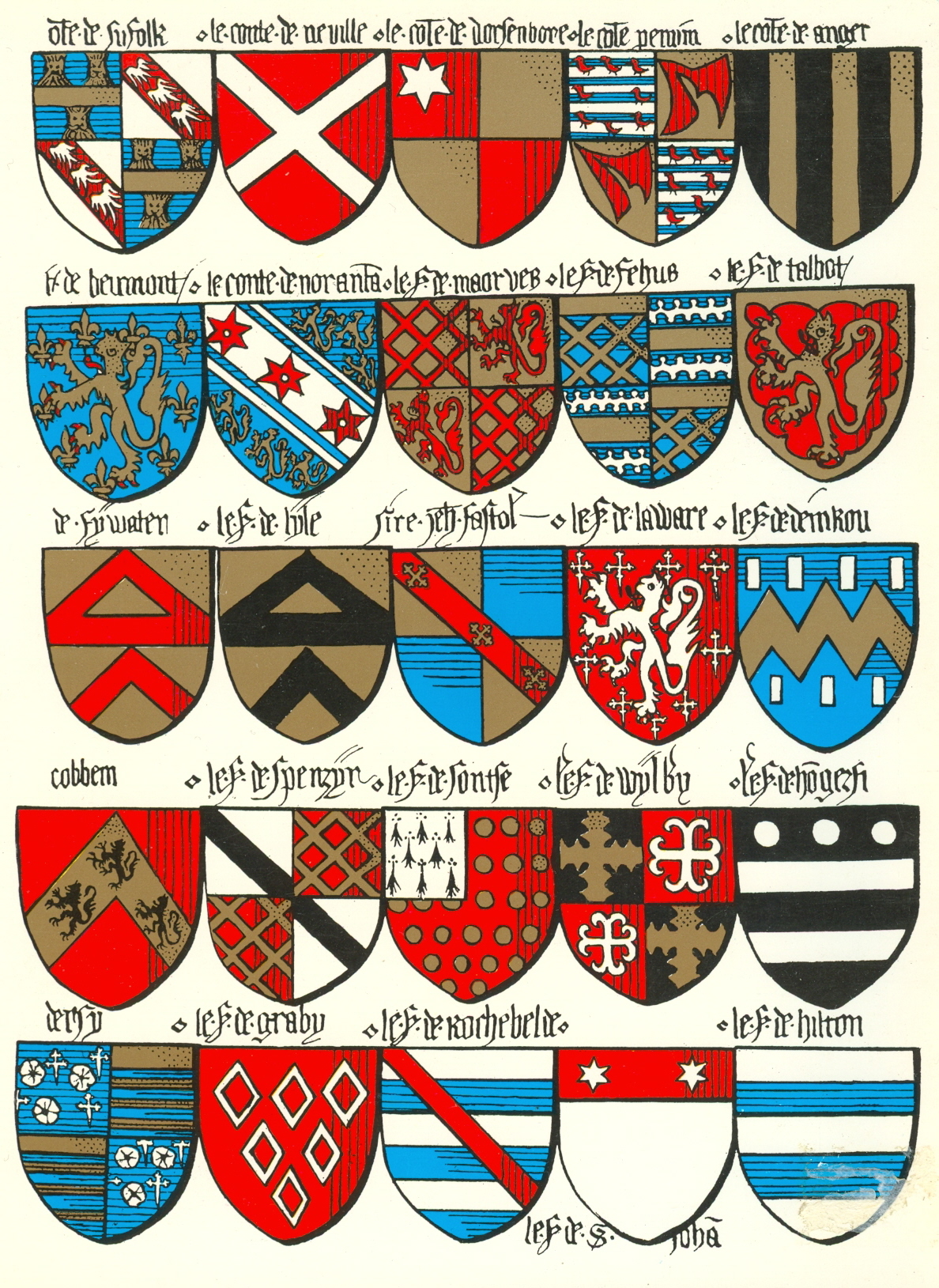
We belong to different tribes of Willoughbys. Their earliest-known male-line ancestor was William Willoughby of Willoughby-in-the-Marsh, Lincolnshire, in the time of Richard I. Mine was an Elizabethan yeoman, John Wilby of Colchester. ‘Wilby’ was a common variant of ‘Willoughby’: see, for example, the famous MS of the arms of the English nobility, now in the Bibliotheque de l’Arsenal in Paris, where the arms of ‘de Wylby’ depicted (second row from bottom, second from right) are those of the Lincolnshire Willoughbys. Though these arms were also borne by a George Willoughby who was living at Colchester at the same time as the yeoman John, my stock may just as easily derive from Wilby in Suffolk as from Willoughby in Lincolnshire – not to mention the Wilbys in Norfolk and Northamptonshire whence they might also have come.

As all these villages were within the Danelaw, our shared Viking ancestry is, at least, beyond reasonable doubt. The eponymous ‘Willa’ who gave his name to the ‘byr’ or ‘by’ in each of these counties was no doubt some sea-rover or ‘creeker’ who had daringly penetrated far inland, founding the homestead or single farm that had developed, over time, into a village. The movements of these settlers, throughout the British Isles, can be traced very conveniently through the place names that they left behind.

My father, Christopher, had many namesakes and was regularly confused in military circles with Brigadier Christopher Willoughby, young Rupert’s great-grand-uncle. However, it is likely to be some time before the lad is lecturing on the Bayeux Tapestry, writing books about Basingstoke or preparing his own website. I am therefore delighted to welcome him into the charmed circle of Rupert Willoughbys.

Peter Fleming and Nettlebed Church: Reflections on Mortality

February 7th, 2011


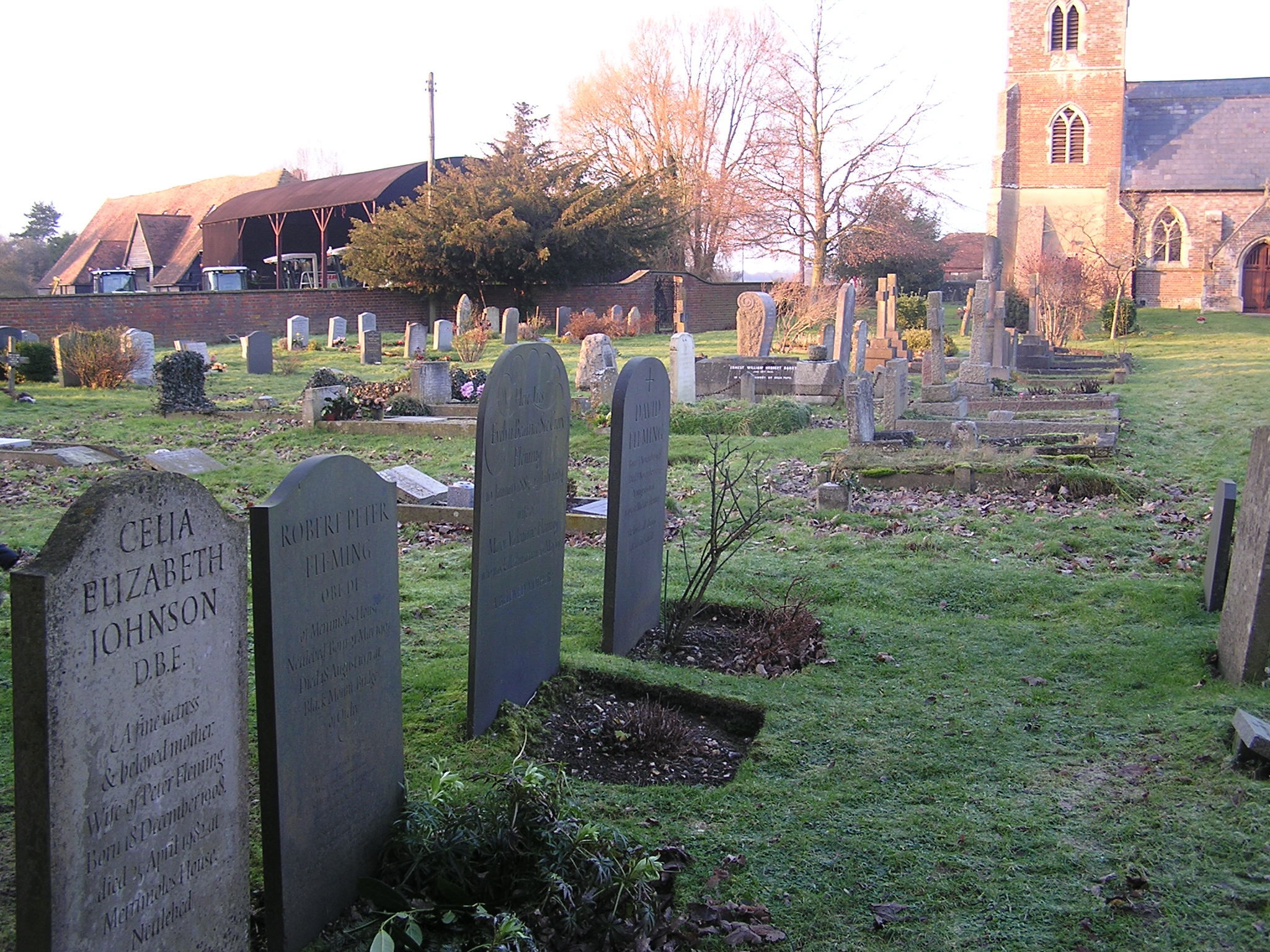
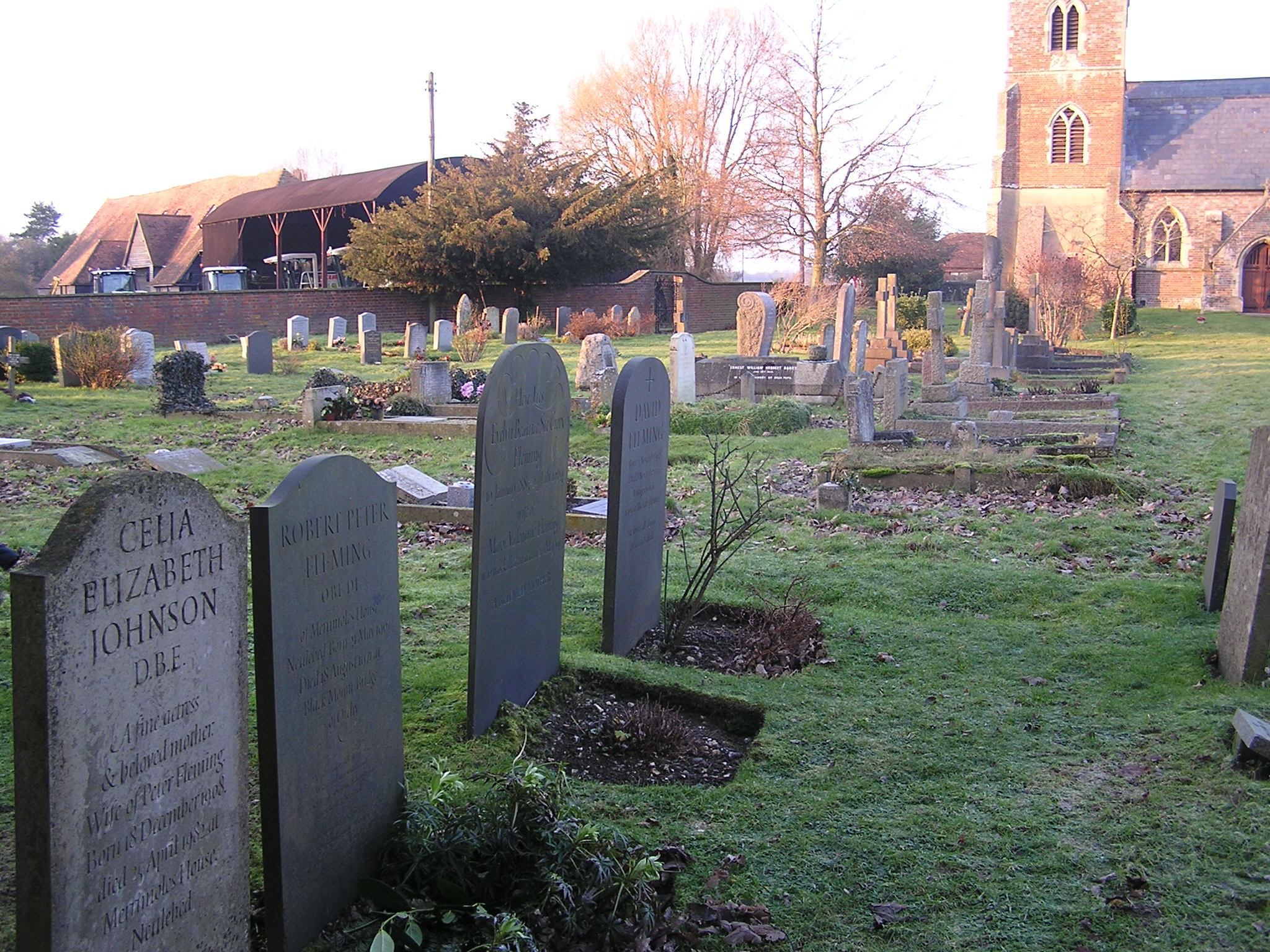
After lunch with my enchanting, hospitable cousins at Nettlebed, Oxfordshire, we repaired to the adjacent churchyard. I was interested to see the grave of Peter Fleming (1907-1971), one of my literary heroes, as the epitaph inscribed on the headstone, composed by Fleming himself, is a particularly fine example of this art form.

 
He travelled widely in far places:

Wrote, and was widely read.

Soldiered, saw some of danger’s faces,

Came home to Nettlebed.


The squire lies here, his journeys ended –

Dust, and a name on a stone –

Content, amid the lands he tended,

To keep this rendezvous alone. 


 R.P.F. 


Peter Fleming, who lived at Merrimoles House on his 2,000-acre estate at Nettlebed and was married to the actress Celia Johnson, is best known for his Brazilian Adventure (1933) and for accounts of his travels in Asia. His wartime service was with the Grenadier Guards and as head of ‘D’ Division in south-east Asia.

In a single sheet of instructions headed ‘R.P.F.: FUNERAL ARRANGEMENTS’, Fleming anticipates that the epitaph ‘may require a “Faculty”, and involve a skirmish with ecclesiastical bureaucracy’, but any such impediments were, happily, overcome. This is said to have been ‘the only serious poem he ever wrote’. (Duff Hart-Davis, Peter Fleming: A Biography (London, 1974), pp.400-1.)

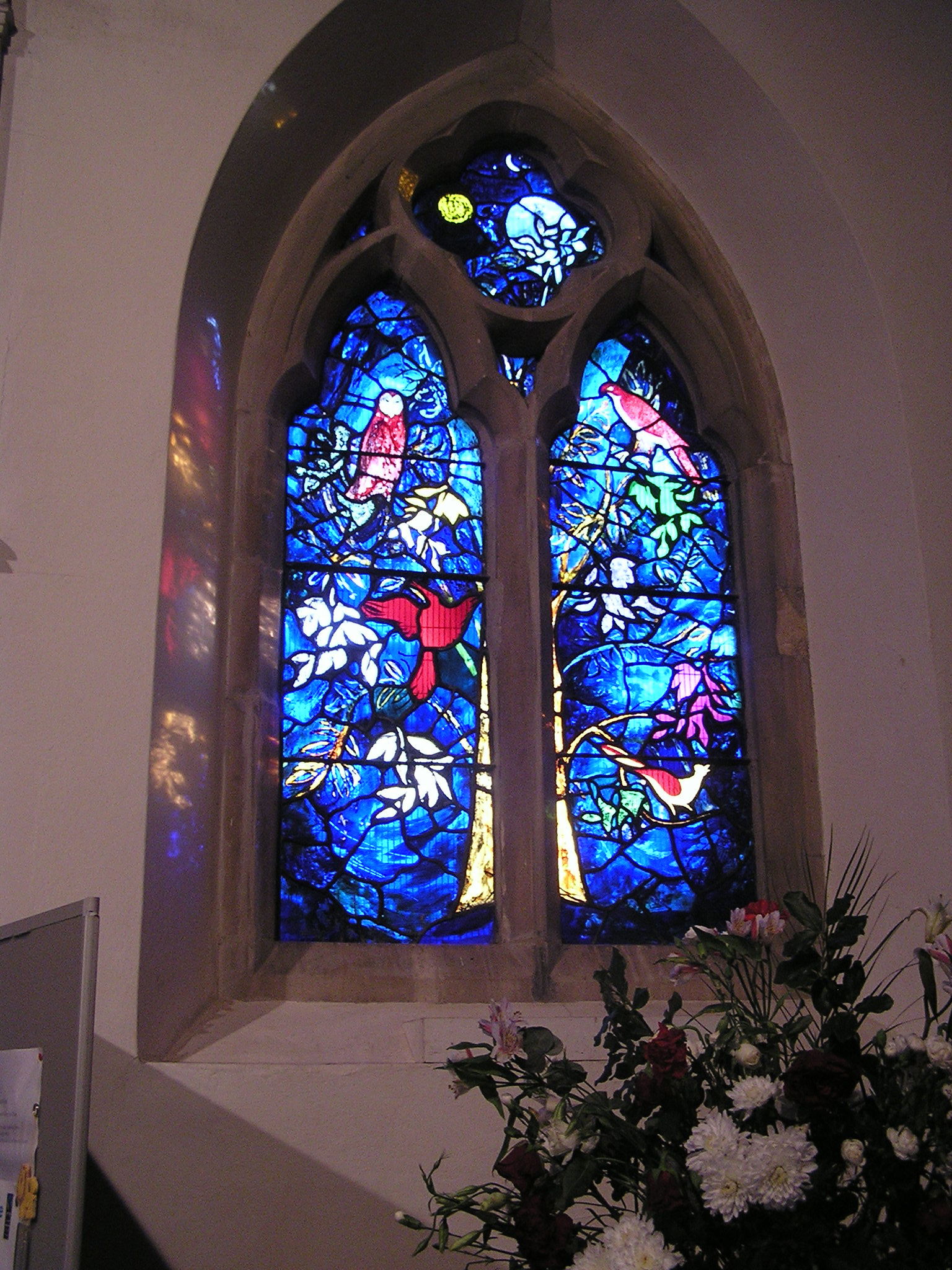
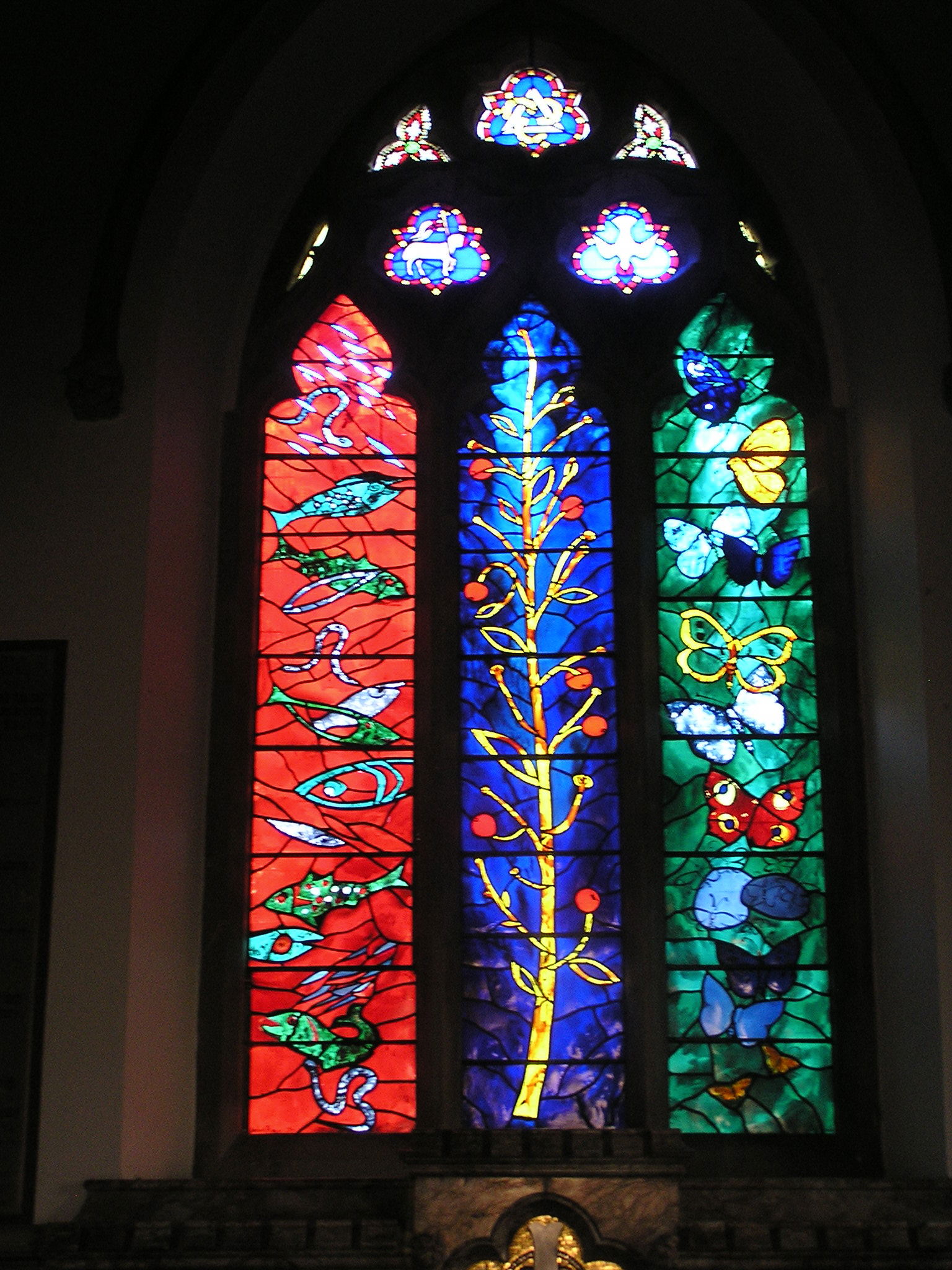
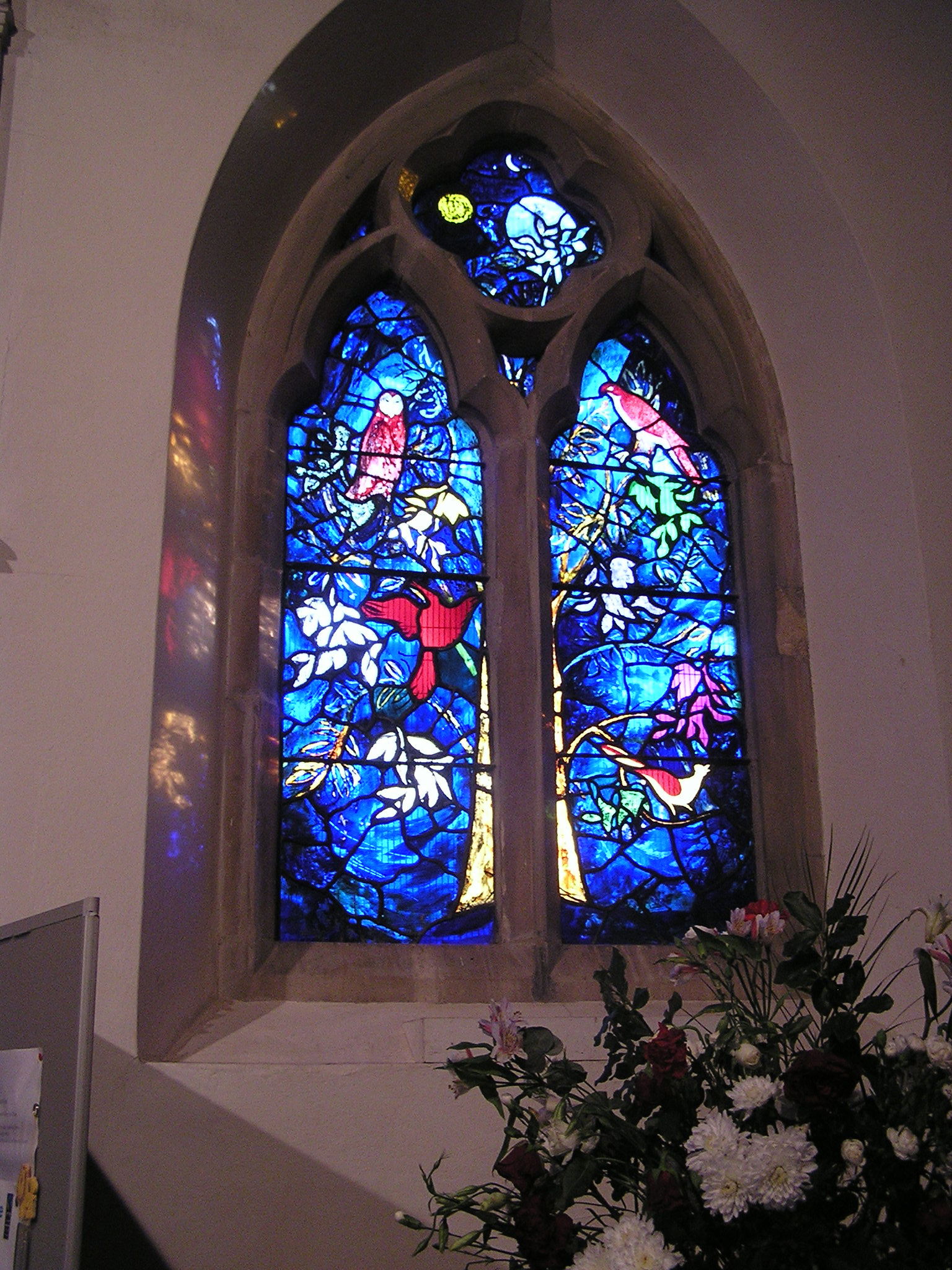
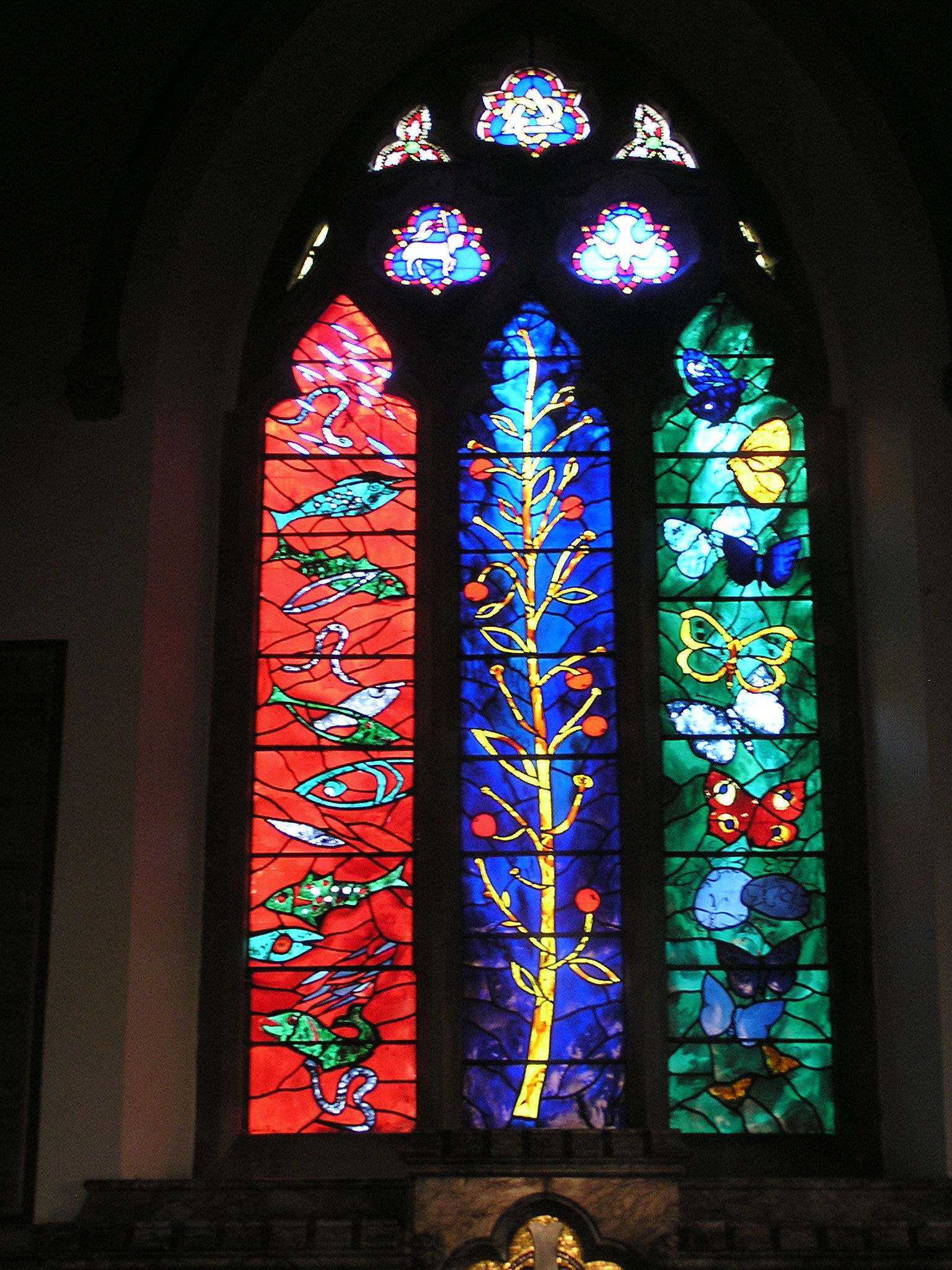
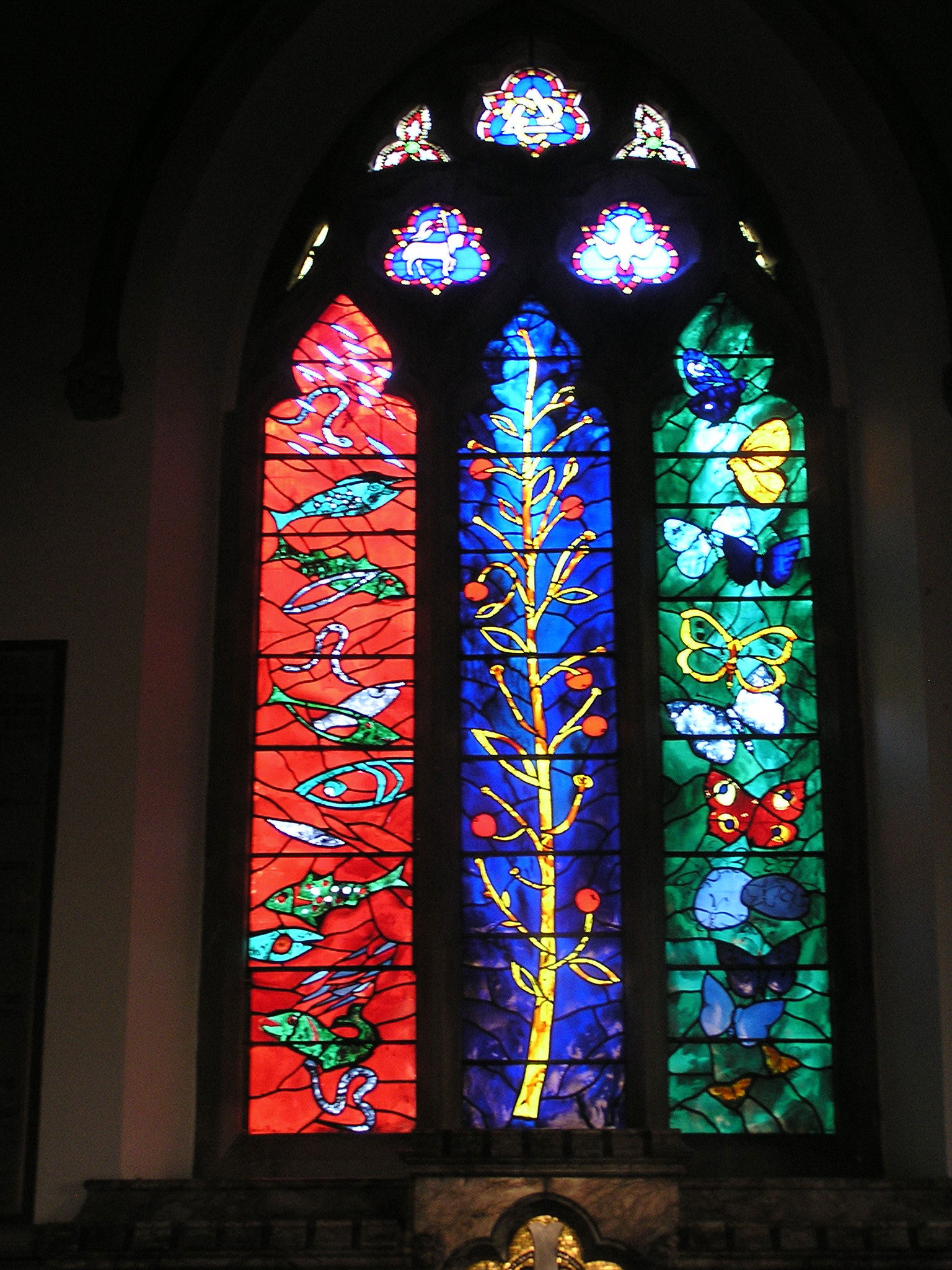
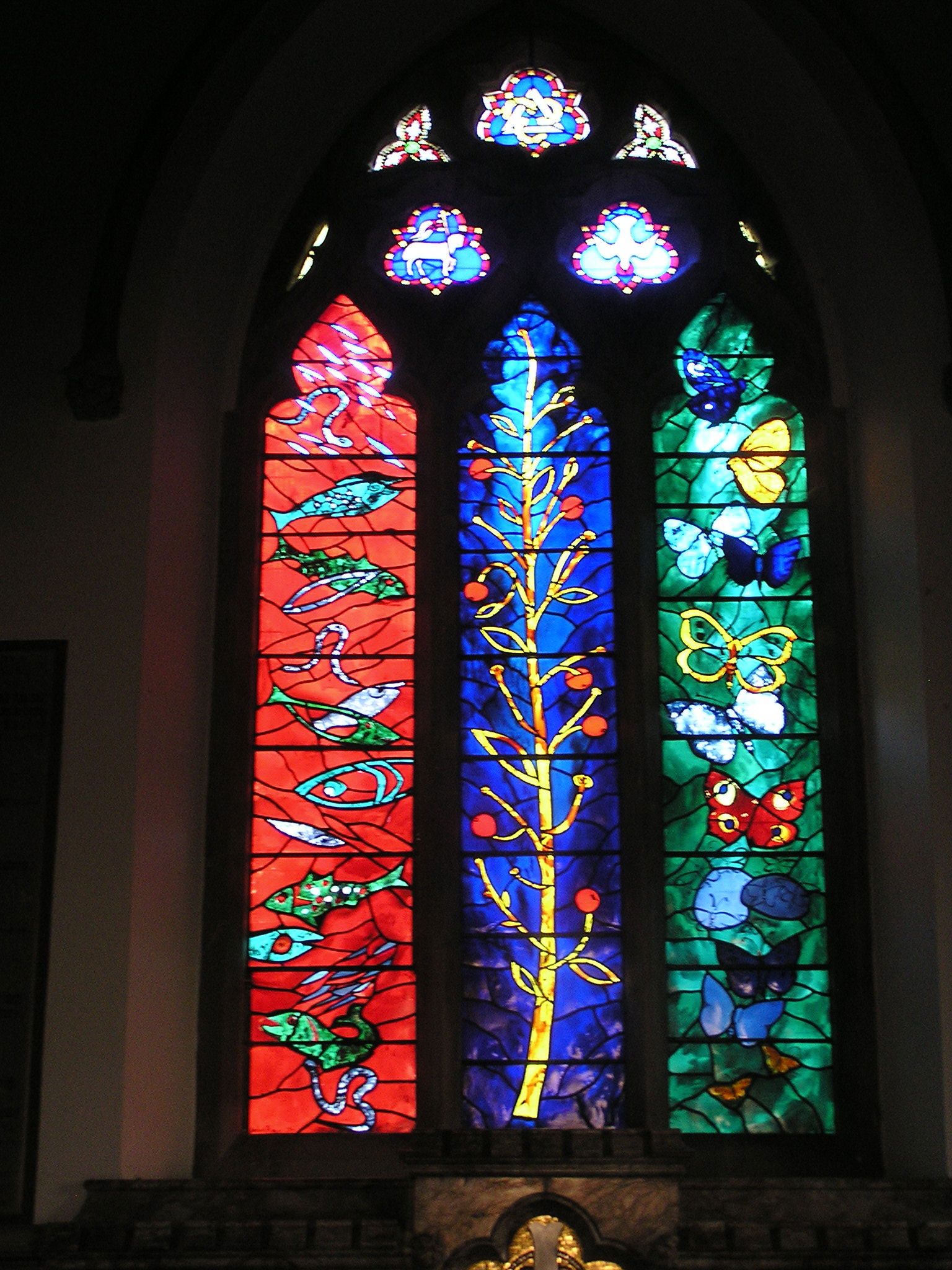
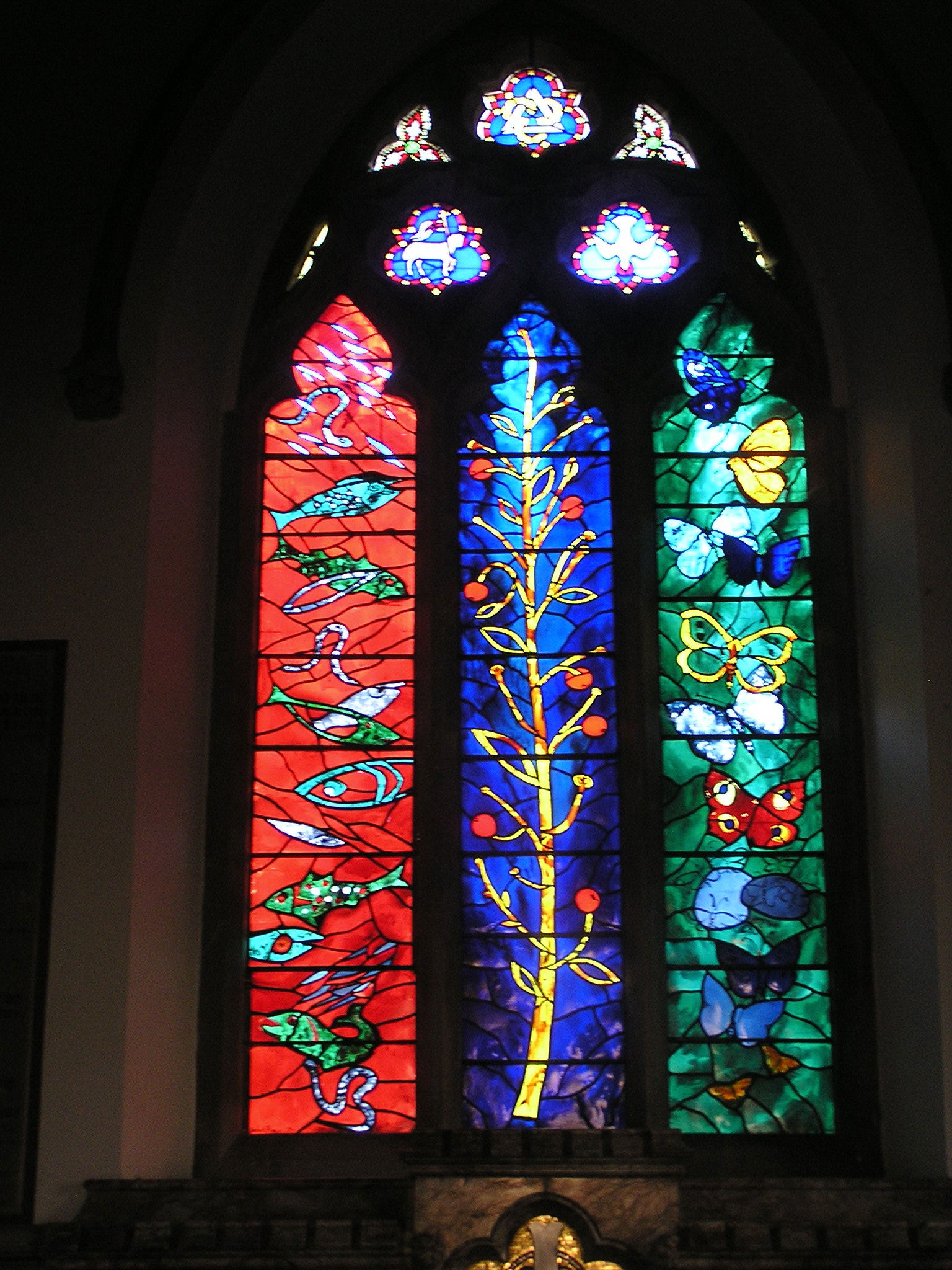
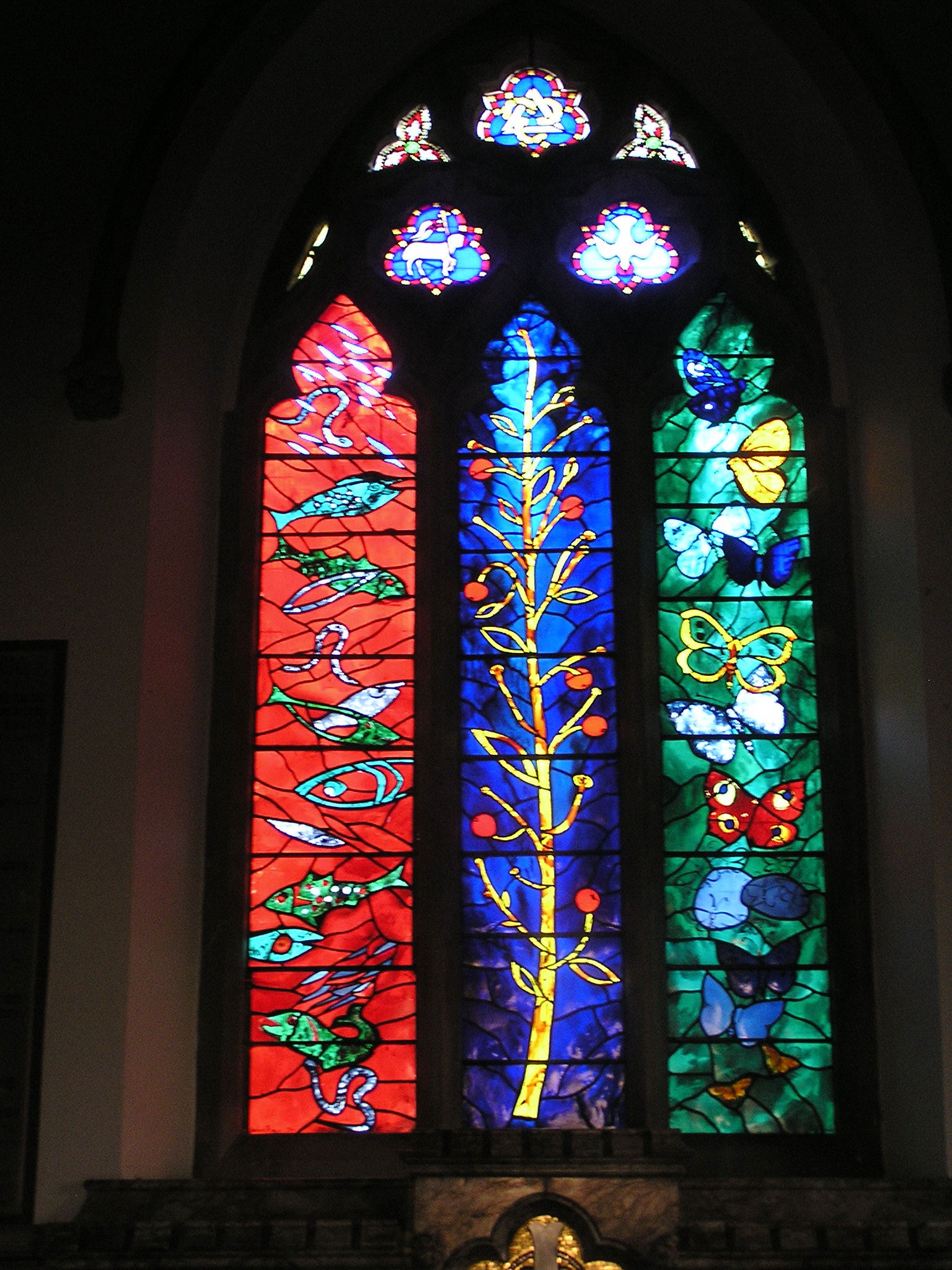
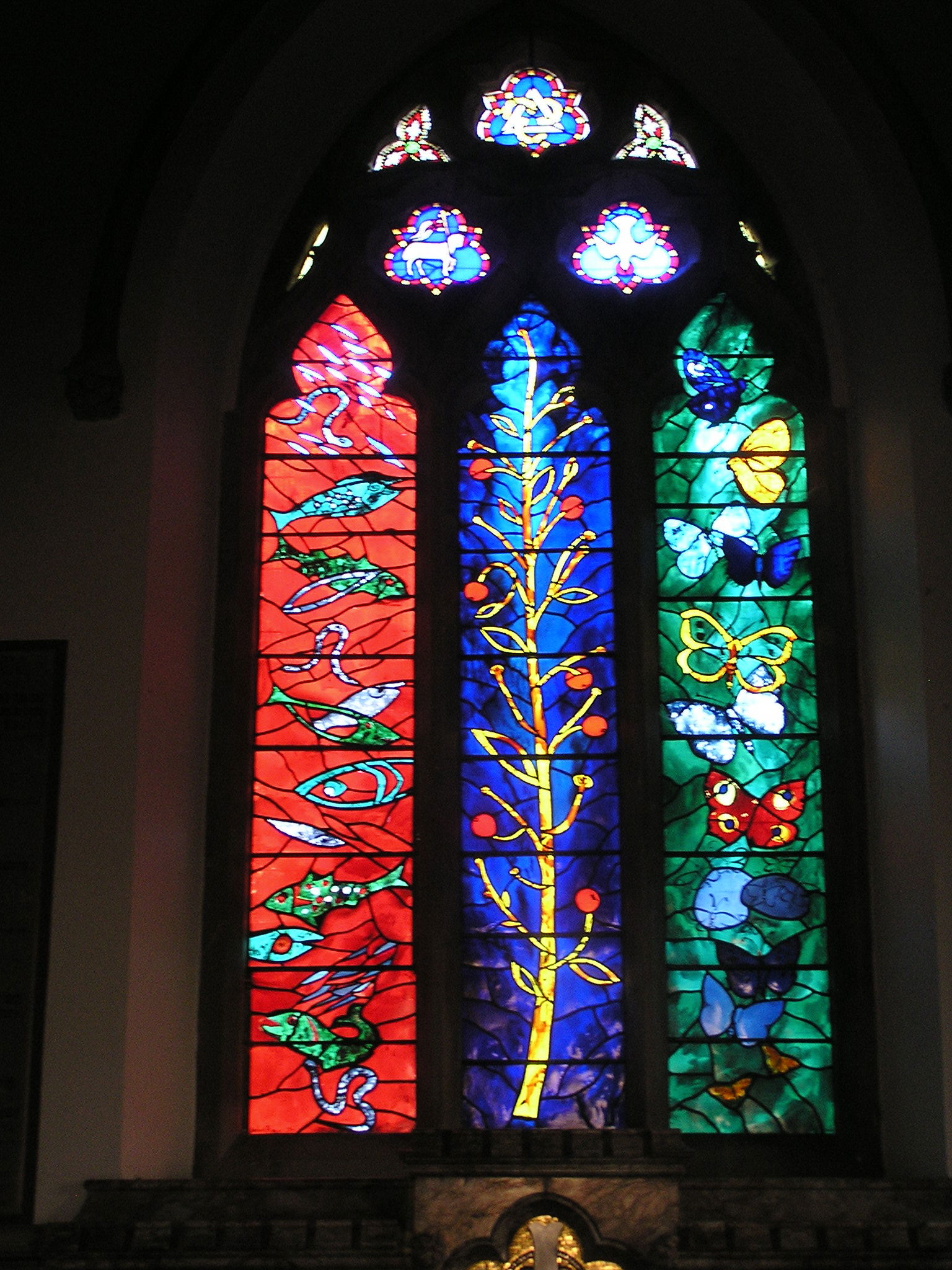
Such panache even in death! Fleming was fortunate also to have John Piper as a near neighbour, who designed this beautiful stained-glass window (top) as his memorial in the church – and it boasts a second, even finer Piper window in memory of Dr Robin Williamson, also illustrated here (left).

The best epitaphs are those which cause one to pause and reflect on mortality. With incredible coolness and composure, Sir Walter Ralegh recast the final verses of his earlier poem, ‘Nature that washed her hands in milk’, on the eve of his execution in 1618. He is said to have left them ‘att the Gate howse’ of Whitehall Palace, as if intending them as an epitaph:


Even such is time which takes in trust

Our youth, our Joys, and all we have,

And pays us but with age and dust:

Who in the dark and silent grave

When we have wandered all our ways

Shuts up the story of our days.

And from which earth and grave and dust

The Lord shall raise me up I trust. 

Perhaps the finest example of an epitaph in the English language is that of W.B. Yeats (1865-1939) on his headstone at Drumcliffe, County Sligo –


Cast a cold eye

On life, on Death.

Horseman, pass by! 

– though these are actually the last lines of one of Yeats’s final poems, ‘Under Ben Bulben’, and were not composed specifically as an epitaph.

I have recently come across a touching epitaph from a place near Melitene (Malatya, Turkey) in the Byzantine period, when the local population were bilingual in Greek and Arabic and tolerant of each other’s religions. A stranger from what is now Iraq had settled there and had befriended a local man, possibly a doctor. When the stranger died, his friend had him buried according to Islamic custom – oriented towards Mecca – and had the following Arabic verses carved on his tomb:


I went on long journeys,

travelling hither and thither in search of wealth,

and the misfortunes of time overtook me,

as you can see.

I wish I knew whether my friends cried

when they lost me

or whether they even knew. 

(From The Book of Strangers: Medieval Arabic Graffiti on the Theme of Nostalgia, trans. Patricia Crone and Shmuel Moreh (Princeton, 2000), p.40.)

However, the pithiest epitaphs are from the classical world, the most famous of all being that by Simonides, which, according to Herodotus, was inscribed on a slab on the burial-mound of the Spartans at Thermopylae: 


Go tell them in Lacadaemon, passer-by,

That here, obedient to their word, we lie.

Macintosh versus Burberry: Basingstoke’s Greatest Contribution to World Culture?

January 18th, 2011

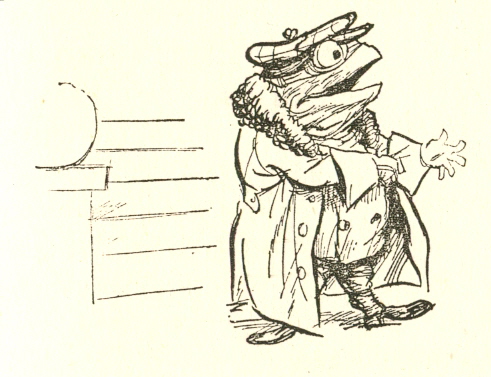
Mr Toad models Burberry

The Daily Telegraph has reported (13 January 2011) the ‘Stylish return of the mac’. Apparently, ‘classic Mackintosh (sic) looks from the archives’ are to be re-worked by the Japanese company that has bought the brand, and sold in up-market shops.

However, the true pioneer of the raincoat was not Charles Macintosh but Thomas Burberry, the Basingstoke draper. The rubberised ‘Macs’ were sticky, smelly, easily punctured garments, apt to melt in hot weather and to stiffen in cold – a crude concept compared to Burberry’s silky ‘Gabardine’. Burberry’s ‘Trench Coat’, originally intended for officers in the Great War, came to be considered the height of sophistication and chic, but no person of fashion has ever dreamed of wearing a ‘Mac’.
 
Burberry modelled his gabardine on the peasant smock, which in the 1870s was still a common sight in Basingstoke. The story of Burberry is told in my new book, Basingstoke and its Contribution to World Culture.

The Search for Sophy: Sophia Hayward and the Naming of Margaret River

January 18th, 2011

The remarkable story of John Garrett Bussell (1802 – 1875), one of the pioneering settlers of south-western Australia, is included in my new book, Basingstoke and its Contribution to World Culture. Margaret Whicher of Petersfield, the young cousin whom Bussell hoped to marry, was to live in Basingstoke for fifty years, in the fine house on Church Street that was later known as Queen Anne House. Jan Matthews and John Alferink of the Margaret River District Historical Society have established that, under other circumstances, the river that Bussell named after her might well have been called ‘Sophia River’. Jan here describes the quest for Sophy Hayward, Bussell’s other lost love.

Margaret River, in the south-west corner of Western Australia, is a beautiful place, named after the river on which it sits. And the river in turn was named by early settler and explorer John Garrett Bussell after Margaret Whicher of Petersfield.

The Historical Society in Margaret River was interested in researching the facts behind this naming, and have indeed found them to our satisfaction, but the story we wished to present had an untidy thread dangling and we thought it should be neatly tied off.

And there began a fascinating and – so far – totally frustrating search which we have come to think of as “Whatever Happened to Sophy Hayward?” 

Sophia (Sophy) Hayward was the childhood sweetheart and heiress whom John Garrett Bussell left behind when he sailed for Western Australia in 1829, and it was a long eight years later that he made a return trip to England with the intention of marrying his Sophy and bringing her back to Australia. It can be seen from extant letters that the reunion was less than a success and neither Sophy nor John’s friends at the time saw the match as propitious. John wrote one letter to Sophy in which he states that he no longer loves her as he once did, but is still prepared to marry her, which does rather sound like a defence against a breach-of-promise suit and hardly likely to set a maiden’s heart a-flutter. The relationship foundered.

John Garrett Bussell went on to marry Charlotte Cookworthy and sail back to Western Australia and it has to be said that Charlotte was an excellent and highly suitable wife. But Sophy?

One of the most poignant letters that we unearthed in our search was one written by Sophy to a cousin and friend, asking her if she would offer a batch of visiting cards to her friend Mrs W. Bussell. These cards Sophy had had printed, she wrote, at a time when she had expectations of becoming a Mrs Bussell and, as “Mrs Bussell” was all they had inscribed on them, they could in fact be put to use by Mrs. W. Bussell.  This was in 1841 and is the last we can find of Sophy.

Investigations have turned up the surprising information that Sophy was the illegitimate daughter of one James Morgan, himself the son of an impressively wealthy James Morgan senior, of Bath, details of whose Will we have accessed. Sophia was born in 1806 and her brother James in 1810 and their father died in 1809. It would seem that both children were born, and their father died, in India. James-the-most-Junior states his birthplace as Bengal on a later census, and information from a family tree on the web indicates that his father spent extended time in India on more than one occasion. Whether this was government, trade or military we have been unable to elicit, but we fancy not military.

When Sophia and James’ grandfather died in 1810 they were mentioned in his will (actually the will mentioned three children, but we have only found trace of two) and baldly described as the illegitimate children of his late son James. They are commended to the care of their Aunt Elizabeth Morgan who indeed cares for them until her death in 1825. Elizabeth bought Loudwater House in Rickmansworth (still existing as luxury flats; one does wonder at the thought of Sophy swapping this for a slab hut in the Australian wilderness!) and James inherited it when Elizabeth died. It is here in the 1841 census that we find Sophy living with her brother and his family. We have traced brother James to his death in London in 1875, but of Sophy there is not a single footprint.

Sweet reason would have her marrying, of course, but using the resources available to us on the web we have assiduously pursued all the likely records to prove each of them inapplicable, one after another. Ditto the deaths.

From our position, using only web resources we can, for instance, see the offspring of Sophy’s brother James and in some cases their offspring, but sleuthing opportunities dry up as records become more current. The privacy aspect is completely understandable, but oh! so frustrating!  We’ve even done some “shoot an arrow in the air” letters to people in the phonebook who we think might have the right name to be related to our Sophie and James, without luck.

We did find that one of James and Sophy’s uncles emigrated to the US with his family and we have as a result of enquiries an emailed copy of a lovely portrait of his son, who would have been James and Sophy’s cousin, of course.  Close, but no cigar. Actually it’s hardly close even, but it’s amazing how excited you can get at the remotest of relationships! We did fantasise that Sophy may have moved to America with her uncle, but can’t find anything that would confirm this.

One of the most intriguing aspects of the story we’re researching here is that Sophy and James are openly admitted to be illegitimate and one would have thought that a family of such obvious substance as the Morgans would move in social strata that concealed rather than revealed these things? We may be well out of touch here with the mores of the time and situation, but it does seem to us that there might well be extenuating circumstances to their illegitimacy. We’ve been unable to trace anything like a birth registration for either of them in India and are completely, completely in the dark as to the identity and situation of their mother.

Yes, this was just a loose end to be followed up and tied off. It’s been over a year of sleuthing so far but we’re not giving up…