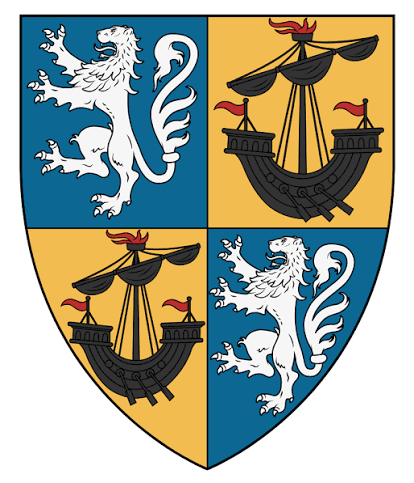
MacDougall of MacDougall (WappenWiki)
The practice of ‘numbering’ clan chiefs dates only from the nineteenth century. Historically, chiefs were never distinguished in clan memory, or indeed in written pedigrees, by numerals, but rather by sobriquets like Mòr (Big) or Ruadh (Ruddy).
Some of the senior clans, such as the various lines of Clan Donald, have never attempted to number their chiefs, aware, no doubt, of the disputes and difficulties that would ensue. Though the high chiefship of the clan is, at best, divided between Lord MacDonald and MacDonald of Sleat, the superior claim of Lord MacDonald was acknowledged in 1947, when Sir Thomas Innes of Learney, Lord Lyon King of Arms, yielded him the ‘undifferenced’ arms. The heraldic definition of chiefship is the only one today that has any standing in law.
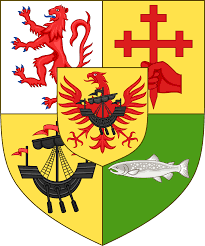
Lord MacDonald (WappenWiki)
Learney no doubt hoped to end what he perceived as a most unseemly squabble. Just before the Great War, the lairds of Sleat, Glengarry and Clanranald had attempted to settle their old dispute about the chiefship of Clan Donald. On any future occasion, they would decide who among them should pose as chief by tossing a coin. Learney’s reaction was severe. ‘To what depths of ignominy had clanship fallen! What the old Lords of the Isles would think about playing “pitch and toss” for the chance of pretending to “represent” them, one hesitates to contemplate.’
The numbering of chiefs is thus a minefield that is entered at one’s peril, and two eminent scholars in this field, R.W. and Jean Munro, have pointed out the essential flaws in the practice. A particular fault of numbering systems is the lack of clarity about ‘what should be taken as constituting chiefship, e.g. ownership of land, exercise of leadership, or simply … outliving the previous holder’.
A numbering system was adopted by the Clan MacDougall Society in its official publication, The Galley of Lorn, in 1909; and has been perpetuated ever since, despite its acknowledged inconsistencies and errors. For example, the chiefs are listed from the eponymous Dougal, who was not a chief but a reigning king (of the Hebrides), before the ‘clan’ even existed. Why not begin with his father Somerled (also a king), or indeed with Somerled’s father or grandfather?
The sixth chief is said to be Duncan of Lorn, the fictional creation of ‘Blind Harry’ for his poem The Wallace; the seventh was supposedly Ewen of Argyll, eldest son of John Bacach, though John is likely to have outlived Ewen and to have been succeeded by his younger son, Allan Ruadh; John Gallda, Allan’s son, is omitted from the list altogether; and there is no accounting for his grandson, a second Allan Ruadh, who, opposing the succession of his younger half-brother, was recognised as de facto chief by a significant part of the clan. Furthermore, should one not include Duncan of Argyll, the younger brother of John Bacach, on the grounds that he was granted John’s forfeited estates, and may have held them for some years? Notwithstanding these glaring discrepancies, announcements of the death of the most recent chief, Madam Morag MacDougall of MacDougall (22 January 2026) described her as the ‘thirty-first’ head of the clan.
The Munros have demonstrated that, especially with the older chiefly lines, such confident numbering should be treated with extreme caution. Their article, ‘Numbering of Clan Chiefs’, appeared in the May 1977 issue of West Highland Notes of Queries and can be downloaded, free of charge, from the Society of Highland and Island Research website – https://www.highlandhistoricalresearch.com/wp-content/uploads/WHNQ-1977-05-Series-1-No-4.pdf.